
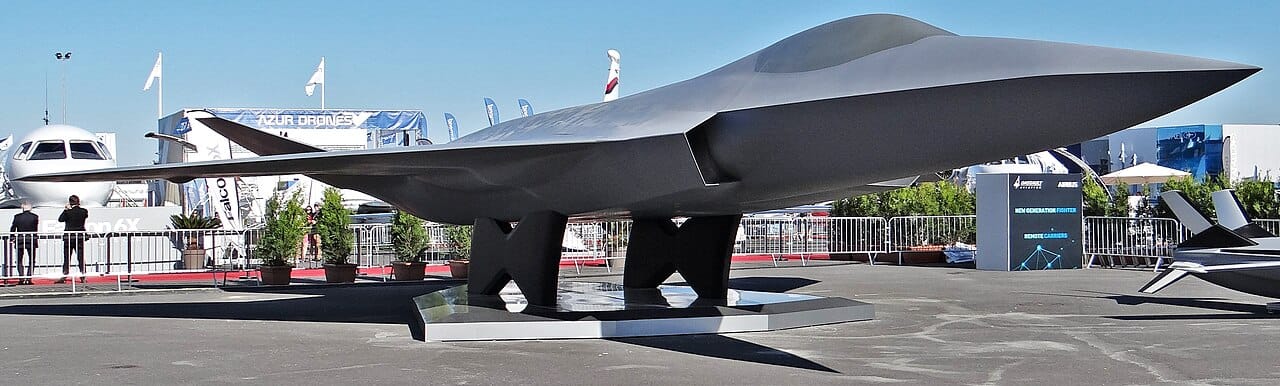
Europe’s most ambitious fighter project spent years tearing itself apart. Now, from the wreckage, an unexpected suitor has stepped forward: India.
On 7 August 2026, India’s Ministry of Defence confirmed to Parliament that New Delhi has begun efforts to join the Future Combat Air System, the French-led programme to build a sixth-generation fighter. It is a striking turn for a project that, only weeks earlier, had lost one of its three founding nations.
Quick Facts
- What: India has begun efforts to join the French-led FCAS sixth-generation fighter programme
- Confirmed: Indian MoD, in a parliamentary report presented 7 August 2026
- The opening: Germany withdrew from FCAS’s core fighter in June 2026
- The prize: a New Generation Fighter, combat-cloud networking and teamed drones
- India’s need: the IAF is roughly 13 squadrons below strength
- Alongside: India’s own AMCA fifth-generation fighter
How FCAS lost Germany
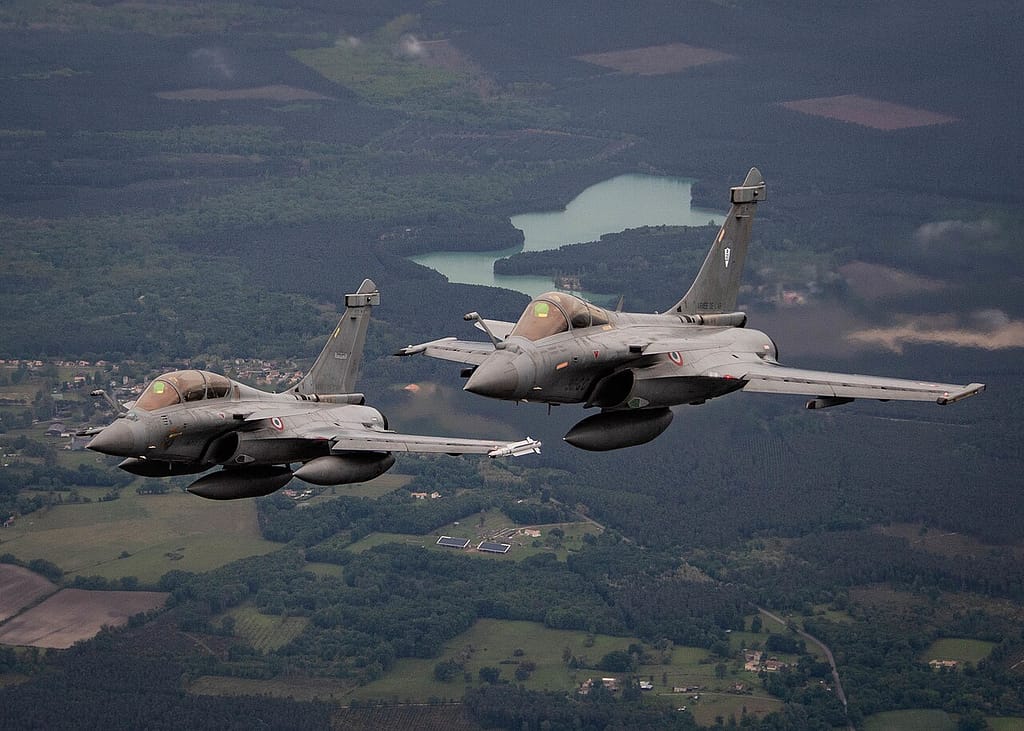
FCAS — SCAF in French — was conceived as a Franco-German-Spanish crown jewel: a New Generation Fighter to eventually replace the Rafale and the Eurofighter, flying alongside swarms of remote-carrier drones and stitched together by a battlefield “combat cloud.” Dassault Aviation led the fighter for France, Airbus represented Germany, and Spain’s Indra took a share.
The trouble was never the technology. It was the politics of who builds what. Dassault and Airbus feuded for years over leadership, workshare, intellectual property and basic design philosophy. In June 2026, Germany formally walked away from the core fighter element, leaving France to plot its own path toward a demonstrator that could fly around 2031.
Why India, and why now
For New Delhi, the timing is close to perfect. The Indian Air Force is roughly 13 squadrons below its sanctioned strength, its home-grown AMCA fifth-generation fighter is still years from service, and a sixth-generation programme suddenly has a vacancy. Joining France offers access to combat-cloud networking, teamed unmanned systems and next-generation engine and sensor work that India cannot yet develop alone.
India would keep building its own AMCA in parallel — this is about buying into the technologies of the generation after, not replacing the domestic effort. And unlike the deadlocked three-way European partnership, a France-India deal has only two capitals to satisfy.
A second life for a troubled programme
Nothing is signed. India’s ministry described talks, not a contract, and the terms of any partnership — workshare, technology transfer, cost — are exactly the issues that sank the original FCAS. But for a programme that looked close to collapse in June, a partner with deep pockets and a hungry air force is a remarkable turn of fortune.
Sources: The Print; Outlook India; Army Recognition; EurAsian Times; FlightGlobal; Indian Ministry of Defence parliamentary report (7 August 2026).
0 Comments