
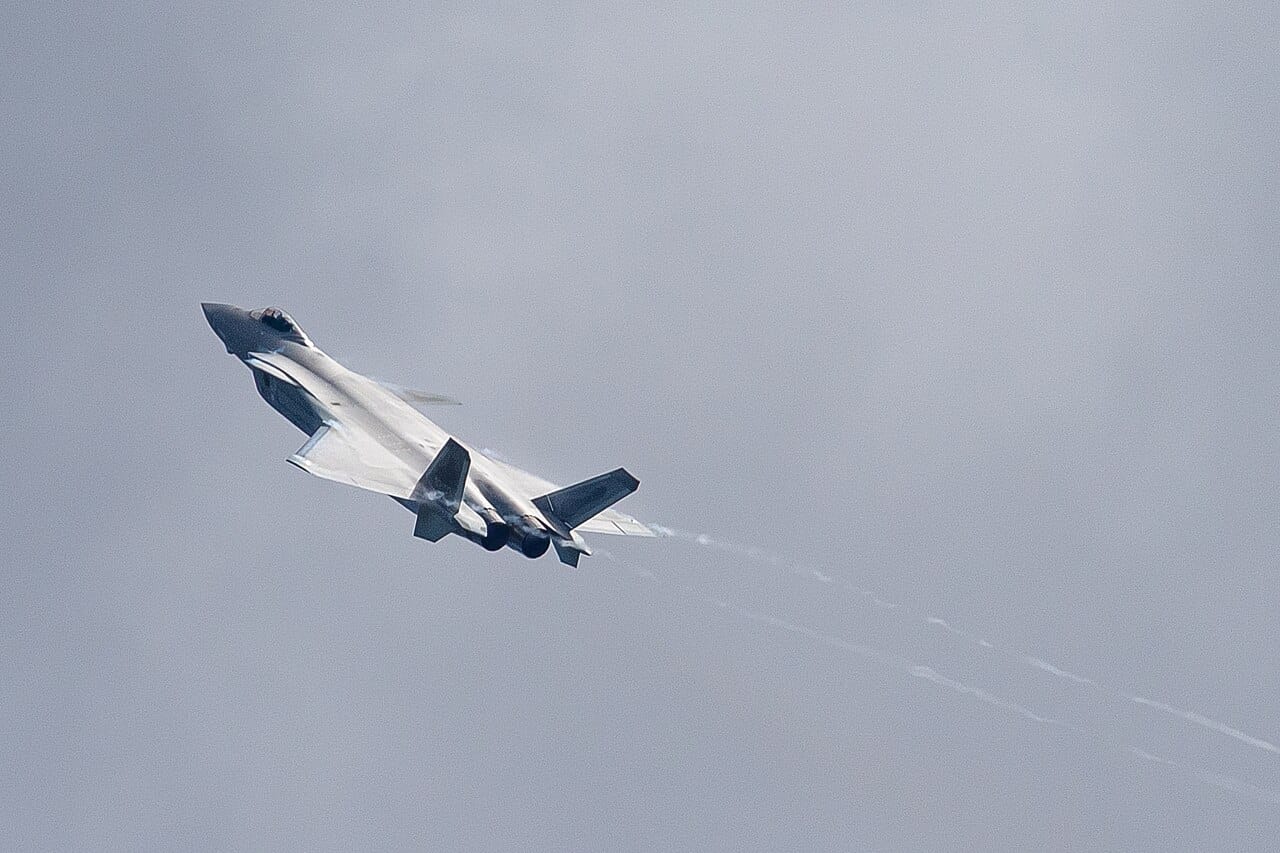
A stealth fighter is only as good as the radar in its nose. China appears to have just made the J-20’s a great deal better — not with a bigger dish, but with a different kind of crystal. Reports from Chinese researchers describe a leap in semiconductor material that, they claim, roughly triples the radar’s detection range.
If the figures hold up, it is one of the most consequential upgrades the J-20 has received since entering service — and a reminder that the most important changes to a modern fighter are the ones you cannot see from the outside.
• Aircraft: Chengdu J-20, China’s frontline fifth-generation stealth fighter
• The upgrade: High-purity silicon-carbide (SiC) radar modules, reported to roughly triple detection range
• Source of the work: A research team at Shandong University (per Chinese reporting)
• Wider plan: New radar, improved engines and AI-assisted systems
• Fleet: Reportedly 300+ built by late 2025, with output estimated at 100–120 per year
Why silicon carbide matters
Modern fighter radars are active electronically scanned arrays — thousands of tiny transmit-receive modules working together. The performance of those modules is limited by the semiconductor they are built from. Most use gallium nitride; the Chinese claim centres on high-purity silicon carbide, a material that tolerates more heat and higher power.
More power, handled cleanly, means a stronger signal pushed further out. According to the reporting, that translates into roughly triple the detection range, plus more accurate missile guidance and more energy available for any future directed-energy weapon. Those last two points should be read as claims, not verified specifications.
The number behind the headline
Detection range is the currency of air combat. The aircraft that sees first usually shoots first. A genuine tripling of range would let the J-20 detect and engage from distances that reshape the geometry of an encounter — exactly the advantage stealth is meant to provide in the first place.
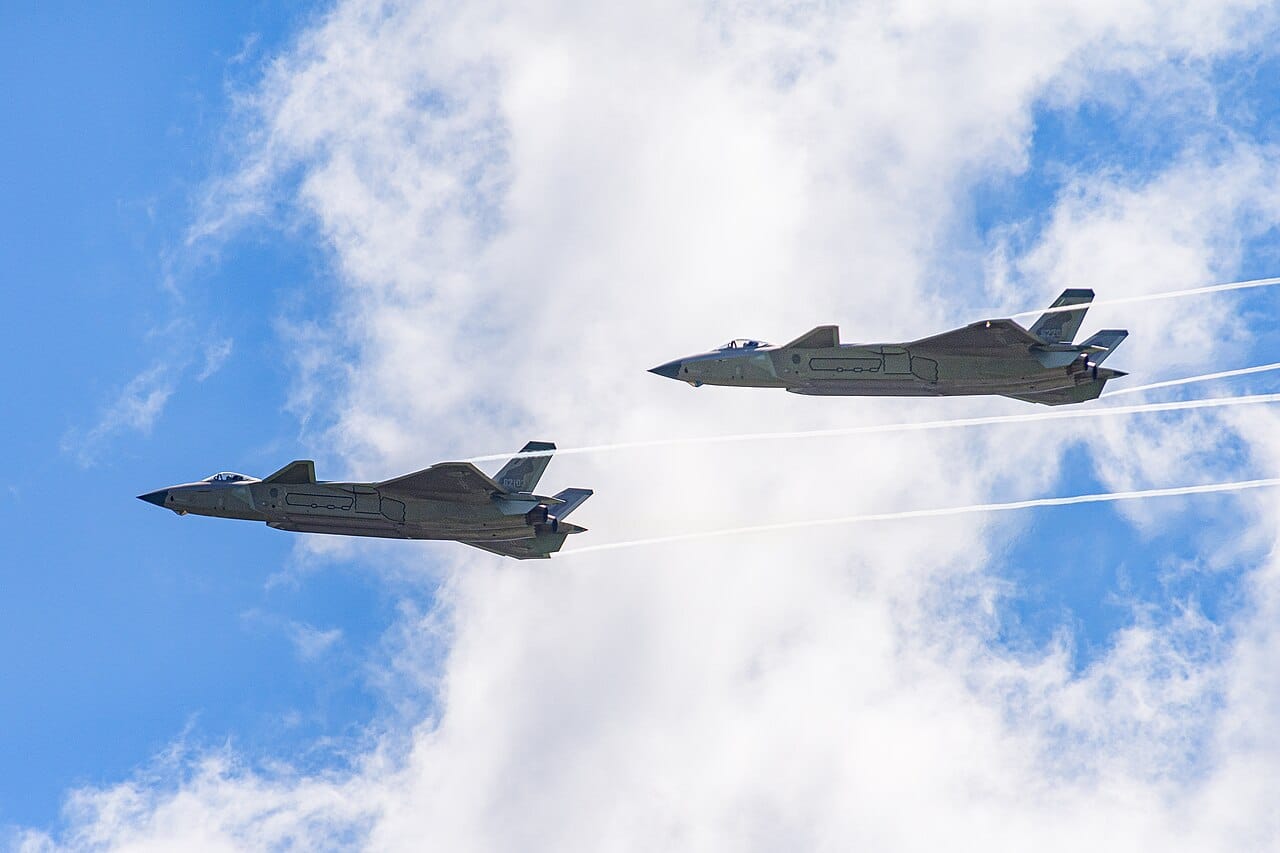
Caution is warranted. Laboratory gains in a crystal do not automatically become fielded capability, and “tripling” is the kind of round, dramatic figure that deserves independent confirmation. China has built more than 300 J-20s, but a material breakthrough on a test bench and a reliable production radar are two very different things.
Whether or not the threefold figure survives scrutiny, the direction is clear: China is pouring effort into the unglamorous internals that decide who wins a beyond-visual-range fight. That is precisely where serious air forces compete — quietly, and out of sight.
Sources: South China Morning Post, Interesting Engineering, National Security Journal (reporting Chinese research claims).

 English
0 Comments