
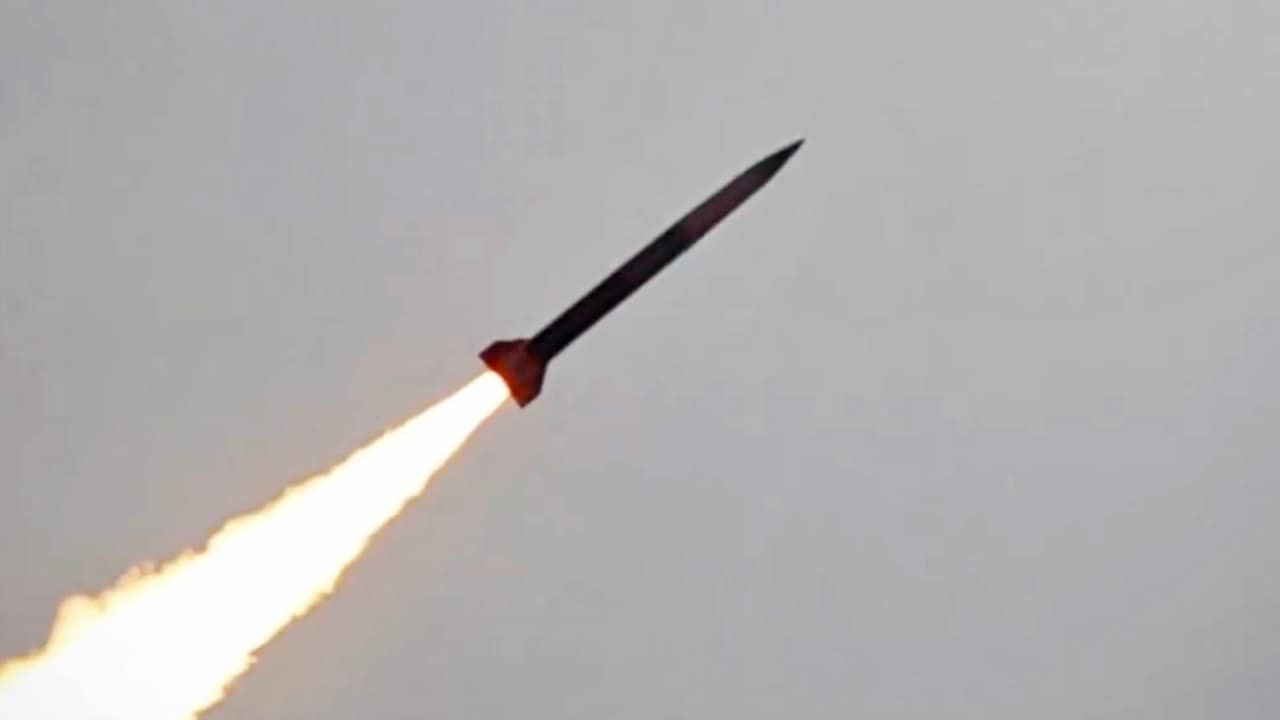
The missile is pink. That is the first thing you notice in the test footage Ukrainian manufacturer Fire Point released this week: a bright flamingo-pink rocket leaping off its launcher and carving through a “fully controlled maneuvering flight.” The colour is a company trademark, borrowed from its FP-5 Flamingo cruise missile. The purpose is deadly serious.
The FP-7.X is the stepping stone toward Freyja — Ukraine’s first homegrown anti-ballistic missile system, and a deliberate attempt to break the brutal economics of defending against Russian missiles with multi-million-dollar Western interceptors. Fire Point’s target price: under $1 million per missile. A single Patriot PAC-3 MSE now runs about $5.3 million, according to the U.S. Army’s latest budget documents.
The timing is no accident. Patriot interceptor stocks are critically strained, U.S. deliveries have reportedly been suspended over stockpile concerns, and Russian drones and missiles keep coming.
Quick Facts
- Missile: FP-7.X, derived from Fire Point’s FP-7 surface-to-surface ballistic missile (~124 mi range, ~331 lb warhead)
- Goal: the production Freyja interceptor — Ukraine’s first domestic anti-ballistic missile system
- Target cost: under $1 million per interceptor, vs ~$5.3 million for a PAC-3 MSE
- Timeline: Fire Point aims to intercept its first ballistic missile by the end of 2027
- Test: fully controlled maneuvering flight, footage released June 3, 2026 by CTO Iryna Terekh
- Partners sought: Hensoldt, Saab and Thales named for radar; Diehl Defence seeker components reported
A Ballistic Missile Turned Interceptor
Fire Point’s approach is unorthodox: derive the interceptor from its existing FP-7 ballistic missile, betting that commonality will compress development time. The FP-7.X is reported to be 7.25 metres long and designed to fly at 1,500 to 2,000 metres per second, with a composite body to keep costs down. The ability to rapidly correct course mid-flight — demonstrated in this week’s test — is the heart of any anti-ballistic capability.
This is the test footage, published by Fire Point’s chief technology officer:
The planned Freyja interceptor has been described with an imaging-infrared terminal seeker plus a semi-active radar homing seeker from Germany’s Diehl Defence, fired from a lightweight domestic mobile launcher. For radar, Fire Point has openly named Hensoldt, Saab and Thales as potential partners — an admission that sensors remain the company’s gap.
The Patriot Problem
Ukraine’s anti-ballistic shield currently rests almost entirely on the Patriot, supplied by the United States, Germany and the Netherlands, plus a handful of Franco-Italian SAMP/T systems. The Patriot has scored famous kills — but Russia has adapted, adding manoeuvring capability to its ballistic missiles that has measurably cut the system’s effectiveness. By Shtilierman’s account, downing one ballistic target often takes two or three interceptors, each costing millions.
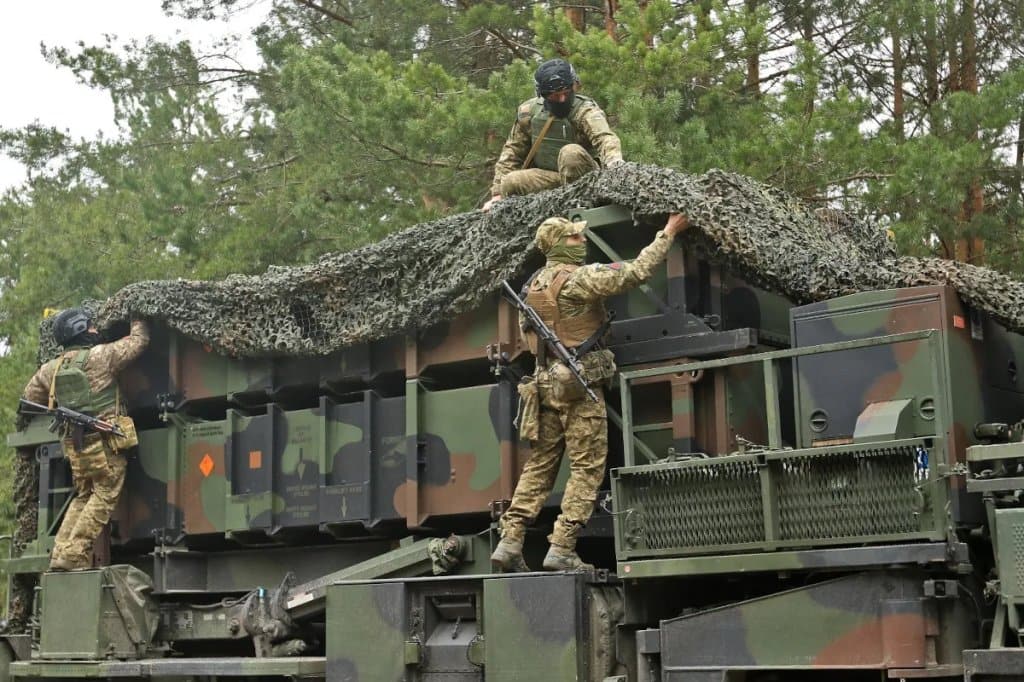
President Volodymyr Zelensky has repeatedly pressed Washington for more missiles, saying this week that officials have one week to finalise the legal and financial details of a new Patriot purchase — agreed politically, stalled in practice:
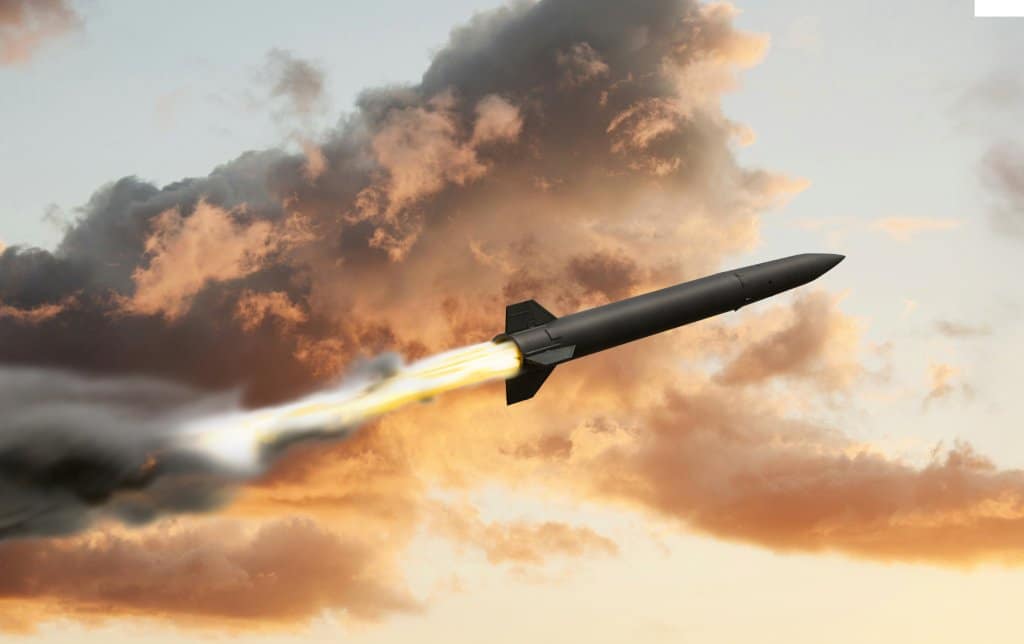
Notably, the United States has the same problem in miniature: the U.S. Army is currently pressing contractors for its own sub-$1-million Patriot interceptor. In a wry twist, the Army general running that effort illustrated a recent post with a rendering of — the FP-7.X.
Ambition Meets Arithmetic
Skepticism is warranted. The FP-7.X is an early-stage demonstrator; turning it into a working interceptor by the end of 2027 means solving seekers, radars, battle management and mass production simultaneously, in wartime. Fire Point’s parallel promise of 2,555 Flamingo cruise missiles a year remains unproven. For scale: Lockheed Martin, with decades of experience, built just over 500 PAC-3 MSEs in 2024.
But the logic is sound, and the stakes could hardly be higher. Even an interceptor with a lower kill probability changes the maths if it costs a fifth as much and can be built at home — and a working Freyja would be an export product for a world suddenly short of affordable air defence. This is Ukraine’s own programme, born of necessity, and worth watching closely.
Fire Point’s pink paint scheme made its debut on the Flamingo cruise missile — here is that weapon’s test launch:
Sources: The War Zone, Reuters, Kyiv Post, Ukrainska Pravda, Militarnyi


 English
0 Comments