
Sweden has roughly ten million people and builds its own fighter aircraft. It has done so, without interruption, since the 1940s. That is a peculiar and slightly improbable national habit, and on 9 September 2026 Stockholm quietly paid to keep it going for another decade.
The Swedish Defence Materiel Administration, FMV, placed an order with Saab worth approximately 2.9 billion Swedish kronor, around 260 million euros, for continued concept work on a future fighter system. The contract runs from 2026 to 2028 with options for 2029 and 2030, and it builds directly on agreements signed in 2024 and 2025.
This is not a fighter programme. It is a decision to remain able to have one.
Quick Facts
| Announced | 9 September 2026 |
| Customer | FMV, the Swedish Defence Materiel Administration |
| Contractor | Saab, business area Aeronautics |
| Value | Approximately SEK 2.9 billion (around €260 million) |
| Period | 2026 to 2028, with options for 2029 and 2030 |
| Deliverables | Flying and ground-based demonstrators, advanced studies, system concepts |
| Scope | Both manned and unmanned systems |
| Technology focus | Systems integration, autonomy, signature adaptation, propulsion, digital development, future production capability |
| Builds on | Contracts signed in 2024 and 2025 |
What Sweden is actually buying
Read the list of technology areas carefully, because it is unusually candid. Systems integration. Autonomy. Signature adaptation. Propulsion. Digital development. Future production capabilities.
Those are not the ingredients of an aeroplane. They are the ingredients of an aerospace industry. Saab's own description of the programme says it contributes to building competence, reducing technical risks and creating freedom of action for future choices in Swedish air combat capability, which is corporate language for a very simple proposition: if you stop doing this work, you cannot restart it, and then somebody else decides what you fly.
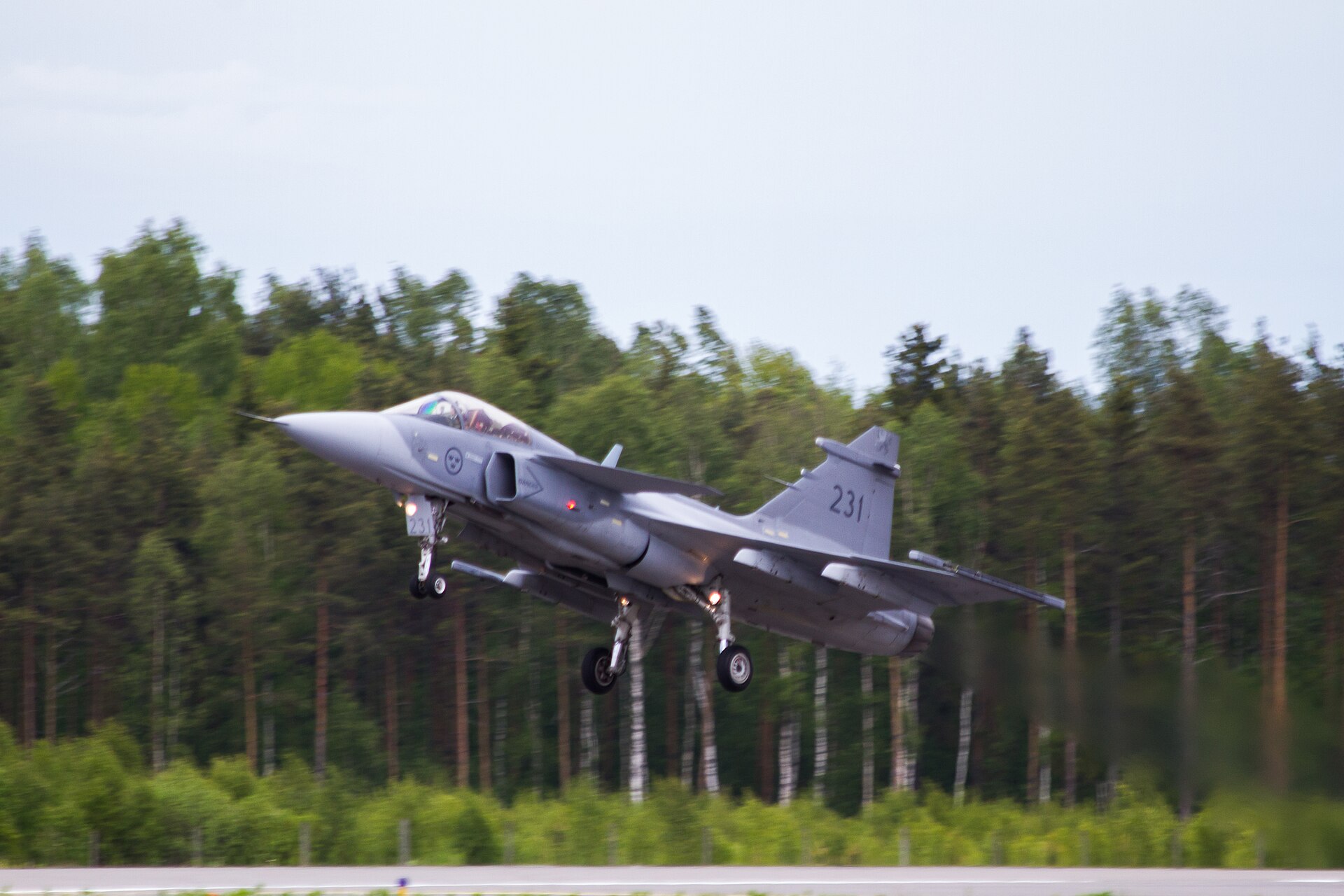
Britain learned this lesson the expensive way after TSR-2. Sweden has never had to, because it never stopped. The Tunnan, the Lansen, the Draken, the Viggen and the Gripen form an unbroken chain of domestically designed combat aircraft, and each one existed partly so that the next one could.
Manned, unmanned, or both
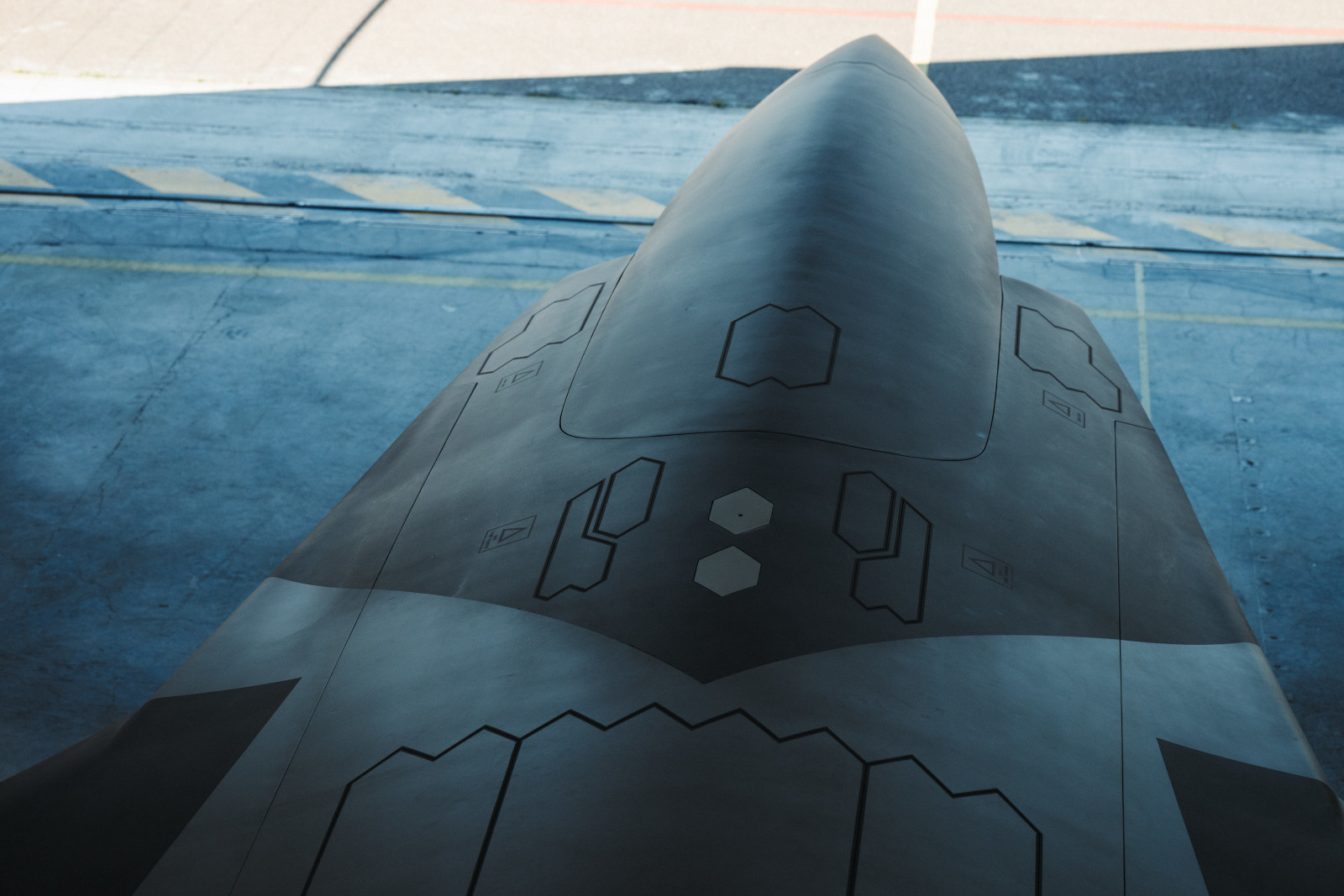
The most interesting phrase in the FMV order is that the concept work covers manned and unmanned systems, with flying and ground-based demonstrators for both. Sweden has not decided whether its post-2040 air combat capability has a pilot in it.
Not deciding is, for a country of Sweden's size, the correct answer. A ten-million-person economy cannot afford to bet on the wrong architecture and then find out in 2038. Buying demonstrators and studies rather than a programme keeps the options open at a fraction of the cost, and 2.9 billion kronor over three years is a rounding error next to what Britain, Italy and Japan are spending on GCAP or what France, Germany and Spain have already burned on FCAS.
The awkward European context
Sweden is doing this at the exact moment when the continent's two big collaborative fighter programmes are looking wobbly and its neighbours are making very different choices. Germany's first F-35 flew this week, bought specifically to inherit a nuclear mission. France has publicly floated cooperating with Sweden on a next-generation fighter as FCAS strains.
An unglamorous three-year technology contract gives Stockholm something none of those conversations do: a credible walk-away position. Sweden can join a partnership from a position of having its own demonstrators flying, or it can decline and build its own again, as it has done every time before.
The Gripen does not need replacing yet. That is precisely why now is the moment to pay for the option.
Frequently Asked Questions
What did Saab win from FMV in September 2026?
Is Sweden building a new fighter jet?
What technologies does the Swedish future fighter contract cover?
Will Sweden’s next fighter be unmanned?
How does this relate to GCAP and FCAS?
Why does a country of ten million build its own fighters?
Sources: Saab press release, 9 September 2026; FMV; aeroTELEGRAPH; defence-industry.eu.
0 Comments