
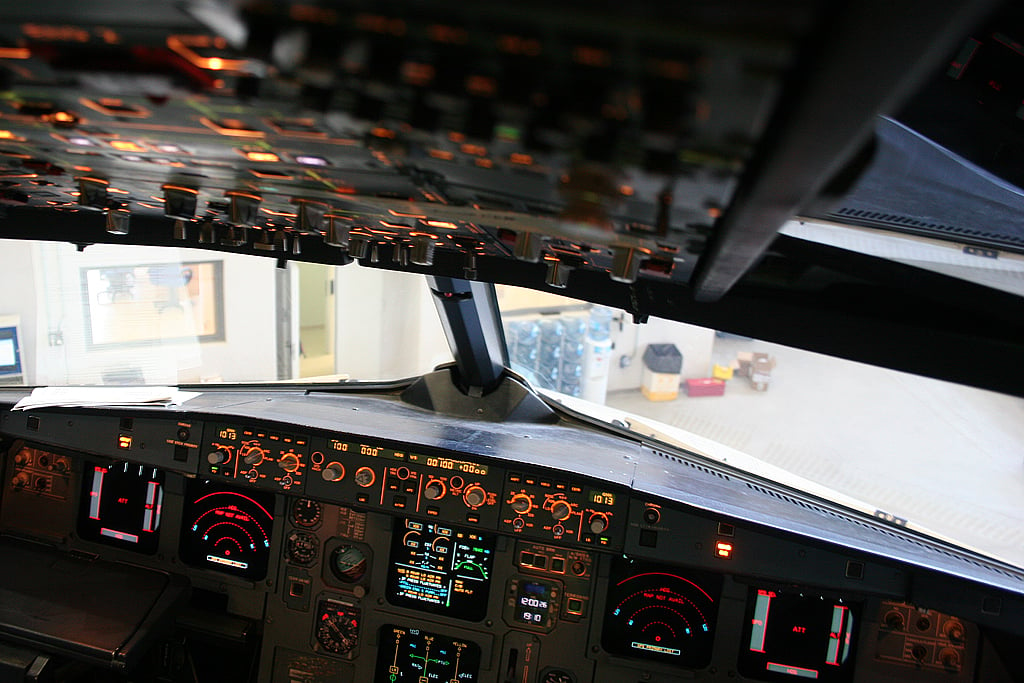
A controller is working a busy approach frequency. Four aircraft are talking over one another about runway changes and speed restrictions. Then one voice comes through, flat and unhurried, and says a single word three times. Everyone else stops transmitting. Nobody was told to. They simply stop.
That word is Mayday, and it is the most powerful thing a pilot can say on a radio. It is not a cry for help in any emotional sense. It is a procedural instrument: a word that, under international rules, clears a frequency and reassigns priority in the space of about two seconds.
Almost everything pilots say on the radio works like that. It sounds like jargon, and a lot of it sounds faintly ridiculous, but nearly every phrase exists because somebody once misunderstood something and people died. Here is what the words actually mean, where they came from, and which of the popular explanations are wrong.
Quick Facts
Distress call: MAYDAY, preferably spoken three times (FAA AIM 6-3-1)
Urgency call: PAN-PAN, spoken the same way
Priority: Mayday commands radio silence; Pan-Pan outranks everything except a Mayday
Emergency frequencies: 121.5 MHz (civil), 243.0 MHz (military)
Emergency squawks: 7500 unlawful interference, 7600 radio failure, 7700 general emergency
Alphabet in use: ICAO, adopted 1956. R is Romeo, not Roger
Governing documents: ICAO Annex 10 and Doc 9432; FAA AIM chapters 4 and 6
Mayday: the word that commands silence
The FAA’s Aeronautical Information Manual is unromantic about it. Paragraph 6-3-1 says the initial communication by an aircraft in distress “should begin with the signal MAYDAY, preferably repeated three times,” and that “the word MAYDAY commands radio silence on the frequency in use.” Not requests. Commands.
Distress means grave and imminent danger requiring immediate assistance. Engine fire, control failure, uncontained smoke, fuel exhaustion. Once the call is made, the pilot is released from a great deal of the rulebook, because the rulebook exists to keep aircraft apart and there is now something more urgent to worry about.
The AIM also prescribes the order of what comes next, and it is worth knowing because it is a checklist for a brain that has stopped working properly: the call itself, the station addressed, aircraft identification and type, the nature of the emergency, weather, intentions, position and heading, altitude, fuel remaining in minutes, and souls on board. Fuel and souls are the last two for a reason. They are what search and rescue needs if the rest of it goes badly.
The most famous Mayday in modern aviation lasted about thirty-five seconds. On 15 January 2009, US Airways 1549 lost both engines to a bird strike over New York. What the transcript records is not panic but a man running out of options in public.
Pan-Pan: the call almost nobody uses
Below distress sits urgency, and its call sign is Pan-Pan, also spoken three times. The AIM gives it the same treatment: it “warns other stations not to interfere,” and it outranks every transmission on the frequency except a Mayday.
Pan-Pan is for a problem that is real but not yet lethal. A sick passenger. One generator lost. A rough-running engine that is still producing thrust. A pilot who is lost. The distinction is not how frightened you are, it is whether you need help right now or merely soon.
In practice it is badly underused. Pilots reach past Pan-Pan for the informal “we’d like to declare an emergency” or, worse, say nothing at all and try to sort the problem out quietly. Every safety organisation that has looked at the habit has said the same thing: the cost of calling Pan-Pan and not needing it is a bit of paperwork. The cost of not calling it is measured differently.
Why three times?
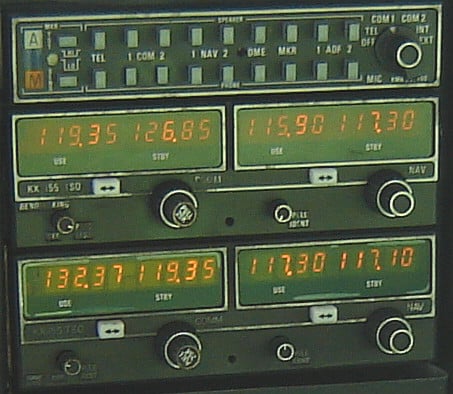
Because English contains the word “mayday” in other contexts, and because VHF radio is a lossy medium. A single utterance can be clipped by a late transmitter keying, swallowed by a squelch break, or simply misheard as part of a sentence. Three repetitions make the call unmistakable as a formal signal rather than a mention of one, and they give a controller who was writing something down a second chance to catch it.
The same logic runs through the whole of aviation radio. It is why headings are spoken digit by digit, why nine is pronounced “niner” so it cannot be confused with the German nein, and why the FAA prints “tree”, “fife” and “fow-er” in its own alphabet table. The language is deliberately slightly wrong so that it cannot accidentally be something else.
Captain Joe’s explainer above, with well over two million views, is the clearest short account of the Mayday and Pan-Pan distinction on the internet, and it uses real radiotelephony examples rather than paraphrase.
Roger, Wilco, and the Roger who never existed
There was no Roger. “Roger” simply meant the letter R, and R stood for received. In the spelling alphabets the US military used from the late 1920s through the Second World War, R was Roger, and acknowledging a transmission with “Roger” was shorthand for “your message has been received.” That is all it ever claimed. It did not promise that anything would be done about it.
In 1956, ICAO adopted the alphabet still in use today, and R became Romeo. “Roger” should have died with the alphabet that produced it. It did not, partly because the film industry had already made it famous and partly because Apollo astronauts said it on live television for a decade. It survives today as a procedure word with no letter attached to it.
Its companion is Wilco, a contraction of will comply, and the two are not interchangeable. Roger means “heard you”. Wilco means “heard you and I am doing it”. Saying “Roger Wilco” is redundant, which is exactly why Hollywood loves it. The AIM lists the acceptable acknowledgements plainly in paragraph 4-2-3: “Wilco,” “Roger,” “Affirmative,” “Negative,” or other appropriate remarks.
Charlie, Papa, and the alphabet that is not phonetic
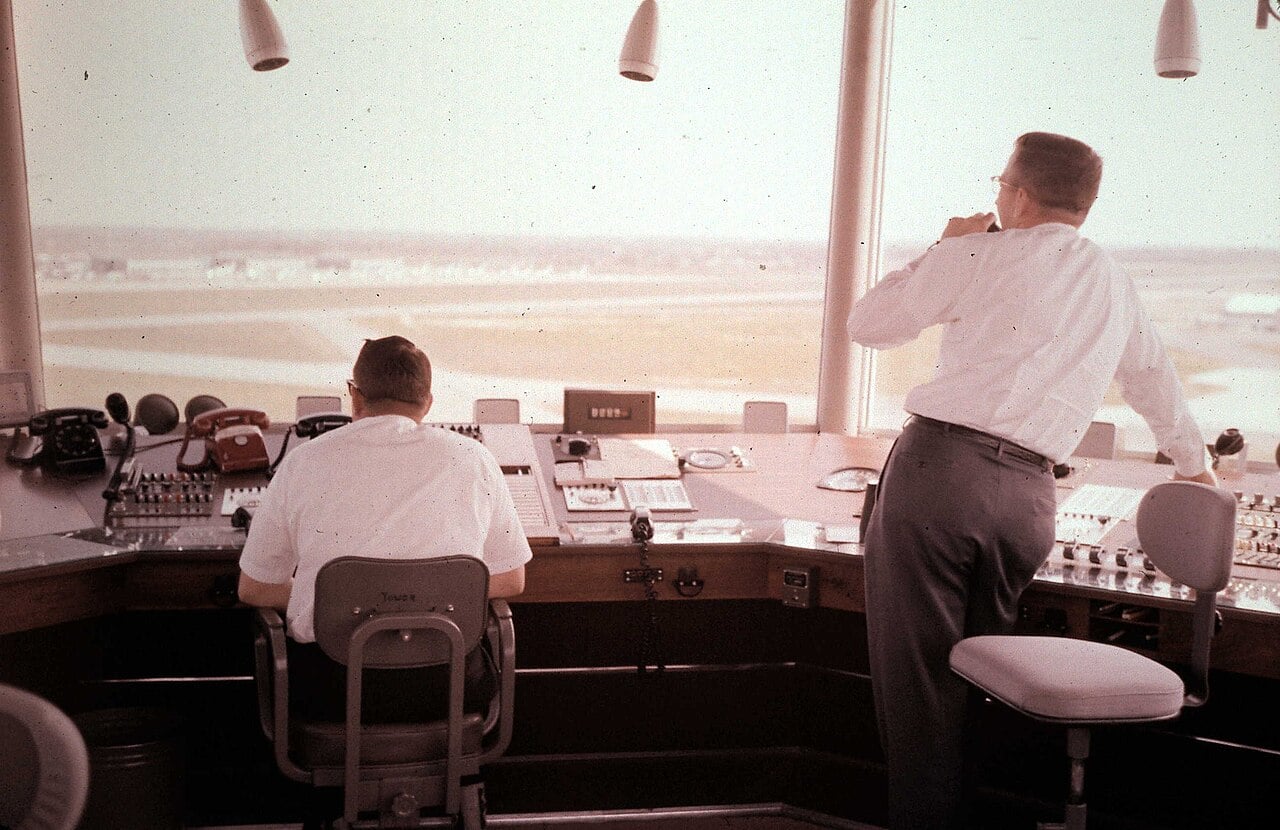
The ICAO alphabet exists so that letters cannot be confused across a noisy channel spoken by people with thirty different first languages. B and D and E and P all collapse into mush on VHF. Bravo, Delta, Echo and Papa do not. The FAA publishes the pronunciation in its own table: Charlie is CHAR-LEE or SHAR-LEE, Papa is PAH-PAH with the stress on the second syllable, Quebec is KEH-BECK.
So why do people search for “why do pilots say Charlie Charlie”? Because they have heard it, usually on a maritime or regional frequency, used to mean “understood” or “correct”. It is not standard aviation phraseology. It appears in no ICAO document and no FAA publication. It is informal usage, it varies by region, and a controller in Frankfurt or Dubai would treat it as noise. If you hear it in a cockpit video, you are hearing a habit, not a procedure.
“Papa” on its own is simply the letter P. It appears constantly because registration letters, taxiway designators and approach identifiers are full of Ps, not because it carries any hidden meaning.
7500, 7600, 7700: the three numbers you never dial by accident
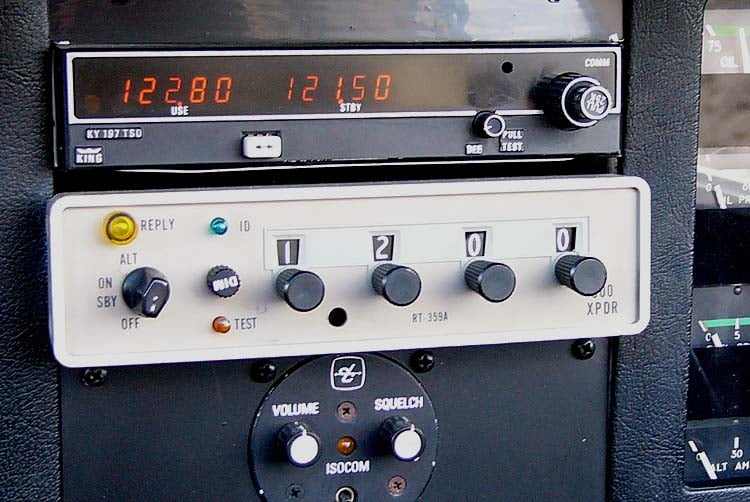
The transponder gives a pilot a second, silent voice. Three four-digit codes are reserved worldwide under ICAO Annex 10, and setting any of them lights up every radar screen in range without a word being spoken.
7700 is general emergency. The AIM tells pilots to select it if they cannot immediately raise anyone on the radio. 7600 is radio communications failure, and it triggers a set of pre-agreed assumptions on the ground about where the aircraft will go and what altitude it will fly. 7500 is unlawful interference, and the AIM is unusually blunt about it: the code “will never be assigned by ATC without prior notification from the pilot that the aircraft is being subjected to unlawful interference,” and a controller receiving it will ask the crew to verify.
That verification request is one of the quieter pieces of design genius in the system. If the code was set by mistake, the crew simply say so. If it was not, and a hijacker is listening, the crew can answer normally and the controller stops asking questions and starts making phone calls.
The five C’s, and what to do when you are lost
Every student pilot in the English-speaking world learns a mnemonic for being lost: Climb, Communicate, Confess, Comply, Conserve. It is a training device rather than a line in a regulation, but it maps almost exactly onto what the AIM actually instructs a pilot in difficulty to do.
Climb, because altitude buys radio range, radar coverage and time. Communicate, on the frequency in use or on 121.5. Confess, which is the hard one, because admitting you do not know where you are feels like a professional failure and is in fact the single most useful thing you can transmit. Comply with what you are then told. Conserve fuel, because every option you have left is bought with it.
The confess step is the one that gets people killed when they skip it. Controllers are not disciplinary authorities. They are people with a radar picture you do not have.
The two words that changed the language forever
On 27 March 1977, in fog at Los Rodeos on Tenerife, a KLM 747 began its takeoff roll while a Pan Am 747 was still on the runway. 583 people died, and it remains the deadliest accident in aviation history. There was no mechanical failure. There was a radio call that could be read two ways.
The consequence is something every pilot alive now says without thinking about it. The word “takeoff” is reserved for the clearance itself. In every other context, before and after, crews and controllers say “departure”. You are not at the takeoff point, you are at the departure point. You did not request takeoff, you requested departure. The word is quarantined so that it can only ever mean one thing.
That is the whole philosophy in one change. Radio phraseology is not jargon for its own sake and it is not a club language. It is a very small vocabulary, deliberately stripped of ambiguity, maintained by an international body, and amended whenever somebody discovers a new way to be misunderstood. When a pilot says Mayday three times, that is the system working exactly as designed. When they say “Charlie Charlie”, that is just a person talking.
Frequently Asked Questions
What does Mayday mean and why do pilots say it three times?
What is the difference between Mayday and Pan-Pan?
Why do pilots say “Roger” instead of “yes”?
What is the difference between Roger and Wilco?
Do pilots really say “Charlie Charlie”, and what does it mean?
What do squawk codes 7500, 7600 and 7700 mean?
Where does the word Mayday actually come from?
What are the five C’s in aviation?
Sources: FAA Aeronautical Information Manual (paragraphs 4-2-3, 4-2-7, 6-3-1, 6-3-2, 6-3-4); ICAO Annex 10 and Doc 9432 Manual of Radiotelephony; Flightradar24 interview with Capt. Ken Hoke; AOPA, FAA transcript of US Airways Flight 1549; AskThePilot.com; NATO on the phonetic alphabet.

0 Comments