
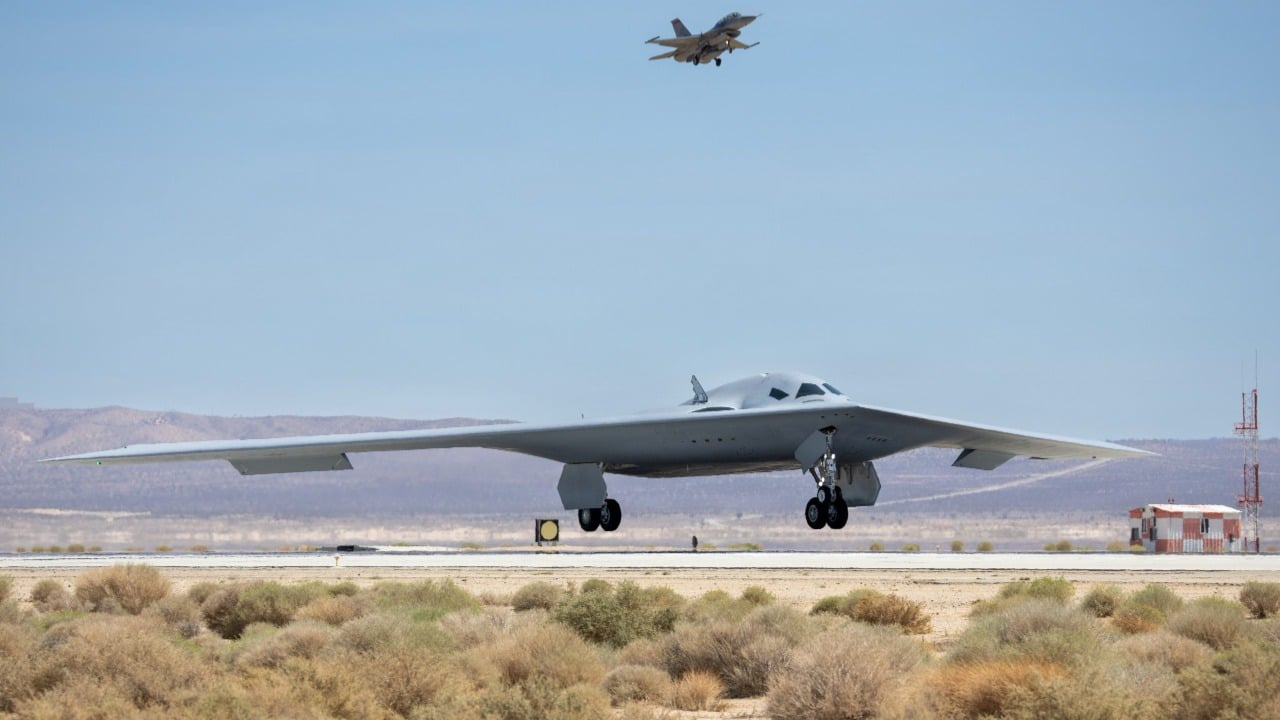
Somewhere over the Mojave in the first week of November, a bomber that officially does not have a published wingspan opened its bay and let something fall out of it. Nobody filmed it. Nobody has said what it was. The U.S. Air Force waited a week, then announced it on a Friday afternoon with a photograph of an aeroplane landing.
That photograph, released through the Defense Visual Information Distribution Service on 13 November 2026, carried a headline about weapons and a caption that mentioned none. The caption simply describes a B-21 Raider touching down at Edwards Air Force Base, California, in an undated photo. The headline above it says the aircraft has demonstrated weapon release capability, validating its foundational role in U.S. deterrence strategy.
The mismatch is the story in miniature. After three years of flight testing conducted almost entirely out of public view, the most consequential milestone the Raider has hit so far arrived as a press release and a landing shot. Here is what the Air Force actually confirmed, what it carefully did not, and why a single conventional weapon leaving a bomb bay matters more than it sounds.
Quick Facts
Aircraft: Northrop Grumman B-21 Raider, long-range penetrating strike bomber
Announced: 13 November 2026, by Secretary of the Air Force Public Affairs
What happened: a B-21 test aircraft flying from Edwards AFB released a conventional weapon, during a test the Air Force says took place the previous week
Not disclosed: the weapon type, the exact date, and whether this was the first physical release
First flight: 10 November 2023, Palmdale to Edwards
Test organisation: B-21 Combined Test Force, Edwards AFB, California
First operational base: Ellsworth AFB, South Dakota, selected in 2019, aircraft on the ramp planned for 2027
Planned fleet: at least 100 aircraft
What the Air Force Actually Said
The official release is short, and worth reading closely because almost every clause in it is doing work. The Department of the Air Force, it says, conducted a weapons release test for the B-21 Raider last week, transitioning the platform from flight test to a functional weapons platform.
Then the detail: a B-21 test aircraft flying from Edwards Air Force Base released a conventional weapon, validating its digital models and the maturity of its open systems architecture. Three claims, in one sentence. The aircraft can carry and drop. The software that predicted how the weapon would fall was right. And the architecture designed to let the Air Force bolt on new munitions for the next forty years does what it says on the box.
Note the word conventional. The B-21 is intended to carry both conventional and nuclear munitions, and the service chose to say which kind this was. That is not an accident.

Northrop Grumman put out its own statement the same day, in the slightly warmer register companies use when a programme is going well. The B-21, it said, has demonstrated weapons release capability, marking a major step forward for America’s next-generation bomber, and this demonstrates the aircraft can carry and employ combat power.
The company also used the moment to list what else has gone right this year: a new 265,000 square foot manufacturing building at Layton, Utah, ground broken on a one million square foot final assembly facility at Plant 42 in Palmdale, California, and fatigue testing equivalent to multiple airframe lifetimes completed months ahead of schedule.
The Digital Twin Did Most of the Work
The part of the announcement that engineers will care about is the bit most readers will skim. The execution of the test, the Air Force says, was built on thousands of hours of virtual modelling inside the B-21’s digital twin environment, which let the Combined Test Force accelerate weapons integration and predict and refine the weapon’s trajectory before the aircraft ever left the ground.
Separation testing is one of the nastier problems in flight test. A weapon leaving an internal bay does not simply fall. It sits for a moment in a cavity full of violently recirculating air, then meets the free stream, and the aircraft it just left is still there, a few feet away, at several hundred knots. Historically this has been solved with wind tunnels, instrumented shapes, high-speed cameras and a long, cautious expansion of the release envelope, one condition at a time.
What the Air Force is claiming here is that it ran most of that campaign in software first and then confirmed it in the air. If the prediction matched the event, the next weapon takes a fraction of the flights. That is the whole argument for open systems architecture, and it is the reason the service keeps saying the Raider can onboard new munitions quickly.
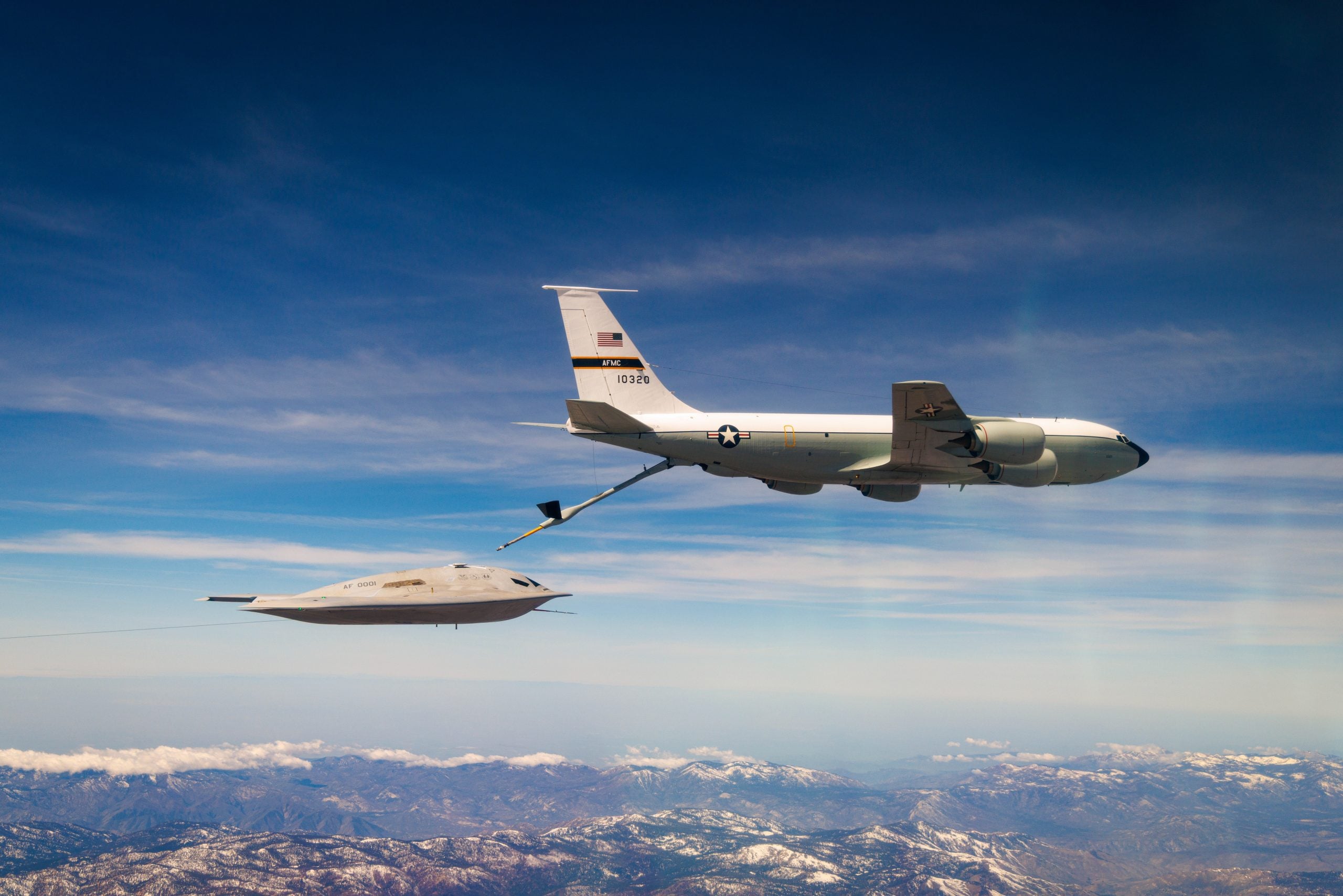
The first public video of the Raider in flight, above, is still the clearest look most people have had at the aircraft moving. Three years into the test campaign, the imagery released remains almost comically sparse: a rollout, a handful of flight shots, a tanker sequence, and now a landing photograph standing in for a weapons test.
What the Release Did Not Say
Four things are missing, and all four are deliberate.
The weapon is not named. The B-21 is expected to carry a wide conventional inventory, and the obvious early candidates are the guided bombs and stand-off weapons already integrated across the bomber fleet, but the Air Force has not said which one fell. The precise date is not given either, only that the test happened the week before the announcement. The location is narrowed to a B-21 flying from Edwards, not to a particular range.
And the word first does not appear in the official release at all. The headline says demonstrates, not first demonstrates. Northrop calls it a major step forward. Outside observers, including The Aviationist, have flagged that it remains unclear whether this was the aircraft’s first physical weapon separation or the first one the service has chosen to talk about. Those are different statements, and only one of them has been made.

Why This Is the Milestone That Counts
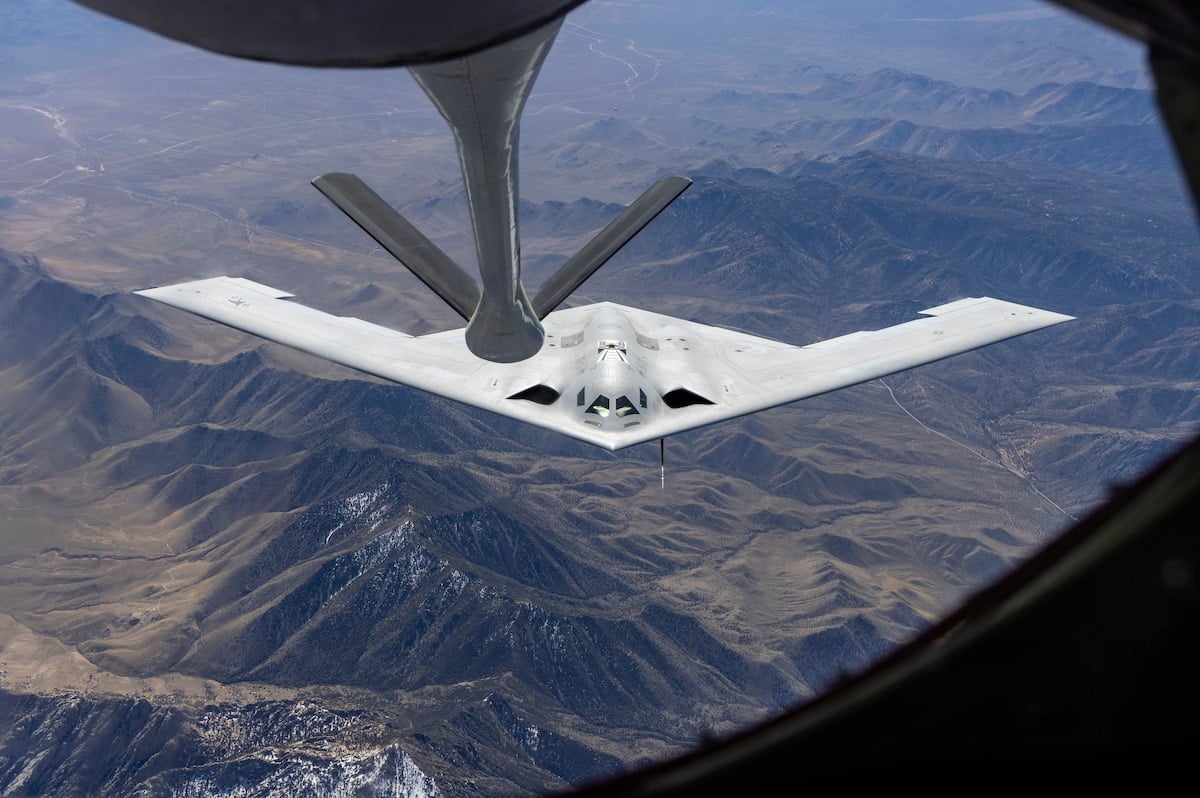
A bomber that cannot drop anything is an expensive way to fly around. Every milestone before this one, the first flight on 10 November 2023, envelope expansion, the aerial refuelling sequence confirmed in April 2026, proved the Raider could get airborne, stay there and come home. None of them proved it could do the thing it exists to do.
That is why the Air Force reached for the phrase transitioning the platform from flight test to a functional weapons platform. It is a programmatic statement as much as a technical one. Money, schedule and political patience all key off the moment a prototype stops being an aerodynamic experiment and starts being a weapon system.
The second test aircraft, which arrived at Edwards in late 2025, was built for exactly this phase. Unlike the first Raider it carries no air data probe or trailing cone, the instrumentation trailing-edge giveaway of early envelope work, and it was always intended to take on weapons and mission systems testing while aircraft one continued flight sciences.
Ellsworth, 2027
The programme, the Air Force repeated on Friday, remains on track to have aircraft on the ramp at Ellsworth Air Force Base, South Dakota, in 2027. Ellsworth was picked back in 2019 as the first operational and first training base, and Northrop says a detachment squadron is already working there.
At least 100 Raiders are planned, eventually replacing the B-2 Spirit and the B-1B Lancer, with the B-52 Stratofortress expected to soldier on past them both. Whether 2027 holds is a separate question, and one that a weapons release test does not answer. Bombers have slipped before, and this one still has an operational test and evaluation campaign in front of it.
But the gap between a stealth bomber and a stealth bomber that has dropped something is a real gap, and as of last week it is closed. We just have to take the Air Force’s word for what fell.
Sources: Secretary of the Air Force Public Affairs (AFNS release, 13 November 2026); Northrop Grumman statement, 13 November 2026; Secretary of the Air Force Public Affairs (AFNS release, 14 April 2026); The Aviationist; Defence Industry Europe.



0 Comments