
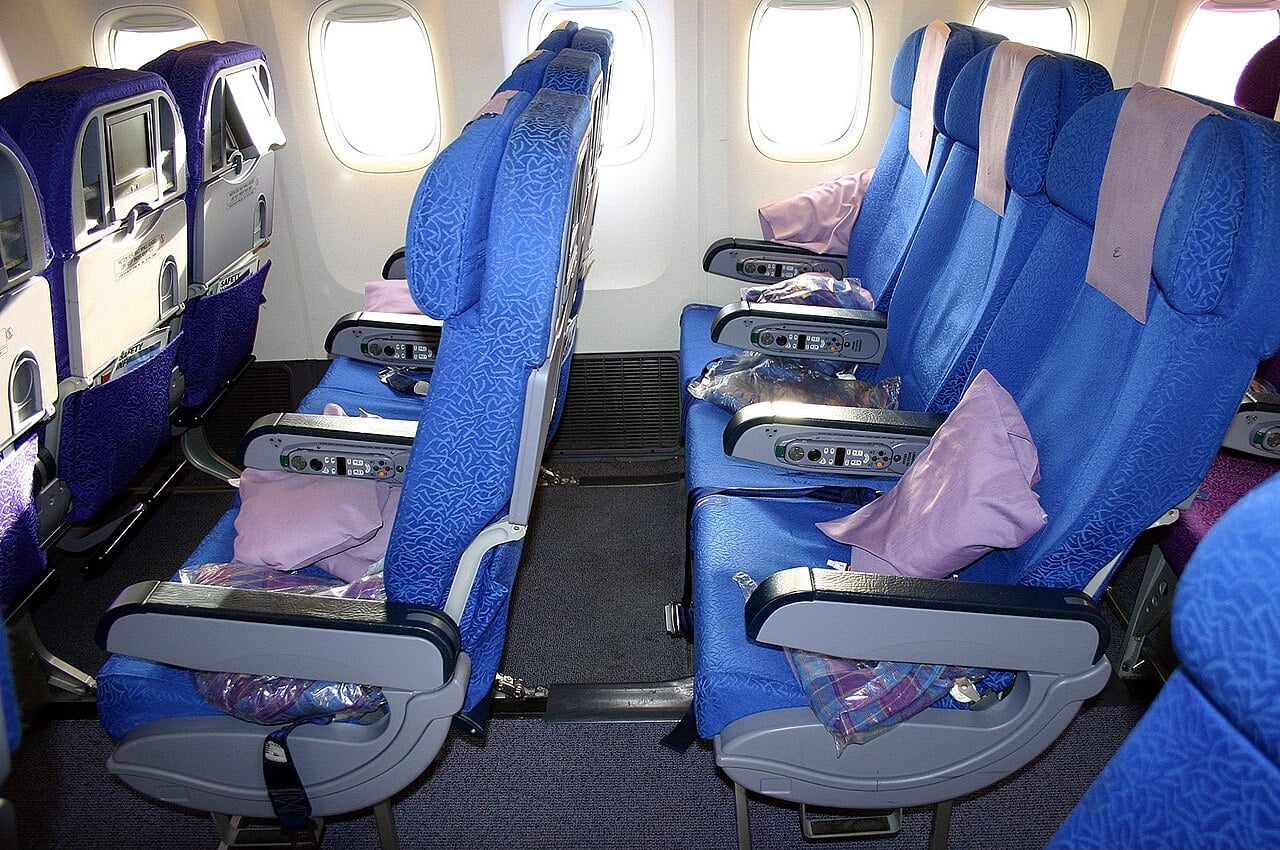
On 12 June 2025, an Air India Boeing 787-8 came down within a minute of leaving Ahmedabad. Of the 242 people on board, one walked away: Vishwash Kumar Ramesh, a 40-year-old British national, who had been sitting in seat 11A. People on the ground were killed too.
Within about seventy-two hours, 11A had become a superstition. Airlines reported the seat filling up. Travel forums filled with people asking how to book it. A video of passengers fighting over row 11 went viral before fact-checkers traced it to a flight-attendant training school in Nagpur, which had staged it as a demonstration.
The 11A story is one of three cabin-safety beliefs that circulate endlessly and that all share the same shape: a real piece of safety science, garbled in transmission until it becomes advice. Here is what each of them is actually built on, and what the evidence supports.
Quick Facts
Myth 1: Seat 11A is the safest seat on an aircraft
Myth 2: Never wear jeans on a plane
Myth 3: Cabin crew sit on their hands for luck or ritual
Certification standard: full evacuation in 90 seconds with half the exits blocked (14 CFR 25.803)
Best-known seating study: TIME, 2015, 17 accidents from the FAA CSRTG database
What the research agrees on: proximity to a usable exit matters; a fixed “safest seat” does not exist
Myth one: seat 11A is the safest seat
Seat 11A was, in that aircraft, on that day, survivable. It was a window seat immediately beside an emergency exit on a 787-8 in Air India’s configuration. That is a fact about one seat map, not about aviation.
Seat numbering is not standardised in any way whatsoever. On one airline’s A320, row 11 is the first row of economy. On another’s, it is over the wing. On a 787 with a large business cabin it might be nowhere near an exit at all. Two airlines flying the same aircraft type will number the same physical seat differently.
The coincidence that kept the story alive is real, though. Ruangsak Loychusak, a Thai singer and actor, survived the crash of Thai Airways flight TG261 at Surat Thani on 11 December 1998, and has said publicly that he too was in seat 11A. Two survivors, two 11As, decades apart. It is a striking pattern and it is also exactly what randomness looks like when millions of people go looking for one.
What the actual seating research says
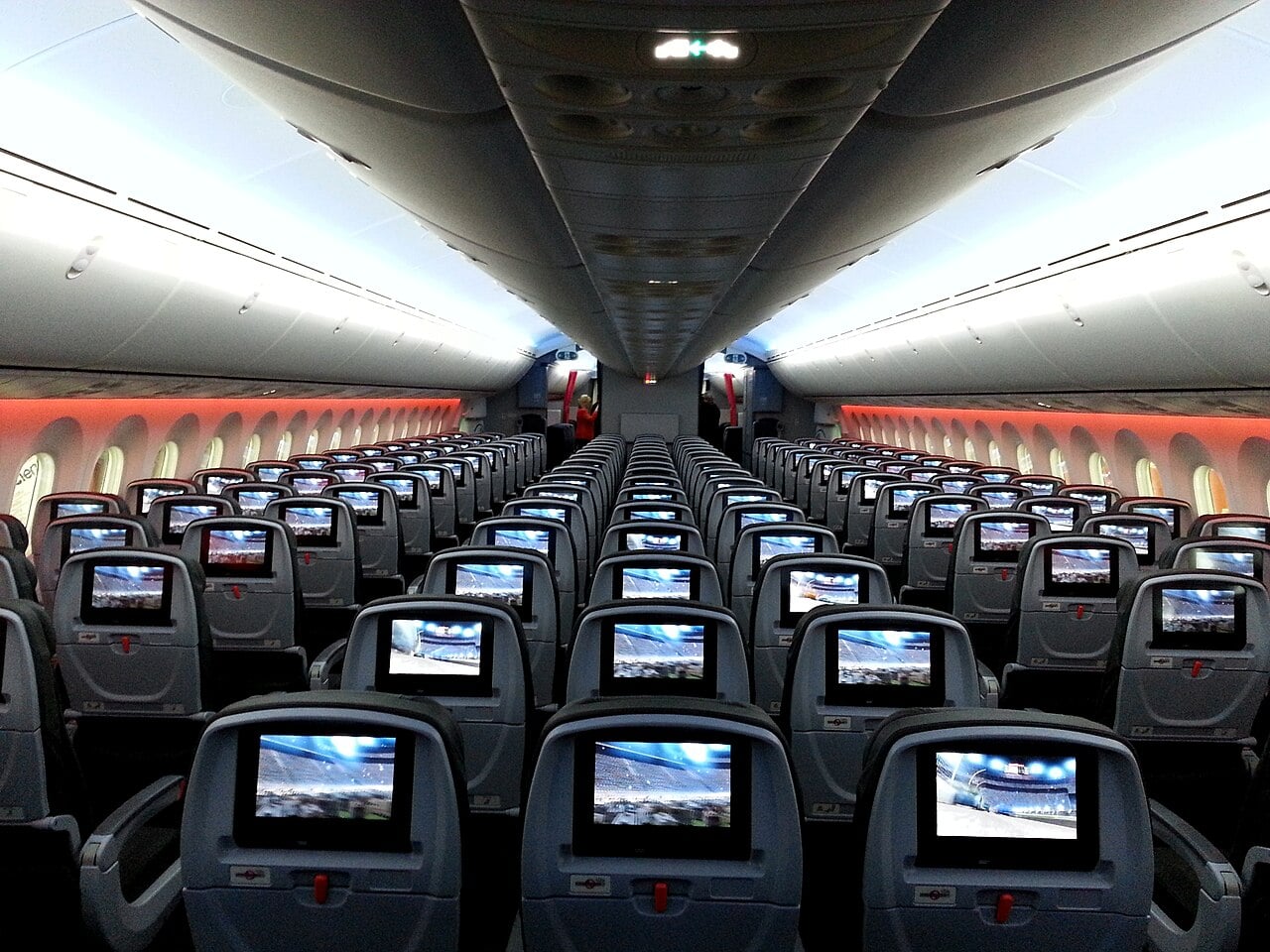
There is one widely cited attempt to answer the question with data. In June 2015, TIME went through the FAA’s accident database looking for crashes that had both fatalities and survivors and a usable seating chart. Out of 35 years of records they found seventeen that qualified, the oldest from 1985 and the most recent from 2000.
The result: seats in the rear third of the cabin had a 32 per cent fatality rate, against 39 per cent for the middle third and 38 per cent for the front third. The best individual category was a middle seat in the rear third, at 28 per cent. The worst was an aisle seat in the middle third, at 44 per cent.
Those numbers are real, and they are also close to useless as advice. Seventeen accidents is a very small sample. None of them is more recent than 2000, which means none of them involves a modern cabin. And TIME itself printed the caveat that matters: the FAA and other safety experts say there is no safest seat on the plane.
What researchers do agree on is less satisfying and more useful. Professor Ed Galea of the University of Greenwich, who has spent decades studying how people actually get out of burning aircraft, has put it bluntly: there is no magic safest seat, and it depends entirely on the nature of the accident. What consistently correlates with survival is not where you sit in the cabin but how close you are to an exit you can actually use, and whether you move immediately.
Galea also makes the point that gets lost in every viral thread: the vast majority of aircraft accidents are survivable, and the majority of people involved in them survive. Since the introduction of dynamically tested 16g seat standards in the late 1980s, the impact itself is usually not what kills people. The fire and the evacuation are.
The rule that actually protects you: 90 seconds
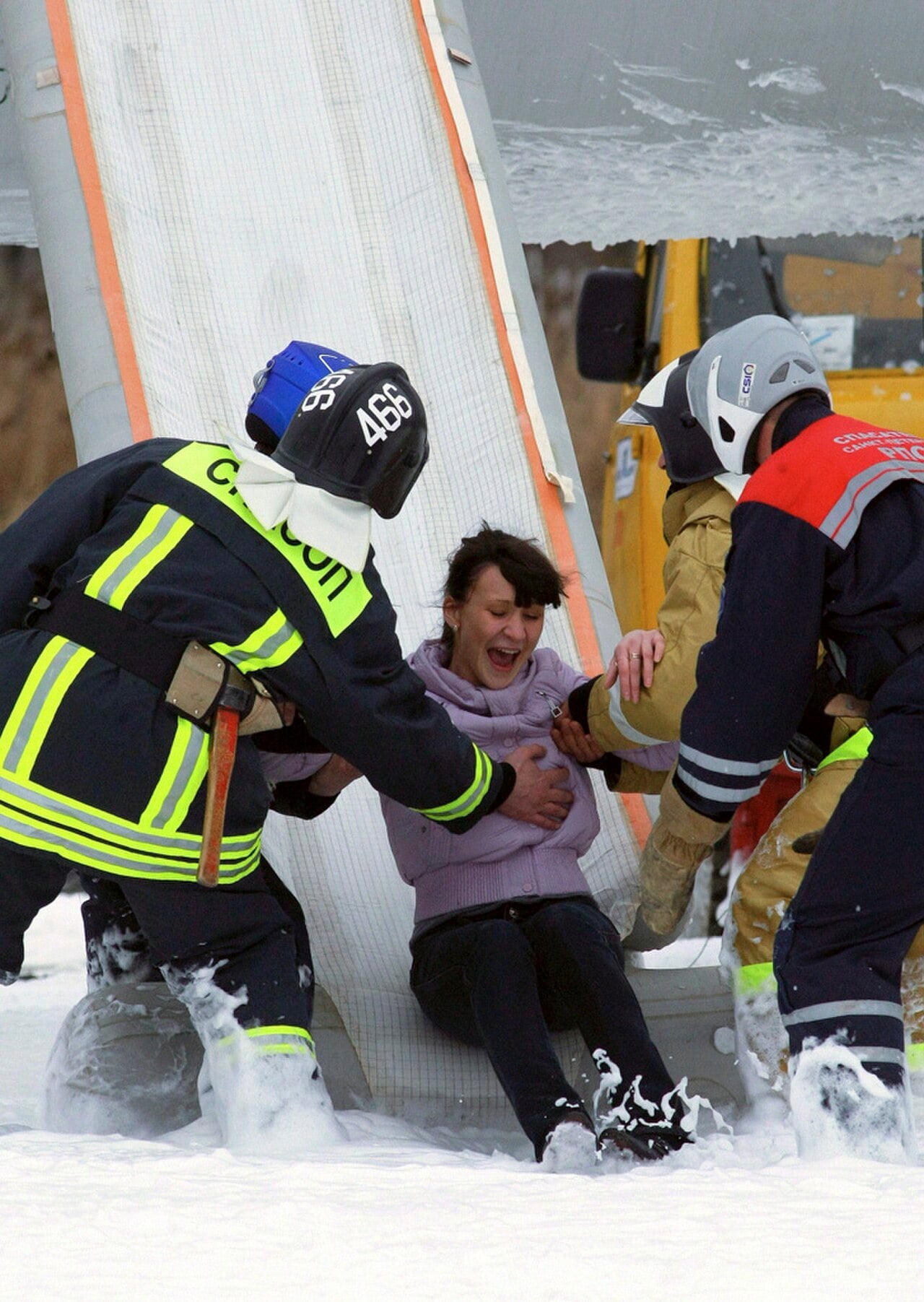
Every large airliner in service had to demonstrate, before certification, that its full passenger load plus crew could get out in 90 seconds with half the exits blocked. That is 14 CFR 25.803, and it applies to any aircraft carrying more than 44 passengers. The blocked-exits condition is the point: the regulator assumes in advance that you will not get to use the door you planned on.
The ninety-second figure is not arbitrary. It comes from research into how long a cabin stays survivable once a fuel-fed fire breaches the fuselage, and the single most influential piece of that research came out of a disaster.
On 22 August 1985, British Airtours flight 28M suffered an engine failure during its takeoff roll at Manchester. The aircraft was stopped, on the ground, on a runway, at an airport with a full fire service. Fifty-five people died, most of them from smoke, many of them within a few metres of an exit they could not reach through the crush. The Cranfield evacuation trials that followed for the UK CAA changed cabin design permanently: seat layouts around overwing exits were opened up, bulkhead passageways widened, and floor-proximity emergency lighting became standard so that a cabin full of smoke still has a visible escape path at ankle height.
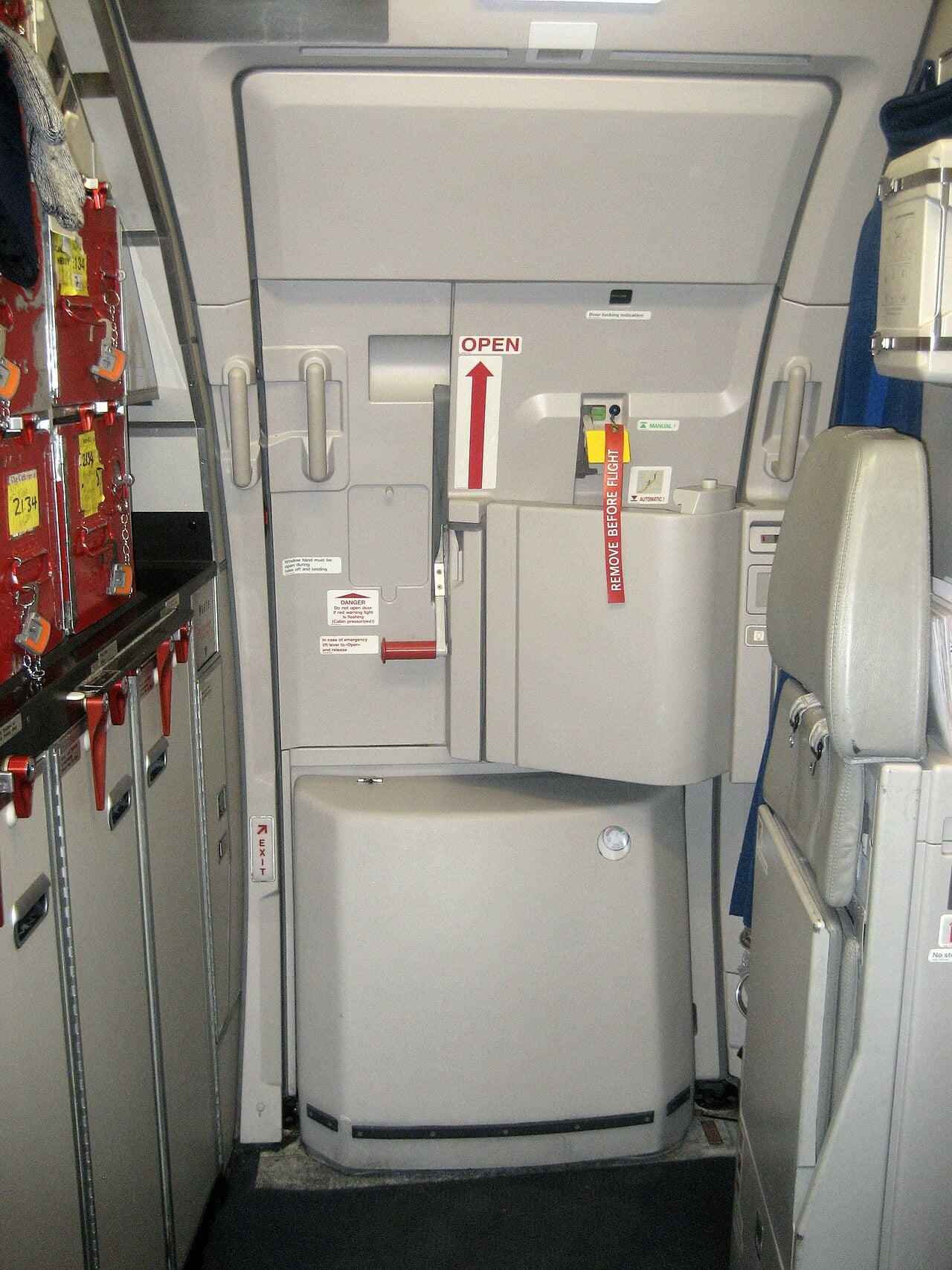
The practical version of all this, if you want one, is not a seat number. It is: count the rows to your nearest exit and the one behind you, keep your shoes on, leave the bag, and go the moment you are told to.
Myth two: never wear jeans on a plane
This one is a real safety argument that has been passed through so many hands it now points at the wrong garment.
The original claim is about synthetics, not denim. Polyester, nylon and elastane are petroleum products. In a post-crash cabin fire they do not burn so much as soften, and a softened synthetic in contact with skin adheres to it, deepening a burn and making it far harder to move. The safety writer Christine Negroni has been making this argument about leggings for years, and she makes it precisely.
Denim is cotton. Heavy, tightly woven cotton is close to the opposite of the problem: it chars rather than melts, it does not adhere to skin, and a dense weave holds less air between the threads. By the fire logic, jeans are among the better things you could be wearing.
So where does the anti-jeans advice come from? A different and much weaker argument: circulation. Tight waistbands and narrow-cut legs restrict blood flow on long sectors, which is worth taking seriously if you are already at risk of clots, and which is a comfort question rather than a survival one. Somewhere between “avoid synthetics because of fire” and “avoid tight clothing because of circulation”, the internet produced “never wear jeans”, which satisfies neither.
Negroni also offers the corrective that should probably go at the top of every article of this kind.
Myth three: cabin crew sit on their hands
You have probably noticed it. During takeoff and landing the cabin crew sit bolt upright on their jumpseats, feet flat, hands tucked palm-down under their thighs or pressed onto them, staring at nothing. Passengers read it as boredom, or as some private ritual.
It is a brace position. The point of immobilising the hands and arms is to stop them flailing in a sudden deceleration, because a crew member with a broken wrist cannot open a door, and the doors are their entire job in the first thirty seconds after an impact. The specific posture varies with the airline and with the design of the jumpseat, but the principle does not.
The staring at nothing is not nothing either. It is the silent review, sometimes called the thirty-second or sixty-second review, and it is a structured mental rehearsal run during taxi, takeoff and the approach: where my exits are, how to operate them, where the equipment is, which passengers near me look able-bodied enough to help, what commands I shout. Many operators teach it under the mnemonic OLDABC, and IATA recommends it be included in initial and recurrent cabin-crew training.
The clip above is a certification evacuation demonstration, the exercise every new airliner type has to pass. It is worth watching once, because it shows how fast ninety seconds actually goes, and how much of the outcome rests on the four or five people who were sitting on their hands a moment earlier.
What all three myths have in common
Each one takes something true and hands it to the wrong person. Exit proximity matters, so people memorise a seat number. Melting synthetics are dangerous, so people ban the one fabric that behaves well. Cabin crew brace and rehearse, so people invent a superstition to explain it.
The underlying research is genuinely reassuring, which is the part that never goes viral. Modern airliners are certified to empty themselves in a minute and a half with half their doors unusable. Seats are built to take sixteen times gravity. Cabins are lit at floor level for people crawling under smoke. The overwhelming majority of accidents are survived.
None of that is a seat number. It is a system, and the only part of it that depends on you is whether you were paying attention during the safety briefing and whether you leave the bag behind.
Frequently Asked Questions
Is seat 11A really the safest seat on a plane?
Is there a safest seat on an aeroplane at all?
Why should you avoid wearing jeans on a plane?
Why do flight attendants sit on their hands during takeoff?
What is the silent review that cabin crew do?
How fast does an airliner have to be evacuated?
What changed in aircraft cabins after the 1985 Manchester fire?
Did passengers really fight over seat 11A after the Air India crash?
Sources: 14 CFR 25.803 and FAA Advisory Circular AC 25.803-1A; TIME analysis of FAA accident data, June 2015; Reuters via CBS News; CNN Travel interview with Professor Ed Galea, University of Greenwich; HuffPost interview with Christine Negroni; UK CAA and Cranfield University evacuation research following British Airtours flight 28M; Factly fact-check of the staged seat 11A video; IATA cabin crew training guidance.
0 Comments