
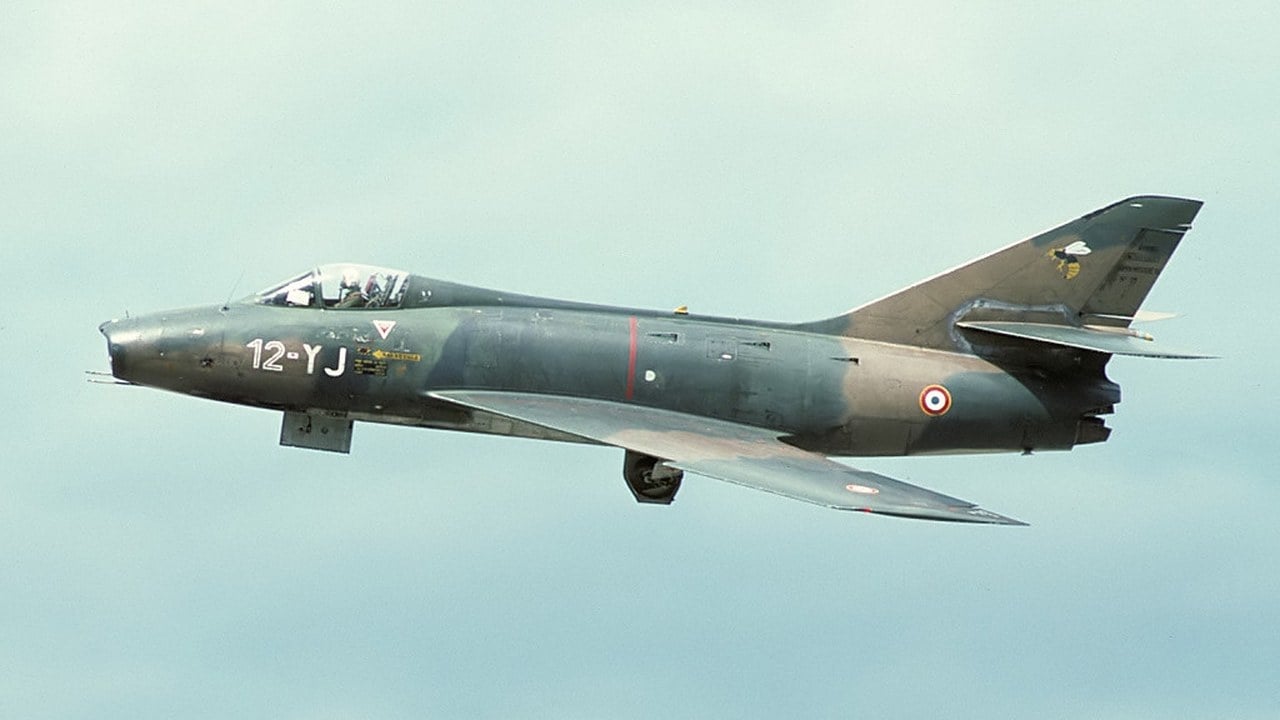
On 3 March 1955, Dassault test pilot Paul Boudier did something no aircraft from Western Europe had done before. He flew his swept-wing prototype faster than sound and kept it there in level flight. No dive, no rocket, no help from gravity.
It was only the aircraft’s second day in the air. The Super Mystère B1 had made its first flight the day before, and by breaking the sound barrier in level flight it made a point that mattered enormously in post-war France: Western Europe could now build a supersonic fighter of its own.
The production version, the Super Mystère B2, went on to serve France for almost two decades, fight two wars for Israel, receive an American engine and finish its career defending Honduras in the 1990s. Not bad for the last of a family that started with the straight-winged Ouragan.
Quick Facts
- Type: Single-seat supersonic day fighter and fighter-bomber
- Builder: Dassault, France
- First flight: 2 March 1955 (Super Mystère B1 prototype); Mach 1 in level flight the next day
- Engine: SNECMA Atar 101G with afterburner (B2); Pratt & Whitney J52-P8A in the Israeli Sa’ar
- Top speed: About Mach 1.12
- Armament: Two 30 mm DEFA cannon, rockets, bombs; Shafrir missiles in Israel
- Production: 178 production B2s delivered 1957 to 1959, per Dassault
- Operators: France (1958 to 1977), Israel (1958 to 1975), Honduras (1976 to 1996)
The last of the Mystère line
Dassault’s first jet fighters grew in steps. The Ouragan led to the Mystère II and then the Mystère IV, a fine transonic fighter that could only go supersonic in a dive. The next step needed a new wing and an afterburner.
In mid-1953, Dassault’s design office at Saint-Cloud started work on a thin wing swept at 45 degrees, compared with 41 degrees on the Mystère IV. According to Dassault, the new wing and tail were built with a then-novel technique of machining parts from very thick metal sheet, with titanium used for bolts and some mechanical parts. The Mystère IV B fuselage was kept and fitted with a Rolls-Royce Avon RA.7 engine with afterburner.
The result went through several names, from Mystère XX to Mystère IV B1, before settling on Super Mystère B1. The privately funded prototype flew on 2 March 1955, and the next day it went supersonic in level flight.
From Avon to Atar
The B1 was meant for export, but customers held back because the French Air Force had not ordered it. What the air force wanted was a home-built engine. The production Super Mystère B2, often shortened to SMB2, was fitted with the SNECMA Atar 101G, giving around 44 kN of thrust with afterburner.
On 29 March 1955, French officials cancelled an order for Mystère IV Bs and ordered the Super Mystère instead. The B2 prototype flew on 15 May 1956 with Gérard Muselli at the controls, and Dassault says it broke the sound barrier on that first flight without using its afterburner. The first production aircraft flew at Mérignac on 26 February 1957.
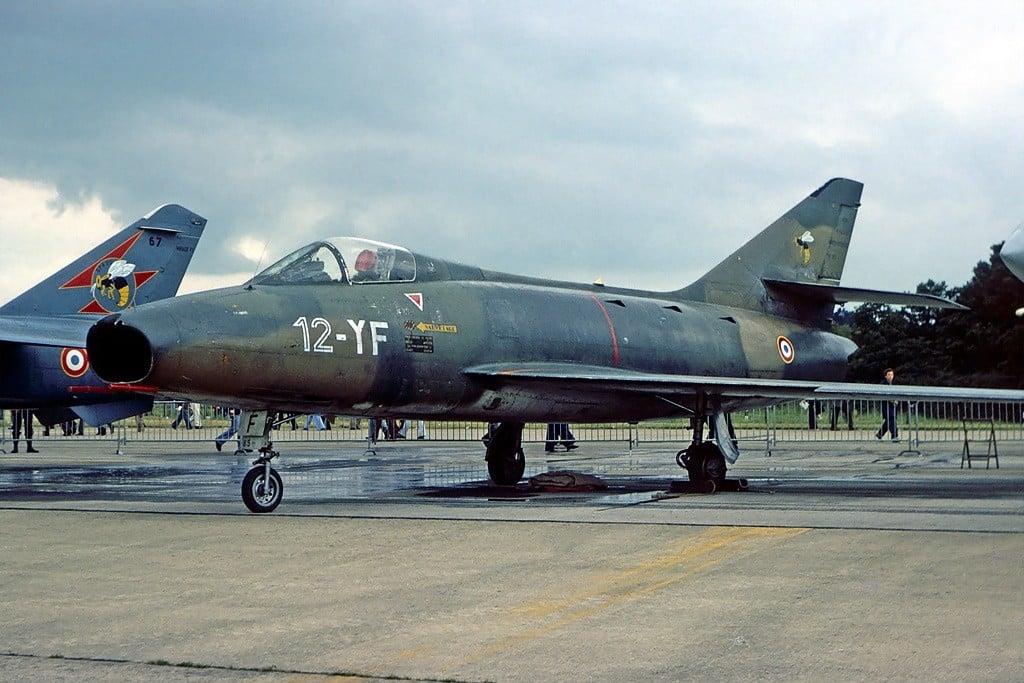
The order went up and down with the defence budget. In the end 178 production aircraft were delivered between 1957 and 1959, according to Dassault: 154 for the French Air Force and 24 for Israel. Two French aircraft became Super Mystère B4 test beds for the more powerful Atar 9 with a 48-degree wing, but the faster Mirage III was already on its way, and the B4 never reached production.
Nineteen years in French service
The first SMB2s reached the 10th Fighter Wing at Creil in May 1958, and the type went on to equip three wings, the 5th, 10th and 12th. With a top speed of about Mach 1.12, two 30 mm DEFA cannon and rockets or bombs under the wings, it was a day fighter and fighter-bomber rather than an all-weather interceptor.
The 12th Wing kept it longest. In November 1977, the last SMB2 of Escadron 1/12 Cambrésis made its final flight, closing 19 years of service with the Armée de l’Air. About fifteen of the squadron’s aircraft went on to the technical school at Rochefort to train mechanics.
The Sambad goes to war
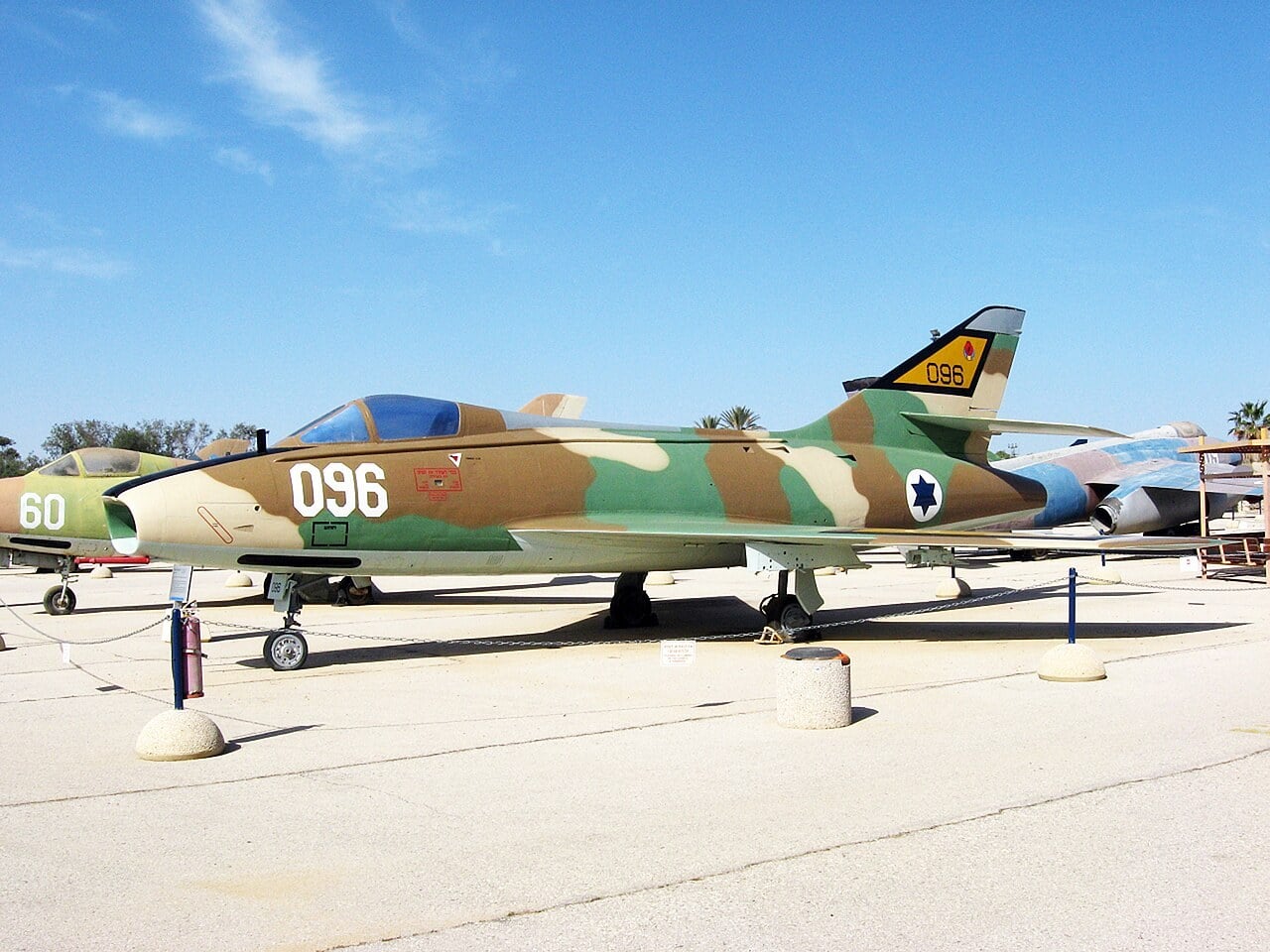
Israel ordered the Super Mystère in 1958, after the Suez campaign had shown the Israeli Air Force it needed a faster, longer-legged fighter. Known as the Sambad, from the initials of Super Mystère B2, it equipped the reformed 105 “Scorpion” Squadron, and the first aircraft arrived at Hazor on 4 December 1958, according to the Israeli Air Force’s history.
Its early fights with Egyptian MiG-17s were frustrating. Several MiGs were damaged but none were shot down until 28 April 1961. The IAF later traced the problem to the DEFA cannon shells, which were fused for delayed detonation against bombers and did too little damage to small jet fighters. By then the Mirage III had taken over the interceptor role, and the Super Mystère moved to ground attack in a brown-and-blue camouflage.
In April 1967 the squadron was reinforced with ex-French aircraft and became the IAF’s largest. In the Six-Day War it flew 507 sorties and lost nine aircraft, according to the IAF’s history. Israeli pilots liked the type, and in air combat it was considered a fair match for the MiG-19 flown by its Arab opponents.
Archive footage of Israeli Super Mystère Sa’ars during the 1973 Yom Kippur War.
Sa’ar: the Super Super Mystère
After France imposed an arms embargo on Israel in 1968, keeping the Atar engines running became a problem. Israeli engineers had an answer in the hangar next door: the Pratt & Whitney J52 that powered the IAF’s A-4 Skyhawks. The non-afterburning J52-P8A was lighter and more reliable, and needed a longer tailpipe and a reworked rear fuselage.
The first converted aircraft flew on 13 February 1969, and by early 1973 the fleet had been converted. The result was called the Sa’ar, Hebrew for “storm”. In the Yom Kippur War of October 1973, Sa’ars flew close-support missions against Syrian and Egyptian forces, and six were lost. The type was retired from 105 Squadron in 1975, making way for the F-4 Phantom II.
Last stand in Honduras
The Super Mystère had one more career ahead. In 1976, Honduras bought a dozen ex-Israeli airframes with the J52 engine, and more followed later. For a small Central American air force, they were a big step up, and they provided air support during border skirmishes with Sandinista Nicaragua in the 1980s.
A Honduran Air Force Super Mystère starting up, one of the last of the type to fly.
The Honduran Super Mystères flew until 1996, when Northrop F-5Es replaced them. One went to the Honduras Air Museum. By then the design was more than 40 years old, and the jet that had carried Western Europe into the supersonic age had outlived its French service by almost two decades.
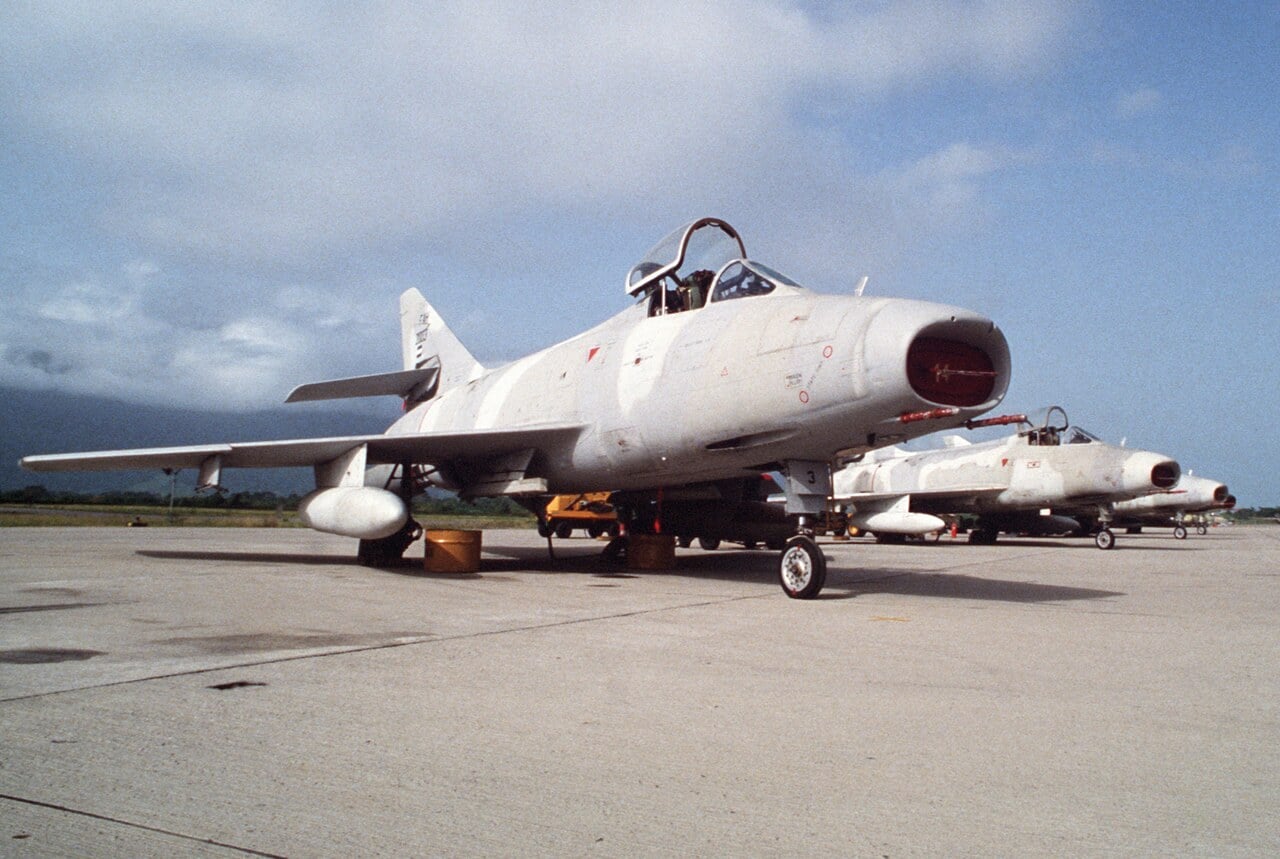
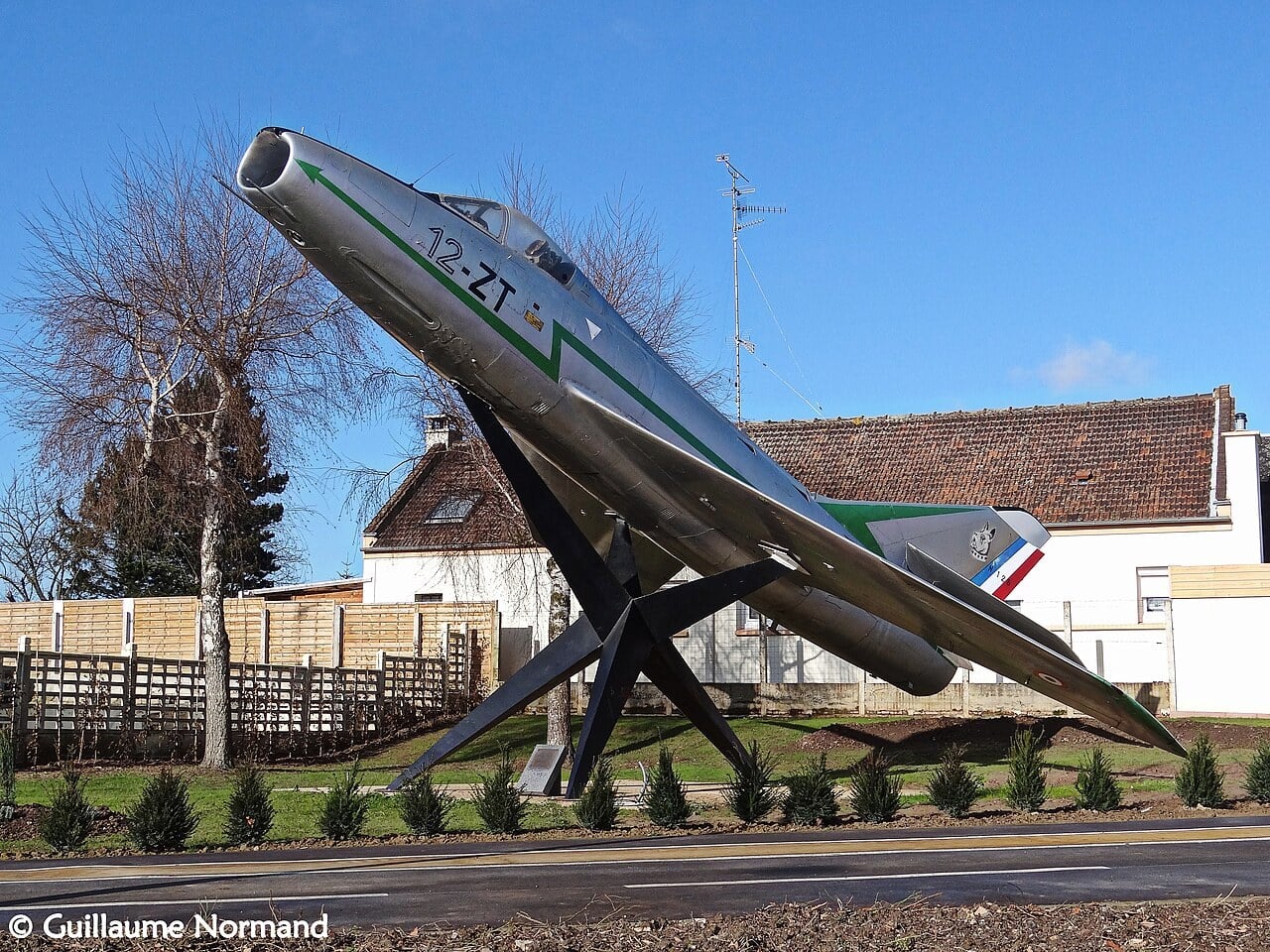
Today Super Mystères survive as gate guardians and museum pieces in France, Israel and Honduras. They were the bridge between Dassault’s first jets and the Mirage era, and they marked the moment French fighters stopped needing a dive to break the sound barrier.
Sources: Dassault Aviation (Super Mystère history), Israeli Air Force aircraft inventory histories (Super Mystere; Sa’ar) via the Jewish Virtual Library, Vintage Aviation News, U.S. Air Force photo records
Header photo: Mike Freer - Touchdown-aviation / Wikimedia Commons, GFDL 1.2
0 Comments