
Mikoyan-Gurevich MiG-19
“Farmer”
The Soviet Union’s first mass-produced supersonic fighter — a twin-engined, hard-hitting day fighter that the USSR itself soon replaced, but which China built in the thousands as the Shenyang J-6 and flew for half a century.
The USSR’s first supersonic fighter
In the early 1950s the Mikoyan-Gurevich design bureau set out to give the Soviet air forces a fighter that could break the sound barrier in level flight — something no Soviet production aircraft had yet done. The result, developed from the swept-wing experimental SM-9, first flew in prototype form in September 1953 and entered service in 1955 as the MiG-19, known to NATO as “Farmer.” It was the first Soviet production fighter capable of supersonic speed in level flight, and one of the first genuinely supersonic fighters anywhere.
Unusually for a Soviet fighter of the day, the MiG-19 was twin-engined, powered by a pair of Tumansky RD-9B afterburning turbojets. That gave it strong acceleration and a rapid rate of climb, and its designers armed it heavily: three 30 mm NR-30 cannon, hard-hitting guns at a time when many Western designers were betting the future on air-to-air missiles alone. The definitive day-fighter version, the MiG-19S, appeared in 1956, alongside radar-equipped all-weather variants such as the MiG-19P and the missile-armed MiG-19PM.
In Soviet service the Farmer’s front-line career was surprisingly short. The far more capable MiG-21 arrived only a few years later, and the USSR began phasing the MiG-19 out of first-line units in the early 1960s. Its real legacy lies elsewhere: China took up a licence, and the Shenyang J-6 — and its export version, the F-6 — became the most-produced member of the family by far, built in the thousands and serving with air forces across Asia, the Middle East and Africa well into the 2010s.
01The MiG-19 Farmer and the Shenyang J-6: how to tell the Soviet and Chinese aircraft apart
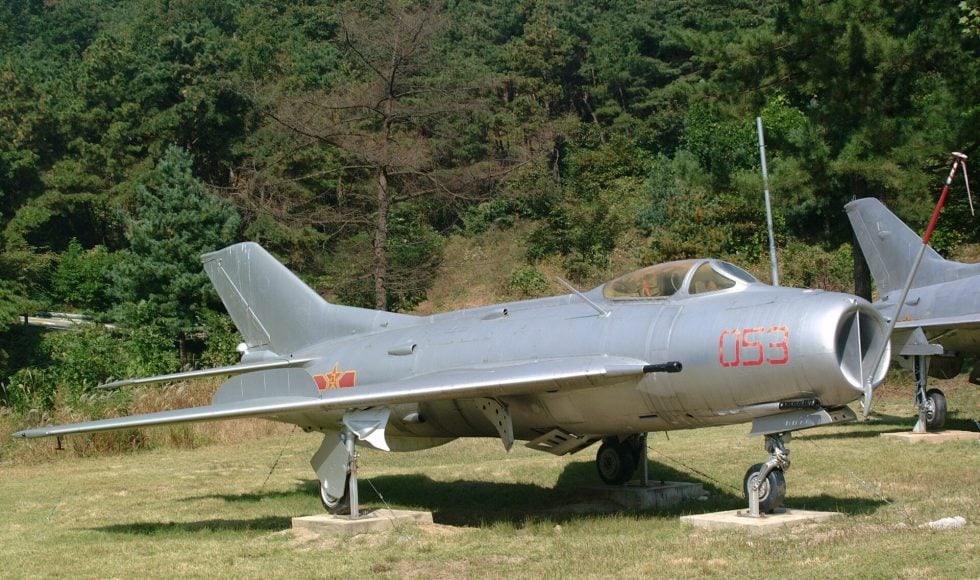
The MiG-19 is the original Soviet aircraft, designed by Mikoyan-Gurevich and built in the USSR (with licence production also in Poland and Czechoslovakia). The Shenyang J-6 is China’s licensed copy of the MiG-19S, built by the Shenyang Aircraft Factory from the late 1950s; the version China exported was designated F-6. Mechanically the J-6/F-6 is very close to the Soviet MiG-19S — same twin-engine layout, same three-cannon armament — but China kept it in production for decades after Soviet lines had closed, refining and simplifying it and building far more than the USSR ever did. So when you read about a “MiG-19” in Pakistani, Vietnamese, Egyptian or Bangladeshi service, it is almost always really a Chinese-built J-6 or F-6. We use “MiG-19” for the Soviet aircraft and the family as a whole, and “J-6 / F-6” where the Chinese-built machine is specifically meant.
What makes it special
Twin turbojets and genuine supersonic speed
Where earlier Soviet fighters like the MiG-15 and MiG-17 had a single engine, the MiG-19 used two Tumansky RD-9B afterburning turbojets, roughly 32 kN dry and about 37 kN each in reheat. Combined with a highly swept wing, that gave it a top speed of around Mach 1.35 and an excellent rate of climb — enough to make it the first Soviet production fighter able to go supersonic in level flight.
Three 30 mm cannon — a heavy gun fighter
The MiG-19S carried three 30 mm NR-30 cannon (one in each wing root and one in the fuselage), firing shells far heavier than the 20 mm guns common on Western fighters. At a moment when some Western designers were moving toward missile-only armament, the Farmer stayed a hard-hitting gun fighter — a choice that paid off in the close-in dogfights its export descendants later fought.
The J-6: cheap, rugged and long-lived
The MiG-19’s most remarkable quality only emerged in Chinese hands. Built as the Shenyang J-6, the design proved simple, robust and inexpensive — easy to maintain and to fly from rough fields. China produced it in very large numbers and kept it in service for decades, and export F-6s soldiered on with several air forces into the 2010s, long after the Soviet original had been retired.
02The MiG-19 Farmer’s guns: why the Soviets kept a heavy cannon fighter
The MiG-19S was built around three 30 mm NR-30 cannon, a battery capable of destroying a bomber or fighter with a short burst. This ran against the trend of the late 1950s, when the United States and others increasingly believed guided missiles would make the gun obsolete — a belief that led to fighters such as early F-4 Phantoms carrying no internal cannon at all. Combat over Vietnam and the Middle East later showed that guns still mattered in a close turning fight, and the Chinese-built J-6 and F-6, with their three heavy cannon, were respected precisely because they could hit hard at short range. Exact effectiveness figures vary by account and should be read with caution, but the design philosophy — keep the guns — aged well.
03The Shenyang J-6 Farmer’s longevity: fifty years from a short-lived Soviet fighter
In Soviet service the MiG-19 was a brief interlude between the subsonic MiG-17 and the far more capable MiG-21, phased out of front-line units within roughly a decade. China took the opposite path. Having begun licence production in the late 1950s, the Shenyang Aircraft Factory turned out the J-6 in very large numbers — commonly cited figures run to several thousand aircraft — and kept refining and building it into the 1980s. Cheap, tough and easy to operate, the J-6 and its F-6 export version became a mainstay for many smaller air forces. China is generally reported to have retired the last of its own J-6 fighters from front-line use around 2010, with some export operators flying them a few years longer. Precise production totals and retirement dates vary between sources.
Full specifications (MiG-19S)
Baseline note: the figures below describe the MiG-19S, factory izdeliye 61, NATO Farmer-C — the all-moving-tailplane day fighter that entered production in 1956 at GAZ-21 in Gorky and GAZ-153 in Novosibirsk, on two Tumansky RD-9B turbojets and three 30 mm NR-30 cannon. That is the fair column because it is the version the Soviet Air Forces actually fought with, and the one every later derivative is measured against. Deltas for the radar-equipped MiG-19P and the missile-armed MiG-19PM interceptors, and for the Chinese Shenyang J-6 and its export F-6, are in grey. Three cautions before the numbers. First, published MiG-19 lengths differ by more than two metres because the nose pitot probe telescopes; 12.54 m and 14.64 m are the same aeroplane. Second, this type was rushed into production on 17 February 1954 while factory testing had barely begun, and early aircraft exploded in flight from fuel tanks cooked by the engines beneath them, so early-build and late-build figures are not interchangeable. Third, Chinese-built J-6 data descends from a separate documentary tradition and rarely matches the Soviet tables to the decimal; where the two disagree, both are given rather than averaged.
Dimensions & weights
- Crew
- 1 — and the Soviet Union never built a two-seater. A photograph of a supposed "MiG-19UTI" that circulated in the Western press was a hoax. The tandem trainer exists because China built it: the Shenyang and Tianjin JJ-6, exported as the FT-6, stretched 84 cm (33 in) for the second cockpit and left with a single 30 mm gun
- Length
- 12.54 m (41 ft 2 in) with the pitot probe retracted; 14.64 m (48 ft 0 in) extended. This is the single commonest source of confusion in MiG-19 tables, and both figures are correct
- Wingspan
- 9.00 m (29 ft 6 in) — the same span as a MiG-17 on an aeroplane a tonne and a half heavier, which is the whole story of how this fighter flew
- Height
- 3.885 m (12 ft 9 in) on the nosewheel
- Wing area
- 25.00 m² (269 sq ft). Chinese tables for the J-6 give 25.16 m² (271 sq ft); the difference is a measurement convention at the root fillet, not a different wing
- Aspect ratio
- 3.24 — very low, and deliberately so. A short, stubby, thin wing was the only way TsAGI knew in 1951 to get a fighter past Mach 1 in level flight, and everything unpleasant about the MiG-19 at low speed follows from it
- Wing sweep
- 55° at quarter chord — a large step beyond the 45° of the MiG-17 and the reason the aeroplane was supersonic where its predecessor was not. It also gave a vicious wing drop at high angles of attack, fixed only partially by deepened wing fences during development
- Dihedral
- 4° 30′ anhedral — drooped wings, needed to claw back the excessive lateral stability that 55° of sweep on a mid-set wing produces. It is the quickest way to identify a MiG-19 from a MiG-17 in silhouette
- Aerofoil
- TsAGI SR-12S at the root, 8.74 per cent thick; TsAGI SR-7S at the tip, 8 per cent — thin sections that bought supersonic drag rise at the price of internal volume, which is why this aeroplane never had enough fuel
- Empty weight
- 5,172 kg (11,402 lb) as commonly quoted after Gunston. Russian and Chinese tables give up to 5,447 kg (12,008 lb) for a fully equipped late-production MiG-19S or J-6; the spread is equipment fit, not disagreement about the airframe
- Normal take-off weight
- 7,560 kg (16,667 lb) clean, with full internal fuel and full ammunition
- Maximum take-off weight
- 8,832 kg (19,471 lb) with two 760-litre drop tanks and two rocket pods; 8,662 kg (19,096 lb) with the tanks alone
- Internal fuel
- ~1,800 litres (~476 US gal, ~396 imp gal) in fuselage and wing cells. Some Russian tables give up to 2,170 litres as a maximum internal figure for late aircraft. Whichever number is used, it was never enough: short range is the defining defect of the MiG-19 and no variant ever cured it
- External fuel
- Two 760-litre drop tanks (2 × 201 US gal, 2 × 167 imp gal) on the outboard pylons, which could carry nothing else. Pakistan later fitted its F-6s with underbelly gondola tanks of local design to extend endurance further
Performance
- Maximum speed
- 1,452 km/h at 10,000 m (902 mph at 32,800 ft), Mach 1.35. This is the number that mattered historically: the first Soviet production aeroplane that could exceed the speed of sound in level flight, rather than in a dive. Chinese sources give 1,540 km/h (957 mph), Mach 1.45, for the J-6
- Rate of climb
- 180 m/s (35,400 ft/min) initial, the figure quoted from Belyakov and repeated in most Western references. The Russian reference site airwar.ru gives 3,333 m/min for the MiG-19S, which is 55.5 m/s (10,900 ft/min). The two are not really in conflict: the first is an instantaneous rate at light weight in full reheat, the second a mean rate through a climb, and readers should be sceptical of any table that prints one without the other
- Service ceiling
- 17,500 m (57,400 ft); 17,900 m (58,700 ft) is quoted for the J-6 in full afterburner
- Ceiling, high-altitude variants
- 18,500 m for the MiG-19SV, 19,100 m for the MiG-19SVK (60,700 ft and 62,700 ft), and a peak of 20,740 m (68,000 ft) reached on 6 December 1956. All of it was chasing the U-2, and all of it failed: the American aeroplane cruised above 21,000 m and the MiG never got there
- Range
- 1,390 km (864 mi) on internal fuel. An American test pilot who flew a Pakistani F-6 in 1969 put it more usefully: "after going in full after-burner at low altitude for five minutes, the MiG driver will be looking for a place to land"
- Ferry range
- 2,200 km (1,367 mi) with two 760-litre drop tanks at 14,000 m (45,900 ft)
- Combat radius
- ~640 km (~398 mi) with two drop tanks, per Chinese figures for the J-6. Clean and at low level it was a fraction of that, and North Vietnamese pilots disliked the type largely for this reason
- Endurance
- 1 h 43 min clean, 2 h 38 min with drop tanks — Chinese J-6 figures, at economical cruise. In reheat the RD-9B drank fuel at a rate that made those numbers a fiction
- Wing loading
- 301.4 kg/m² (61.7 lb/sq ft) at normal take-off weight — high, and the reason the approach speed was brisk and the stall unforgiving. Pilots converting from the MiG-17 found the aeroplane far less tolerant of mishandling
- Thrust-to-weight
- 0.85 at normal take-off weight in full reheat — an exceptional figure for the middle 1950s, better than the contemporary F-100 Super Sabre, and the source of the MiG-19’s remarkable acceleration and climb. American pilots who flew the type found it could out-turn an F-4 Phantom and out-accelerate one to about Mach 1.2
- g limit
- +8 as quoted in Russian tables for the MiG-19S. The airframe was strong; the problem was never the wing structure but the fuel it could not carry
- Take-off and landing run
- 760 m take-off, 400 m landing (2,490 ft and 1,310 ft), the landing figure with the brake parachute streamed. The Chinese J-6C moved the parachute container to the base of the rudder, which is the quickest external way to tell a J-6C from an earlier machine
Propulsion & systems
- Engines
- two Tumansky RD-9B afterburning turbojets — originally the Mikulin AM-9B, itself descended from the AM-5, which was a scaled-down AM-3 from the Tu-16 bomber. Two small engines were chosen because the Soviet Union had no single engine of adequate thrust in 1951; the arrangement worked, and it also doubled the maintenance burden, which North Vietnamese ground crews in particular came to resent
- Rated thrust
- 25.5 kN dry, 31.8 kN with afterburner (2,600 kgf and 3,250 kgf; 5,732 lbf and 7,150 lbf) each, so 63.6 kN in reheat from the pair. Late MiG-19SF and MiG-19R aircraft used the uprated RD-9BF-1
- Chinese engine
- Liming WP-6 and WP-6A — the licence-built RD-9B, at the same nominal 25.5 kN dry and 31.8 kN in reheat. Chinese production of the engine outlasted Soviet production of the aeroplane by decades
- The fire problem
- Early aircraft suffered in-flight explosions — traced to inadequate insulation between the engines and the rear-fuselage fuel tanks sitting above them, which could cook the fuel until it detonated. A metal heat shield was fitted and largely, but not entirely, solved it. This is what happens when a fighter is ordered into series production before factory testing has properly started
- Radar and ranging
- No search radar on the MiG-19S — only an SRD-1M, SRD-3M or, on late Novosibirsk batches, SRD-5 gun-ranging set feeding an ASP-5N-V3 gyro gunsight. The MiG-19P carried RP-5 Izumrud in a pointed radome with a second small radome on the intake lip; the MiG-19PM carried RP-2U Izumrud-2 in a deeper inlet. The Chinese J-6A and J-6D were the equivalent radar aircraft, the J-6D with the radome on the splitter plate rather than the centrebody
- Avionics
- RSIU-4 Doob VHF radio, OSP-48 instrument landing system, ARK-5 radio compass, MRK-48P marker receiver, SRO-1 Bariy-M IFF, Sirena-2 radar warning receiver — a genuinely modern fit for 1956, and a radar warning receiver years before most Western fighters had one. MiG-19P aircraft were built to one of two ground-control standards, the MiG-19PG with a Gorizont-1 receiver and the MiG-19PL with Lazur, because Soviet air defence flew its interceptors from the ground
- Airframe
- all-metal semi-monocoque in D-16 duralumin, mid-set two-spar wing with strengthened spars, nose intake split by a vertical wedge — conventional construction executed thinly and lightly. The MiG-19S introduced strengthened spars and a modified canopy with electric jettison after production aircraft had trouble getting the hood off
- Controls
- all-moving stabilators, hydraulically boosted — the single most important change from the first production MiG-19, whose conventional elevators simply stopped working as the tailplane shock wave formed near Mach 1. Tailplane flutter on the SM-9/3 prototype was cured by bolting mass balances to each tip. The lesson was general: every supersonic fighter after this one has a slab tail
- Airbrakes
- Three — two on the rear fuselage sides and a third added beneath, behind the ventral fin, during development. A brake parachute was fitted as standard. Three airbrakes on a fighter this small is a confession about how badly it wanted to keep going fast
- Escape system
- Ejection seat, not zero-zero — usable only above a substantial minimum height and speed by later standards. Pakistan retrofitted Martin-Baker seats to its F-6 fleet, one of some 140 modifications the Pakistan Aeronautical Complex made to the type, along with gun cameras, Western avionics and a ground power unit to cut scramble time
- Design service life
- 100 flight hours — the Chinese J-6 was frankly regarded as disposable and built to roughly 100 hours, or about 100 sorties, before overhaul. Diligent Pakistan Air Force maintenance stretched that to 130. Western readers should sit with that number: this was an aeroplane designed on the assumption that a war would use it up
- Production
- 2,172 Soviet-built, 1954–1968 — excluding Czechoslovak and Chinese output. Aero Vodochody built 103 S-105s between 1958 and 1962 with imported engines. Shenyang and its partners built more than 4,500 J-6 family aircraft including the JJ-6 trainer between 1958 and 1986, so roughly two of every three Farmers ever built were Chinese, and the licensee outlasted the licensor by twenty years
- Unit cost
- Not reliably published — Soviet and Chinese aircraft of this period were costed in internal accounts that do not convert meaningfully to dollars. Any figure quoted for a MiG-19 or a J-6 in period currency should be treated as invention
- Service dates
- Soviet deliveries from June 1955, publicly unveiled 3 July 1955 when 48 aircraft flew past at Tushino. Soviet front-line service was short, largely displaced by the MiG-21 from the early 1960s. Chinese service ran from 29 April 1962 with the practical type from 1964, and the J-6 was the mainstay of the PLAAF for a quarter of a century
04The MiG-19 Farmer’s cost: why no reliable price exists
The MiG-19 was a Soviet state product and the J-6 a Chinese one; neither was sold on an open commercial market, so no firm flyaway unit price exists in the public record. The Chinese-built F-6 was widely regarded as an inexpensive fighter — one of its main attractions for smaller air forces — but concrete per-aircraft dollar figures from the period are scarce and inconsistent. No credible cost-per-flight-hour figure exists for the type in open sources. Any precise dollar figure attached to a MiG-19 or J-6 should be treated as an estimate.
Armament & payload
The MiG-19S carried three 30 mm cannon and almost nothing else, and for about a decade that was the correct answer
The MiG-19S was armed with three Nudelman-Rikhter NR-30 autocannon: one in the lower right of the forward fuselage with 55 rounds, and one in each wing root with 75. A 30 mm NR-30 shell weighs 410 g and leaves the barrel at some 800 m/s, and the gun cycles at roughly 900 rounds a minute; a two-second burst from three of them puts about 37 kg of metal into the air. For comparison, an American M61 Vulcan of the same era delivered a little under half that in the same time. The recoil and muzzle blast were correspondingly brutal — each gun needed a muzzle brake with an integrated flame damper, and the wing installations needed stainless steel panels let into the skin to stop the blast eroding it.
Everything else the aeroplane carried was an afterthought. Four pylons, of which the outboard two took drop tanks and nothing else, left two stations and 500 kg for weapons. The Soviet Union built the MiG-19 as a bomber-interceptor and a day escort fighter, and the doctrine of the period said that guns killed bombers. It was not wrong. It was simply overtaken: by the time the type reached its peak the guided missile had arrived, and the MiG-19PM went to squadrons with four beam-riding K-5Ms and no gun at all — a swap that Soviet pilots came to regard as a poor bargain, since the K-5M could only be fired from dead astern in a straight line while the radar held the target in its beam. Fits varied enormously by mark and operator: the first MiG-19 had three 23 mm NR-23 rather than NR-30, the MiG-19P kept only two wing guns to make room for radar, the MiG-19PM had none, the JJ-6 trainer had one, and Pakistani F-6s carried American Sidewinders on Chinese airframes with French rockets under the wings.
Gun
- Three 30 mm Nudelman-Rikhter NR-30 autocannon on the MiG-19S: 55 rounds for the fuselage gun, 75 rounds for each wing-root gun, about 205 rounds in total and roughly six seconds of firing
- 410 g projectile, some 800 m/s muzzle velocity, about 900 rounds per minute per gun; a muzzle brake with an integrated flame damper on every barrel, and steel blast panels in the wing skin
- Sighted through an ASP-5N-V3 gyro gunsight fed by an SRD-series ranging radar, with an S-13 gun camera
- The first production MiG-19 had three 23 mm NR-23 instead; the MiG-19P had two NR-23 in the wings only, and despite persistent reports to the contrary no MiG-19P was armed with the NR-30; the MiG-19PM had no gun
- Chinese aircraft used the Type 30-1, the licence copy of the NR-30. The J-6C is the three-gun day fighter; the J-6A and J-6B are the two-gun and gun-less radar interceptors; the JJ-6 trainer retained one
Air-to-air
- MiG-19PM: four K-5M, service designation RS-2US, NATO AA-1 Alkali — a beam-riding missile launched from APU-4 rails, which had to be flown down the radar beam from astern and was close to useless against a manoeuvring target
- MiG-19P: from 1960, surviving aircraft were modified to launch two R-3S, the production K-13, NATO AA-2 Atoll — the Soviet reverse-engineered AIM-9B, and a far better weapon than the K-5M it succeeded
- Shenyang J-6B: two PL-1, the Chinese K-5M, of which only 19 aircraft were built before the programme was stopped
- Guizhou-upgraded J-6A from a first flight on 21 December 1975: two PL-2 infrared missiles, the Chinese K-13; later Chinese aircraft could carry PL-5
- Pakistan Air Force F-6: AIM-9B, AIM-9J and AIM-9P Sidewinders on locally engineered rails, the most effective missile fit the type ever had
Air-to-surface guided
- None. No MiG-19 or J-6 variant in any air force ever carried an air-to-surface guided weapon, and none was developed for it
- The type’s connection to guided weapons was as a laboratory. The SM-20 and SM-20P were MiG-19S aircraft rebuilt as unmanned testbeds for the guidance system of the Kh-20, NATO AS-3 Kangaroo, and were carried aloft under a Tu-95K mother ship
- Two more MiG-19S became the SM-K/1 and SM-K/2, testbeds for the K-22 cruise missile guidance chain that armed the Tu-22
- The SM-2I, SM-6, SM-9/3T and SM-12/3T and /4T were airborne test rigs for the K-6 and K-13 air-to-air missiles
- In front-line hands, ground attack meant guns, rockets and iron bombs, and nothing else
Bombs
- Two FAB-250 general-purpose bombs, one on each inboard pylon — 250 kg per station and 500 kg maximum, which is a modest load even by 1956 standards
- Egyptian MiG-19s flew ground-attack sorties in the North Yemen Civil War from 1962, the type’s first combat use anywhere
- Pakistani F-6s flew 184 ground-attack sorties in the 1971 war; their close air support at Shakargarh is generally reckoned the most effective work the type did in that campaign
- Iraqi J-6s delivered via Egypt and Jordan in 1982 and 1983 were used almost entirely for air-to-ground work in the Iran–Iraq War, by which time the aeroplane was thirty years old
- Sudanese, Somali and Tanzanian F-6s were bought as cheap strike aircraft rather than as interceptors, and used that way
Rockets
- ORO-57K pods of 32 × 57 mm S-5 rockets: one pod under each wing at first, and provision for four from 1957
- An ORO-32K pack or a FAB-250 bomb under each wing was the original MiG-19S alternative fit
- Numerous large unguided rockets were trialled and none entered service: ARS-212 and ARS-212M on the SM-2V, ARS-160 on the SM-2/G, TRS-190 on one SM-2B, ARS-70 on the SM-2A and the S-21 on the SM-21 of 1955
- Pakistani F-6s carried French 68 mm SNEB rockets alongside Soviet-pattern S-5s, and used both against Indian armour and vehicles in December 1971
- Rockets were the type’s real secondary weapon: cheap, plentiful, and well matched to an aeroplane with no bombsight worth the name
Pods & other stores
- Two 760-litre drop tanks on the outboard pylons, which took nothing else. The tanks were not optional in any real sense: without them the aeroplane had no useful radius at all
- Reconnaissance: the MiG-19R carried an AFA-39 or a BA-40 camera with a MAG-9 voice recorder, and only a small number were built; the Chinese JZ-6, exported as the FR-6, carried a fuselage camera pack in place of the cannon and was flown by the PLAAF 3rd Reconnaissance Regiment until April 2006
- Rocket boost packs: the jettisonable U-19 under the MiG-19SU and the improved U-19D under the MiG-19PU, containing an RU-013 rocket motor intended to push the aeroplane up to U-2 height. Five MiG-19S were converted; none of it worked well enough to matter
- The SM-30 was a MiG-19 or MiG-19S rigged for zero-length launch off a ramp with a PRD-22 solid booster, an attempt to disperse interceptors away from runways that could be bombed
- The SM-10 of 1955 carried a port wingtip refuelling probe for trials with a Tu-4 tanker, and a second aircraft trialled four probe positions with an Il-28 in 1956. Both worked and neither was funded
- Pakistan added underbelly gondola fuel tanks, gun cameras and Western avionics; the same fleet later gave the United States its first flyable Farmer for evaluation in 1969
Three typical loadouts
- Day interception, Soviet Air Defence, MiG-19S, 1957
- Three NR-30 with 205 rounds · two 760-litre drop tanks on the outboard pylons · nothing on the inboard stations. Vectored from the ground on the Gorizont or Lazur link, closing from astern on a bomber or a reconnaissance aircraft and firing a short burst. This is the configuration in which the type shot down an RB-47H over the Barents Sea on 1 July 1960 and a T-39 Sabreliner over East Germany on 28 January 1964.
- All-weather interception, MiG-19PM, 1958
- Four K-5M beam-riding missiles on APU-4 rails · RP-2U Izumrud-2 radar · no gun · no drop tanks on a missile-loaded aircraft. On paper an all-weather interceptor; in practice a machine that had to hold its target inside a narrow radar beam from directly behind while the missile rode the beam in, and which had thrown away the three best weapons it owned to do it.
- Close air support, Pakistan Air Force F-6, Shakargarh, December 1971
- Three 30 mm guns · S-5 or SNEB 68 mm rocket pods on the inboard pylons · drop tanks outboard · Sidewinder rails available for the air defence tasking on the same airframe. Three squadrons, Nos 11, 23 and 25, flew 945 sorties in the war, of which 834 were combat; 184 of those were ground attack, and the guns and rockets were reported particularly effective against armour and troop concentrations.
Sourcing caveat: NR-30 rate of fire is quoted between about 850 and 1,000 rounds per minute in different references and varies with feed and temperature; 900 is a fair middle figure. Ammunition loads of 55 and 75 rounds follow the Soviet documentation for the SM-9/3 and production MiG-19S, but Vietnamese J-6 accounts describe 90 rounds per gun, and Chinese guns and belting were not identical to Soviet ones. Claim figures from the 1971 and Vietnam wars are national claims that both sides dispute; where they are given here the claiming air force is named. Pakistani modification counts come from Pakistan Air Force sources.
Variants
The MiG-19 had a short Soviet life and a very long Chinese one, and the licensee built more than twice as many as the designer
The Soviet MiG-19 story is compressed into about fifteen years and 2,172 airframes. The type went into production in February 1954 before it had been properly tested, spent its first two years having its worst faults engineered out, reached maturity as the MiG-19S in 1956, and was then overtaken almost immediately by the MiG-21, which did most of the same jobs on one engine with far less trouble. What is striking about the Soviet variant list is how much of it is experiment rather than production: rocket packs, zero-length launch ramps, refuelling probes, cruise-missile guidance testbeds, shock-cone inlets. The MiG-19 spent much of its career being used to find out things for other aeroplanes.
The Chinese story runs the other way. Shenyang started building the type in 1958, produced a batch so poor that the PLAAF refused to accept it, scrapped the jigs, restarted with Soviet help, and then kept going until 1986 — through the Sino-Soviet split, the Cultural Revolution and the arrival of two later generations of fighter. More than 4,500 J-6 family aircraft were built. It armed the PLAAF for twenty-five years, went to war for Pakistan, North Vietnam, Egypt, Iraq, Somalia, Sudan and Tanzania, and its airframe became the Nanchang Q-5 attack aircraft, which outlived it again.
One thing the list does not contain is a Soviet two-seater. There never was one. The trainer is Chinese, and so is almost every MiG-19 still capable of leaving the ground.
- MiG-19, izdeliye 59, NATO Farmer-A (1955–1956)
- The first production version, from the SM-9/1 prototype: conventional fixed tailplane with elevators, three 23 mm NR-23 cannon. Its elevators went ineffective near Mach 1 and its rear fuselage tanks were prone to cooking off, and it was superseded within about two years.
- MiG-19S, izdeliye 61, NATO Farmer-C (production from 1956; the baseline above)
- All-moving stabilators from the SM-9/3, three 30 mm NR-30, D-16 duralumin construction, strengthened wing spars, an electrically jettisoned canopy and a full avionics fit including a Sirena-2 radar warning receiver. This is the definitive Soviet MiG-19 and the one nearly all published data describes.
- MiG-19SF and MiG-19SV / SVK (1956–1957, SV in small numbers)
- The SF was a late MiG-19S on uprated RD-9BF-1 engines. The SV was the high-altitude answer to Western reconnaissance balloons, Canberras and the U-2: more thrust, seat armour and one gun deleted, revised flap settings and a new pressure suit, lifting the ceiling to 18,500 m. The SVK added span for 19,100 m. A hundred SVs were requested and far fewer built, and none of it reached the U-2.
- MiG-19P, izdeliye 62, NATO Farmer-B (from November 1955, about 200 for the VVS)
- The all-weather interceptor from the SM-7/3: RP-5 Izumrud radar in a pointed radome with a second radome on the intake lip, two NR-23 in the wings, an extended fin fillet and a third ventral airbrake. Roughly 200 for the Soviet Air Force plus 27 for Czechoslovakia, 12 for Poland and 15 for Bulgaria. Built as the MiG-19PG with a Gorizont-1 ground-control receiver or the MiG-19PL with Lazur; survivors were modified from 1960 to carry two R-3S missiles.
- MiG-19PM and MiG-19PML, izdeliye 65, NATO Farmer-D (1957 onwards, about 260 built)
- Four K-5M beam-riding missiles on APU-4 rails, RP-2U Izumrud-2 radar in a deepened inlet, and no cannon at all. Built exclusively at GAZ-21 in Gorky. The most heavily armed MiG-19 on paper and the least dangerous in a fight.
- MiG-19R and MiG-19M (small numbers)
- The R was the tactical reconnaissance conversion with an AFA-39 or BA-40 camera and a MAG-9 voice recorder, on RD-9BF-1 engines. The M was the end of the line: older MiG-19S airframes converted into unmanned target drones, a fate the type met again in China forty years later.
- MiG-19SU, MiG-19PU and SM-30 (1955–1957, testbeds and small conversions)
- Three attempts to reach altitudes the aeroplane could not otherwise reach or to launch it from places it could not otherwise use. The SU carried a jettisonable U-19 pack with an RU-013 rocket motor on RD-9BM engines, with the fuselage gun removed for telemetry; five MiG-19S were converted. The PU used the improved U-19D, restartable up to five times in a flight. The SM-30 was rigged for zero-length launch off a ramp with a PRD-22 solid booster, so that interceptors need not depend on runways.
- SM-12 and SM-12PM (four prototypes plus derivatives, later 1950s)
- The aerodynamic development that pointed at the MiG-21: a new supersonic inlet with a movable shock cone, fuselage gun deleted, RD-9BF-2 or R3-26 engines. The SM-12PM added an RP-30 radar in an enlarged cone and four K-5M. None was built in series, and the ideas went into a different aeroplane.
- Aero Vodochody S-105 (Czechoslovakia, 103 built 1958–1962)
- The licence-built MiG-19S, assembled at Vodochody with imported engines. The Czechoslovak Air Force operated 183 Farmers all told across the S-105, MiG-19S, MiG-19P and MiG-19PM, the largest European fleet outside the Soviet Union.
- Shenyang J-6 family, export F-6 / FT-6 / FR-6 (1958–1986, more than 4,500 including trainers)
- The Chinese line and by far the larger half of the type’s history. The J-6A of 1958 was the MiG-19P equivalent and a failure: about 100 built, never properly accepted by the PLAAF, the jigs scrapped and production restarted with Soviet assistance. The J-6 proper, first flown 30 September 1959 and in service from 29 April 1962, matched the MiG-19S. The J-6B was the missile interceptor, 19 built by Nanchang. The J-6C was the definitive three-gun day fighter with the brake parachute at the base of the rudder. The J-6D or J-6III carried a Chinese radar in a splitter-plate radome. The JJ-6, exported as the FT-6, was the two-seat trainer the Soviet Union never built, stretched 84 cm and armed with one gun. The JZ-6, exported as the FR-6, was the camera-nosed reconnaissance version. The J-6W is the target and attack drone conversion, first flown in 1995 and reported in numbers from 2013, with an estimated 200 converted by 2026 across bases in Fujian and Guangdong. The airframe also became the Nanchang Q-5 attack aircraft, which has outlived every fighter version.
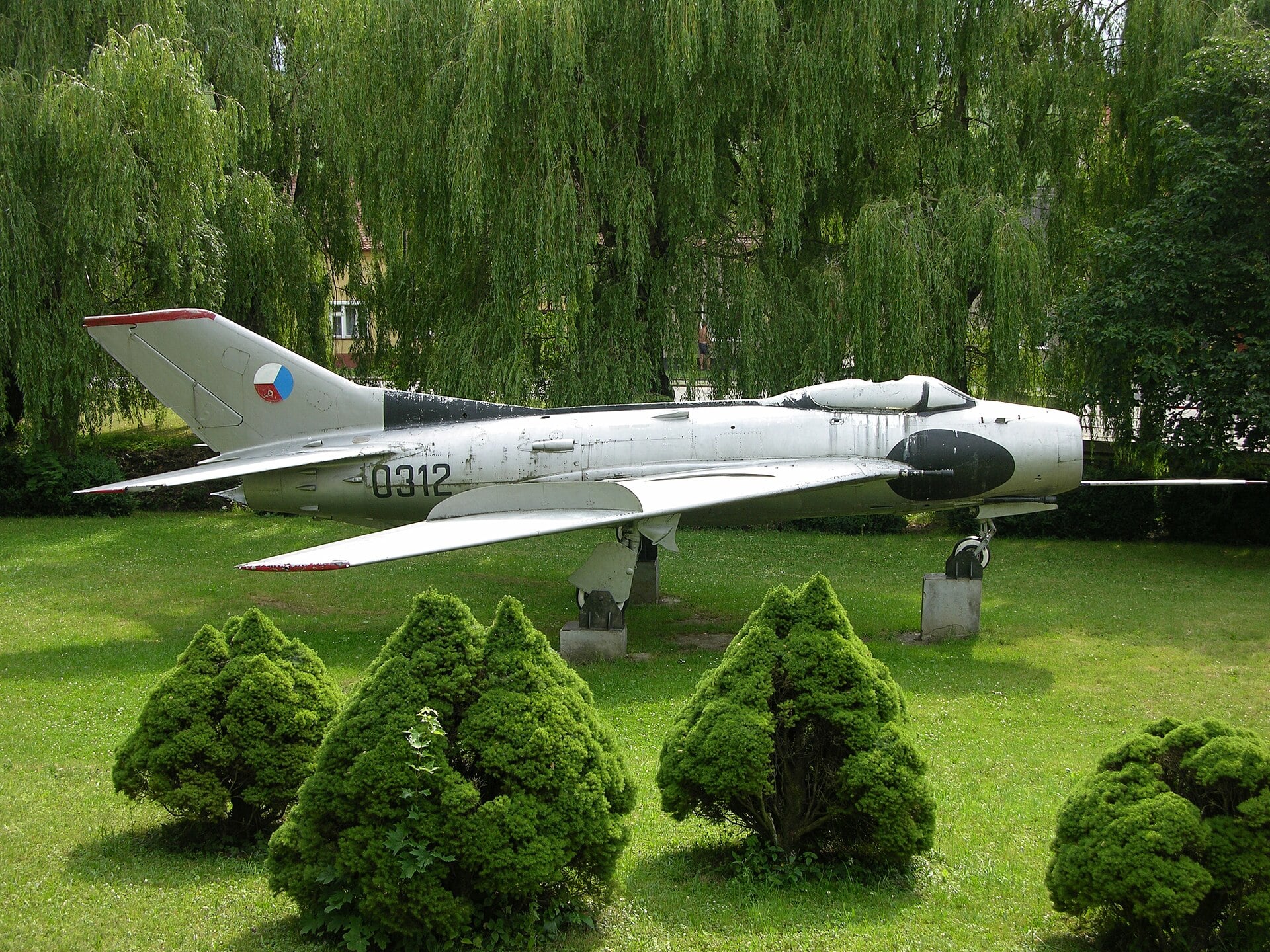
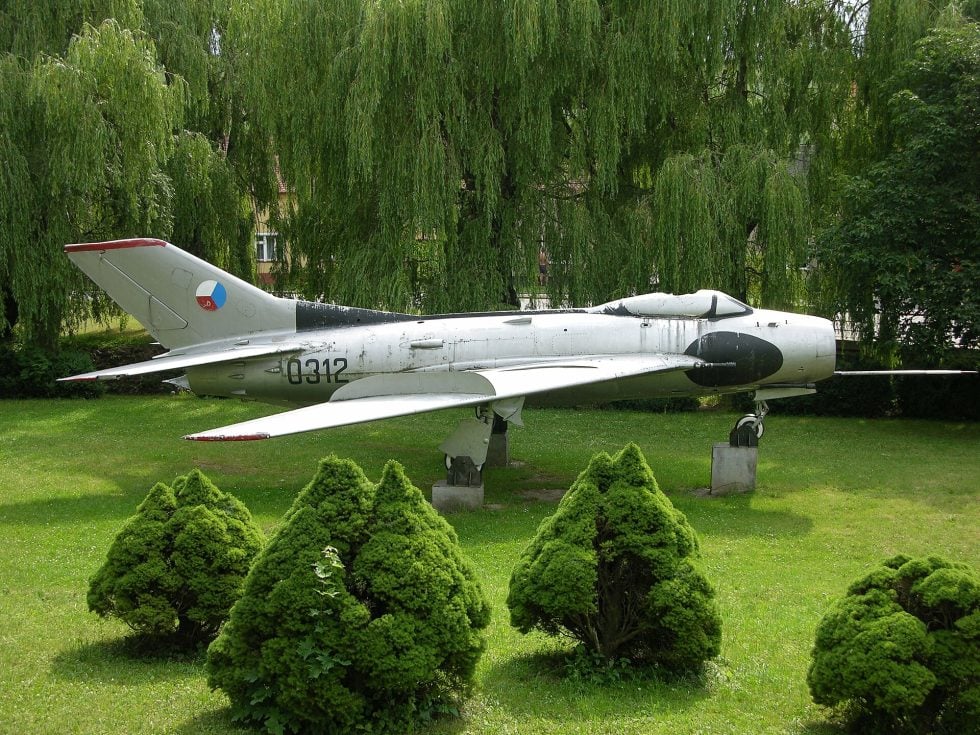
Survivors and operators, stated precisely, because there is no separate fleet section on this page. No Soviet-built MiG-19 remains in service with any air force; the only Farmers still on strength anywhere are Chinese-built J-6 and F-6 derivatives, and the numbers rest on a single dataset. FlightGlobal’s World Air Forces directory, compiled by Craig Hoyle, gives the following as of December 2023: North Korea 97 F-6, comfortably the largest remaining fleet and the only one large enough to be called a force; Pakistan 9 FT-6 trainers, the single-seat F-6 having been retired in 2002; Sudan 8 F-6; Tanzania 3 F-6 and 1 FT-6; Myanmar 1 F-6; and Zambia 8 F-6 and 2 FT-6, which the same directory records as retired by the end of 2025. The Chinese air arms were listed with 35 JJ-6 in the PLAAF and 14 in the naval air arm as of December 2019, all trainers, and China’s remaining airframes are now being consumed as drones rather than flown as fighters. These figures could not be corroborated against a second independent source, so they are reported here as one publisher’s estimates rather than presented as a fleet chart, and many of the airframes counted are certainly stored rather than flying. Among preserved aircraft, the machine displayed at the National Museum of the United States Air Force in Dayton as a MiG-19S is in fact one of the Pakistani-supplied F-6s evaluated in the United States in 1969 — an original airframe, but a Chinese one wearing Soviet identity, which is a fair emblem for the type as a whole. Genuine Soviet-built examples survive at the Prague Aviation Museum at Kbely as a Czechoslovak S-105, at the Dirgantara Mandala Museum in Jakarta, and in Russian and eastern European collections; the China Aviation Museum at Datangshan holds J-6A, J-6B and FT-6 examples. Albania’s F-6 fleet was grounded by 2005 and some airframes reportedly remained in storage as of 2019. There are no MiG-19 reproductions or replicas: every survivor is an original airframe, because a type built in some 6,800 examples worldwide has never been scarce enough to be worth faking.
From Soviet first to Chinese mainstay
First flight
The MiG-19 prototype, developed from the experimental SM-9, first flies in September 1953.
Enters service
The MiG-19 becomes the first Soviet production fighter able to go supersonic in level flight.
The definitive MiG-19S
The three-cannon MiG-19S day fighter appears, followed by radar-equipped and missile-armed variants.
Cold-War intercepts
Soviet MiG-19s down a US RB-47 over the Barents Sea; on the day of the U-2 shootdown a Soviet MiG-19 is lost to friendly fire.
Superseded by the MiG-21
The far more capable MiG-21 pushes the MiG-19 out of Soviet front-line units after only a few years.
The Shenyang J-6
China’s licence-built J-6 enters PLAAF service; it and the export F-6 will be built in the thousands.
War over the subcontinent
Pakistan Air Force Shenyang F-6s fly intensively in the Indo-Pakistani war, well regarded in the close-in fight.
The last Farmers retire
China retires its front-line J-6s around 2010; some export F-6 operators fly on a few years longer.
Twelve stories of the Farmer
Breaking the sound barrier
The MiG-19 was the first Soviet production fighter able to go supersonic in level flight.
Read the full story
Why two engines
The MiG-19 broke with Soviet single-engine tradition to get the thrust it needed.
Read the full story
A three-cannon gun fighter
The MiG-19S carried three heavy 30 mm cannon at a time when the West was chasing missiles.
Read the full story
The Barents Sea shootdown
A Soviet MiG-19 downed a US RB-47 reconnaissance aircraft over the Barents Sea in July 1960.
Read the full story
Friendly fire on the U-2 day
On the day Gary Powers was shot down, the Soviets accidentally downed one of their own MiG-19s.
Read the full story
The Shenyang J-6
China turned the MiG-19 into its own mass-produced fighter, the J-6.
Read the full story
The J-6 goes to war
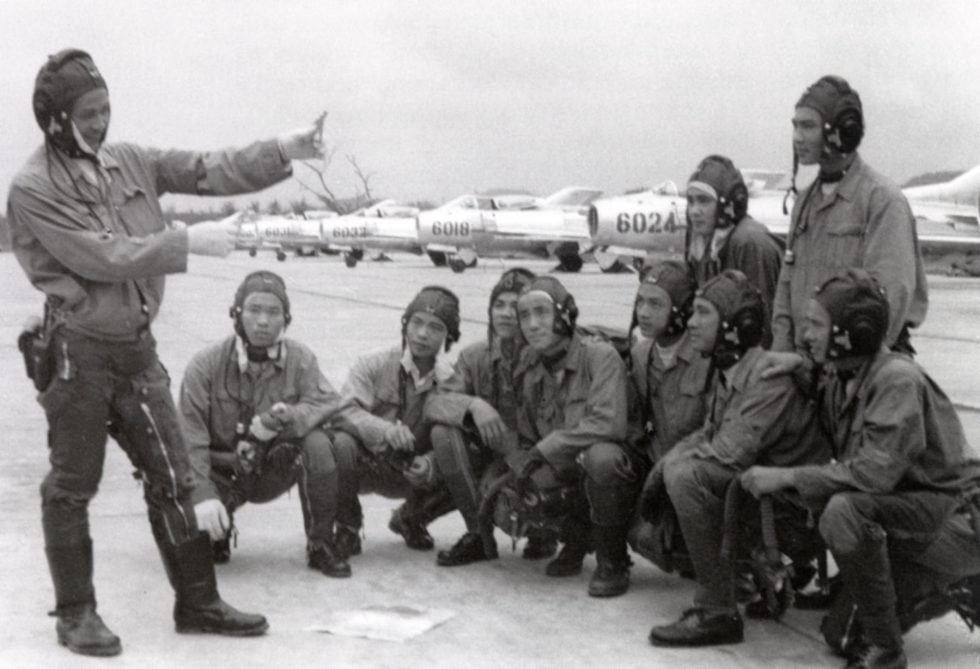
North Vietnam flew Chinese-built J-6s late in the air war over the North.
Read the full story
The F-6 in Pakistani hands
Pakistan’s Shenyang F-6s were highly regarded in the 1971 war.
Read the full story
A fighter for many air forces
Cheap and rugged, the F-6 spread to air forces across the Middle East and Africa.
Read the full story
From day fighter to all-weather
The Farmer family grew to include radar-equipped and missile-armed versions.
Read the full story
The two-seat JJ-6
China built a tandem two-seat trainer to convert pilots onto the fast, demanding Farmer.
Read the full story
A short Soviet life, a long second one
The MiG-19’s story is really two stories — a brief Soviet career and a long Chinese one.
Read the full story
The Farmer in pictures

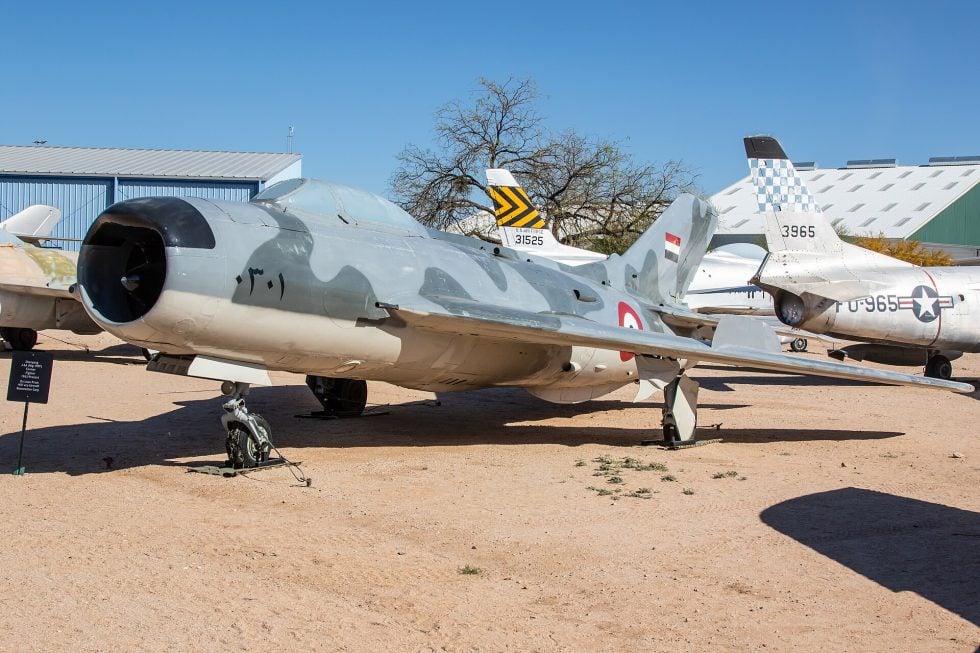
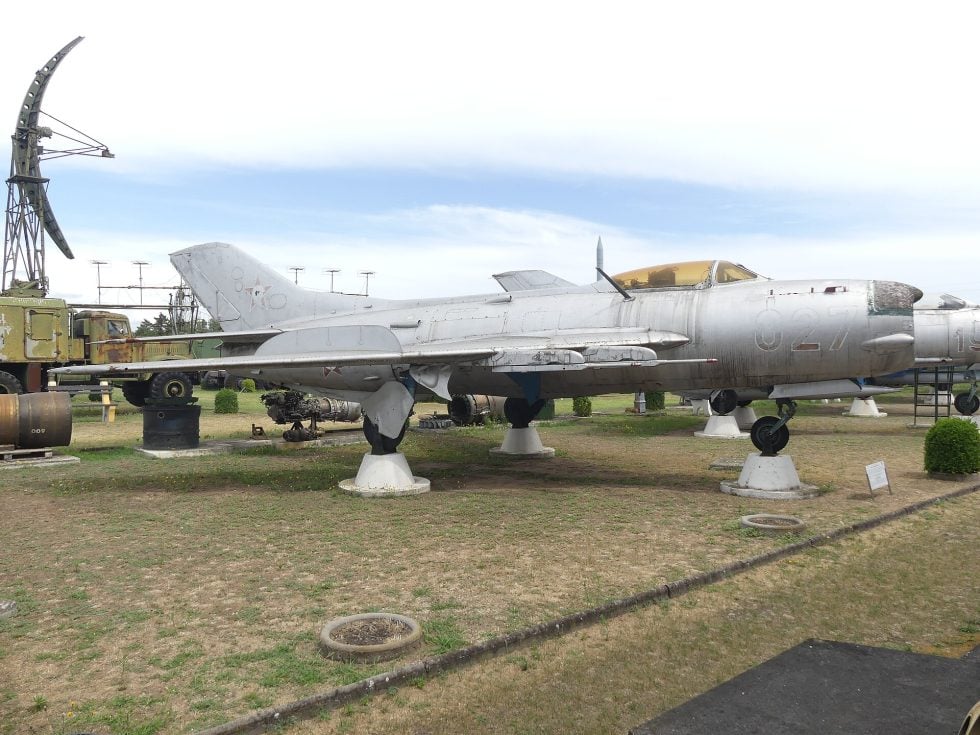
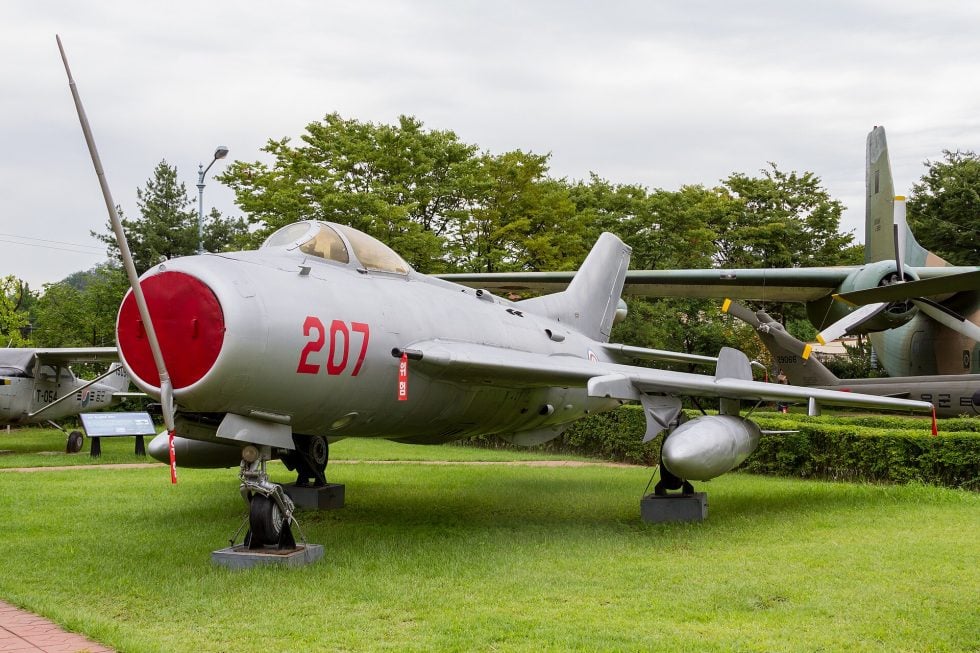
The MiG-19 in motion
A verified, high-authority video feature for the MiG-19 is still being selected — video coming soon. In the meantime, the photo gallery above and the stories carousel cover the aircraft in depth.
Where the Farmer flew
The record that defines it
The MiG-19 itself saw only limited front-line combat in Soviet hands, but as the Chinese J-6 and F-6 the design fought in Vietnam, over the subcontinent, and across the Middle East and Africa. Its combat reputation rests on close-in dogfighting with three heavy cannon. Kill-and-loss figures for these conflicts vary widely between sources and are presented here neutrally.
Compare the combat record of every military aircraft. Figures as of July 2026.
Everything people ask about the MiG-19
Can I fly in a MiG-19?
What is the difference between the MiG-19 and the Shenyang J-6?
Was the MiG-19 the first Soviet supersonic fighter?
How many MiG-19s and J-6s were built?
Did the MiG-19 see combat?
How good was the Pakistani F-6?
Why did the Soviet Union retire the MiG-19 so quickly?
Is the MiG-19 still in service?
You can’t fly the MiG-19.
These, you can.
Some legends only live in museums — others are fuelled and waiting. MiGFlug has put civilians in real military jet cockpits since 2004.
 Fly the L-39 AlbatrosThe world’s most-flown jet trainer — aerobatics included
 Fly the F-104 Starfighter“The missile with a man in it”
 Fly the MiG-21The Cold War’s most-produced jet
 Fly the T-33 Shooting StarAmerica’s first jet trainer
 Fly the DH VampireA piece of early jet history
 Fly the S.211Agile Italian jet trainer
 Fly the MB-326The classic Aermacchi jet
 Fly the MiG-15The Soviet legend of the Korean War
Continue the tour
Every fact, checked
- National Museum of the US Air Force — MiG-19SDimensions, engines, armament and the “first Soviet supersonic-in-level-flight” note.
- Airforce Technology — Shenyang J-6 / F-6Production numbers, export operators, engines and the 2010 retirement.
- GlobalSecurity.org — MiG-19 operationsCold-War intercepts, the 1960 RB-47 shootdown and combat history.
- Weapons and Warfare — Shenyang F-6 in Pakistani serviceThe F-6 in the 1971 war: sorties, victories, losses and pilot assessments.
- Military Factory — MiG-19 FarmerCross-checked specification and variant data.
- The Aviation Geek ClubFirst-person Pakistani F-6 combat accounts from the subcontinent.
- The National InterestOverview of the MiG-19 as the Soviet Union’s short-lived first supersonic fighter.
- Pickled Wings — The Forgotten MiGDevelopment, variants and the type’s long second life in Chinese hands.