
Swiss crews meet GPS spoofing every day. Switzerland is nonetheless switching its airports away from the ground-based landing system that spoofing cannot touch, and doing it to save money. That plan has just started to unravel.
The Tages-Anzeiger reported today that the federal government has suspended the planned removal of the Instrument Landing System at Bern-Belp, after Europe’s aviation safety regulator began advising national authorities to keep ILS available for emergencies. The Swiss pilots’ union has been arguing exactly that for months.
The underlying question is a good one, and it is not only Swiss: what do you land on when the satellites lie to you?
Quick Facts
| What is being removed | Instrument Landing System (ILS) ground stations at smaller Swiss airports, replaced by GPS-based approaches by 2030 |
| Already gone | La Chaux-de-Fonds, no ILS since 2021 |
| Still planned | Lugano, where Milan is available as an alternate |
| Suspended | Bern-Belp, after the federal office reconsidered |
| Unaffected | Zurich and Geneva keep their ILS |
| Why remove it | High acquisition and operating costs, according to the authorities |
| The objection | GPS approaches can be spoofed; ILS cannot be spoofed the same way |
| EASA position | Recently began advising national authorities to keep ILS operational for emergencies |
What ILS does, and why it is hard to fake
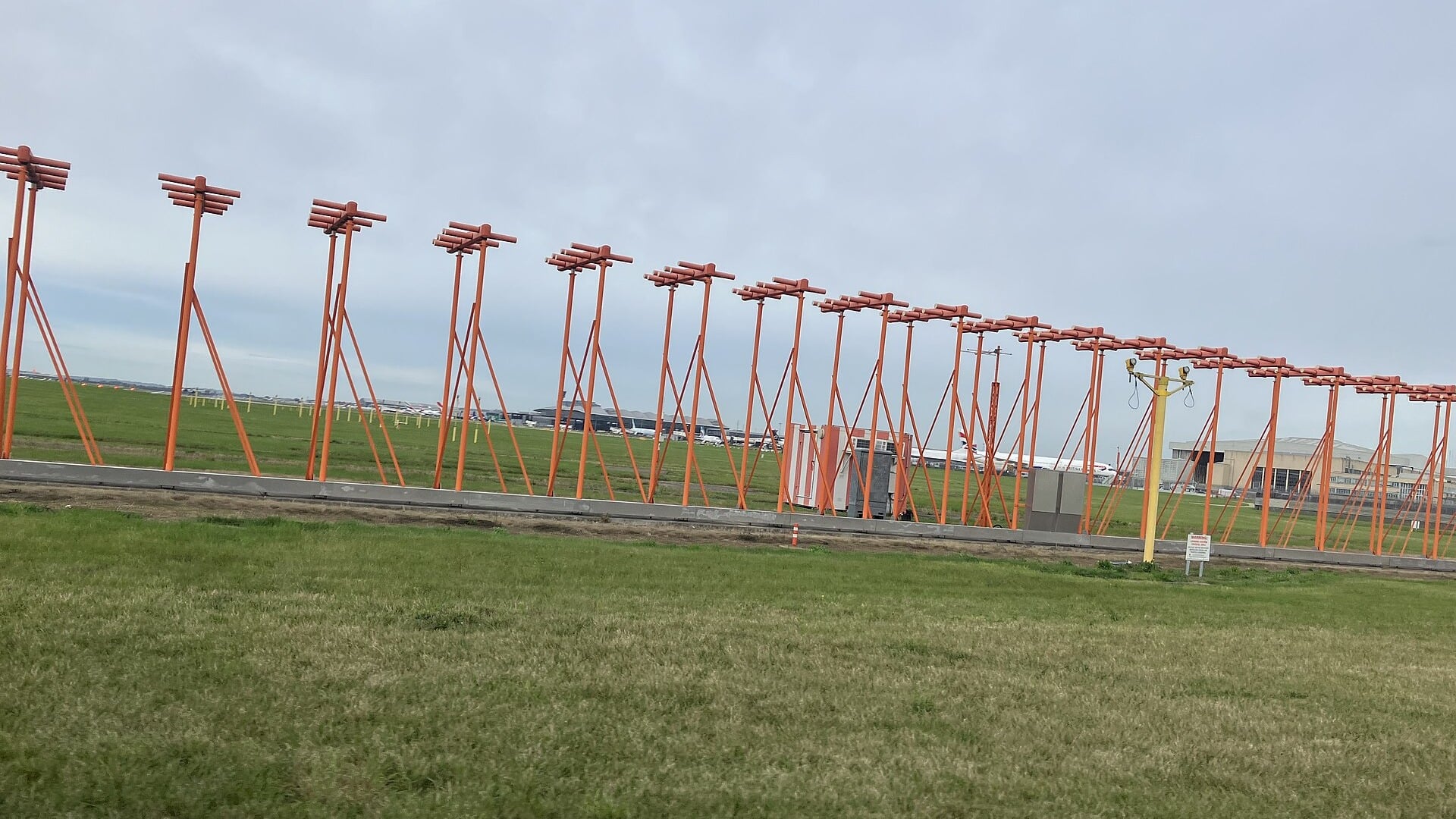
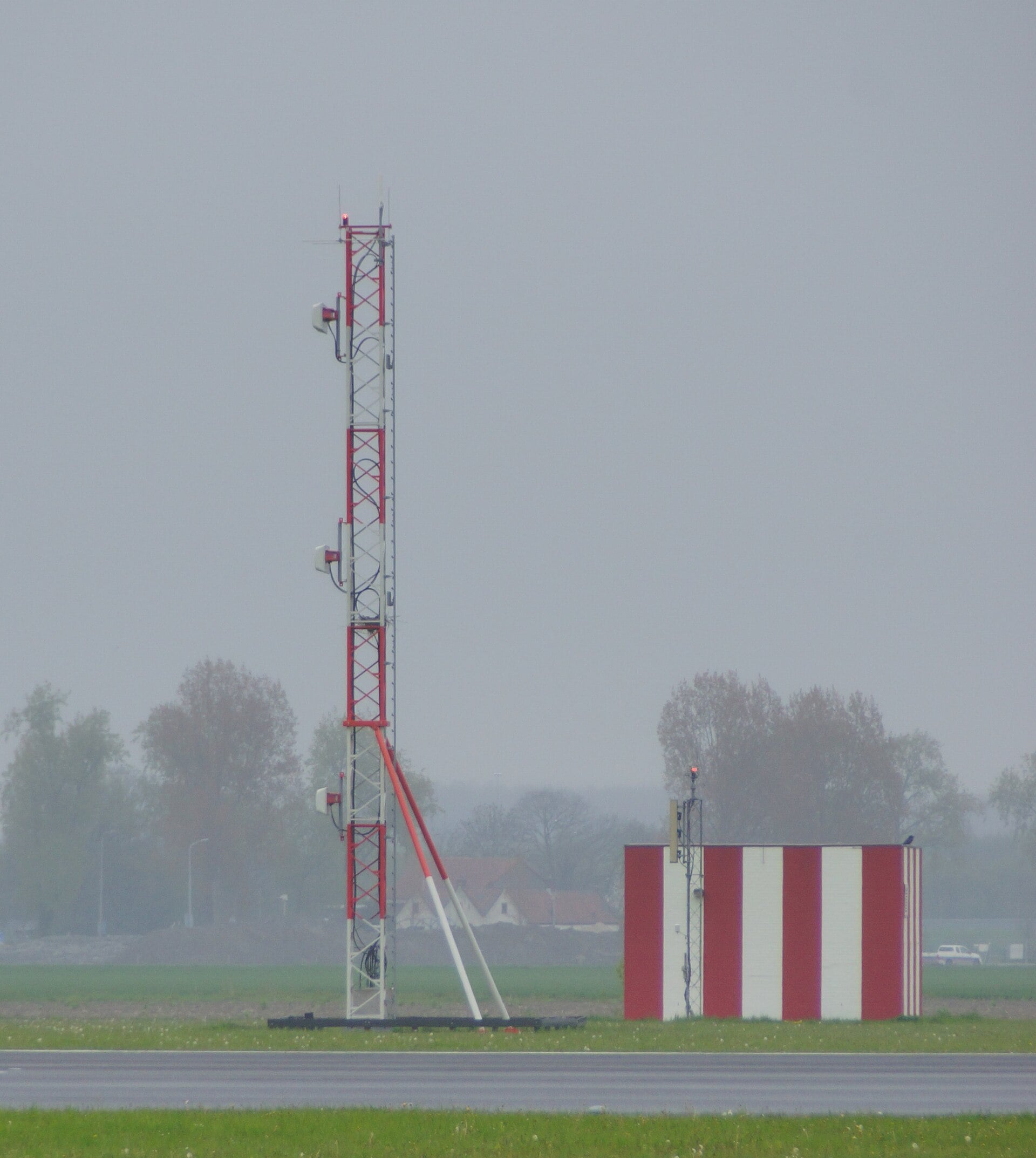
When fog closes in and the crew cannot see the runway, the Instrument Landing System tells them where it is. Two ground transmitters beside the runway send directional radio beams: the localiser gives left and right alignment with the centreline, the glide slope gives the descent angle. The aircraft receiver compares the beams and drives the needles, or the autopilot, down to the threshold.
The important property is physical. ILS is short-range, line-of-sight and tied to a transmitter sitting on the airfield you are landing at. To feed an aircraft a false ILS signal you would need a transmitter close to that runway, radiating on the right frequency, in a country’s regulated airspace. It is not impossible, but it is a completely different proposition from spoofing a satellite constellation.
Satellite navigation is the opposite. GNSS signals arrive from 20,000 kilometres up and are extraordinarily weak by the time they reach an aircraft. Overpowering them from the ground is cheap, and it can be done from far outside the airspace being affected.
Jamming is noisy; spoofing lies
Two things are usually lumped together. Jamming drowns the satellite signal, and the crew loses GPS. That is disruptive, but the failure is obvious: the box says it has no position.
Spoofing is the dangerous one. The attacker transmits counterfeit satellite signals, and the aircraft computes a position that is confidently, precisely wrong. Nothing announces a failure. As Tages-Anzeiger put it, pilots believe themselves to be on a different course from the one they are actually flying.
This is not a distant problem for Swiss operators. Dominik Jäggi, then head of Swiss’s long-haul fleet, told SRF in 2024 that GPS spoofing occurs daily on Swiss routes, for example over the Middle East. What has changed since is the geography: interference that was concentrated around conflict zones now shows up routinely over the Baltic, with NDR research tracing the origins to nearby Russia. EASA has recorded a marked increase since the start of the Russian war, and its own website lists roughly 40 cases in the past seven days alone, in airspace including Ankara, Warsaw and Sofia.
Our earlier reporting put numbers on the trend: IATA logged a 193 per cent rise in spoofing and 67 per cent in jamming between 2023 and 2025.
The Swiss plan, and the pilots’ objection
Switzerland is replacing ground-based landing systems with GPS-based navigation at several airports by 2030. La Chaux-de-Fonds has been without ILS since 2021. Lugano is slated to lose it. Bern-Belp, which handles scheduled services, was on the same list until recently. Skyguide, which is carrying out the change on federal instruction, describes the replacement as a cheaper, stable and reliable alternative, and notes that no interference incidents have so far been registered in Switzerland.
Aeropers, the Swiss pilots’ union, does not agree.
Skyguide’s answer to interference is procedural: if the satellite approach is unusable, the crew lands visually or diverts to a predefined alternate. Steffen’s objection is that this is precisely the case where the procedure fails. In bad weather, he told the paper, a reliable system matters most, because correcting visually is either impossible or possible only very late.

The regulator moves, and Bern is reprieved
The risk has now reached European regulators. EASA recently began recommending that national authorities keep ILS operational for emergencies, and in Switzerland that had immediate consequences: the federal government suspended the planned removal at Bern.
The Federal Office of Civil Aviation told the Tages-Anzeiger that the ILS installations at Zurich and Geneva will be maintained, and explained the Bern reprieve on the grounds that its ILS is now the last one at a regional airport in the Mittelland.
Read plainly, that is an admission that pilots need Bern as a usable diversion airfield when satellite navigation fails. Lugano gets no such reprieve, because Milan is close enough to serve as the alternate, so its removal proceeds as planned.
The wider argument about backups
The Swiss case is a small instance of a decision facing every air navigation service provider. Ground-based aids are costly, individually maintained, and mostly redundant on a normal day. Satellite navigation is cheaper, more flexible and enables approaches at airfields that could never justify an ILS. On efficiency grounds the case for switching is strong, and it was made long before electronic warfare became a routine feature of European airspace.
What has changed is the threat. A backup system is worth exactly what it saves you on the worst day, and the worst day now looks different from how it looked in 2015. That is why the industry is also pouring money into navigation that needs no satellites at all, from magnetic-anomaly navigation flown for four hours with GPS switched off to quantum magnetometers on uncrewed aircraft.
Those are years from routine airline service. The ILS beside the runway works today. The question Switzerland has just partly answered is whether saving its running costs is worth giving that up while the jamming maps keep filling in.
Frequently Asked Questions
What is an Instrument Landing System (ILS)?
Why is Switzerland removing ILS from some airports?
Has the removal been stopped?
What is the difference between GPS jamming and GPS spoofing?
Can an ILS signal be spoofed like GPS?
How common is GPS interference in European airspace?
Sources: Tages-Anzeiger (Christopher Gilb); EASA Safety Information Bulletin on GNSS interference; IATA; SRF; NDR; Skyguide; Swiss Federal Office of Civil Aviation; Afterburner reporting


0 Comments