
On the afternoon of Thursday 17 September 1992, an F-111E was coming home to RAF Upper Heyford in Oxfordshire after a routine training flight. In the cockpit sat Captain Jerry C. Lindh, the pilot, and Major David “Mike” McGuire, his weapon systems officer, both of the 55th Fighter Squadron.
On the approach the aircraft suffered what Lindh reported as a total hydraulic failure. In an F-111 that is close to the end of the argument. Witnesses on the base watched the swing-wings flapping through 25 or 30 degrees either side of level while the aircraft made what one of them described as a horrible sputtering noise, sinking towards the threshold of Runway 09.
Below the approach path lay the villages of Upper Heyford and North Aston. The crew stayed with the aircraft. It came down in a field short of the runway, just beyond the perimeter fence. Both men were killed.
Thirty-four years later the village still marks the date, and the story has found a second life online, where it is usually told with one important detail slightly wrong.
Quick Facts
| Date | Thursday 17 September 1992 |
| Aircraft | General Dynamics F-111E, serial 68-0052 |
| Unit | 55th Fighter Squadron, 20th Fighter Wing, USAFE |
| Base | RAF Upper Heyford, Oxfordshire, England |
| Crew | Capt. Jerry C. Lindh (pilot); Maj. David “Mike” McGuire (weapon systems officer) |
| Reported cause | Total hydraulic failure in the approach pattern |
| Impact point | Field south of Runway 09, roughly 1,700 feet short of the threshold, beyond the perimeter fence |
| Escape system | Two-seat crew escape module. Fired too low and too late; parachute did not fully deploy |
| Outcome | Both crew killed. No casualties on the ground |
| Memorial | Village memorial at Upper Heyford; 20th anniversary ceremony held 16 September 2012 |
What the aircraft was doing
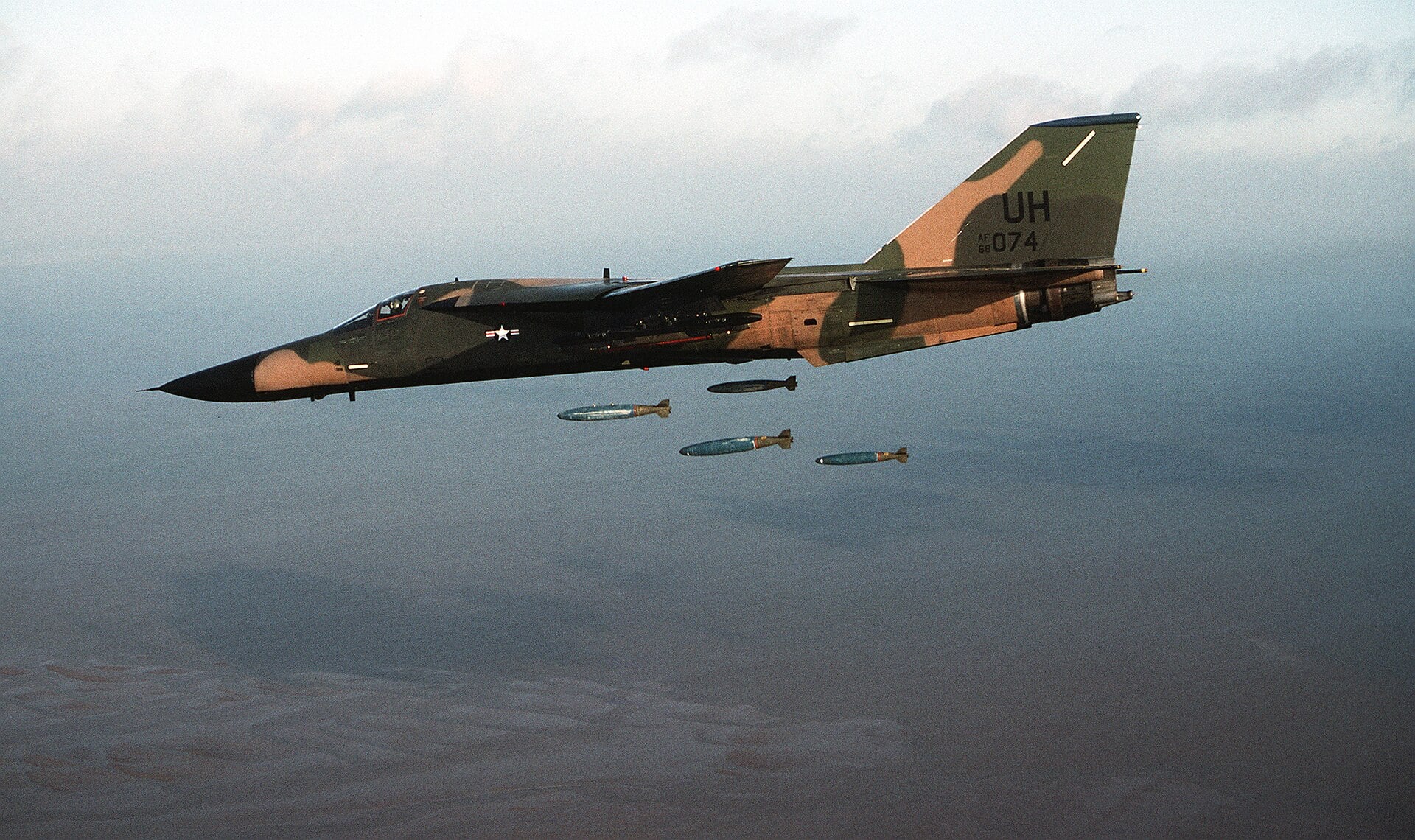
Accounts from people who were on the base that day, collected over the years on aviation forums and in the Aviation Safety Network’s file on the airframe, line up closely. The aircraft was at roughly 200 feet on the approach, already visibly in trouble. The wings were oscillating. Then, as it passed the edge of the village at something like 100 feet, it rolled hard right, through about 150 degrees, until it was very nearly inverted.
That roll is the whole story of what happened next, and it is the part that gets lost when the crash is retold as a simple act of will. An F-111 rolling inverted at a hundred feet has no options left at all.
The aircraft struck the ground in a field south of Runway 09, around 1,700 feet short of the threshold and just past the perimeter fence. It did not reach the houses.
The capsule that was supposed to save them
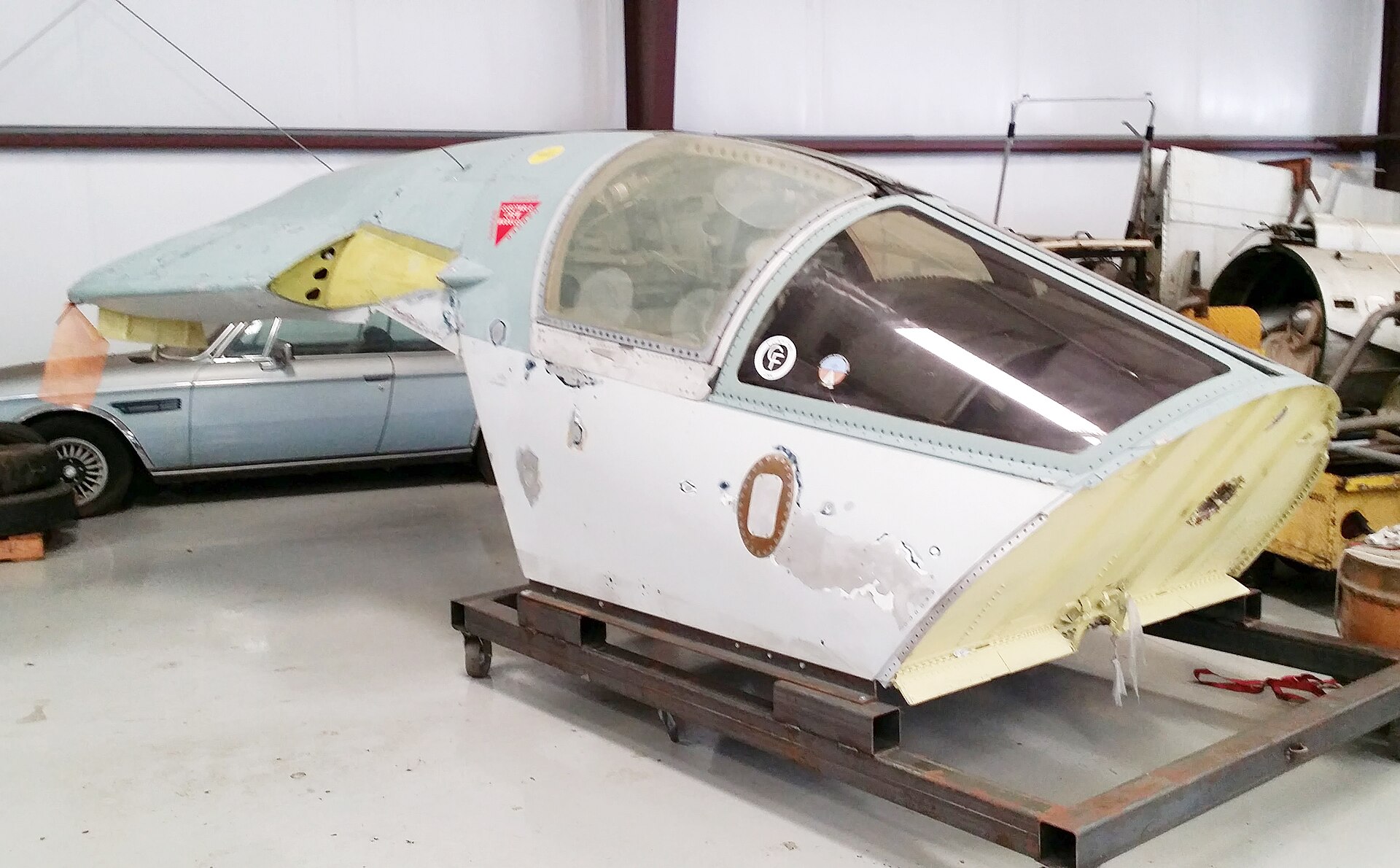
The F-111 did not have ejection seats. It had something far stranger and, on paper, far better: the entire two-seat cockpit was an escape module. Pull the handle and explosive cutting cord sliced the whole crew compartment out of the airframe, guillotines cut the cables and oxygen lines, and a rocket motor the size of a fence post threw the module clear. A small stabilising chute deployed at once, then a 70-foot ring-sail parachute brought it down. An inflatable bag under the floor cushioned the landing; more bags kept it afloat and upright if it came down in water.
General Dynamics rated the system across the whole flight envelope, from maximum speed and altitude down to ground level at 50 knots. On a serviceable aircraft sitting more or less the right way up, it worked, and it saved a good number of F-111 crews over the type’s career.
It could not help Lindh and McGuire. The module fired in the last seconds, with the aircraft rolled towards inverted and already making contact with the ground. A rocket that is designed to push the capsule upwards pushes it into the earth if the aircraft is upside down. The module was damaged in the initial impact and never gained the height its parachute needed. The official finding put it plainly: it did not achieve sufficient altitude to permit proper parachute deployment.
The detail the story usually gets wrong
The version of this story that circulates online says the crew were ordered to eject and refused. That phrasing comes from the official account: the US Air Forces in Europe write-up of the 2012 memorial ceremony says they were told by their control to eject, and Robert Menzies, chairman of the parish council and a retired RAF Air Marshal, used the same words.
Aircrew tend to wince at it, and they have a point. Nobody orders a crew out of an aeroplane. A controller or a supervisor can tell you the aircraft is finished and recommend you leave it; the decision to pull the handle belongs to the people strapped in, and it belongs to them alone. What Lindh and McGuire did was not disobedience. It was the exercise of the only authority that matters in that cockpit, and they used it to buy distance from the houses.
The second thing worth saying is that the timeline is tighter than the retelling suggests. This was not a long, deliberate glide with a decision taken at leisure. From the hydraulic failure to the impact was a matter of seconds, and for the last part of it the aircraft was rolling out of control. The choice they made was real. The window in which they made it was very small.
“Although they were told by their control to eject they refused. Their decision was an extraordinary act of bravery and self-sacrifice.”
Robert Menzies, chairman of Upper Heyford Parish Council and a retired RAF Air Marshal, September 2012
The village built them a memorial
Upper Heyford had lived with the noise of American bombers since 1970 and did not always love it. What it did after September 1992 was raise a memorial to two airmen it had never met. The inscription reads: in memory of Capt. Jerry Lindh and Maj. David “Mike” McGuire, who gallantly gave their lives to save our village on 17th Sept. 1992. God bless, from all your friends at Upper Heyford.
On 16 September 2012, twenty years on, the village held a ceremony at the stone. Kathy McGuire, Mike’s widow, came from the United States and laid a wreath. Brigadier General John Quintas, then the US defence attaché in London, spoke, as did Menzies.
“These two men, in their actions during the last moments of their lives, did what we all hope we would do. They put the lives of countless other people above their own.”
John Quintas, Brigadier General, US defence attaché in London, at the 2012 memorial ceremony
“Living back in the United States, I often wonder if Mike’s sacrifice is still remembered here. Being here today has made me realize that what he did still matters, and that is very comforting.”
Kathy McGuire, widow of Maj. David “Mike” McGuire, September 2012
What is there now
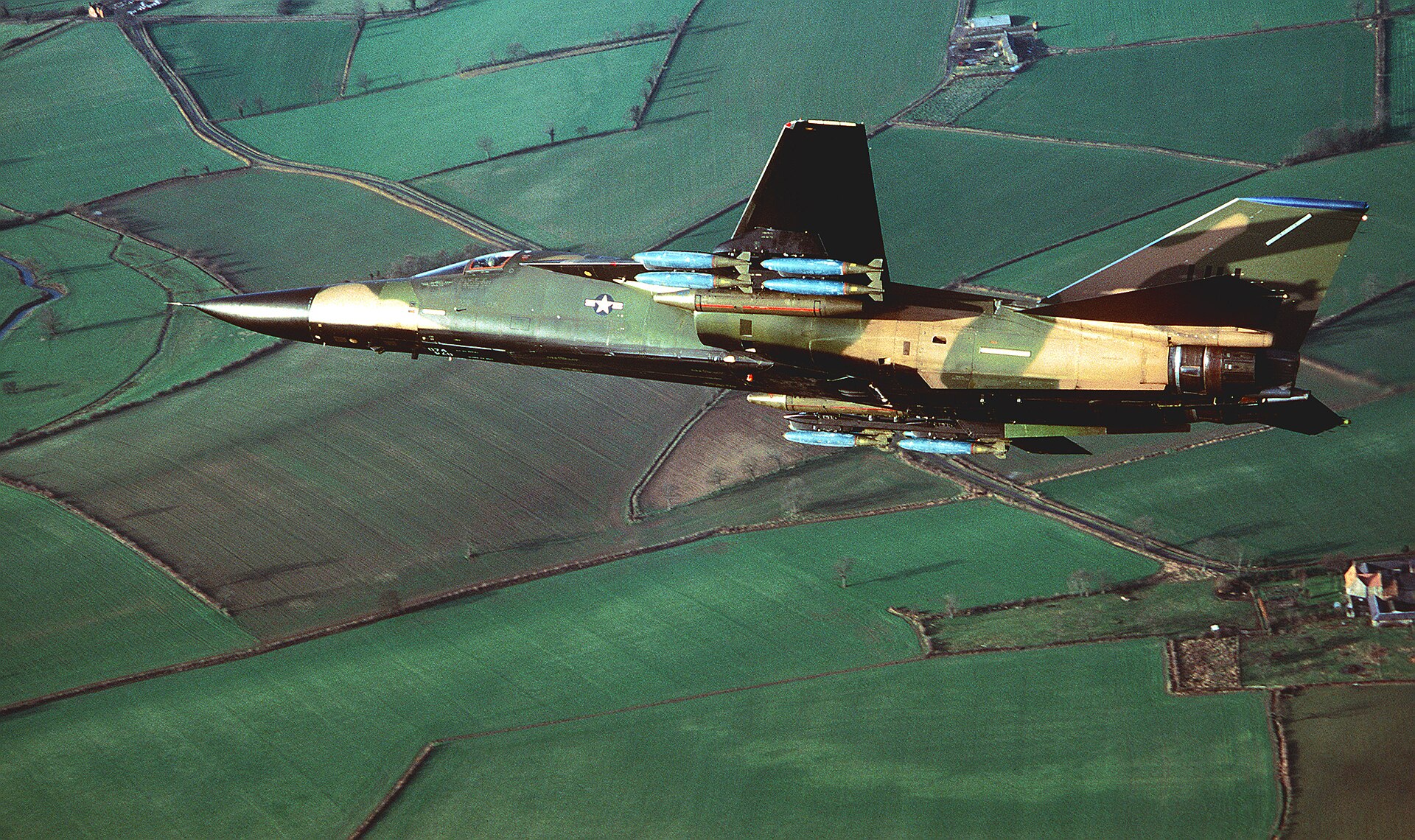
The F-111 did not stay much longer than the crew. The last E-model flew out of Upper Heyford on 7 December 1993, the flight line closed eight days later, and the US Air Force returned the airfield to British control on 30 September 1994. The site is now Heyford Park, a housing and business development built around the old Cold War infrastructure, with the hardened aircraft shelters still standing among the new streets.
The memorial is still there too, and the village still gathers at it. That is the unusual part of this story. Aircraft accidents generate paperwork and, if the crew is lucky, a line in a squadron history. Very few of them produce a stone in an English village that people are still visiting more than thirty years later.
If you want to understand what Lindh and McGuire were sitting in, the interview above is worth the time: an F-111 pilot describing an escape-module ejection that did work, and what the experience is actually like. The gap between that account and what happened at Upper Heyford is about a hundred feet of altitude and a roll to the right.
The post that brought this back
The story resurfaced this week on Instagram, where the aviation account theaviationcircle retold it to a large audience. Most of it holds up well against the record. The ejection-order detail is the one place where the popular version and the way military flying actually works pull apart, and it is worth getting right, because the truth is more to the crew’s credit rather than less.
Frequently Asked Questions
What happened at RAF Upper Heyford on 17 September 1992?
Who were the crew of the F-111 that crashed at Upper Heyford?
Did the F-111 crew disobey an order to eject?
Why did the F-111 escape capsule not save the crew?
How did the F-111 crew escape module work?
Is there a memorial to the Upper Heyford F-111 crew?
What happened to RAF Upper Heyford?
How many F-111s were lost in accidents?
Sources: US Air Forces in Europe (USAFE) news release on the 2012 memorial ceremony; Aviation Safety Network wikibase entry for F-111E 68-0052; PPRuNe first-hand accounts; ejectionsite.com F-111 crew module documentation; Upper Heyford Heritage; theaviationcircle on Instagram; Afterburner reporting

0 Comments