
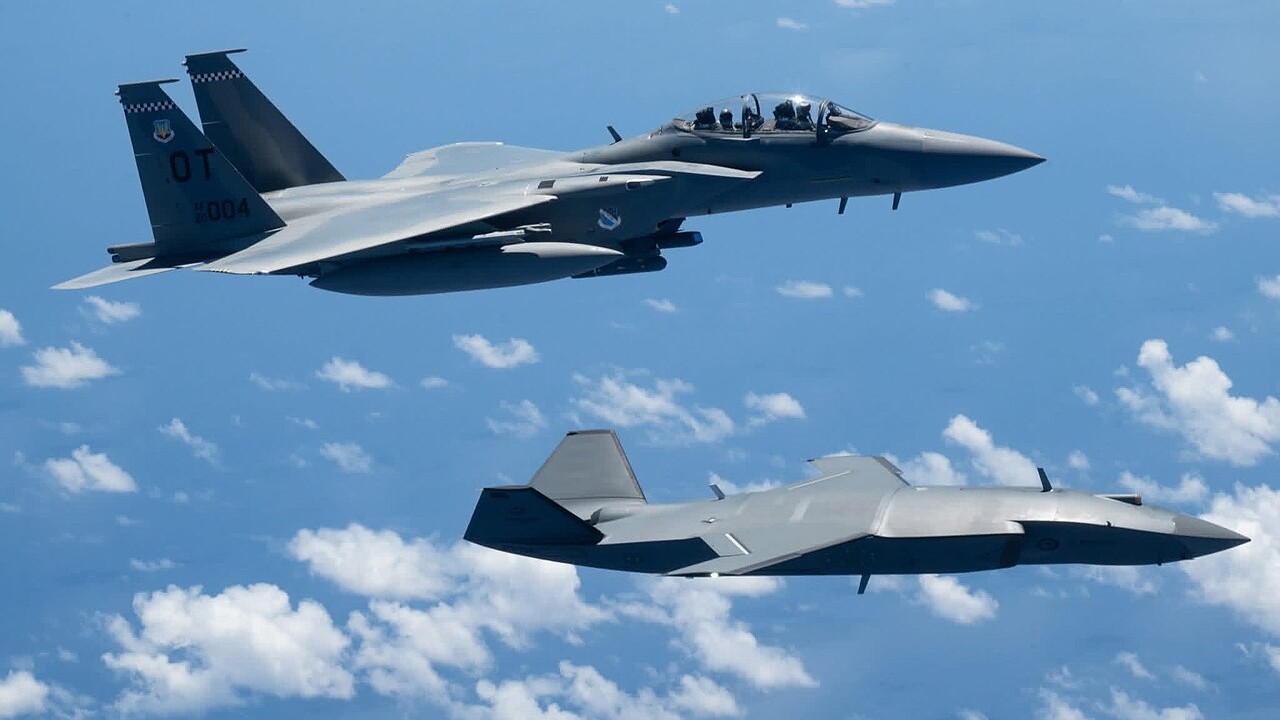
Europe has spent three years arguing about whether it should build its own fighters or keep buying American ones. The answer taking shape is neither, and it is not really about fighters at all.
At the Air & Space Forces Association’s Air, Space & Cyber Symposium on 15 September 2026, the commander of US Air Forces in Europe described a continent lining up to join the American Collaborative Combat Aircraft programme — while simultaneously building its own. Lt. Gen. Jason T. Hinds, commander of USAFE-AFAFRICA and of NATO’s Allied Air Command, put it in the least diplomatic language available.
Germany, he said, is “heavily involved.” The Scandinavians and the Dutch are interested. And USAFE’s job, increasingly, is making sure that when everyone turns up with their own robot wingman, the robots can talk to each other.
Quick Facts
Who spoke: Lt. Gen. Jason T. Hinds, commander of USAFE-AFAFRICA and NATO Allied Air Command, who answered the CCA and interoperability questions; Chief Master Sgt. Joshua J. Wiener, command chief, gave opening remarks
Where: AFA Air, Space & Cyber Symposium, 15 September 2026
US target: At least 500 CCAs in service by 2032, per Air Force Secretary Troy Meink
Named as interested: Germany, the Netherlands, Scandinavian countries
European programmes running anyway: UK Storm Fighter, German loyal wingman, Saab A3-001, GCAP (UK, Italy, Japan)
USAFE’s stated priority: Commonality first, then “interoperability by design”
NATO study: Joint Air Power Competence Centre, Kalkar, Germany, on modular CCA employment
Why Europe wants drones more than it wants fighters
The arithmetic is brutal and it is not new. USAFE flies a fraction of the fighter force it kept in Europe during the Cold War. European air forces have been shrinking their own crewed fleets for thirty years. And the threat picture has gone the other way.
Autonomous aircraft that fly alongside crewed fighters offer the one thing nobody in Europe can otherwise buy: combat mass, without a corresponding increase in aircrew, squadrons and permanently based personnel. That is the whole proposition.
USAFE is selling it to allies with two scenarios. The defensive one has a CCA sitting inside an integrated air and missile defence network, shooting down one-way attack drones and cruise missiles so that an expensive crewed fighter does not have to. The offensive one has autonomous aircraft suppressing or destroying integrated air defences and attacking fielded forces during an incursion into NATO territory.
Hinds said allies want both. Which is convenient, because the American CCA is quietly becoming capable of both: Anduril released imagery only the day before showing its YFQ-44A Fury fit-checked with air-to-ground weapons, a jet designed around air-to-air work growing a strike role in public.
The nightmare scenario is not Russia
It is thirty incompatible drones.
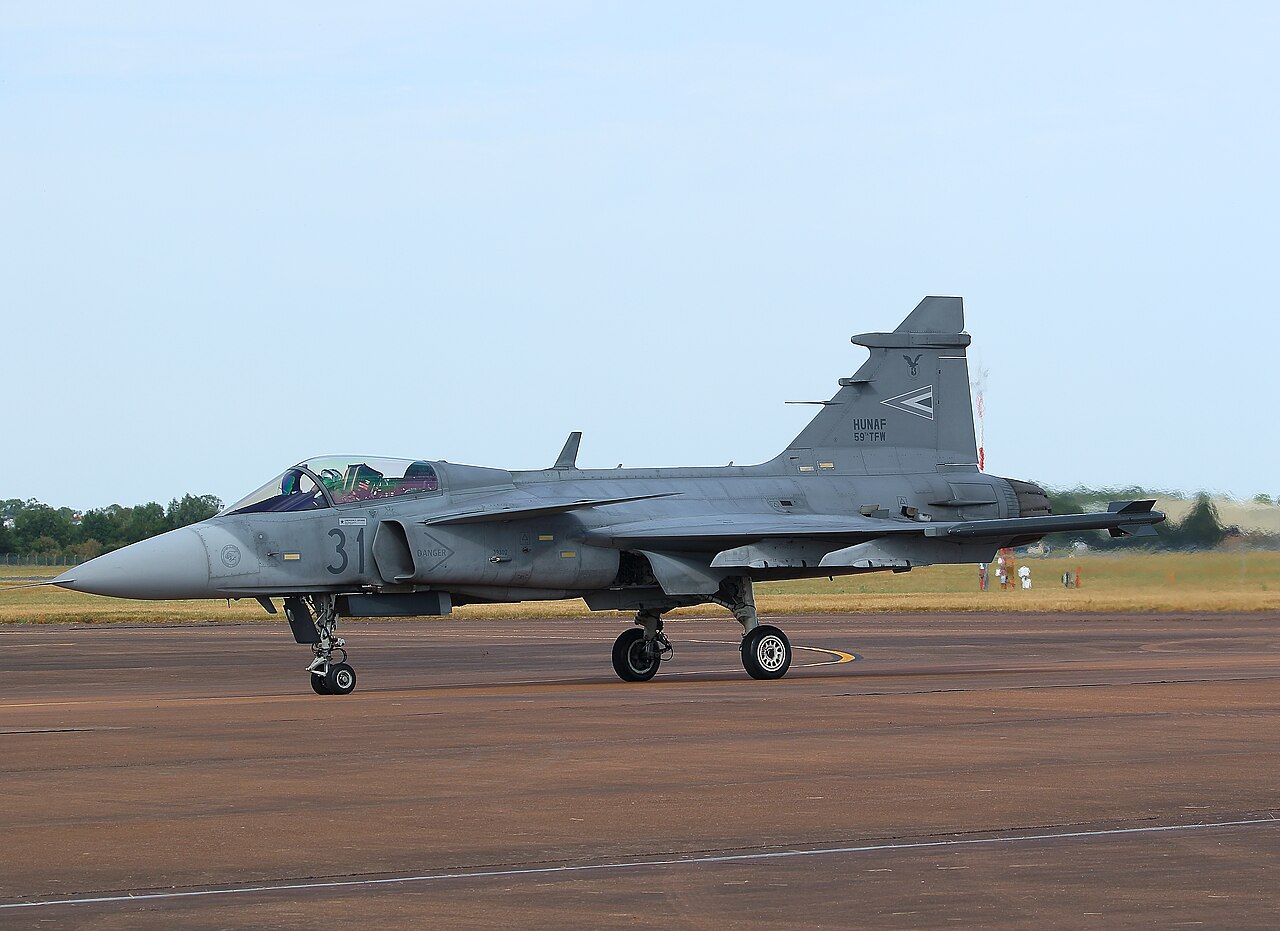
Britain has launched its Storm Fighter CCA programme. Germany is pursuing a separate loyal-wingman effort and wants CCAs by 2029. Saab unveiled the A3-001, a stealthy supersonic concept roughly the size of a Gripen E and aimed at flying alongside it. The UK, Italy and Japan are jointly building GCAP and its associated uncrewed systems. France, having watched FCAS collapse, is pouring money into Rafale F5 and its own drone wingmen.
Every one of those is a national answer to the same question. Left alone, they produce a fleet that cannot share a datalink, a weapon or a maintenance chain.
Where identical equipment is impossible — which is most of the time — USAFE wants what Hinds calls “interoperability by design”: NATO data standards written into national systems before they enter service, not bolted on afterwards at somebody’s expense.
He was blunt about why that matters, noting that some countries have previously bought equipment incompatible with NATO systems and then faced a choice between paying to modify it or making the alliance bend around them. Neither is a good look.
NATO has already commissioned homework on this. The Joint Air Power Competence Centre at Kalkar in Germany has produced a study on employing CCAs modularly across the alliance, covering sustainment, training and exercises. Hinds’s review of it was affectionate: “It was a pretty long paper, but the nations wanted it.”
Saab’s A3-001 full-scale model, unveiled at Malmen in August 2026, is the most concrete European answer so far — tailless, internal weapons, a General Electric F414 for supersonic speed, and a demonstrator promised within eighteen months. Sweden has not ordered it as an operational aircraft.
The kill chain that crosses four borders
The most interesting thing Hinds described was not a drone at all. It was a sentence about who pulls the trigger.
An F-35 detects a target. It passes the track to another node on the network. A ground-based system operated by a different NATO country launches the weapon. The aircraft, the sensor, the command-and-control network and the missile need not belong to the same nation, or even the same service.
This is not theoretical. Dutch F-35s have already used a Lockheed Martin data-exchange system called Keystone to pass targeting coordinates to Israeli-made PULS rocket artillery. A Dutch jet, an American network, an Israeli launcher.
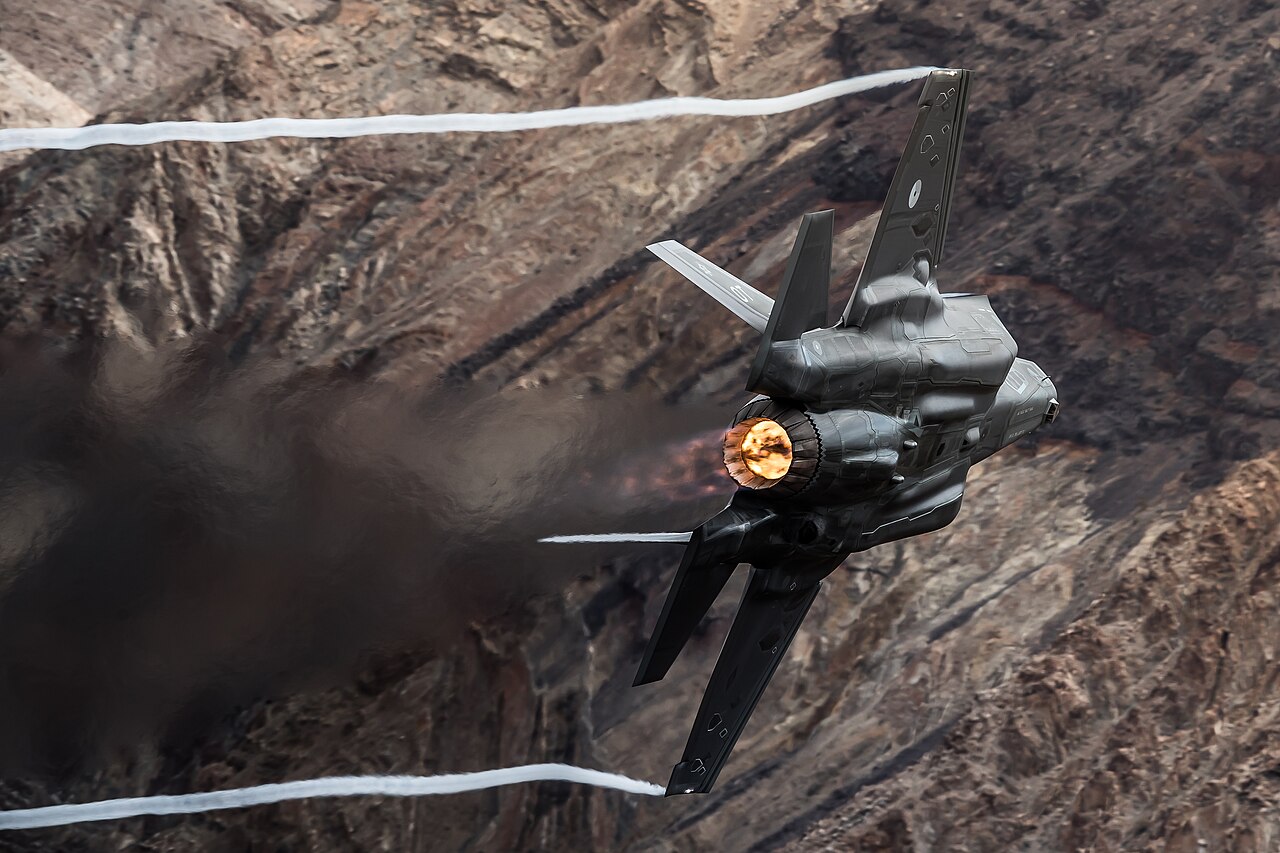
Scale that up to hundreds of autonomous aircraft, each needing a command-and-control network that any partner can plug into, and the integration problem stops being a technicality. Hinds said USAFE is making “significant advances” in cross-servicing, cross-loading and cross-flying allied aircraft — the unglamorous groundwork that decides whether any of this works on a bad day.
The same logic applies to ordnance, and here he was refreshingly indifferent to the flag on the box.
Not a divorce
Asked directly whether Europe building its own aircraft and drones signals a move away from American equipment, Hinds’s answer was two words: “No, I don’t.”
His framing is that the transatlantic defence-industrial base is expanding rather than splitting. Sweden, newly in NATO, keeps building Gripens, and NATO members fly them — Hungary leases Swedish jets, and others are looking. Co-manufacturing and co-production talks, he said, are something he welcomes.
There is an obvious self-interest in that view. A USAFE that has spent decades covering Europe with too few fighters does not much care whose factory the extra combat mass comes from, so long as it answers to the same network.
The aircraft are still years away. The standards that decide whether they can fight together are being written now, which is the part nobody photographs.
Correction, 17 September 2026
This article originally attributed the quotes and remarks below to Chief Master Sgt. Joshua J. Wiener, command chief of USAFE-AFAFRICA, following the reporting this piece was based on. US Air Forces in Europe – Air Forces Africa Public Affairs has since advised that the Collaborative Combat Aircraft and allied-interoperability answers at the roundtable were given by Lt. Gen. Jason T. Hinds, commander of USAFE-AFAFRICA and NATO Allied Air Command. Chief Wiener took part in the roundtable and delivered opening remarks. The attributions have been corrected throughout.
Sources: TWZ; Air & Space Forces Association; Joint Air Power Competence Centre; Saab; Anduril; Aviation Week.

0 Comments