
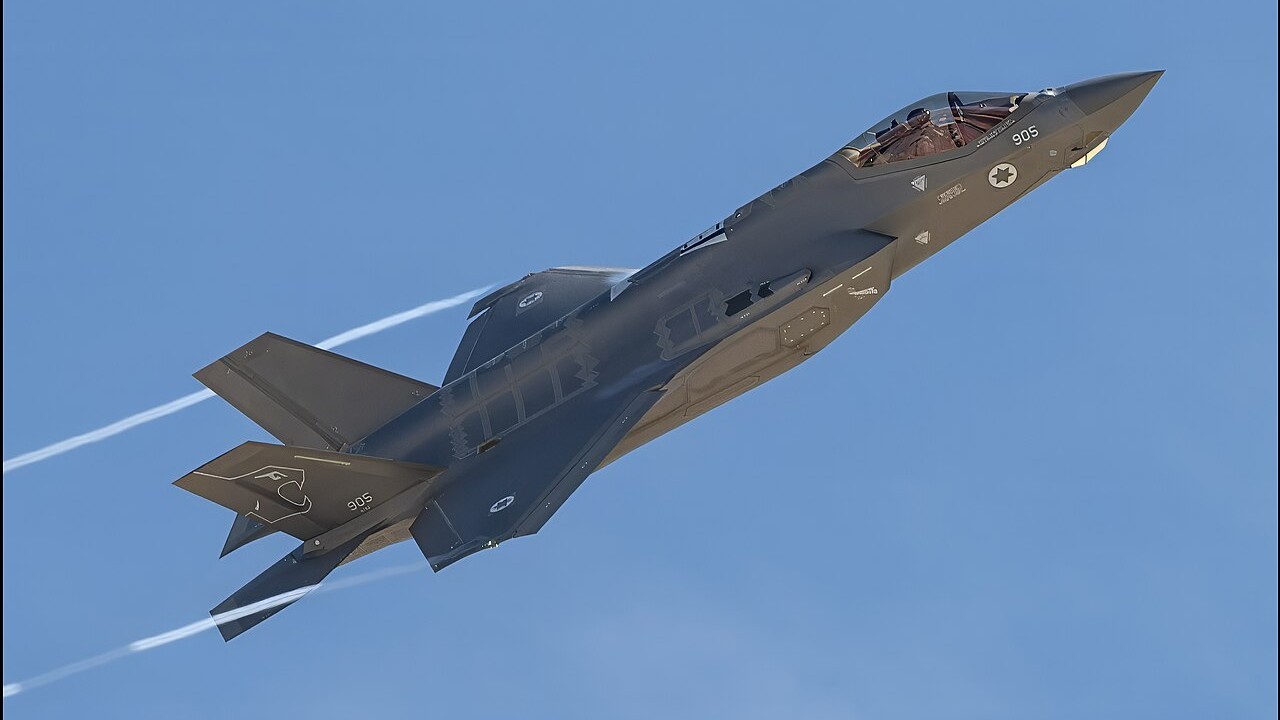
Israel’s F-35s have been flying the hardest missions of the last two years with somebody else’s bombs. That is about to change.
Rafael Advanced Defense Systems announced at the Air, Space & Cyber conference on 15 September 2026 that it is integrating the SPICE 1000 air-to-surface munition onto the F-35. The work is being done jointly with Lockheed Martin at Lockheed facilities in the United States, and Rafael expects it to finish over the next several months.
It is the first time an Israeli stand-off weapon has been put onto the Lightning II, and Rafael has been clear that Israel is not intended to be the only customer.
Quick Facts
Weapon: Rafael SPICE 1000 — Smart, Precise Impact, Cost-Effective, 1,000 lb class
Guidance: Electro-optical seeker with scene-matching; does not depend on GPS for terminal guidance
Stated range: More than 120 km (about 75 miles), using deployable wings after release
In service: With the Israeli Air Force since 2017, carried by F-15 and F-16
Integration partner: Lockheed Martin, at US facilities
Timeline: Completion expected within several months of September 2026
Pentagon paperwork: FY2027 F-35 Modernized Selected Acquisition Report, dated 21 April 2026, cleared for publication in August
What SPICE 1000 actually does
SPICE is an electro-optically guided stand-off family. The 1,000 lb-class member is the one in question here, and its selling point is a specific kind of stubbornness.
Most precision weapons degrade badly when satellite navigation is jammed or spoofed, which is now routine rather than exotic. SPICE gets around that by carrying a picture of the target. Its electro-optical seeker runs scene-matching algorithms against stored imagery, comparing what it sees on the way in with what it expects to see. That gives it a terminal guidance path that does not rely exclusively on GPS.
The second part is reach. Deployable wings snap out after release and extend the glide, giving a stated range beyond 120 kilometres. That is far enough to launch from outside the engagement envelope of a good many surface-to-air systems.
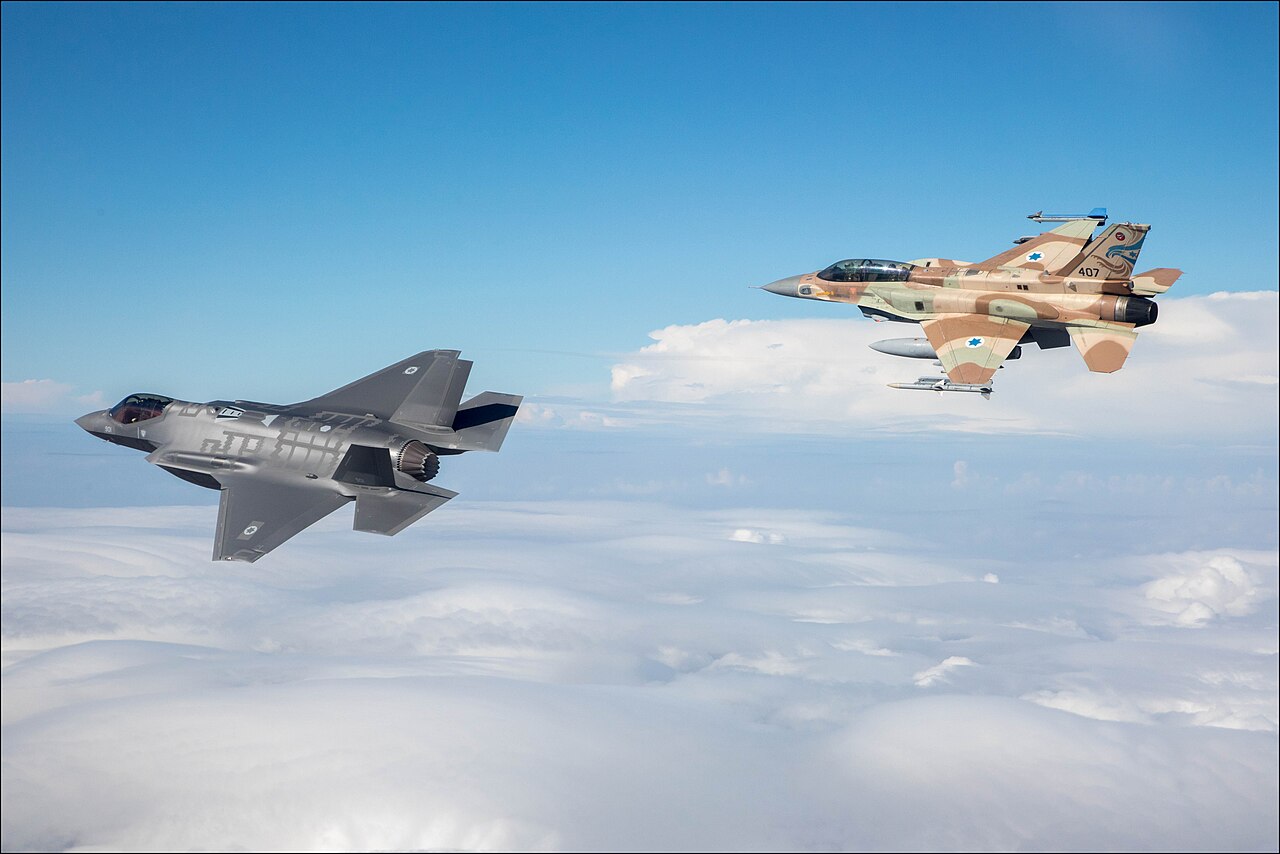
Rafael says it has been operational with the Israeli Air Force since 2017 and describes it as one of the service’s primary precision weapons, carried by F-15s and F-16s. An F-16I Sufa can lift four.
The bit the Pentagon had already written down
Rafael’s announcement was the public version. The paperwork got there first.
The US Department of War’s FY2027 F-35 Modernized Selected Acquisition Report, dated 21 April 2026 and cleared for publication in August, records that integration of the Israel-unique SPICE 1000B was progressing, with a strategy to accelerate it through something the document calls a “SPICE Lite” process.
The report does not explain what SPICE Lite means. What it implies is a deliberately narrow, fast integration path — get a working capability onto Israeli aircraft now, rather than queue behind the far larger Block 4 modernisation that most other F-35 operators are waiting on for new weapons.
The same passage notes that Extended Range Tanks and an electronic warfare pod for the Israeli Air Force are also in work. Israel has, as usual, negotiated itself a separate lane.
The question nobody has answered
Here is the detail that will decide how much this matters, and it has not been made public: whether the SPICE 1000 will be carried inside the F-35 or hung on external pylons.
The distinction is not pedantry. Internal carriage is what preserves the aircraft’s low radar signature; external stores turn a stealth fighter into a fast, well-sensored conventional one. A 1,000 lb weapon with a deployable wing kit is an awkward shape, and neither Rafael nor Lockheed has said which way this goes. Until they do, the honest reading is that a stand-off weapon with a 120-kilometre reach is useful either way — a jet that can shoot from 120 km out does not need to be invisible at 20 km — but the two configurations buy very different things.
Up to now, Israeli F-35Is have gone to work with American ordnance: GBU-31 JDAMs and GBU-39 Small Diameter Bombs. Adding a domestic weapon changes the supply question as much as the tactical one.
And then the export case
Rafael has said explicitly, according to Breaking Defense, that F-35 operators worldwide will be able to field SPICE 1000 at a later stage.
That is a substantial commercial prize. The F-35 is operated or on order in numbers across Europe, the Middle East and the Indo-Pacific, and weapons integration on the type is tightly controlled precisely because the aircraft is a multinational programme with a shared certification framework. Getting a non-US weapon through that framework once makes the second time considerably easier.
For European operators watching their own GPS environment deteriorate, a stand-off weapon that navigates by looking at the ground is not a niche interest. It is close to a requirement.
Sources: Rafael Advanced Defense Systems; TWZ; Breaking Defense; US Department of War FY2027 F-35 Modernized Selected Acquisition Report; The Aviationist.

0 Comments