
On the departures board at Minsk National Airport, flight ATS6446 from Tehran was listed under a carrier name that told you nothing at all: Private owners. It appeared once. Nobody has said who was on it.
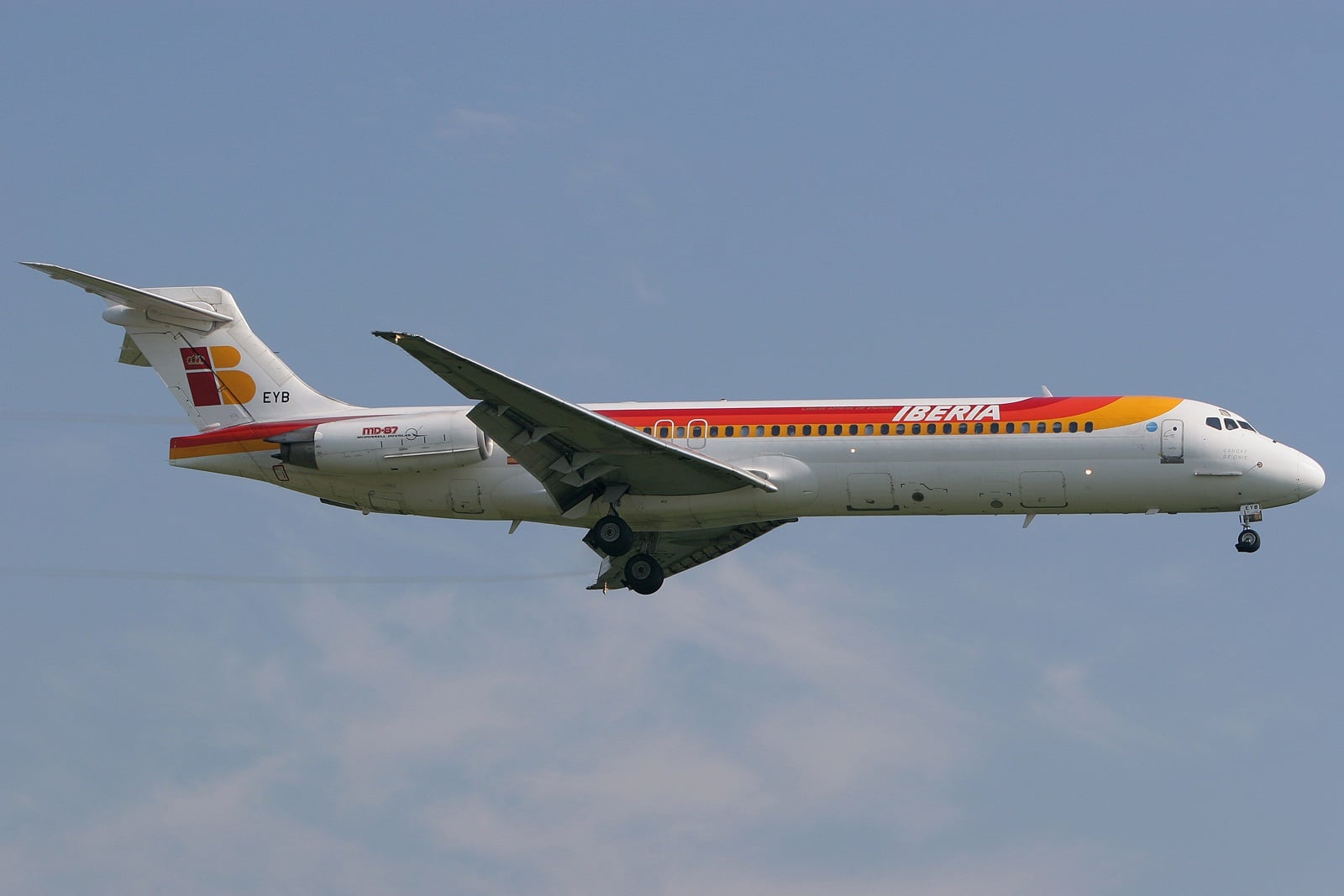
The aircraft was a McDonnell Douglas MD-87 built in 1992 and delivered new to Japan Airlines. Somewhere in the intervening thirty-four years its cabin was gutted and rebuilt for 25 passengers, with lie-flat seats, a private area and a conference room. It now wears the Iranian registration EP-SAT and flies for a charter operator based on Kish Island called Atlas Air.
Between 16 August and 6 September it flew Tehran to Minsk and back four times. Then it stopped, and Minsk disappeared from the airline’s booking system entirely. Two days before that last flight, the US Treasury had added its parent company to the sanctions list.
Quick Facts
- Route: Tehran to Minsk, flight numbers IRH6446 / ATS6446 outbound, IRH6447 / ATS6447 back
- Aircraft: McDonnell Douglas MD-87, registration EP-SAT, delivered to Japan Airlines in March 1992
- Cabin: 25 seats, lie-flat, with a separate conference area
- Fares: roughly $960 to $1,220 one way; up to $2,400 return
- Flights operated: four each way — 16, 23 and 30 August and 6 September 2026
- The end: the 13 September flight never operated; Minsk vanished from the booking system
Two Sanctioned Capitals With No Way to Fly Between Them
Iran and Belarus have been drifting toward each other for years. Both back Russia’s war on Ukraine. Both sit under Western sanctions. They have signed up to cooperation in industry, agriculture, defence, and eased travel between them.
What they have not managed is a scheduled air link. Belavia dropped Minsk to Tehran in 2018. A 2023 restart with Mahan Air produced exactly one flight and then nothing. For two capitals that talk constantly about partnership, the practical business of getting a delegation from one to the other keeps failing.
Which is roughly where a 34-year-old twinjet with a boardroom in the back comes in.

A Schedule That Was Not on Any Schedule
The Belarusian outlet Nasha Niva, following reporting by Blizko.by, traced what actually happened. The first service was billed for 16 August, weekly on Sundays thereafter. Four round trips ran: 16, 23 and 30 August, and 6 September. A flight on 9 August had already positioned the aircraft into Minsk beforehand.
The route never appeared in Minsk National Airport’s seasonal timetable. The official PDF schedule was reissued twice after the service was announced and still did not list it. Nasha Niva reports the flight was spotted on the airport’s live information display exactly once — carrier column: Private owners. All eight legs were, however, visible on public flight-tracking services, which is how anyone knows about it at all.
At up to $2,400 for a return, this was not a service for the general public. Twenty-five lie-flat seats and a conference room describe a specific kind of passenger, and it is not a tourist.
Then Washington Moved
On 8 September the US Treasury announced what it called Operation Economic Outcast and, in a single action, designated 36 targets across Iran’s aviation sector — including all 27 remaining active Iranian airlines. Atlas Aviation Group, which trades as Atlas Air Plus, was on the list.
The designation was made under Executive Order 13902, which targets specific sectors of the Iranian economy, following an aviation-sector determination on 24 August. Alongside it, Treasury’s financial-crimes bureau issued an alert asking banks to watch for the procurement networks that keep Iranian aircraft flying.
The last Tehran to Minsk flight was on 6 September. The sanctions landed on 8 September. The 13 September flight did not happen. Nobody has officially connected those three dates, and the Belarusian aviation Telegram channel that first pointed out the sequence was careful to call it a coincidence worth noticing rather than a proven cause.
There is a competing explanation circulating too. A commenter on the airline’s own Instagram post claimed Mehrabad Airport in Tehran had revoked Atlas Air’s licence, and that passengers holding tickets were left paying penalties. That has not been confirmed by anyone, and it should be treated as what it is: an unverified comment on social media.
The Fleet, and the Strangest Aircraft in It
Atlas Air Plus is small. Two aircraft are active: a Boeing 737-400 and the VIP MD-87. The aviation database CH Aviation lists two more as inactive, an Avro RJ85 and an MD-83.
That MD-83 has a past. According to aeroTELEGRAPH, it is the aircraft that once flew the FIFA World Cup trophy around the world in a full-length Coca-Cola livery — operated at the time by Danish Air Transport, painted head to tail in red. The red, reportedly, is still there.
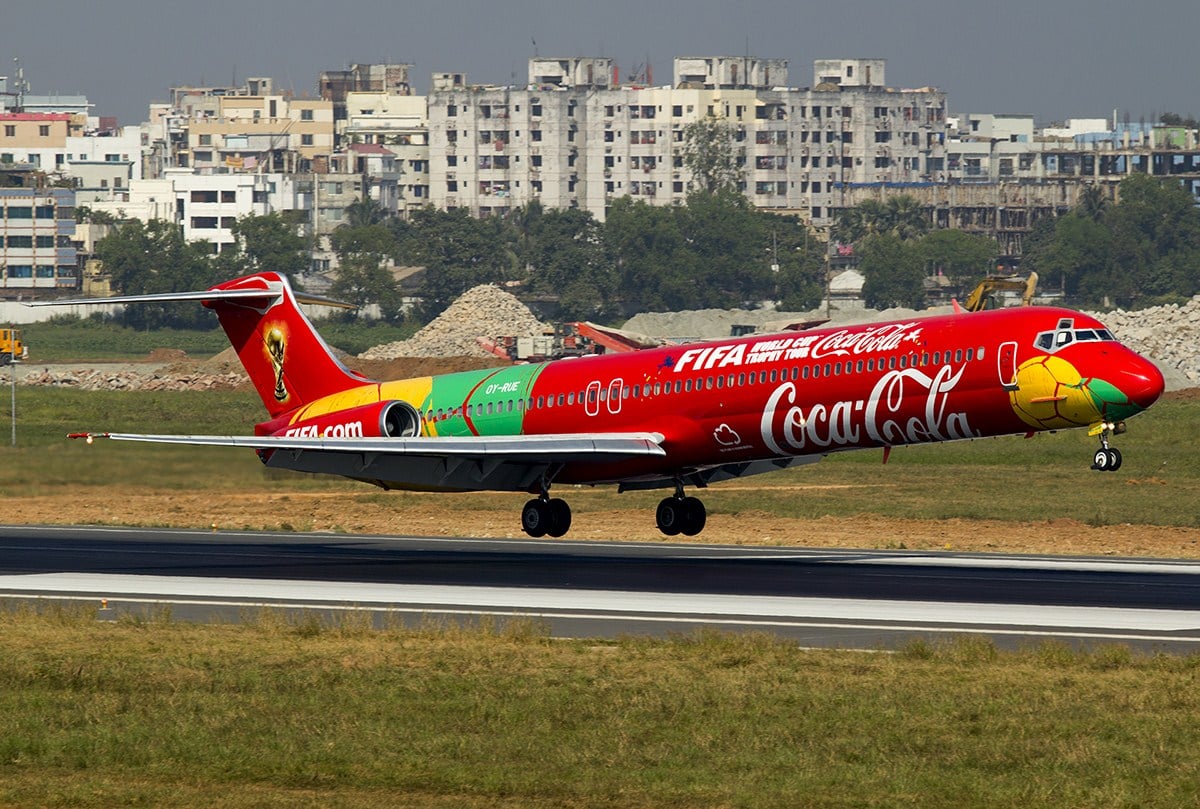
It is a strange lineage for a sanctioned Iranian charter fleet: a Japan Airlines short-haul jet turned flying boardroom, and a soft-drink marketing aircraft that carried the most photographed trophy in sport.
None of which answers the question the whole episode raises. Four flights, at prices no ordinary traveller would pay, on a route that officially did not exist, between two capitals that cannot arrange a normal scheduled service. Somebody wanted to move a small number of people quietly and repeatedly, and then had to stop.
The aircraft is still there. The route is not.
Sources: Nasha Niva, Blizko.by, aeroTELEGRAPH, US Department of the Treasury, CH Aviation.


0 Comments