
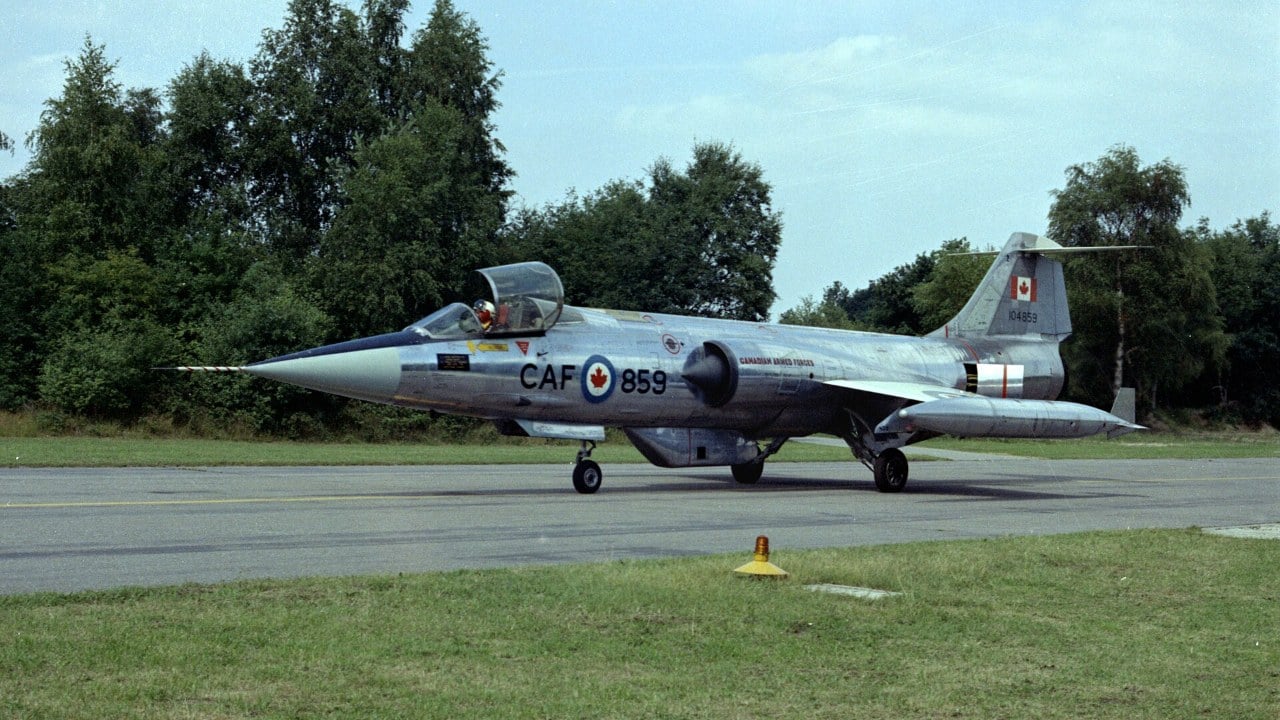
On 1 February 1968 the Royal Canadian Navy, the Canadian Army and the Royal Canadian Air Force stopped existing. Not reorganised, not renamed — abolished, as legal entities, and replaced by a single service called the Canadian Armed Forces. Canada was the first Western country to do it, and for a long time the only one. What followed was seven and a half years in which the country had military aircraft, military pilots and military airfields, but no air force organisation of any kind.
Quick Facts: unification
- Event: Unification of the Canadian Armed Forces
- In force: 1 February 1968
- Legislation: Bill C-243, the Canadian Forces Reorganization Act
- Royal Assent: 8 May 1967 — not 1 February 1968, as is often stated
- Earlier step: Bill C-90, integration of headquarters, in force 1 August 1964
- Minister: Paul Hellyer, Minister of National Defence
- Abolished: Royal Canadian Navy, Canadian Army, Royal Canadian Air Force
- Replaced by: A single service, the Canadian Armed Forces
- Air Command created: 2 September 1975 — seven and a half years later
- Uniforms restored: 1985
- Service names restored: 16 August 2011
Two steps, four years apart
The change is almost always told as a single event, and it was not. There were two, and conflating them makes the story unintelligible.
Integration, 1964. Bill C-90 amended the National Defence Act, passed on 7 July 1964 and came into force on 1 August. It abolished the three separate service chiefs of staff and the Chiefs of Staff Committee, replacing them with a single Chief of the Defence Staff — the first being Air Chief Marshal Frank Miller. Three service headquarters and, by one account, hundreds of tri-service committees disappeared. The services themselves carried on.
Unification, 1968. Bill C-243, the Canadian Forces Reorganization Act, was first read in November 1966, passed the Commons on 25 April 1967, received Royal Assent on 8 May 1967 and came into force on 1 February 1968. That is when the three services ceased to exist.
A widely mirrored account has the bill receiving Royal Assent on 1 February 1968. It did not: that was the in-force date, nine months after assent, and the parliamentary session in which it was passed had already been prorogued on 8 May 1967.
What the White Paper actually promised
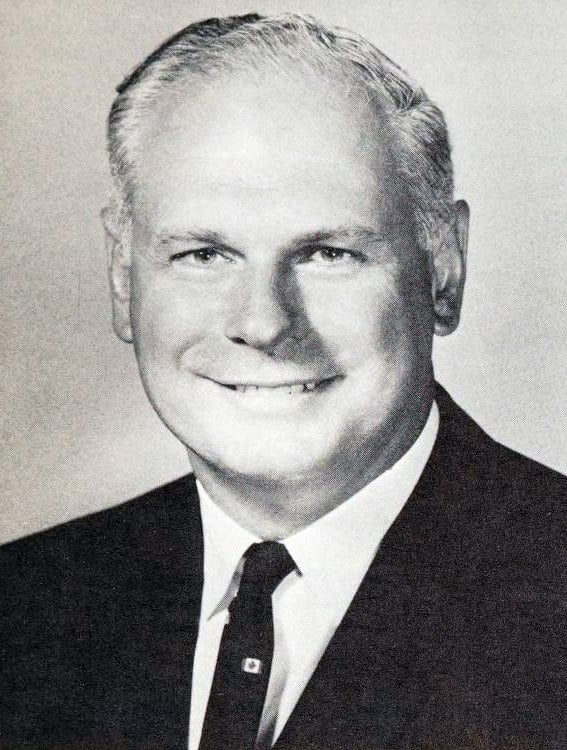
The 1964 White Paper on Defence, tabled on 26 March 1964 over the names of Paul Hellyer and his associate minister Lucien Cardin, is the founding document — and it is more careful than its reputation.
Its central proposal was “the integration of the Armed Forces of Canada under a single Chief of Defence Staff and a single Defence Staff”. And then, in the sentence that did all the work: “This will be the first step toward a single unified defence force for Canada.”
The stated objectives were operational control and effectiveness, streamlined decision-making and reduced overhead, and the paper claimed that integration “should also result in considerable savings” — without naming a figure. Hellyer’s real target was arithmetic: lift capital equipment from fourteen per cent of the defence budget in 1963 to twenty-five per cent by 1970, which meant cutting manpower by roughly thirty per cent.
So the White Paper legislated integration and named unification only as an eventual destination. Three years later Parliament went to the destination directly.
What changed on the day
One service. The RCAF’s own official history puts it without cushioning: the three services “were abolished, and became a single service called the Canadian Armed Forces.”
One rank structure, on the army pattern. An air vice-marshal became a major-general, a wing commander a lieutenant-colonel, a squadron leader a major, a flight lieutenant a captain. Naval ranks went the same way.
One uniform — the rifle-green “CF greens” — in place of navy blue, khaki and air force blue. The rollout was slow; a contemporary observer in August 1967 expected general use “probably by late 1972”.
And one chain of command, with functional commands underneath instead of service ones.
The Canadian military before unification.
The air force that wasn’t there
This is the part that matters most to anyone interested in aviation, and it is routinely missed.
Six functional commands had been announced in June 1965 to replace eleven: Mobile, Maritime, Air Defence, Air Transport, Training and Materiel. After 1968, Canada’s aircraft were distributed among them. As the RCAF’s history records, “The rest of the former RCAF, Fleet Air Arm and Army Air resources were divvied up between Mobile and Maritime Commands.” Air Defence Command and Air Transport Command survived in their own right — but, in the same source’s words, they “continued more or less as before, except that they had no superior air authority to whom they could respond or appeal.”
That sentence is the whole thing in one line. Air power survived. The air force did not.
Air Command was not created until 2 September 1975, absorbing Air Defence Command, Air Transport Command, Training Command, the Air Division and Air Materiel Command. For seven and a half years there was no organisation in Canada whose job was to think about air power as a whole.
Air Command in 1975 was, in effect, the first reversal of unification — ten years before the uniforms came back, and thirty-six before the names did.
What happened to the naval air squadrons

The most revealing thing about the fate of Canada’s naval air squadrons is what the official record does not say. The Directorate of History and Heritage lineages for the surviving squadrons record no 1 February 1968 event at all. The lineage simply continues. They kept their numbers and lost their prefixes, their parent service and, in due course, their branch.
VS 880, the Tracker squadron, runs straight through: 880 Anti-Submarine Squadron from 1951, Maritime Surveillance from 9 June 1975, Maritime Reconnaissance from 3 March 1980, reduced to nil strength in 1990. VU 32 carried on until 1992. HS 50, flying Sea Kings, split into HS 423 and HS 443 in September 1974.
VF 870, the Banshee squadron, is the exception that corrects a common assumption. It was disbanded on 7 September 1962. Canada’s carrier fighter capability was gone six years before unification; unification did not kill it.
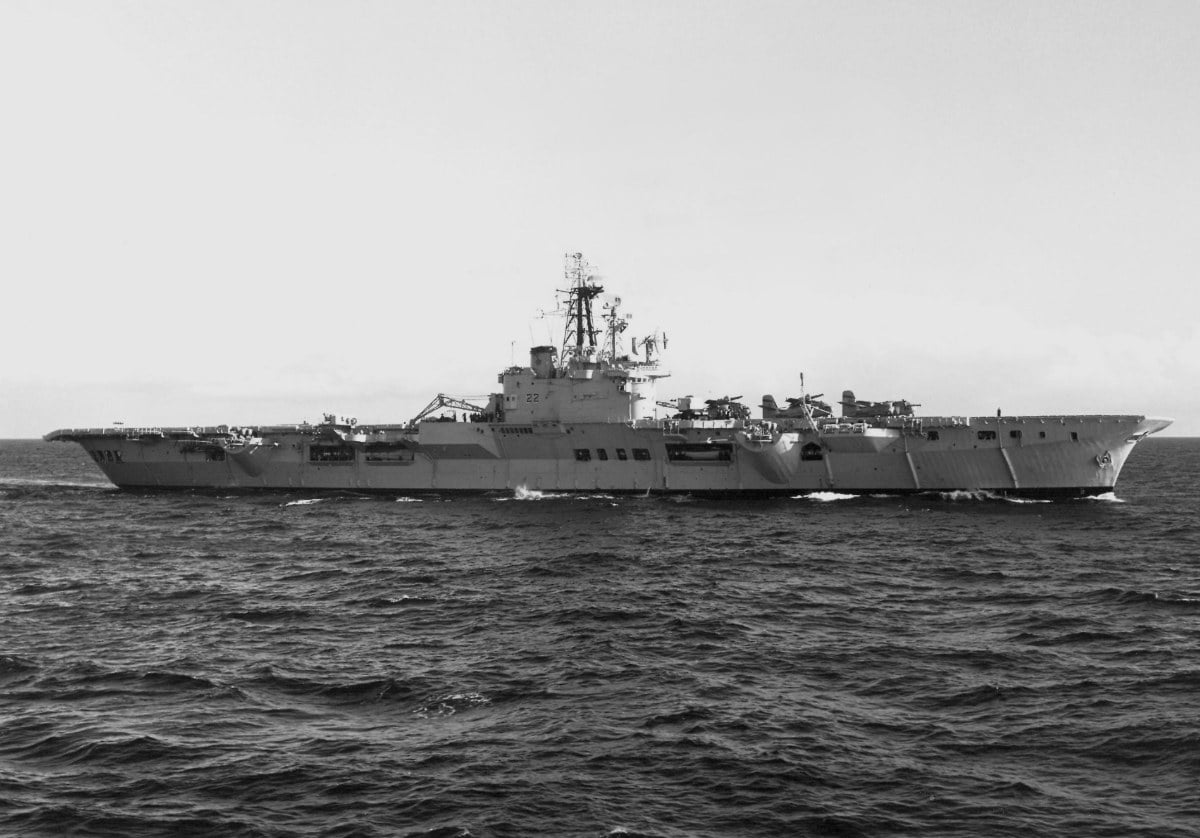
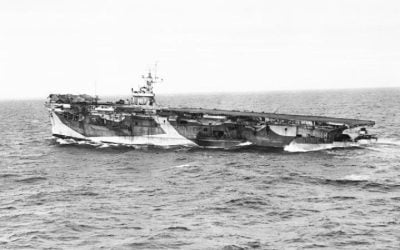
The Royal Canadian Naval Air Branch itself was disbanded in 1968 and became the Maritime Air Group, a sub-unit of Maritime Command. In 1975 even that passed to Air Command. And the carrier the squadrons had flown from, HMCS Bonaventure, paid off on 3 July 1970, three years after an expensive refit.
The designations we still use
The system that gives us the CC-130, the CH-149 and the CF-188 dates from 1968 and is a direct product of unification. Every designation begins with C for Canada; the second letter gives the role — C for cargo, E for special electronic installation, F for fighter, H for helicopter, P for patrol, T for trainer, U for uncrewed, X for experimental — followed by a number from a single sequence shared across all types.
Before it, the three services had used three incompatible systems. After it, one aircraft, one number.
The rollout was not instant, though. The Sea King was still officially the CHSS-2 after unification, and did not become the CH-124 until 1970.
The admirals
The resistance has come down to us as “the admirals’ revolt”, and the phrase is doing more work than the evidence supports.
Rear-Admiral William Moss Landymore is the central figure. He had joined as a cadet in 1934, specialised in gunnery, and in January 1966 became the first Commander of Maritime Command. He was, in the careful language of his official Royal Canadian Navy biography, “encouraged to retire early in July 1966”, because “he disagreed with the Minister of National Defence on whether to continue the traditional naval identity”. He was asked on 12 July and resigned on 19 July 1966, effective the following April. Legion Magazine, writing in 2021, puts it less gently: he was relieved of command and ordered to retire.
He was not the only one. Vice-Admiral H.S. Rayner, Chief of the Naval Staff, was retired prematurely within five months of the White Paper. Rear-Admiral Jeffry Brock was forced out as Vice Chief of the Naval Staff. Rear-Admiral M.G. Stirling joined Landymore in demanding that the navy keep its identity. In June 1966 four very senior officers left at once, among them the Chief of the Defence Staff and the Vice Chief.
How many admirals went in total is genuinely disputed. A contemporary account in August 1967 says five rear-admirals resigned besides Landymore, between July 1966 and January 1967. Legion Magazine in 2021 says six senior admirals plus some air marshals and generals over two years. We give both rather than splitting the difference.
But was it a revolt? The standard academic treatment, David Burke’s 1978 article, is titled “Hellyer and Landymore: The Unification of the Canadian Armed Forces and an Admiral’s Revolt” — singular. An oral-history study of the navy’s own officers found no organised revolt at all: resistance was discreetly suppressed, officers stayed “quiet and non-assertive”, constrained by an ethos against public dissent.
What they actually did is documented and it is not a mutiny. Landymore gave testimony to a parliamentary committee in June 1966 — from which, by one account, his remarks about unification’s moral problems were deleted before delivery. Officers objected to the minister in person at Halifax in September 1966. And then they resigned, one at a time, over about eighteen months. There is no verified evidence of a joint letter, a concerted plan or a coordinated mass resignation. It was a series of resignations that looked like a revolt in the newspapers.
Buttons and bows
The sharpest exchange of the whole affair was about clothing, which is either trivial or the entire point depending on who you ask.
At HMCS Stadacona in Halifax in September 1966, Hellyer told assembled naval personnel that their uniform “was not ordained by God”, and provoked what one account calls an unprecedented outburst from the officers present. He dismissed the objections as “buttons and bows”, irrelevant to military efficiency.
The historian J.L. Granatstein, no admirer of the reform, thinks that was Hellyer’s fatal error rather than his structural reasoning — that loyalty to the navy, army and air force was vital to fighting men, and that without the green uniform Hellyer “might have been remembered as one of the greatest Defence ministers”.
An account of the post-unification period in the Canadian Forces.
Forty-three years of putting it back
Every symbolic element that unification removed was eventually restored. The structure was not.
1975: Air Command created, restoring a single air authority.
1985: Distinctive Environmental Uniforms replace the CF greens after about fifteen years. We could not find an exact date or decision document for this and print only the year.
16 August 2011: the historic service names come back.
2013: Canadian Army divisional nomenclature, patches, gorget patches, corps shoulder titles and traditional officer rank insignia — pips and crowns — restored.
The 2011 announcement was made by Defence Minister Peter MacKay, who said that “restoring these historic identities is an important way of reconnecting today’s men and women in uniform with the proud history and traditions they carry with them as members of the Canadian Forces”, and, more bluntly, that “a country forgets its past at its own peril”. The Chief of the Defence Staff, General Walt Natynczyk, framed it as continuity rather than reversal: “By restoring the historic designations of the Canadian Forces we are continuing to show unified strength here at home, and abroad.”
That is the crucial point about 2011 and it is constantly got wrong. The names came back. The single service did not go away. The Royal Canadian Air Force today is an element of the Canadian Armed Forces, not a separate service as it was before 1968.
The 2013 restorations cost money and were reported as such: army dress uniform jackets at $3.1 million, naval officer rank insignia at $1.35 million, divisional shoulder patches at $1 million and new crowns and pips at $250,000, against a total reported as $4.5 million — a figure that does not reconcile with its own components, and we flag that rather than quietly fixing it. The NDP defence critic Jack Harris asked the obvious question: “This is certainly not an austerity measure. For what, to throw back to the Second World War?”
Did it work?
The administrative case is largely conceded even by critics. Service trade classifications fell from 350 to 97. Recruiting, basic training and support were integrated. The Canadian Forces Base concept consolidated facilities. The three service headquarters became National Defence Headquarters in 1972.
The operational case was never made. Major-General Daniel Gosselin, writing for the Canadian Military Journal on the fortieth anniversary, calls unification “idealistic—and unproven” and concludes that while it removed redundancies, “it did not correspond to a true operational need”. David Bercuson is harsher: “The creation of a truly effective fighting force did not figure in the government’s agenda.” Douglas Bland argues it failed on its own terms, because officers went on perceiving their responsibilities in service terms regardless of what the statute said.
And the savings? Nobody has published a figure for what unification actually saved. Hellyer talked about finding a billion dollars to move from housekeeping into weapons. No source we reached quantifies what was realised, and we are not going to invent one.
In fairness to the reform, Canada unified in 1968 and the United States moved decisively toward jointness with Goldwater-Nichols only in 1986. Whatever else it was, it was early.
The ceremony in Halifax on 16 August 2011 restoring the historic service names.
What the aviators kept
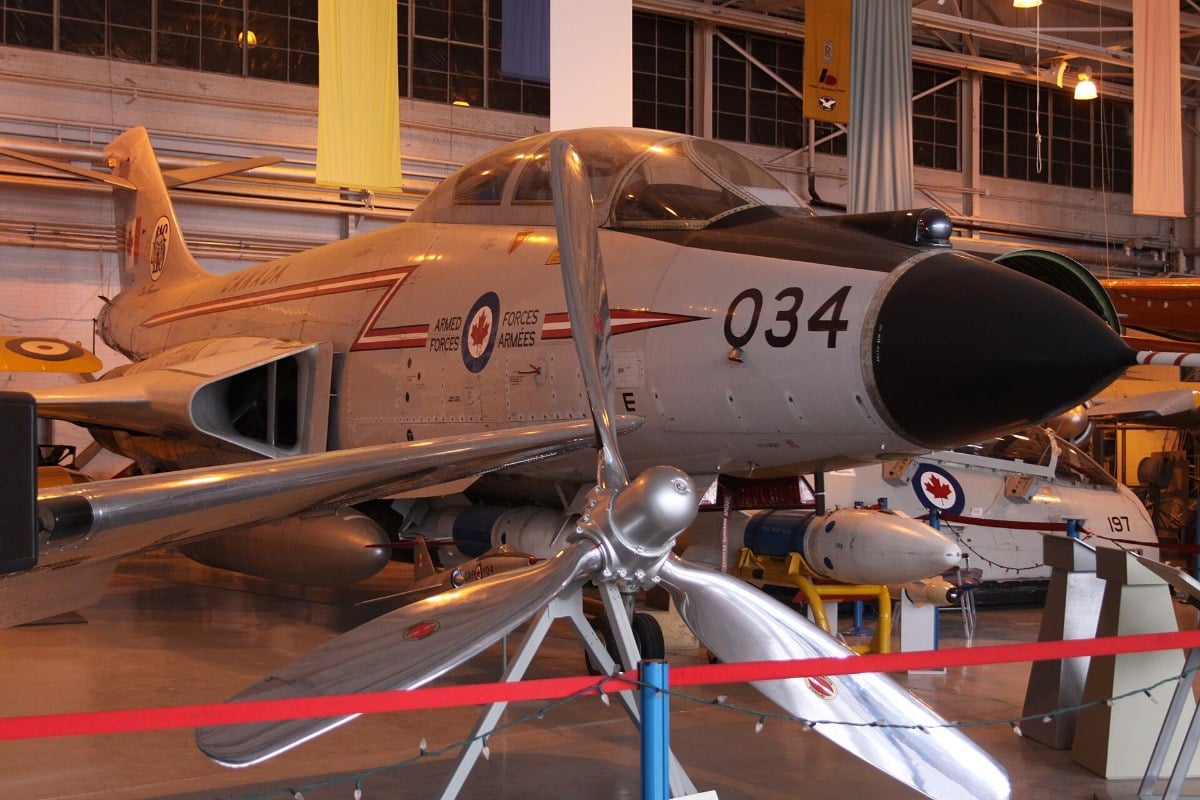
An RCAF pilot who woke up on 1 February 1968 found that his service had ceased to exist, his rank had an army name, his uniform was going to turn green, and his squadron now answered to a command run by soldiers or sailors. He kept his aircraft, his airfield and the number on the side of his hangar.
Over the next forty-three years he got the rest of it back, piece by piece, in an order almost exactly opposite to the one in which it had been taken: the air command in 1975, the uniform in 1985, the name in 2011. What he never got back was the thing that was actually abolished — a Royal Canadian Air Force that was a service in its own right.
The badge on the sleeve says Royal Canadian Air Force. The statute still says Canadian Armed Forces.
Sources: Royal Canadian Air Force, “The genesis of Air Command”, canada.ca; Directorate of History and Heritage official squadron lineages, canada.ca; White Paper on Defence, Department of National Defence, March 1964; Government of Canada news releases of 16 August 2011 and 8 July 2013; Daniel Gosselin, “Hellyer’s Ghosts: Unification of the Canadian Forces is 40 Years Old”, Canadian Military Journal (2008); Bienvenu and Zimmerman, The Navy Speaks Out (2008); The Canadian Encyclopedia; Legion Magazine; US Naval Institute Proceedings, August 1967; CBC News; Canada’s Aviation Hall of Fame; Canadian Naval Review; Canada Year Book 1967. Figures that differ between sources are flagged in the text.
0 Comments