
For six months the accounting was guesswork, satellite imagery and leaks. Last week the United States government published its own figures, twice.
On 14 September the Pentagon’s Lead Inspector General delivered its first quarterly report to Congress on Operation Epic Fury. A day later the Congressional Budget Office went further, attaching replacement costs in 2026 dollars. Between them they confirm officially, for the first time, what Iran has done to American airpower since 28 February.
It is worse than the headline numbers suggest, and the reason is not the aircraft. It is the missiles that are no longer in the magazines.
Quick Facts
| The reports | Pentagon Lead Inspector General, 14 Sep 2026; Congressional Budget Office, 15 Sep 2026 |
| Period covered | 28 February to 30 June (IG) and to 1 August (CBO); open-source tally runs to 18 September |
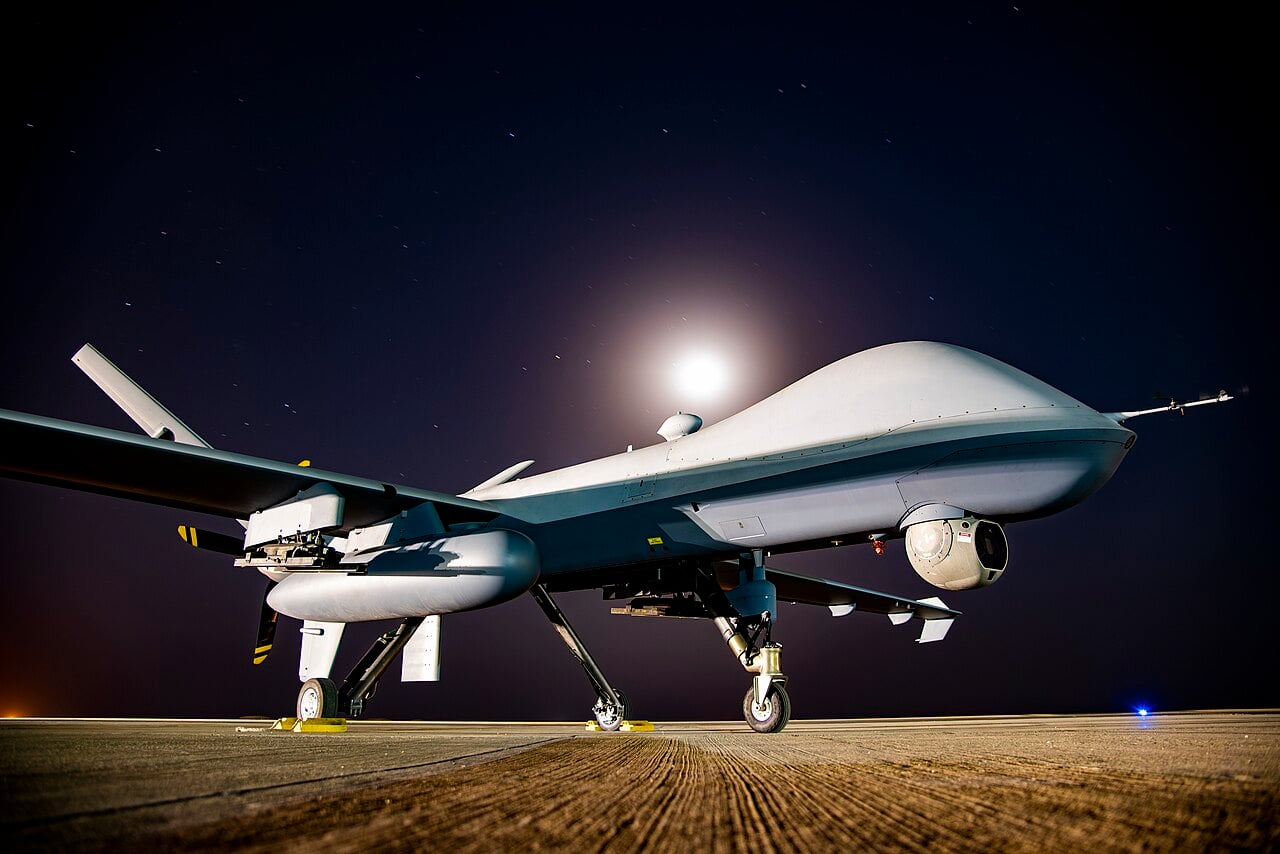
| Worst-hit type | MQ-9A Reaper — up to 47 aircraft by open-source count |
| Most expensive single loss | E-3G Sentry 81-0005, booked by the CBO at $500m |
| Costliest single operation | The F-15E rescue mission, 3–5 April, at more than $400m in airframes |
| CBO headline figures | $1.9bn on a plans basis; $3.3bn to replace with what is available today |
| Munitions | Between one half and two thirds of Patriot, THAAD, SM-3 and SM-6 inventory used since June 2025 |
| Time to rebuild stocks | At least five years, even with increased production (CBO) |
The drones absorbed it
The MQ-9A Reaper took the war’s punishment. The Lead IG says as many as 30 were destroyed in various circumstances through the end of June. The CBO booked 24 at $30 million apiece on a Foreign Military Sales basis, though a fully equipped Reaper with sensors and weapons runs closer to $50 million.
Both figures are already stale. The Washington Post reported in August, citing three US officials, that at least 45 had been lost — about a quarter of the pre-war fleet. Open-source trackers have added two since. The Air Force has confirmed the fleet fell from 165 airframes at the start of fiscal 2026 to 135 by May.
The awkward part is what replaces them. The MQ-9A is out of production, the Air Force does not want the newer MQ-9B at its price point, and a frantic hunt for unused airframes at General Atomics turned up fewer than ten.
The service is now chasing a Massed Modular Aircraft at roughly $10 million a copy excluding sensors. That is a sensible answer to an attrition problem and a straightforward admission that the previous generation of drone became too valuable to risk.
The crewed losses
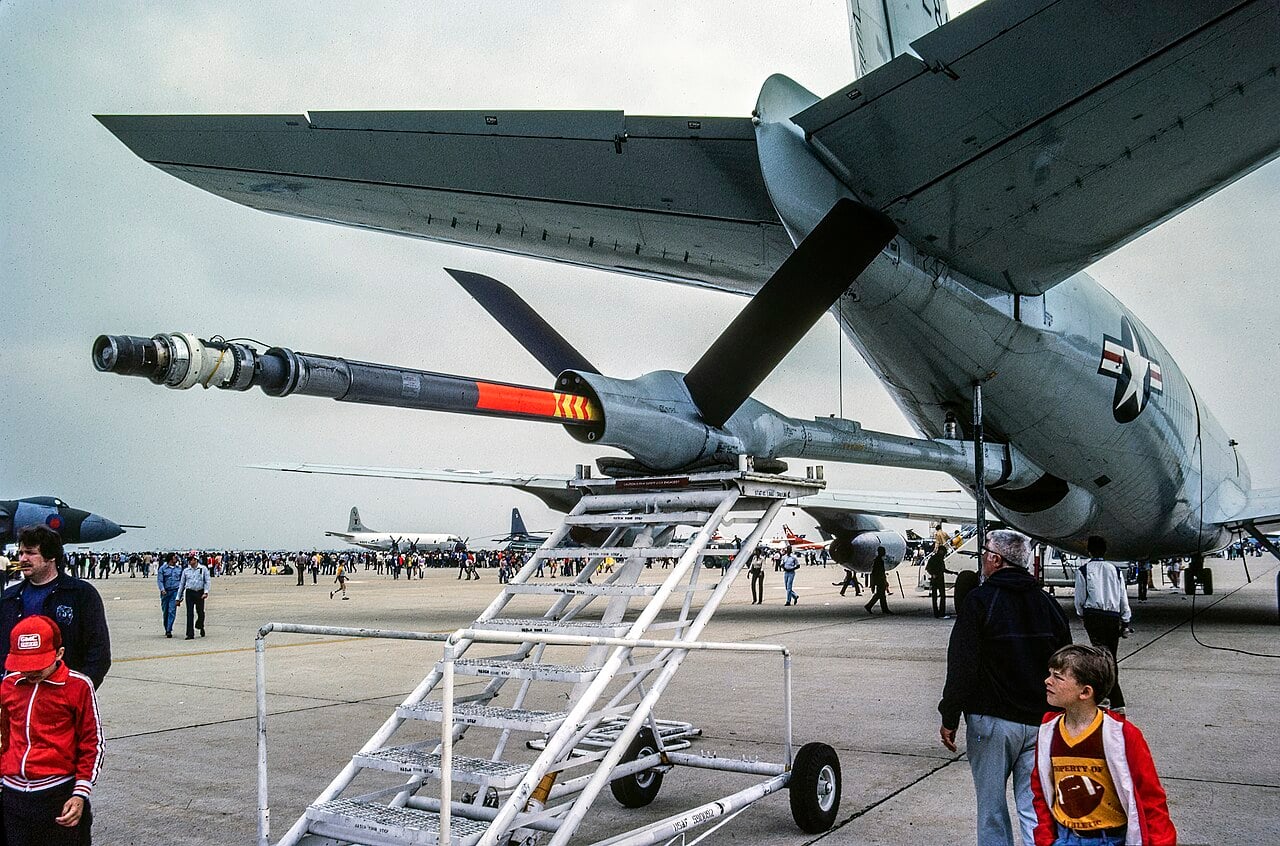
Among manned aircraft, the tanker fleet was hit hardest in raw numbers: two KC-135s destroyed and as many as seven damaged, with the Air Force becoming notably good at patching shrapnel holes well enough to fly the aircraft home. One of the two losses was not combat at all — a collision between two Stratotankers on 12 March that CENTCOM stated was not due to hostile or friendly fire, and which killed six airmen over western Iraq.
Four F-15E Strike Eagles were destroyed — three to friendly fire over Kuwait early in the war, one shot down over Iran on 3 April. Roughly eight more were damaged by ballistic missile fire at Muwaffaq Salti Air Base in Jordan, first reported by CBS News and confirmed by Air & Space Forces Magazine, both citing unnamed officials. President Trump told NewsNation there was no damage.
The rescue that followed the 3 April shootdown was the costliest single operation of the war in airframes. More than 150 aircraft and 92 special operators went in. Both crew members came out alive and no American lives were lost — but two MC-130J Commando IIs became stuck on a temporary strip deep inside Iran and were deliberately destroyed to prevent capture, along with four 160th SOAR MH-6 Little Birds. The CBO booked the MC-130Js at $300 million and five helicopters at $122 million.
The half-a-billion-dollar taxiway
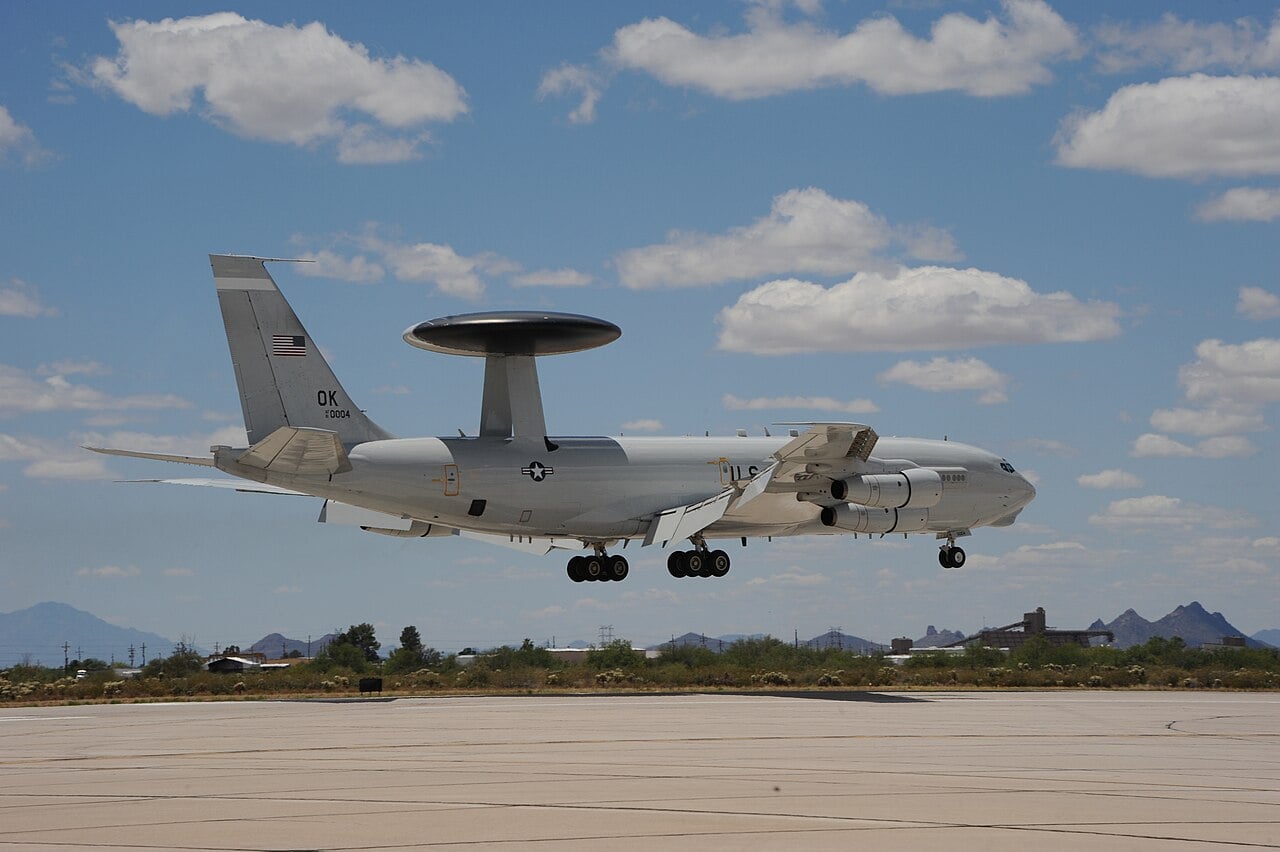
The single most expensive loss never left the ground. On 27 March an E-3G Sentry, serial 81-0005, was struck on the taxiway at Prince Sultan Air Base in Saudi Arabia. It was one of sixteen Sentries the Air Force had left.
The Inspector General lists it as damaged. Photographs and satellite imagery show the aircraft cut in half with the rear fuselage destroyed. The CBO is blunter, categorising it as lost in battle and assigning a $500 million replacement value — the price of one E-7A Wedgetail, the programme the Pentagon tried to cancel last year and has since revived.
The rest of the tally is a scattering. An F-35A took Iranian fire in mid-March and made an emergency landing, as far as is known the first time the type has been hit in combat. An FPV kamikaze drone found a parked Army Black Hawk outside Baghdad. An AH-64 Apache was shot down near the Strait of Hormuz in June. Iranian state media circulated images of a wrecked CH-47F at Camp Buehring in Kuwait, which The War Zone did not independently verify. Four more H-60s have been hit since 10 September.
The number that actually matters
Aircraft can be rebuilt. The CBO’s $3.3 billion is real money but it is not a strategic problem for a country with a defence budget measured in hundreds of billions, and the Pentagon’s running bill for the whole conflict already conservatively exceeds $38 billion.
The interceptors are the strategic problem.
The Lead IG quotes the acquisition office saying munitions expenditure in Epic Fury has produced strategic inventory shortfalls and exposed industrial-base bottlenecks. The CBO estimates between one half and two thirds of Patriot, THAAD, SM-3 and SM-6 stocks have been used since June 2025, and that rebuilding them would take at least five years even with production increased. Historically, it notes, new missile orders take three to five years to arrive before replacement even begins.
CENTCOM’s commander, Adm. Brad Cooper, said he was not concerned at all about stockpiles — which is the answer a theatre commander in an active war can afford to give. The commanders of European, Pacific and Southern Commands, along with the Chief of Naval Operations, formally non-concurred in August with extending the Iran commitment.
Every interceptor listed in the chart above is the reason an aircraft is not listed in it. That trade has been made several thousand times since February, and the magazines behind it take half a decade to refill.
Sources: Pentagon Lead Inspector General report on Operation Epic Fury; Congressional Budget Office letter to the House Budget Committee; The War Zone; Military Air Tracking Alliance; The Washington Post; Air & Space Forces Magazine; CBS News; CSIS.
0 Comments