
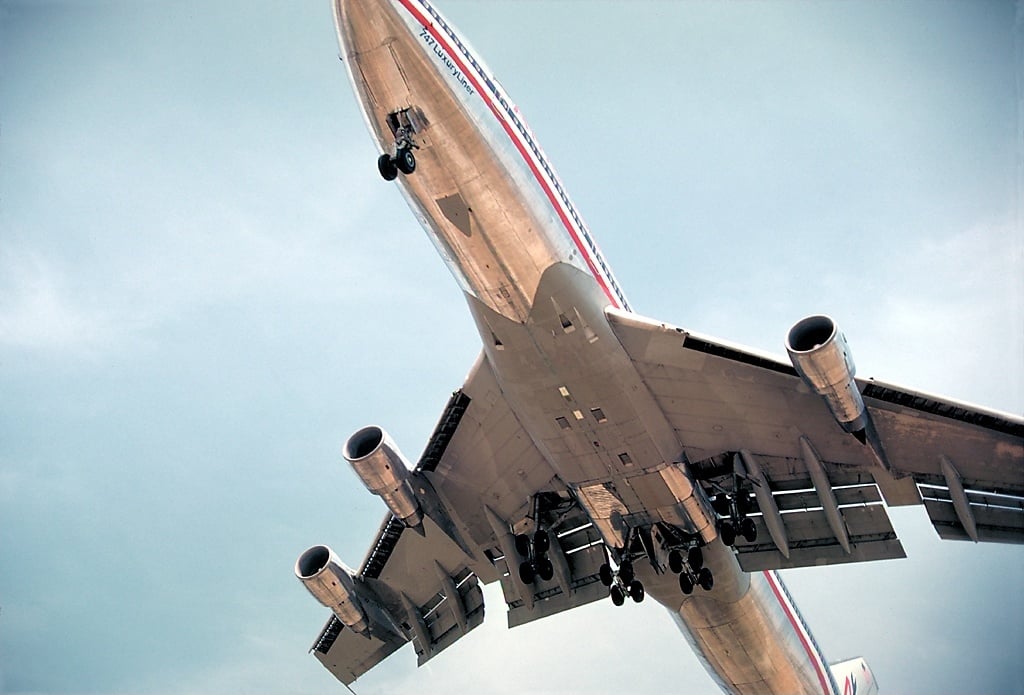
Walk up the stairs to an American Airlines 747 in the 1970s and you could see your reflection in the fuselage. The airline did not paint its jets. It polished them, and the silver airliner with the red, white and blue stripe became one of the most recognisable sights in aviation.
A post going round Instagram tells the story well, but it simplifies a few things. Bare metal was never quite the norm in the jet age, the weight saving depends heavily on the aircraft, and the famous eagle on American’s tail was not drawn by the designer usually credited with the look.
Quick Facts
- Best-known operator: American Airlines, 1968 to 2013 (last polished fleet type retired 2019)
- Livery designer: Massimo Vignelli with Heinz Waibl, Unimark International, 1967
- Paint weight: About 179 lb (81 kg) on a 737-700; around 500 kg (1,100 lb) on a 747
- Polishing: Typically quoted as about three times a year
- End of the era: New painted American livery unveiled 17 January 2013
- Why it ended: Composite airframes must be painted; carbon fibre cannot be polished
Bare Metal Before the Jet Age
Unpainted aluminium was the default for airliners before and just after the Second World War. By the mid-1960s, at the start of the jet age, most airlines had moved to painted exteriors, though many US carriers wore a half-and-half look for years: a white upper fuselage over a bare-metal belly. So the caption’s “first decades of the jet age” is generous. In the jet era, an all-polished fuselage was the exception that made American stand out.
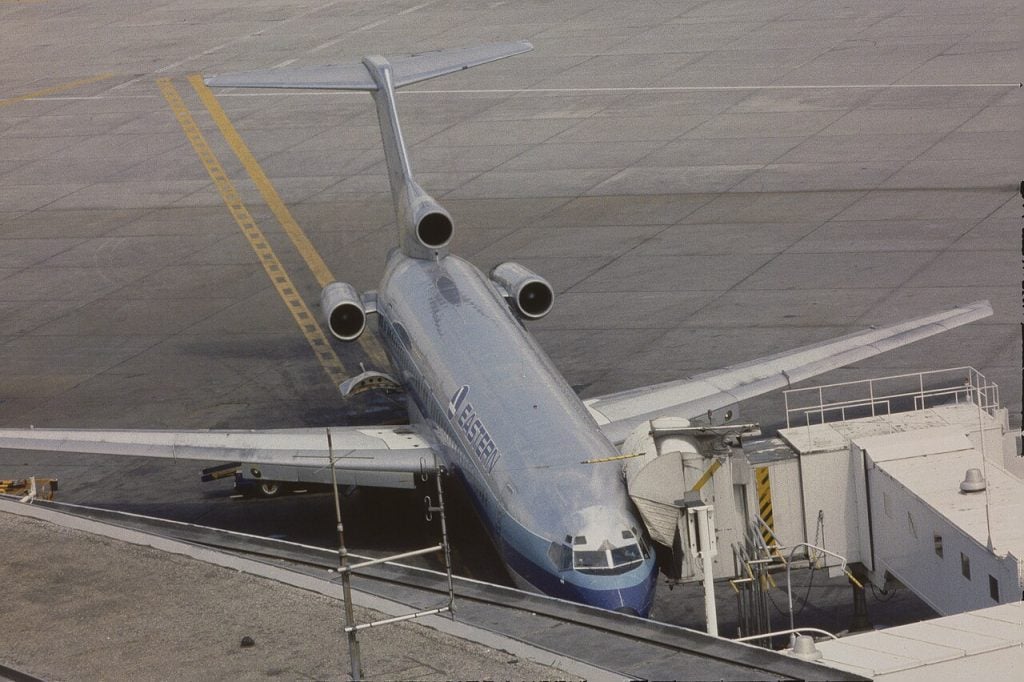
Others did try it. Eastern Air Lines, famous for its painted “hockey stick” scheme of 1964–65, moved to bare metal in stages: the rear fuselage and rudder in 1971, a silver belly from 1975 and the full natural-metal look only from the second half of 1977. It kept that until it shut down in January 1991, although its Airbus A300s were painted white. Northwest Orient flew natural-metal fuselages from 1969 to 1985. Western went fully bare metal only from 1985 until its merger into Delta in 1987, and TWA’s 1980 “Project Skinny” stripped a single Boeing 727 as a test that was never adopted.
What Paint Really Weighs
The logic was weight. Paint is heavy, and an airliner carries it on every flight of its life. How heavy depends on the aircraft. Boeing figures for a 737-700 put a full livery at about 179 lb (81 kg), against 25 lb for a polished aircraft with markings only, a saving of about 154 lb. On a 747 the paint weighs around 500 kg, roughly 1,100 lb. The caption’s “several hundred pounds” is right for a mid-size jet but undersells a jumbo.
Real-world trials show both the savings and the catch. Eastern said its silver aircraft were about 100 lb lighter. Cathay Pacific flew a largely unpainted 747 freighter from 2006 that was about 200 kg lighter and saved more than HK$1.5 million a year in fuel. Air Canada stripped a Boeing 767 in 2005 and saved 360 lb, worth an estimated US$24,000 a year, but dropped the idea because the extra maintenance cost more than the fuel it saved. Its maintenance chief also found that the old skin panels did not all polish up evenly.
American’s Silver Eagles
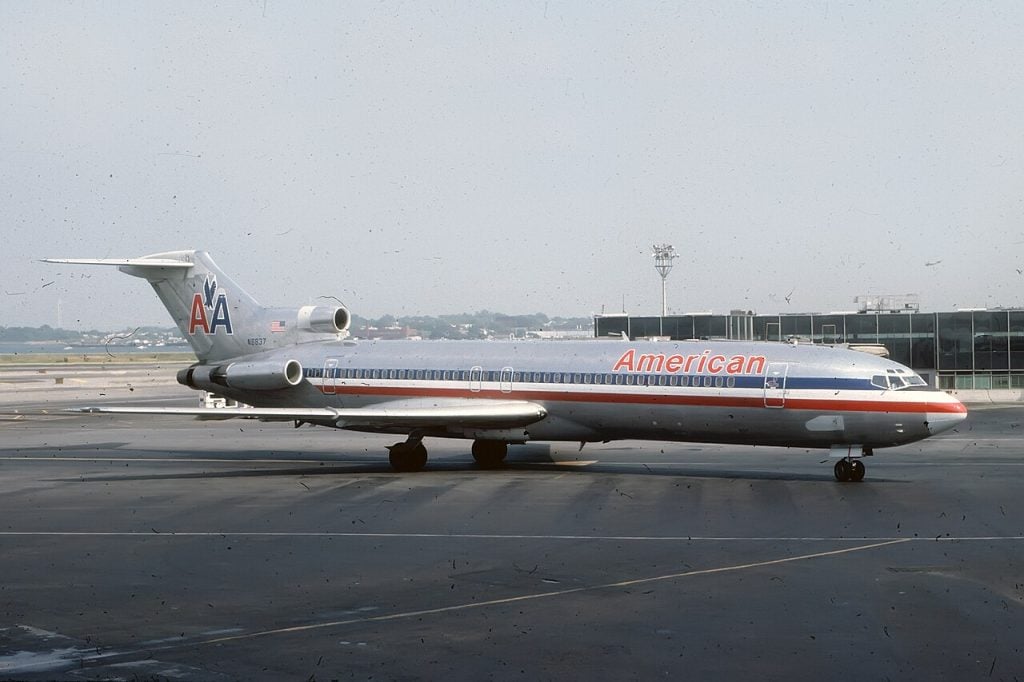
American made the look its identity. In 1967 the Italian designer Massimo Vignelli, working with Heinz Waibl at Unimark International, created American’s double-A logo, the stripes and the wordmark, and the new scheme appeared in April 1968 on bare-metal fuselages. Vignelli went on to design the 1972 New York subway map. The tail eagle, however, was not his. He declined to draw one, and the “scissor eagle” was added by the office of industrial designer Henry Dreyfuss after American staff pushed back.
American flew its first Boeing 747-100 service on 2 March 1970, from New York JFK to Los Angeles, initially with two aircraft leased from Pan Am. It ordered 16, and the jumbos left passenger service in the mid-1980s, many converted to freighters. Even American’s Airbus A300s first had to be painted grey; Airbus later supplied matched skin panels that could be polished.
Keeping the fleet bright was hard work. Bare aluminium has to be washed, inspected for corrosion and polished regularly, and every scratch and repair shows. Aviation commentators usually put the polishing at up to three times a year; Air Canada estimated twice a year for its 767. Critics have long argued that the labour cancels out much of the weight saving.
Why Carbon Fibre Ended It
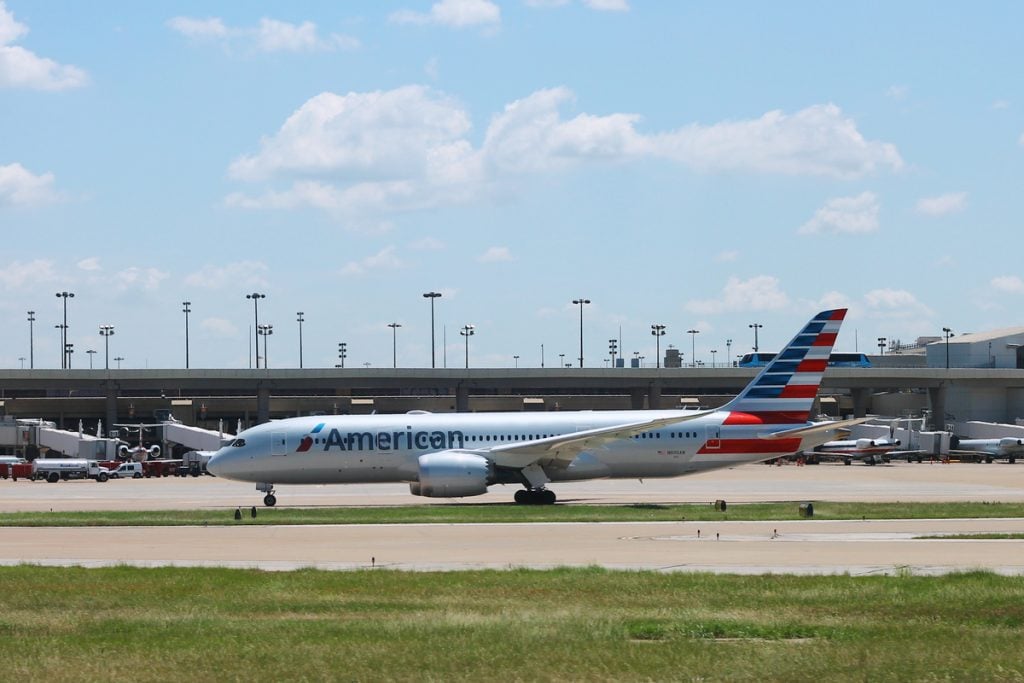
On 17 January 2013, American unveiled a new livery designed with FutureBrand. The airline said its new aircraft, including the Boeing 777-300ER and its coming Airbus fleet, used composite materials that had to be painted.
The reason is chemistry. The epoxy resin that binds carbon fibre is sensitive to ultraviolet light and needs protecting from the sun, and composite skins need embedded metal foil and coatings for lightning protection. You cannot polish carbon fibre to a mirror finish. American chose a silver mica paint to keep a hint of its heritage, and repainted 992 aircraft by 2017, a year ahead of schedule. In December 2013, after the merger with US Airways, more than 60,000 employees voted on the tail, and 52 percent chose to keep the new design rather than bring back the Vignelli one.
The polished aircraft did not vanish overnight. American’s McDonnell Douglas MD-80s, the last fleet type in bare metal, flew their final revenue flights on 4 September 2019. In December 2017 the airline even rolled out a polished heritage livery on a Boeing 737-800, N921NN.
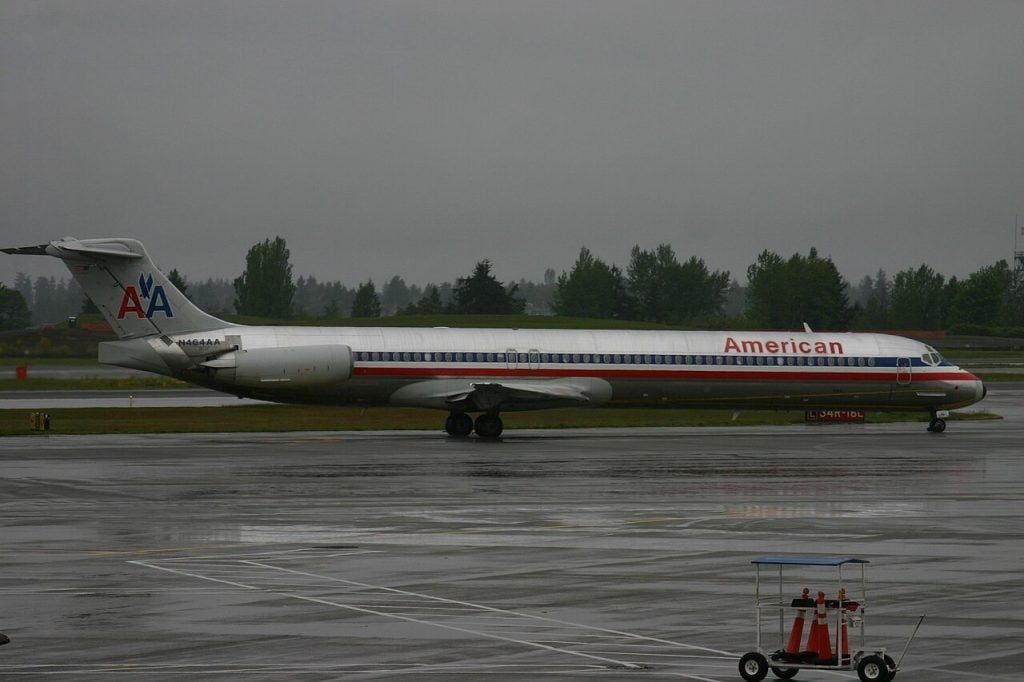
What the Viral Post Gets Right and Wrong
The broad story is right: airlines polished instead of painting to save weight and fuel, American turned it into an identity for more than 40 years, and composites ended it in 2013. The details need care. All-over bare metal was the exception, not the rule, in the jet age. Eastern’s fully polished look dates from 1977, not the start of the jet era, Western’s lasted two years and TWA’s was a single test aircraft. Vignelli designed American’s logo and stripes, but not the eagle. The “three times a year” polishing figure is widely repeated rather than documented by American. And the bare-metal American scheme appears often on lists of the most beautiful liveries, though “almost always” is a stretch.
View this post on Instagram
Sources: Wikipedia, Aircraft livery and Eastern Air Lines; Yesterday’s Airlines (American, Eastern, Western, TWA and Northwest livery histories); American Airlines newsroom (17 January 2013 and 2021 “Going Green with Silver Eagle”); Design Week (January 2014); AirlineGeeks (2017); Flying Magazine (September 2019); Mentour Pilot (Boeing 737-700 paint figures); Cathay Pacific via Freight News; The Globe and Mail (Air Canada, 2005); Northwestern University transportation design archive; People’s Graphic Design Archive; Airbus; BASF; COMSOL; AirportSpotting; AeroTime


0 Comments