
There is a moment in the design of every defensive electronic warfare system where the engineering stops being intuitive. You are being tracked by a radar. The obvious response is to drown that radar in noise. And the moment you do, you have told everyone within a hundred miles exactly which bearing you are on.
A jammer is a transmitter. A transmitter is a beacon. Missile designers worked this out quickly and built seekers that simply home on the jamming signal itself, treating the interference as the target. The countermeasure becomes the aimpoint.
The answer to that problem is one of the strangest-looking ideas in military aviation. If something is going to be shot at because it is shouting, make sure the thing shouting is not the aeroplane. Build a small radiating object, make it louder and more attractive than the jet, and put distance between the two. Either tow it on a wire a hundred metres behind, or fire it out of a flare dispenser and let it fall away. Both exist. Both are in service. And the difference between them is the whole story.
Quick Facts: towed and expendable decoys
AN/ALE-50: Raytheon towed decoy, introduced 1996, self-contained, no threat-specific software
ALE-50 carriers: B-1B Lancer, F-16, F/A-18E/F; also integrated into the AN/ALQ-184(V)9 pod
AN/ALE-55: BAE Systems fibre-optic towed decoy, in service from 2004, operating 1 to 35 GHz
BriteCloud: Leonardo expendable active decoy using digital radio frequency memory; no tether at all
BriteCloud sizes: 55mm round, and the 218 at roughly 2 x 1 x 8 inches for US dispensers such as the AN/ALE-47
US designation: BriteCloud 218 was designated AN/ALQ-260(V)1 by the US Air Force
The problem both solve: home-on-jam seekers, which steer towards the jamming signal
Why an onboard jammer is not enough
Start with what the aircraft already has. A modern fighter carries a radar warning receiver that tells it which radars are looking, and an electronic warfare suite that can transmit deception signals back at them. We have covered how that deception works in detail: range gate pull-off, velocity gate pull-off, digital radio frequency memory and the rest.
Against a radar, that suite is genuinely powerful. Against a missile already in flight, it has a geometry problem that no amount of transmitter power fixes. The jamming comes from the aircraft. If the seeker decides to steer towards the strongest source of interference rather than towards a radar return, it steers towards the aircraft. Home-on-jam converts the jet's best defensive measure into a guidance beacon.
There is a second limitation that matters just as much. Even a perfect jam that breaks the lock does not necessarily save the aeroplane, because a proximity-fuzed warhead does not need a lock to ruin your day. It needs to pass close. What you want is not merely a broken lock but a large miss distance, and the only reliable way to manufacture miss distance is to make the missile fly at something that is not where you are.
Sandboxx on why locking onto a stealth fighter and hitting it are different problems, including the towed decoy that unreels from inside the airframe.
The AN/ALE-50, and the pilot who called it his little buddy
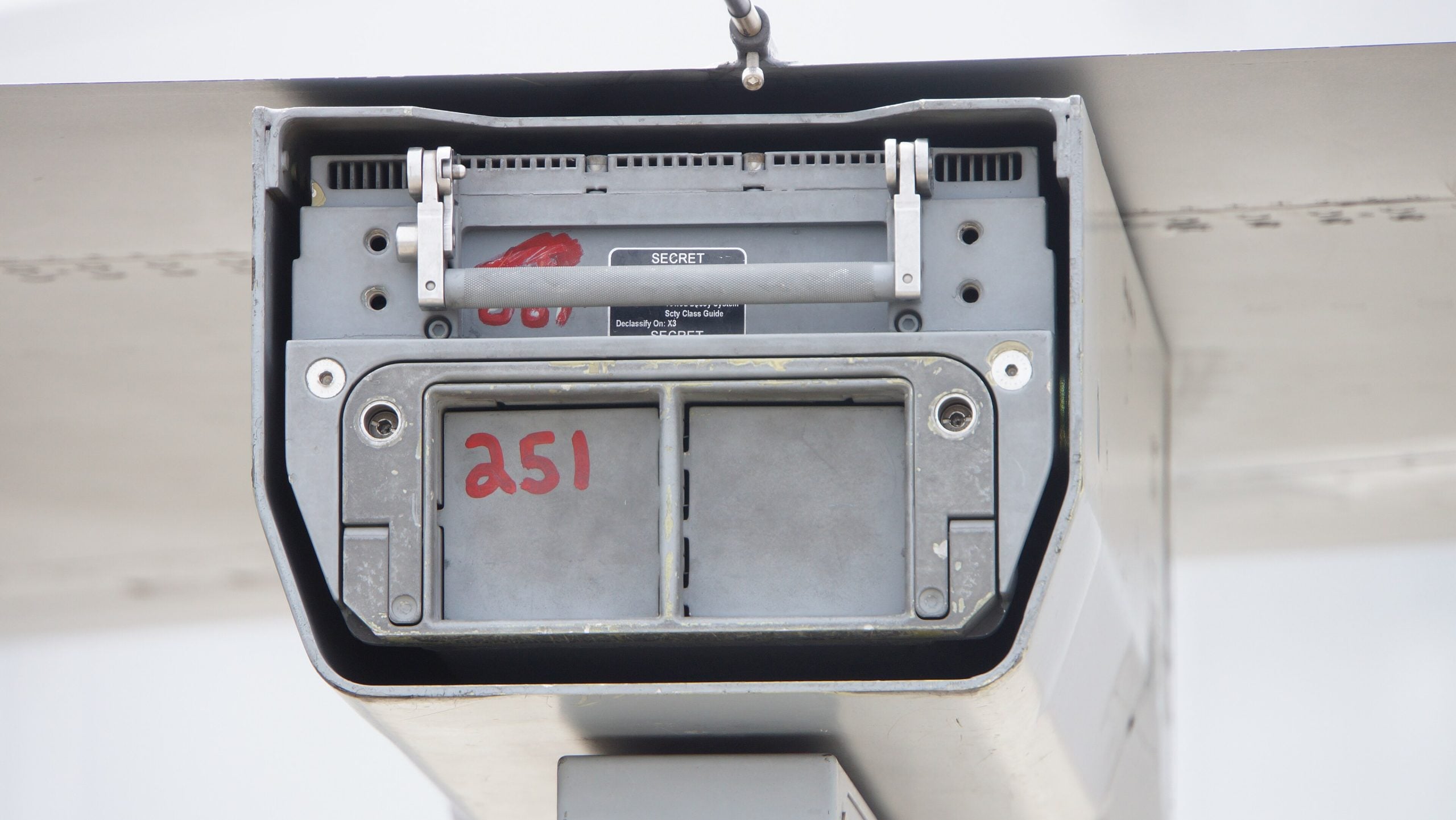
Raytheon's AN/ALE-50 was the first of these to reach squadrons in numbers, introduced in 1996 and built at Goleta, California. The architecture is deliberately simple: a launcher and launch controller on a weapons pylon, and expendable decoys each delivered in a sealed canister with a ten-year shelf life. In flight the decoy is reeled out behind the aircraft on its tow line and radiates, presenting a radar target more attractive than the jet dragging it.
What makes the ALE-50 interesting is what it does not have. It carries no threat-specific software. It does not need to be told what is shooting at it or to look anything up in a library. It is a repeater that is simply louder and, crucially, somewhere else. That simplicity is why it ended up on three very different aircraft: the B-1B Lancer, the F-16 Fighting Falcon and the F/A-18E/F Super Hornet, as well as inside the AN/ALQ-184(V)9 jamming pod.
Crews named it the Little Buddy. The origin of the nickname, as Raytheon's own account has it, is a letter from a pilot who came home and referred to the decoy in exactly those words. The pilot has never been publicly named, so treat it as company lore rather than documented history, but the sentiment is easy enough to understand from the geometry: the thing on the end of the wire is what the missile hit.
What Operation Allied Force actually showed, and what it did not
The ALE-50 is routinely credited with saving B-1Bs over Yugoslavia in 1999, and the story deserves to be told accurately, because the accurate version is still impressive and the exaggerated version is checkable.
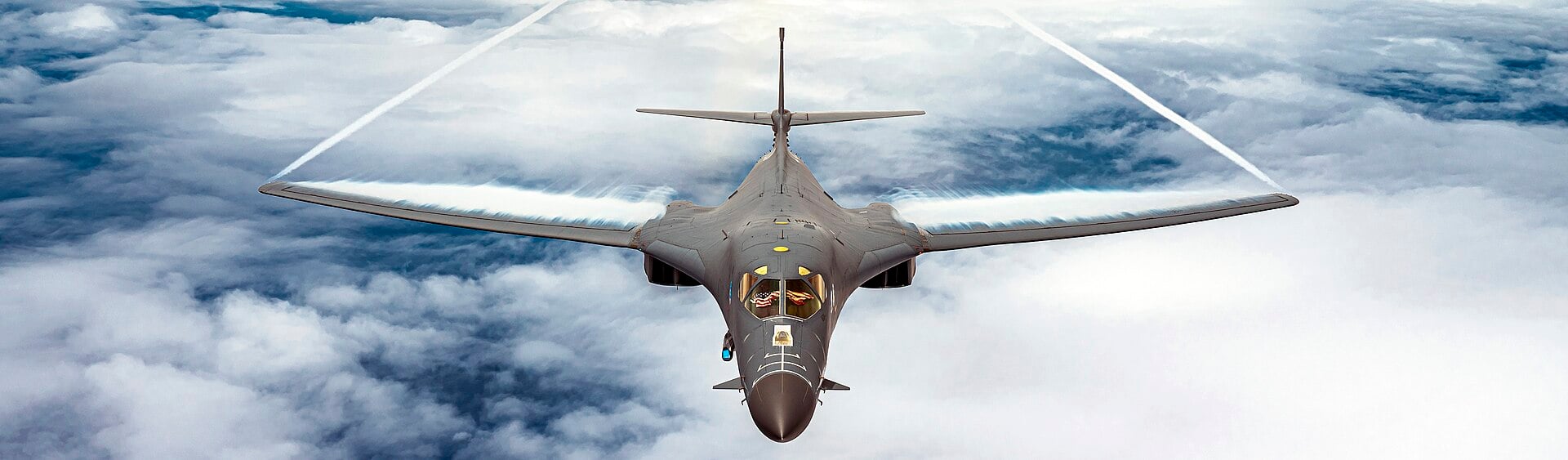
Here is what is documented. A contract dated 15 April 1999 covered an accelerated production lot of 1,509 ALE-50 decoys explicitly in support of Operation Allied Force, which tells you how urgently the system was wanted. Aviation Week and Space Technology reported in May 1999, citing Air Force officials, that 30 surface-to-air missiles had been fired at B-1 bombers over Yugoslavia, of which around 10 locked on before being diverted. The China Lake survivability division tested the decoy against land-range threats during the campaign and issued a performance update to ALE-50 users in theatre.
Here is what is not documented, at least not in the open sources: a direct, itemised attribution of those diverted missiles to decoy employment. The number of decoys B-1Bs actually expended in combat has not been published either. It is entirely reasonable to conclude the system worked. It is not reasonable to state as fact that ten missiles were defeated by ten decoys, and that version circulates widely.
The economics, at least, are unambiguous. Published estimates put an ALE-50 decoy somewhere between 22,000 and 32,000 dollars. The aircraft towing it costs several hundred million. There is no version of that arithmetic where you hesitate.
The AN/ALE-55 and the fibre down the tow line
The ALE-50's limitation is the flip side of its simplicity. A self-contained decoy can only do what it was built to do. It cannot be retasked in flight, and it does not know anything the aircraft knows.
BAE Systems' AN/ALE-55 fixed that by running a fibre-optic cable down the tow line. The aircraft's electronic frequency converter, mounted internally, takes in what the aircraft's own electronic warfare systems are detecting, works out the jamming or spoofing waveform required, and sends that waveform down the fibre to the decoy, which converts it to radio frequency and transmits. The decoy stops being a dumb repeater and becomes a remote antenna for the aircraft's brain, flying a hundred metres behind.
Operating from 1 to 35 GHz and in service since 2004, the ALE-55 gives three documented modes. Suppression jams a threat radar during acquisition so it never achieves a lock. Deflection attacks radars that have already locked on, and can work several at once. Seduction, the last resort, mimics the aircraft's own radar signature closely enough that the missile prefers the decoy and detonates away from the jet. It shares its launch controller with the ALE-50, which is why the two systems coexist so easily on the same airframes.
BriteCloud: cutting the wire entirely
A tow line solves the geometry problem and creates several of its own. It constrains manoeuvre. It can be severed. It has to be cut loose before landing. It occupies a pylon or a dedicated bay. And on a low-observable aircraft, anything trailing behind the airframe is a design argument in itself.
Leonardo's answer was to abandon the tether. BriteCloud is a self-contained, battery-powered active decoy that is fired from a standard countermeasures dispenser exactly like a flare, and then simply falls away while transmitting. Leonardo describes it as the world's first digital radio frequency memory expendable active decoy, and the DRFM part is what makes it more than a noise source.
A DRFM jammer digitises the radar pulses it receives, stores a coherent copy and retransmits an altered version. Because the copy is coherent with the original, the victim radar has no straightforward way of telling it apart from a genuine return. BriteCloud, once ejected, searches for priority threats, compares what it hears against a pre-programmed threat library, and on a match generates a false target using range and Doppler deception. Its transmitter is far weaker than an onboard jammer's, which does not matter, because it only has to work for the few seconds it is falling away from the aircraft and towards the missile.
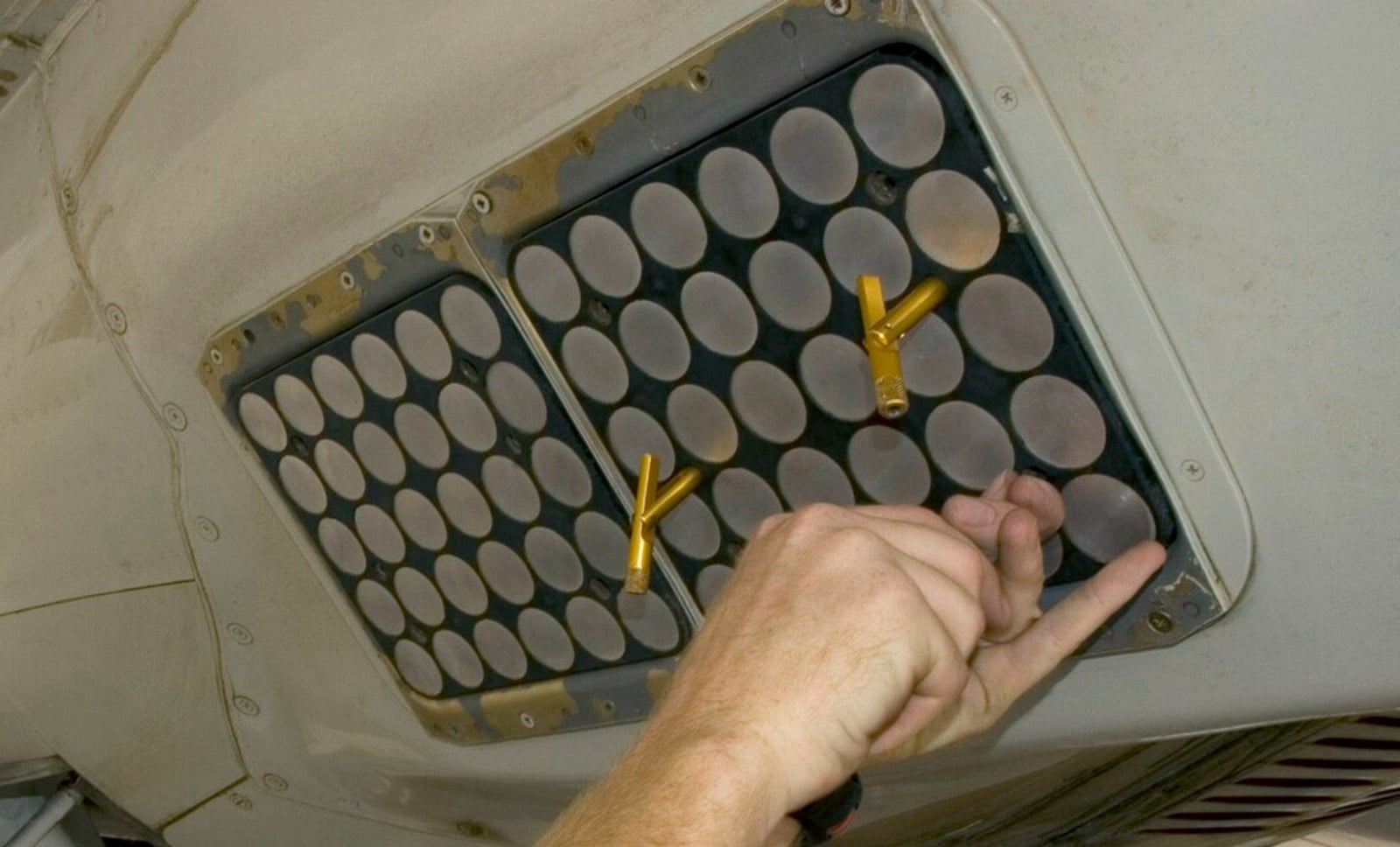
That dispenser compatibility is the entire commercial case. The 55mm round drops into a standard 55mm chaff and flare dispenser. The smaller BriteCloud 218, at roughly two inches by one by eight, fits the square US cartridge format used by dispensers such as the AN/ALE-47 on the F-16. Leonardo states that fitting the 218 to a Danish F-16's standard dispenser required no integration work at all. For an air force weighing a multi-year avionics programme against loading a different cartridge, that is a very short conversation.
Leonardo\u2019s own film on the BriteCloud radio frequency countermeasure, including the dispenser-compatible form factor.
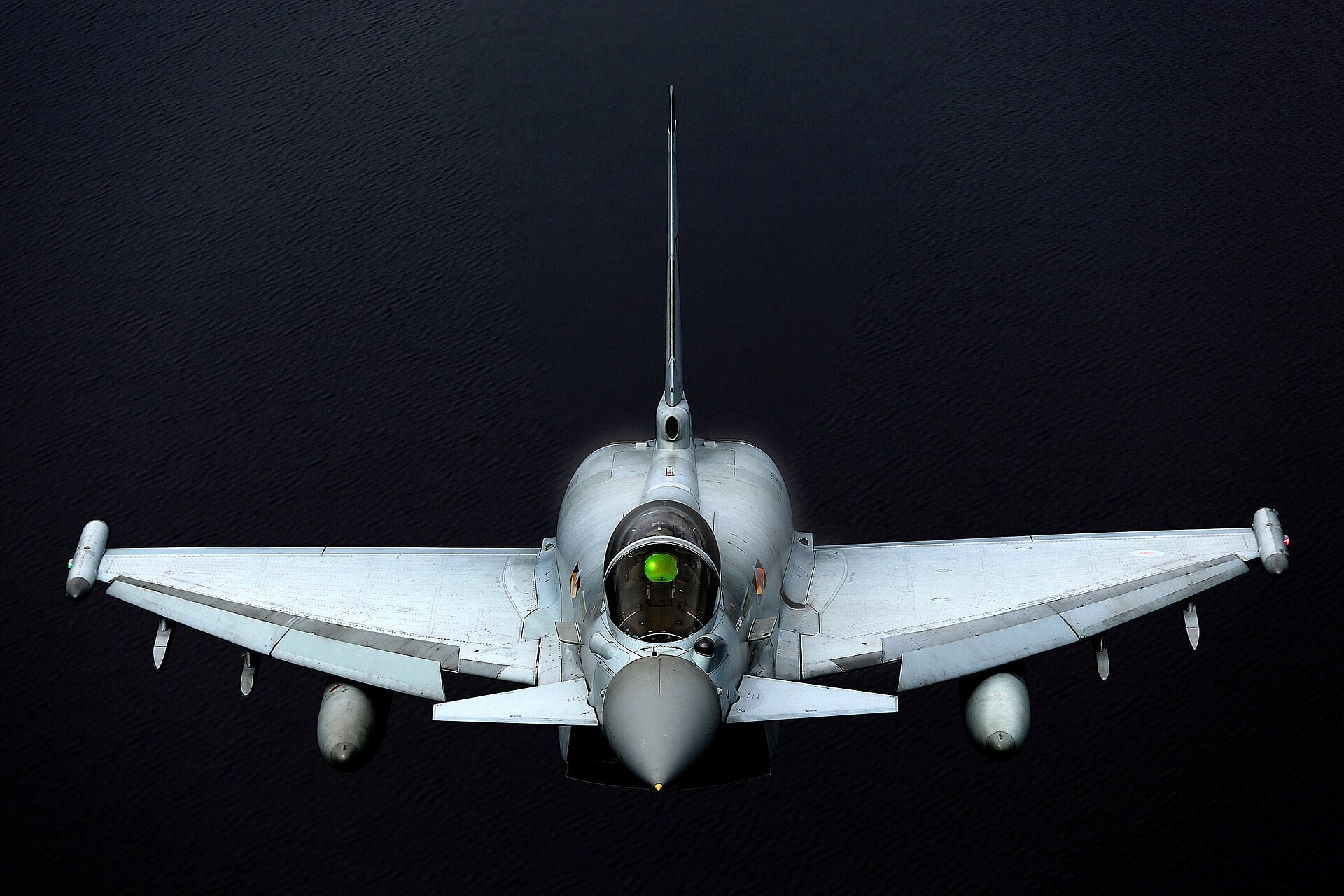
The service record has built steadily. The UK Ministry of Defence bought a significant quantity in 2016 and cleared the decoy for operational service on the Tornado GR4 in 2018, making the RAF the first operator to field it. The RAF's 41 Test and Evaluation Squadron later released 33 rounds during Eurofighter Typhoon certification work. Saab offers it on the Gripen. Trials have also covered the Panavia Tornado and the MQ-9 Reaper, and a higher-powered 55-T variant is aimed at transports including the C-130, A400M and KC-390.
Where it is going next
The United States has moved from evaluating these to buying them at scale. The Air Force designated the BriteCloud 218 as the AN/ALQ-260(V)1 after Air National Guard testing on the F-16. More significantly, the US Navy has set out to procure up to 6,000 active expendable decoys, at a rate of 3,000 to 6,000 per year, with a base year in fiscal 2027 and up to four option years running to 2031. Contract award has been expected in November 2026.
The solicitation names Leonardo UK and specifies the 2 by 1 by 8 inch form factor, which has led most observers to conclude it describes the BriteCloud 218; the notice itself does not name the product, so that remains an inference rather than a confirmed fact. The aircraft named are the F-35 and the F/A-18, with the F-35 having already reached a fielding decision and the F/A-18 decision expected in 2027.
Six thousand decoys a year is not a trial programme. It is a service concluding that in a dense modern air defence environment, every combat sortie should carry several objects whose entire purpose is to be more interesting than the aeroplane.
The towed decoy is not finished either. The F-35 is reported to carry the ALE-70, which deploys from inside the airframe rather than from a pylon, with a unit cost given in a 2020 budget request as 56,375 dollars. The two approaches answer slightly different questions. A towed decoy stays with you, draws power and data from the aircraft, and can work a threat for as long as the wire holds. An expendable one departs immediately, which is precisely what you want when the thing you need is distance, right now, between the warhead and the cockpit.
Sandboxx on the expendable active decoys now heading for the F-35 fleet and what they change about surviving a modern engagement.
Either way, the underlying logic has not changed since 1996. You cannot make a combat aircraft invisible to everything. You can make sure that the loudest, most attractive thing in the sky is not the one with a person inside it.
Sources: Leonardo UK BriteCloud product information; The Aviationist, deep-dive on BriteCloud (2021), Air National Guard fielding recommendation (2022) and US Navy expendable decoy procurement (2025); FlightGlobal; GlobalSecurity.org AN/ALE-50 entry, citing Aviation Week and Space Technology, 31 May 1999; Defense Industry Daily; BAE Systems AN/ALE-55 documentation; The War Zone; Wikimedia Commons.



0 Comments