
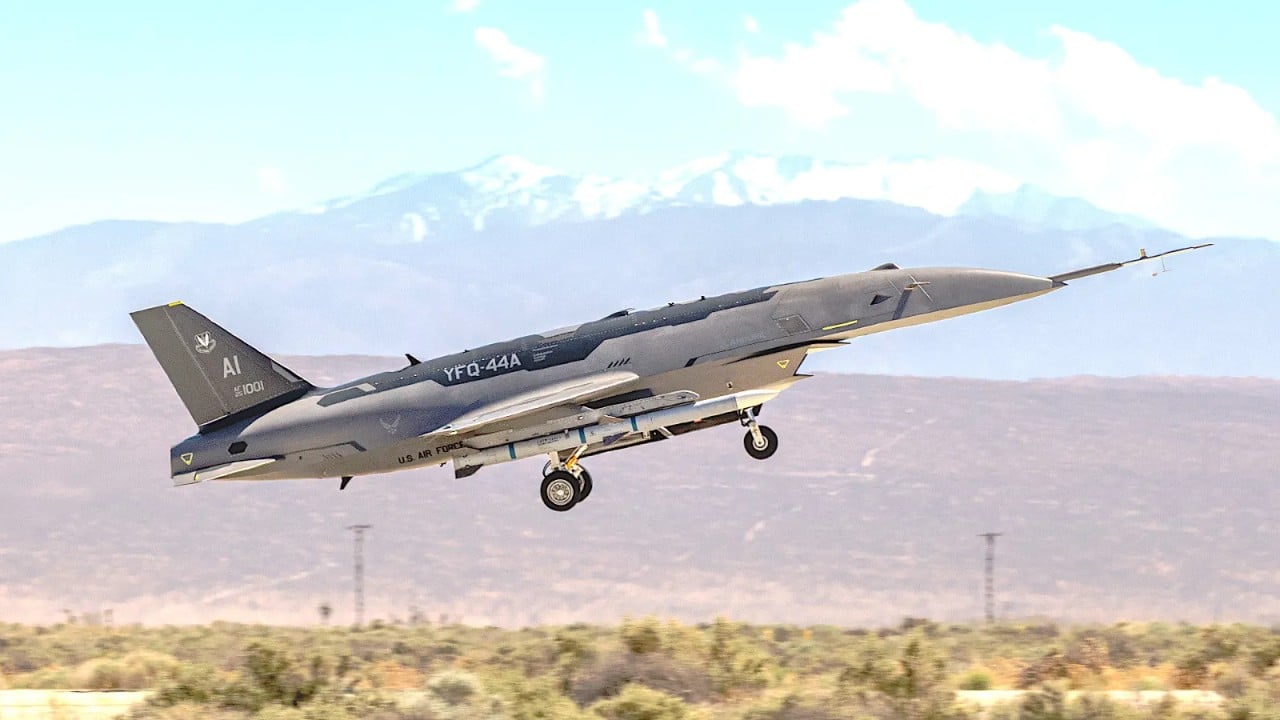
Somewhere over the Mojave Desert, in the first week of October, a Raptor pilot did something no fighter pilot had done before: sending a new mission plan to a combat drone flying alongside, and letting the drone take it from there.
The US Air Force and Anduril announced on 16 October that an F-22 Raptor has issued tactical commands in flight to a pre-production YFQ-44A Fury Collaborative Combat Aircraft (CCA). The service calls it an airborne tactical-control demonstration. Everyone else can call it what it is: the first time the jet that will quarterback America's robot wingmen actually threw the ball.
Quick Facts
- What: F-22 pilot commands a YFQ-44A Fury CCA in flight
- When: Week of 5 October 2026, announced 16 October
- Where: Edwards Air Force Base, California
- Drone: Anduril YFQ-44A Fury (pre-production)
- Control link: Tactical data link from the F-22 cockpit
- Number of drones: One
- Program goal: 500 Increment 1 CCAs by 2032
A new mission plan, sent from the cockpit
According to Anduril, the Fury and the F-22 both took off from Edwards and joined up in the air. The Raptor pilot then pushed an updated mission plan to the drone over a tactical data link and commanded it through what the company describes as operationally relevant manoeuvres. Anduril's Mark Shushnar told Air & Space Forces Magazine the mission lasted several hours and was a success.
The Air Force's own wording is careful. The pilot acted as an airborne quarterback, issuing high-level tactical directives to a single YFQ-44A. The drone's onboard autonomy software interpreted those directives and executed them in real time, flying dynamic manoeuvres and simulated combat tasks. In other words, the pilot says what needs doing, not how to fly it. That division of labour is the whole point of the CCA concept.
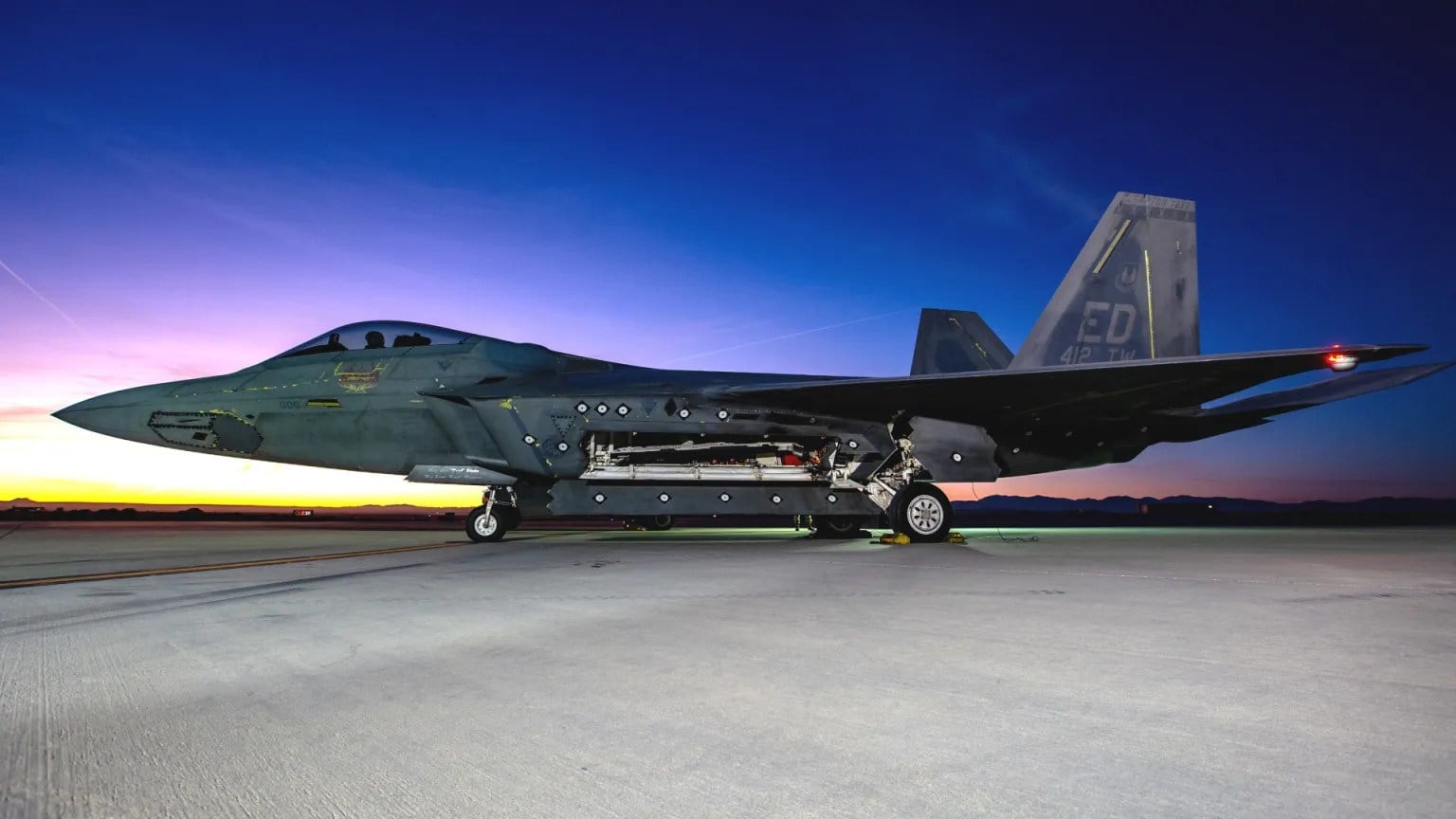
The test brought together the 412th Test Wing at Edwards, the 422nd Test and Evaluation Squadron, the 309th Software Engineering Group, the CCA Experimental Operations Unit, the F-22 System Program Office and the CCA Software Autonomy and Teaming Branch. Neither the Air Force nor Anduril has said how the Raptor was modified to talk to the drone.
Why the Raptor goes first
The choice of fighter is no accident. The Air Force has named the F-22 the threshold platform for the CCA program, meaning the first operational drones will be paired with Raptors before the F-35A and other types follow. Over the summer both Increment 1 designs flew in formation with crewed fighters, but the service and the manufacturers stressed at the time that the jets were not yet giving the drones orders. This test closes that gap.
It also follows years of rehearsal with a stand-in. The Air Force has used General Atomics' MQ-20 Avenger as a surrogate CCA, including tests in which an airborne F-22 controlled one. The difference now is that the drone on the other end of the link is one of the two designs actually going into production.
Those two designs got their popular names this autumn: Anduril's FQ-44 is the Fury and General Atomics' FQ-42 is the Vengeance. The service wants 500 Increment 1 aircraft by 2032 and has talked about an eventual fleet of 1,000 or more. Every one of them depends on a human in a fighter cockpit being able to tell it what to do without drowning in workload, which is why a single successful hand-off from a Raptor matters more than its modest description suggests.
Next stop: Emerald Flag
One drone and one fighter is a start, not the destination. The plan is for a single pilot to manage several CCAs at once, extending the reach and the number of weapons a formation can bring. The next big test of that idea comes in December, when Fury and Vengeance are due to join Exercise Emerald Flag. Lt. Col. Lyndon Bartlett of the Experimental Operations Unit told a panel at the Air & Space Forces Association conference in September, as reported by TWZ, that it will be the first large-force exercise with the drones.
There is still plenty to work out: how the drones are deployed, launched, recovered and maintained, and how far pilots will trust a wingman with no one inside it. But the oldest question in the program, whether a fighter pilot can actually command one of these things in the air, now has an answer.
Anduril's own film on the YFQ-44A's path to its first flight.
Sources: US Air Force release (16 October 2026), Anduril Industries, Air & Space Forces Magazine, TWZ, The Aviationist
0 Comments