
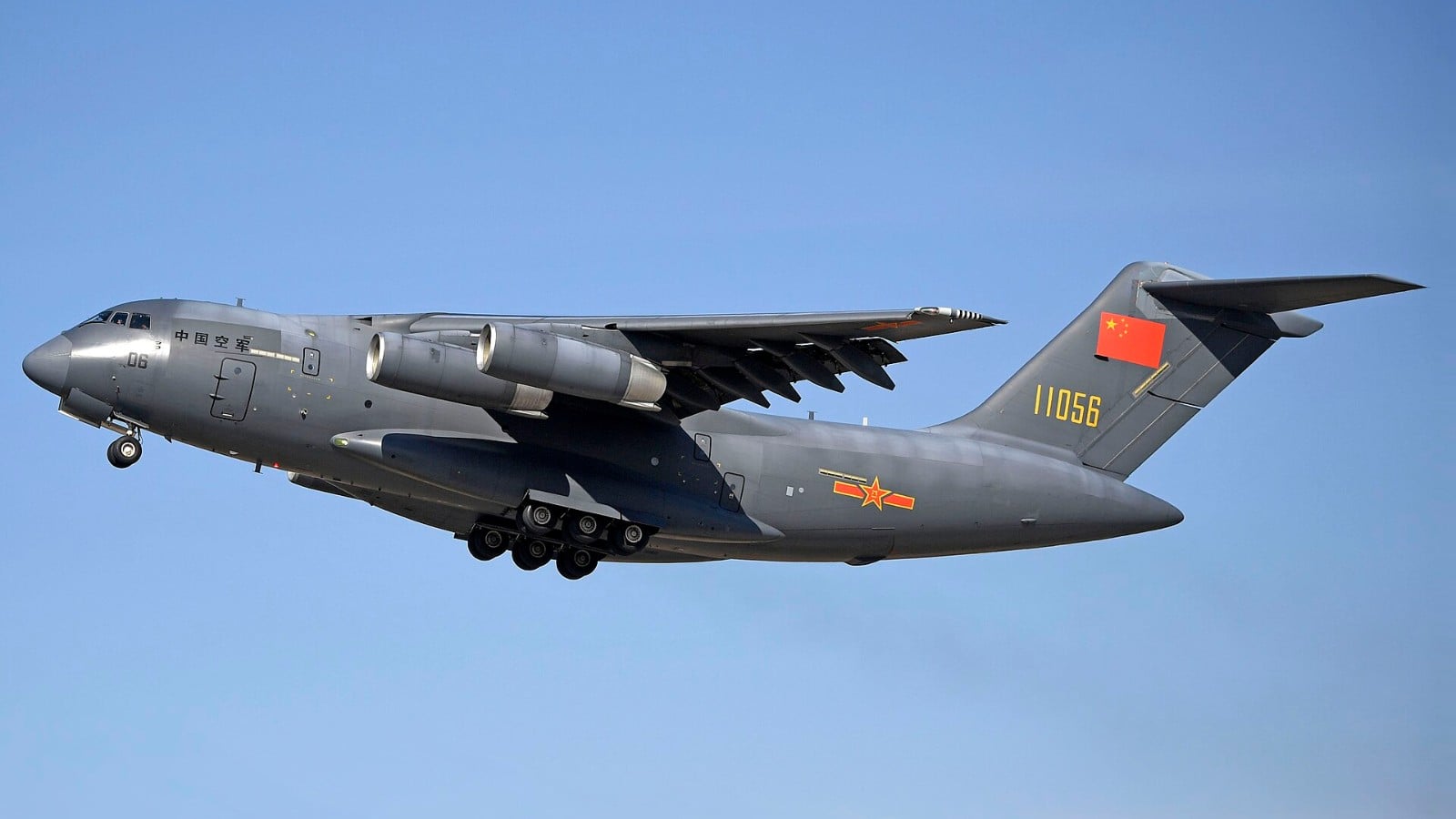
Counting aircraft from orbit is a strange way to follow a weapons programme, but with China it is often the only way. On 5 October 2026 a commercial satellite passed over Xi’an-Yanliang airfield in Shaanxi province and photographed four KJ-3000 airborne early warning and control jets on the ground at the same time.
The War Zone published the imagery on 22 October. Three of the big radar planes sit near the Xi’an Aircraft Company (XAC) factory, and a fourth is parked at the neighbouring China Flight Test Establishment. For a type that was first seen only in December 2024, four airframes in one place is a lot.
Whether it means the KJ-3000 has entered serial production is where the analysts part company.
Quick Facts
Aircraft: Xi’an KJ-3000 (also referred to as KJ-20) airborne early warning and control aircraft
Airframe: Y-20B four-engine transport with Chinese WS-20 turbofans
Operator: People’s Liberation Army Air Force (planned)
First flight: 27 December 2024 at Xi’an, per The Aviationist
Imagery: 5 October 2026, Vantor satellite image of Xi’an-Yanliang
Seen: Three aircraft at the XAC factory, one at the China Flight Test Establishment
Replaces: The Il-76-based KJ-2000, of which only four were built
What the satellite picture shows
According to The War Zone, one of the three KJ-3000s at the factory end of the field is parked among other Y-20 transports, and another sits alongside a pair of Y-20Bs. The fourth, at the flight test establishment, was identified by analyst Andreas Rupprecht as a prototype.
J. Michael Dahm of the Mitchell Institute for Aerospace Studies reads the image as evidence that the type has entered serial production. Rupprecht is more cautious: he says the picture could indicate series or low-rate initial production, but that all four previously identified prototypes could simply have been at the facility at the same time. The War Zone itself concludes that the 5 October imagery does not confirm that serial production has begun.
The Mitchell Institute for Aerospace Studies on why four KJ-3000s at Xi’an matter.
A Y-20 with a giant disc on its back
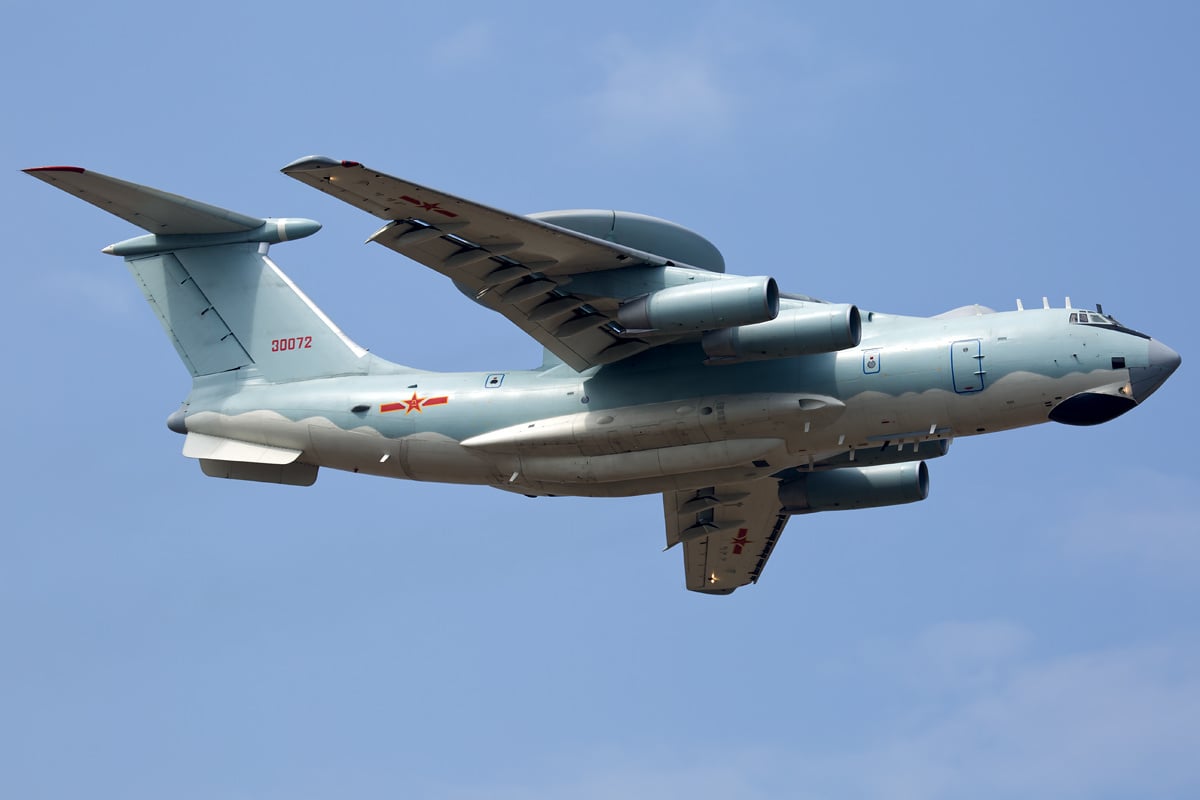
The KJ-3000 is built on the Y-20B, the improved version of China’s four-engine strategic airlifter that swaps the Russian D-30KP-2 engines for domestic WS-20 turbofans. On top of the rear fuselage sits a large circular rotodome, in the tradition of the E-3 Sentry and the Russian A-50. The Aviationist notes an air-to-air refuelling probe above the cockpit and a cluster of blade antennas on the spine, and TWZ points to an intake at the base of the fin that is thought to cool the mission electronics.
The radar inside is the part nobody outside China can see. Claims of gallium nitride modules and a dual-band system remain unverified. The Pentagon’s 2025 report on China’s military, as quoted by The War Zone, was blunt about the ambition.
Why the PLA needs a bigger radar plane
China already flies a family of airborne radars, but the heavyweight of the fleet has been a bottleneck. The KJ-2000, based on the Il-76MD, was limited by the availability of Russian airframes, and only four were ever completed. The Y-20 gives the People’s Liberation Army Air Force a home-built four-engine platform it can produce on its own terms.
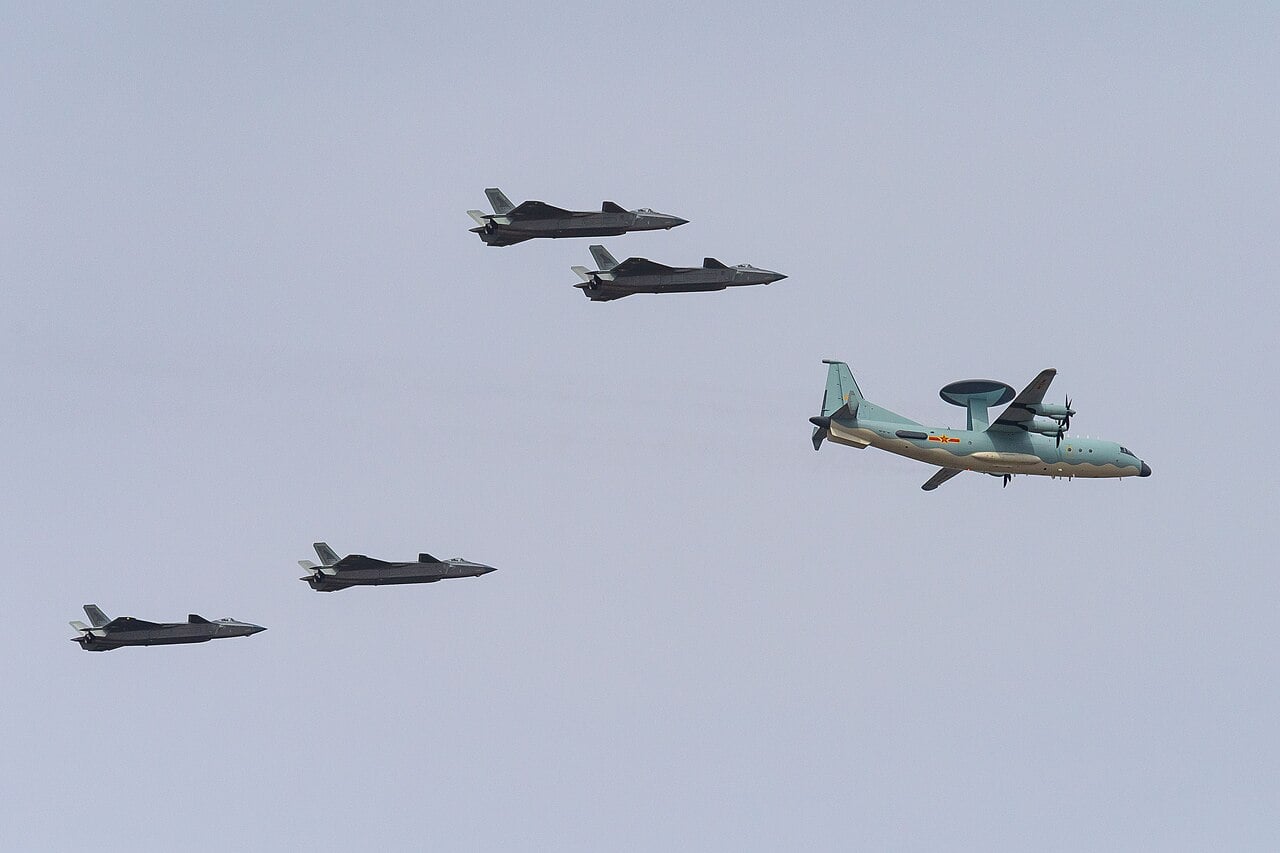
The smaller, turboprop KJ-500, by contrast, has been produced and delivered at a rapid pace, The War Zone notes, and is often seen flying with J-20 stealth fighters. A large, jet-powered KJ-3000 would add range, endurance and room for a much bigger radar, the qualities that matter most over the western Pacific.
The contrast with the U.S. Air Force
The timing is awkward for Washington. The U.S. effort to replace its ageing E-3 fleet with the E-7 Wedgetail has hit major hurdles, The War Zone points out, raising concerns about a gap in airborne battle management. If the KJ-3000 really is coming off a production line at Xi’an, China may be adding big radar jets just as the United States struggles to field its next one.
For now, four aircraft on one ramp is a strong hint, not proof. The next satellite pass, and the next airframe number, will tell.
Sources: The War Zone (22 Oct 2026; Vantor imagery), The Aviationist, Mitchell Institute for Aerospace Studies, U.S. Department of Defense 2025 China Military Power Report (as quoted by TWZ)



0 Comments