
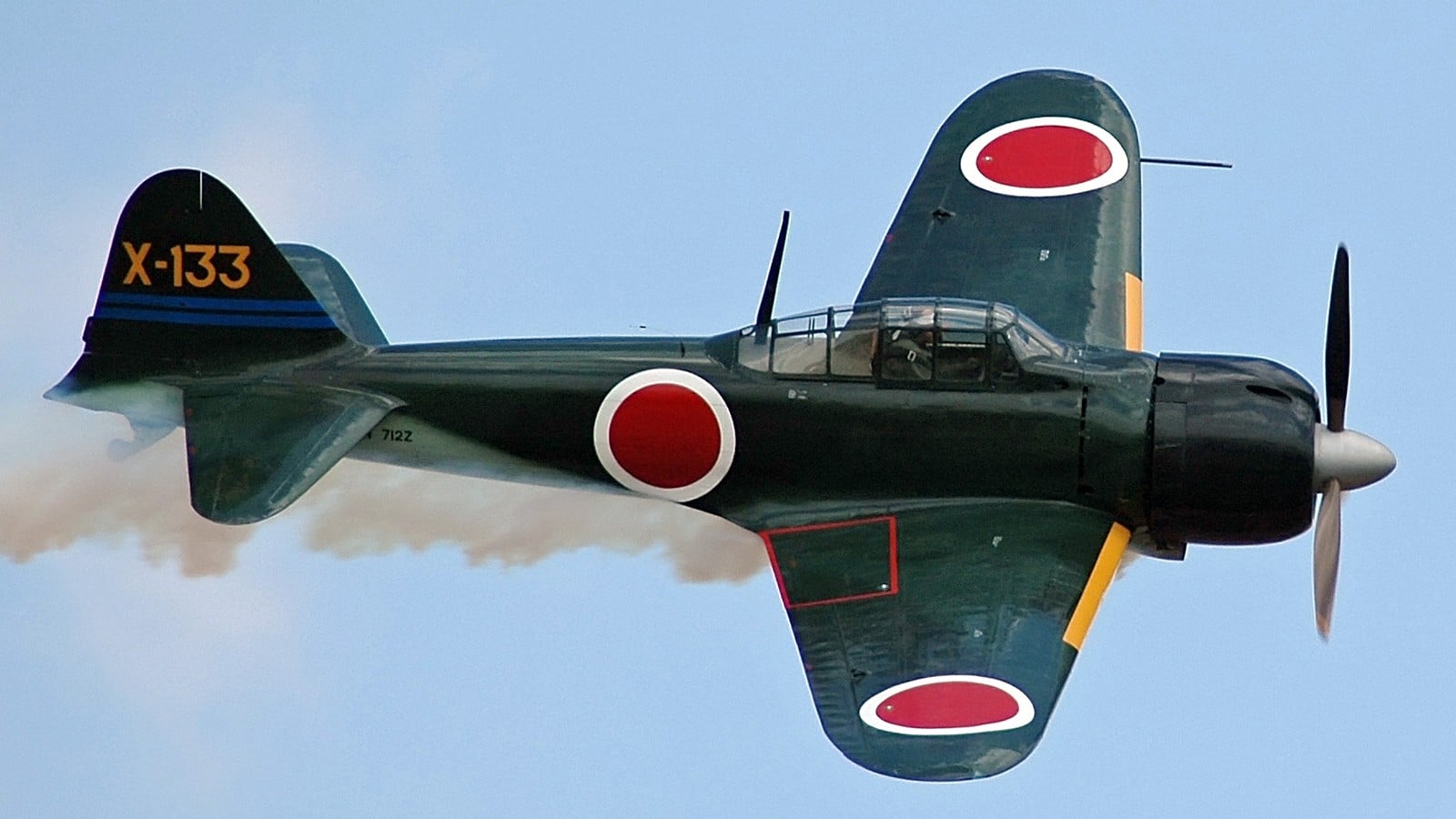
In the summer of 1940, Chinese pilots over Chongqing met a new Japanese fighter that seemed to break the rules. It flew farther than a fighter should, turned tighter than anything they had, and carried cannon.
Warnings from China, including from the American adviser Claire Chennault, made little impression in Washington or London. Eighteen months later, over Pearl Harbor, the Philippines and Malaya, American and British pilots found out the hard way. The Mitsubishi A6M Zero was, for a while, the best carrier fighter in the world.
Quick Facts
Aircraft: Mitsubishi A6M Type 0 carrier fighter (Allied code name “Zeke”)
Designer: Jiro Horikoshi, Mitsubishi
Specification: Imperial Japanese Navy 12-Shi requirement, issued 5 October 1937
First flight: 1 April 1939
First combat: August 1940, over China
Model 21 range: Over 2,600 km (1,600 mi) with drop tank
Weaknesses: No pilot armour, no self-sealing fuel tanks
Built: About 10,939 of all variants
An impossible specification
In October 1937 the Imperial Japanese Navy asked Mitsubishi and Nakajima for a new carrier fighter that would match or beat the performance of land-based fighters, with enormous range and heavy armament. Nakajima dropped out. Mitsubishi’s chief designer, Jiro Horikoshi, concluded that the only way to meet the requirement was to make the aircraft as light as humanly possible.
He used a new aluminium alloy from Sumitomo Metal Industries, lighter and stronger than its contemporaries, and saved weight wherever he could. The Zero first flew on 1 April 1939. It entered service in July 1940, the Japanese imperial year 2600, which is where the name Type 0, and so “Zero”, came from.
The rise and fall of the Japanese Zero (Real Engineering).
Lord of the Pacific skies
Early in the war the Zero achieved a kill ratio of about 12 to 1, according to figures quoted on Wikipedia. Its low wing loading let it out-turn the P-40, the Buffalo and the F4F Wildcat, and its range let Japanese carriers strike from well beyond where Allied commanders expected them. In 1942 the captain of USS Yorktown, Elliott Buckmaster, reported that the Zero could easily outmanoeuvre and out-climb the Wildcat.
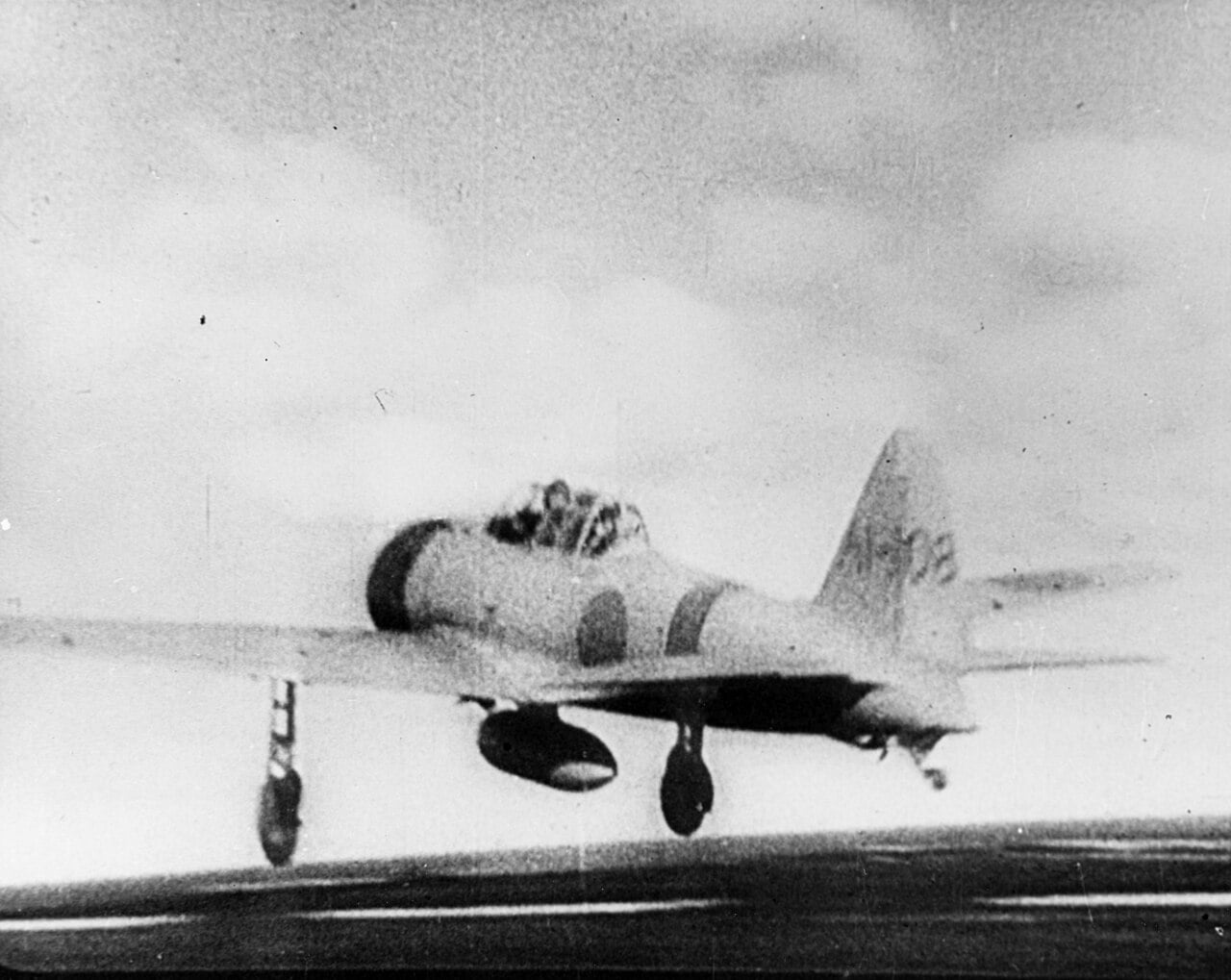
Even after the war, test pilots who flew captured examples were impressed.
The price of being light
Lightness had a cost. The Zero had no armour plate behind the pilot and no self-sealing fuel tanks, so a burst of .50-calibre fire that a Wildcat could survive would set a Zero alight. Its controls also grew heavy at high speed, and it could not follow a diving American fighter.
In June 1942 the Americans got the gift they needed: an almost intact A6M2 that crash-landed on Akutan Island in the Aleutians, killing its pilot, Tadayoshi Koga. Repaired and test-flown at San Diego, the Akutan Zero revealed its strengths and its weaknesses in detail. Tactics followed, most famously the Thach Weave, in which two Wildcats crossed paths so that a Zero chasing one would fly into the guns of the other.
How did the Allies overcome the Zero fighter? (Imperial War Museums).
Japan’s best aces saw the change from the cockpit. Saburo Sakai, wounded over Guadalcanal, described his astonishment at an American aircraft that kept flying after taking a burst that would have destroyed his own.
From air superiority to kamikaze
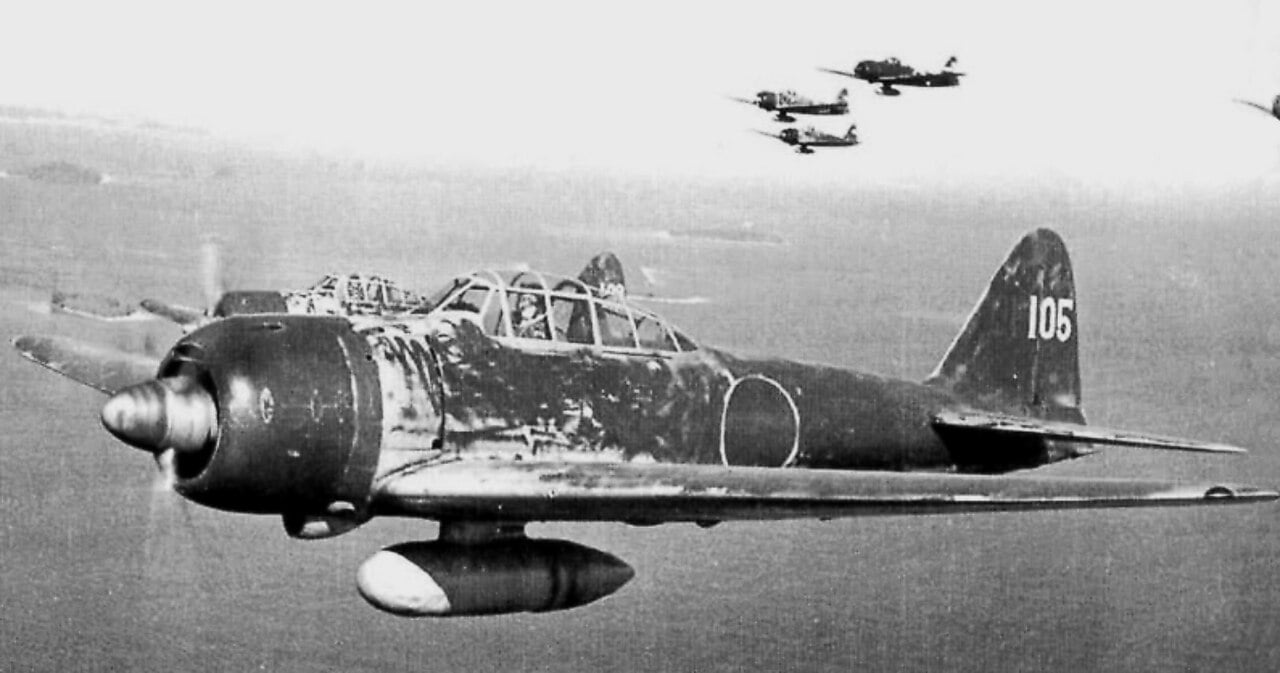
By 1943 the F6F Hellcat and the F4U Corsair outclassed the Zero, and Japan never fielded a true replacement in numbers. Later models added armour, heavier guns and shorter wings for diving speed, but the basic design was stretched to its limit. At the Battle of the Philippine Sea in June 1944, the so-called Great Marianas Turkey Shoot, hundreds of Japanese aircraft were lost.
In the last year of the war, Zeros carrying 250 kg bombs became the first kamikaze aircraft. More than 10,000 were built in all, more than any other Japanese wartime fighter. A handful survive today, and a few still fly in the United States, their Sakae engines a reminder of the summer when the Zero owned the sky.
Inside the cockpit of an A6M3 Zero (Military Aviation History).
Sources: Wikipedia (Mitsubishi A6M Zero), Imperial War Museums, Smithsonian National Air and Space Museum, Real Engineering
0 Comments