
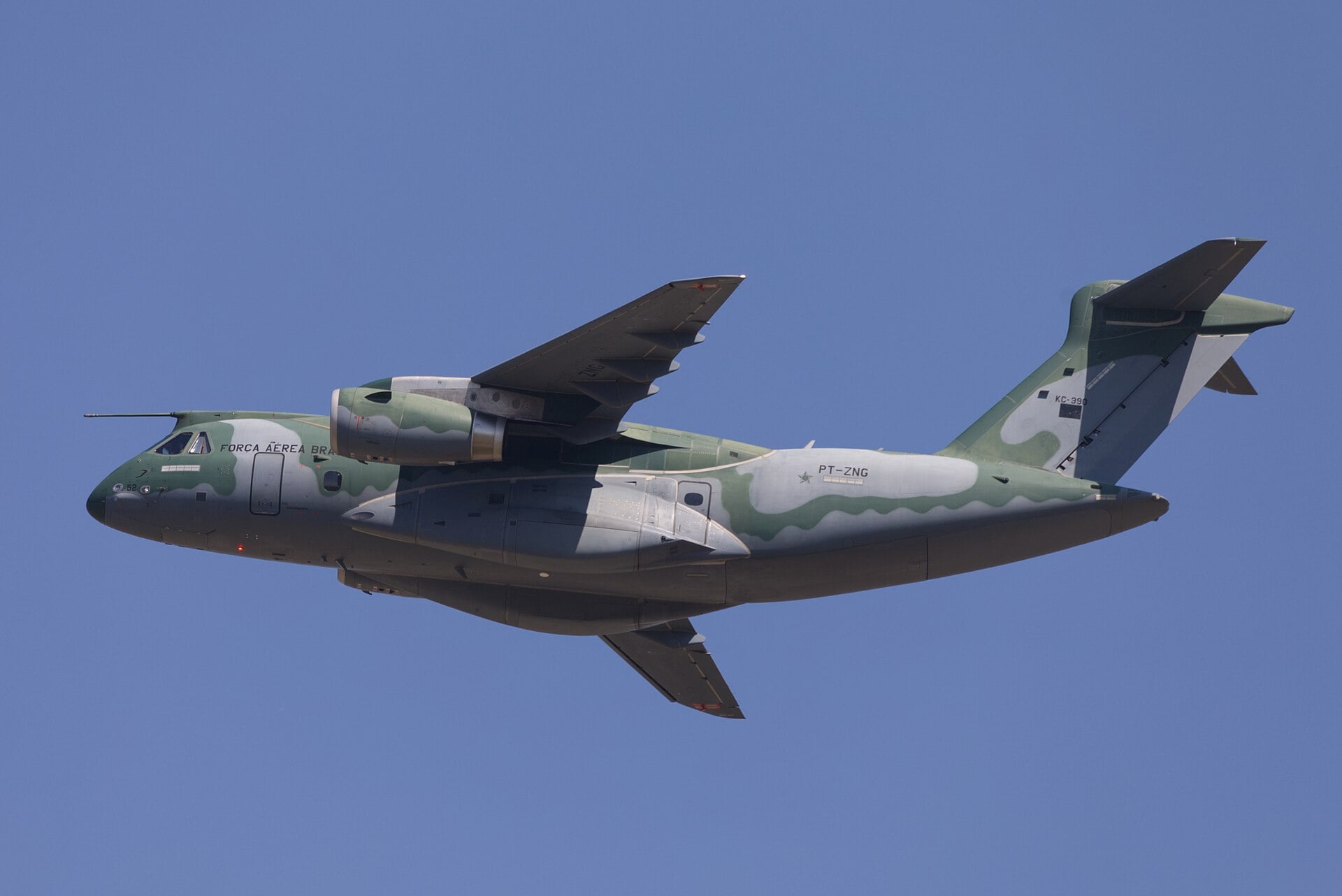
On Monday in Athens, Greece signed for three Embraer KC-390 Millennium transports, with options for three more, to replace a Hellenic Air Force C-130H fleet that has been flying since the 1970s. Within hours the comment sections filled with the same question they always do: is it better than the Hercules? Better than the A400M?
It is a fair question, and almost nobody answers it with numbers you can check. The comparison articles that dominate the search results recycle one another, and the figures in them have usually travelled a long way from anything a manufacturer wrote down.
So this piece does something narrower and, we think, more useful. It sets out only what Embraer, Lockheed Martin and Airbus publish themselves — and it reports, honestly, how much of the comparison simply cannot be made, because two of the three do not publish the numbers you would need.
Quick Facts
Maximum payload: A400M 37 t · KC-390 26 t · C-130J-30 21.2 t (46,700 lb)
Maximum cruise speed: KC-390 470 KTAS (Mach 0.80) · A400M Mach 0.72 · C-130J-30 365 KTAS
Engines: KC-390 two IAE V2500-E5 turbofans · A400M four Europrop TP400 turboprops · C-130J-30 four Rolls-Royce AE 2100D3 turboprops
Paratroopers: A400M 116 · KC-390 64 · C-130J-30 not published
Only one manufacturer publishes a take-off field length with its conditions: Embraer.
Greece, 2 November 2026: three KC-390s ordered, options for three more, to replace C-130H Hercules
What Each Manufacturer Actually Publishes
Start with the documents. Embraer’s C-390 Millennium brochure is the most forthcoming of the three. It gives a take-off distance of 1,524 m (5,000 ft) and states the conditions behind it: balanced field length, sea level, ISA, a 500 nm mission, at a 23-tonne payload. Change the payload to 16 tonnes and the brochure gives you 1,165 m (3,820 ft). That is a figure you can argue with, which is what makes it worth having.
Lockheed Martin’s C-130J Fast Facts card, dated October 2026, is a single page. It gives maximum take-off weight (164,000 lb / 74,389 kg), maximum payload (46,700 lb / 21,183 kg for the stretched C-130J-30, footnoted “assumes wing relieving fuel”), a landing distance of 3,000 ft / 914 m at 135,000 lb, and a range of 2,160 nm with 40,000 lb aboard. It publishes no take-off distance, no service ceiling and no cargo-compartment dimensions. For those, the card directs you to a named company contact.
Airbus publishes the least. The A400M Atlas product page gives 37 tonnes maximum payload, Mach 0.72 maximum speed, 40,000 ft maximum altitude, a 4 m by 4 m cargo cross-section and 340 m³ of hold volume. Almost none of it carries a condition. The FAQ states that a 37-tonne payload can be delivered to a strip “less than 750 meters (2,460 ft) long” without saying on what surface, at what altitude or in what temperature. The same page says the aircraft flies low-level “down to 150 ft” in one section and “500 feet (150 meters)” in another. Those two statements cannot both be right.
Payload: Three Different Questions
On the headline number the A400M wins and it is not close. Thirty-seven tonnes against 26 for the KC-390 and 21.2 for the C-130J-30 puts the Airbus in a different weight class, and Airbus says it is working to certify 40 tonnes, without giving a date.
But read the footnotes. Embraer publishes two payload figures, not one: 26 tonnes concentrated and 23 tonnes distributed, because what limits the aeroplane depends on how the load sits on the floor. Lockheed’s 46,700 lb assumes wing relieving fuel, which is to say it assumes fuel in the wings is carrying some of the bending load. Airbus states 37 tonnes with no qualifier at all. Three numbers, three different definitions of “maximum payload”.
The ranking survives all of that — the A400M really does lift more — but the gap between the KC-390 and the C-130J-30 is smaller than the raw figures suggest, and it rests on assumptions the reader is not shown.

Speed: The Jet in the Room
This is the one comparison that is clean, and it is the KC-390’s whole argument. Embraer publishes a maximum cruise of 470 KTAS, Mach 0.80. Lockheed publishes 365 KTAS for the C-130J-30. Airbus publishes Mach 0.72 as a maximum.
A hundred and five knots is not a detail. Over a 1,500 nm leg it is roughly an hour and a half. The KC-390 is a jet transport with two IAE V2500-E5 turbofans of 31,330 lb thrust each — the same engine family that hangs under an A320 — while the other two are four-engined turboprops. Greek Defence Minister Nikos Dendias made exactly this point in Athens, calling the jet transport the first of two firsts for the Hellenic Air Force.
What speed costs is the other half of the trade, and we will come to it.
Runways: Where the Comparison Falls Apart
Short-field performance is the reason tactical airlifters exist, and it is the specification the three manufacturers are least willing to pin down.
Embraer publishes the most. Beyond the balanced field lengths above, the brochure says the C-390 operates from the worst semi-prepared and damaged runways defined by MIL-B-8866B, quotes ten passes at CBR 4 on a soft field, and gives a normal operating case of a 4,000 ft semi-prepared soft airstrip at CBR-6 carrying 12 tonnes to 500 nm. It explicitly does not publish take-off or landing distances for those conditions.
Lockheed publishes a landing distance of 3,000 ft at 135,000 lb and nothing about take-off. Airbus publishes the 750 m figure and nothing else, resting the case instead on the A400M’s twelve-wheel main landing gear, which spreads the load across soft ground.
Which means the single most-argued-about comparison in tactical airlift — who can get into the shortest, roughest strip — cannot be settled from published data. Anyone who tells you otherwise has read a number off a chart at conditions they did not state, or has made it up.
Range, and What Speed Costs
Here the pattern reverses. Embraer publishes a full ladder: 1,080 nm at 26 tonnes, 1,470 nm at 23 tonnes, 2,710 nm at 14 tonnes, a 3,370 nm ferry range and 4,570 nm with internal auxiliary tanks. Lockheed publishes one point, 2,160 nm at 40,000 lb. Airbus publishes one point, 3,400 nm at 20 tonnes.
Take the three published points at face value and the A400M carries more, further. The C-130J-30 carries about 18 tonnes to 2,160 nm; the KC-390 carries 14 tonnes to 2,710 nm but drops to 1,080 nm once it is loaded to 26. That is the turbofan bill. A jet is fast and it is thirsty at low level, and the Embraer brochure does not hide it.
The RAF, which has since decommissioned its Hercules fleet, publishes its own operating figure for the Atlas: a 30-tonne payload over 2,400 nm, with a maximum of 37 tonnes, operating up to 40,000 ft. That is a government customer’s number rather than a manufacturer’s, and it is the most useful single data point in this article.
Embraer’s own film on the Greek order, above, is a sales pitch, and worth watching as one: it is the clearest statement of how the manufacturer wants the aeroplane understood.
Cost: Three Numbers That Are Not the Same Number
Unit price is where comparisons go to die, because no two of these figures measure the same thing.
Greece’s deal, signed on 2 November 2026 as a government-to-government agreement with Portugal, is worth up to €600 million (about $672 million) for three aircraft plus follow-on support, a figure approved by a Greek parliamentary committee in June 2026. Divide it and you get roughly €200 million per aircraft — but you would be dividing support, training and spares into the airframe price.
For the A400M, the UK Ministry of Defence told Parliament in December 2022 that the total provision for acquiring the RAF’s fleet was £2.6 billion, with an estimated whole-life cost of £7.2 billion. Across 22 aircraft that is about £118 million each on acquisition — again, not a flyaway price.
For the C-130J the US Air Force procurement line is public and it swings wildly. FY2025 bought eight aircraft for $828.0 million. FY2026, as enacted, bought eight for $1,478.1 million — a line that includes six aircraft added by Congress. The same aeroplane, the same quantity, nearly double the money, one year apart.
Anyone quoting you a clean per-aircraft figure for all three is comparing a contract value, a national acquisition provision and a congressional appropriation as though they were price tags.
So Which One Wins?
None of them, because they are not entered in the same race.
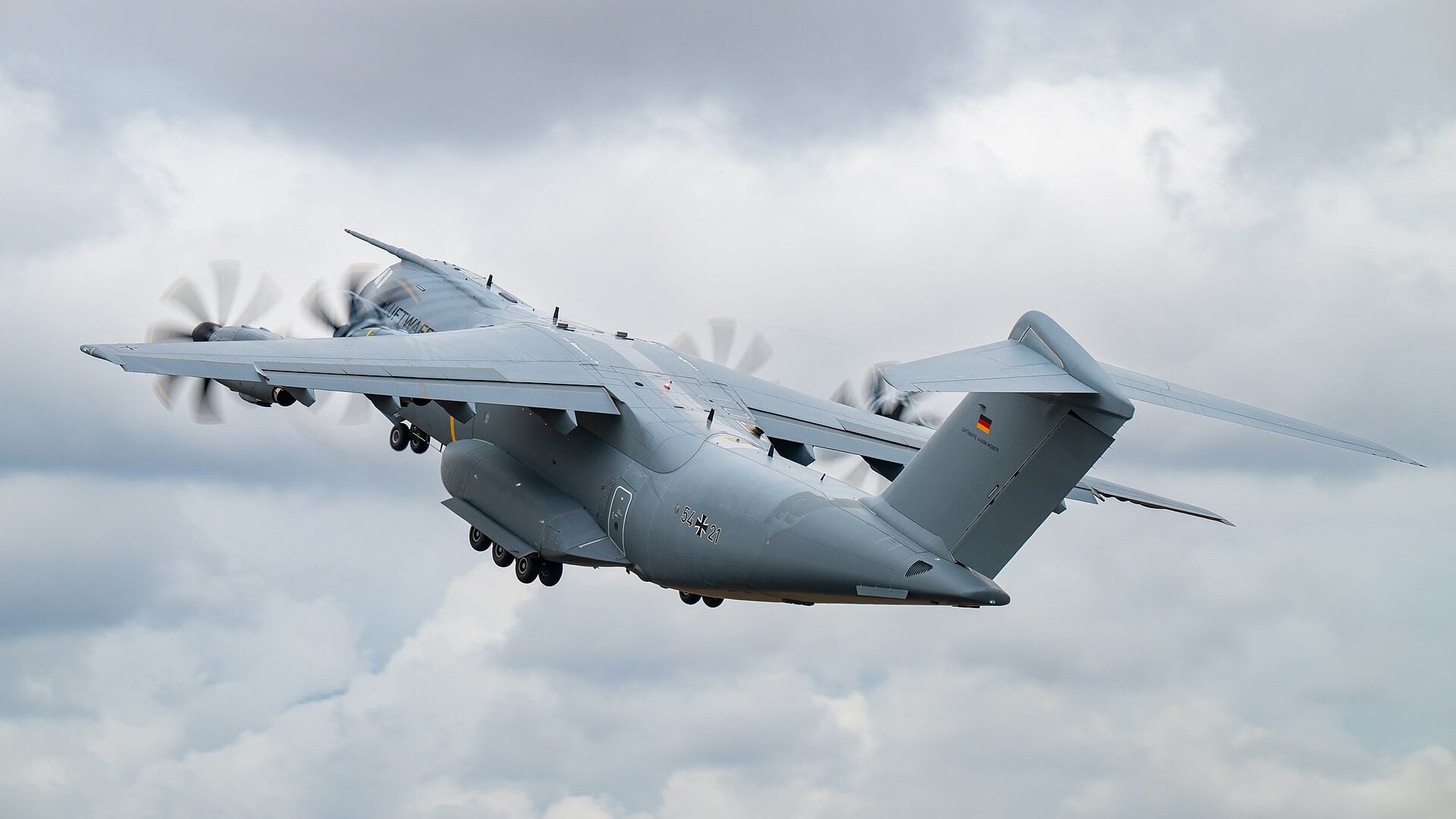
The A400M is a strategic-tactical hybrid. Thirty-seven tonnes, a 4 m by 4 m hold that swallows outsize loads a Hercules cannot, 116 paratroopers, and a role the RAF describes as complementing rather than replacing its C-17 Globemaster III fleet. It is the only one of the three that bridges the gap to strategic airlift.
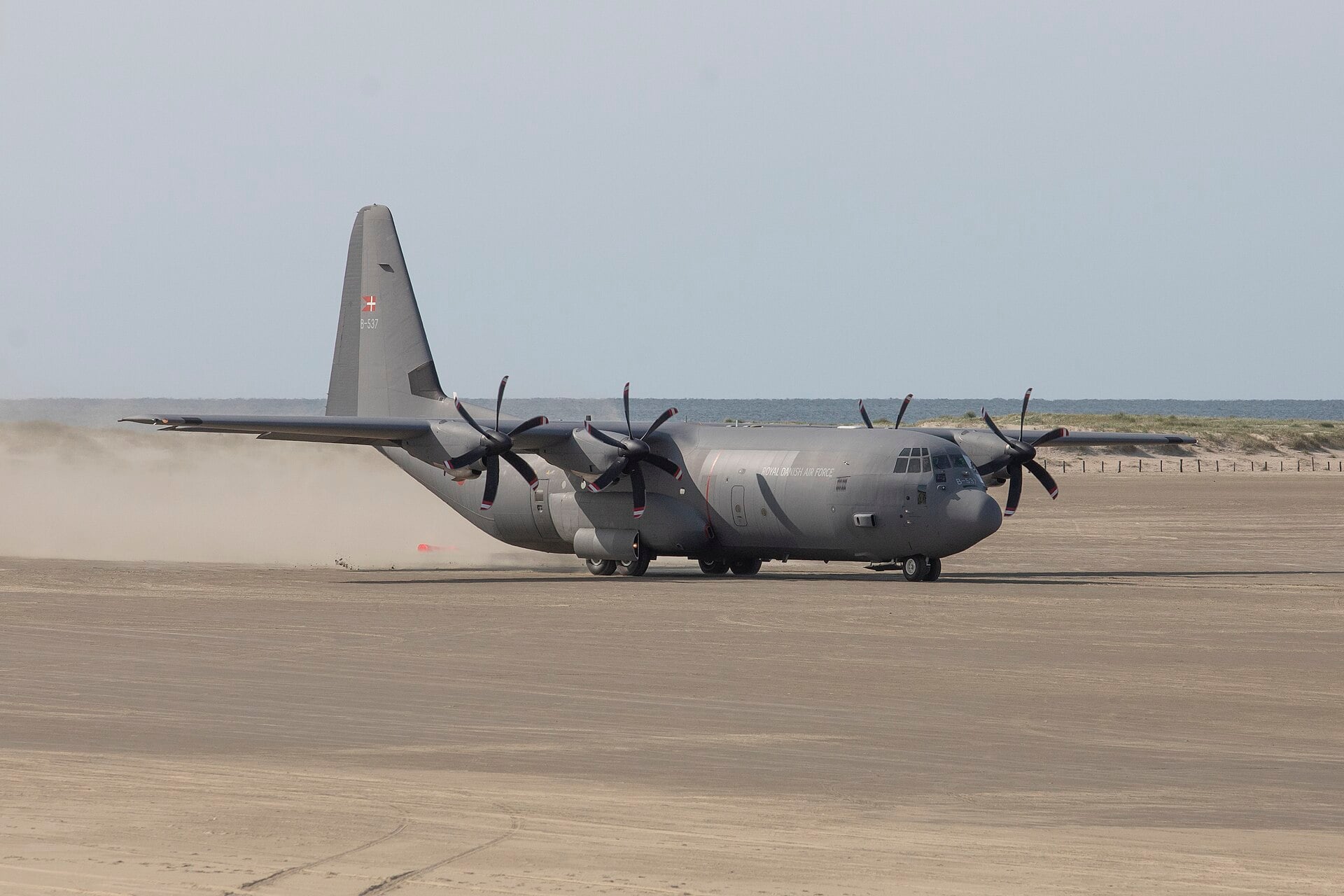
The C-130J-30 is the short-field incumbent, carrying seventy years of the Hercules line behind it and a support network almost everywhere. Its published figures are the thinnest of the three, which tells you something about how little Lockheed Martin feels it needs to prove.
The KC-390 trades the Hercules’s deepest unprepared-strip credentials for jet speed, a bigger payload and a hose-and-drogue tanker fit built in rather than bolted on — which, for Greece, was explicitly part of the attraction. Embraer counts Greece as the fourteenth nation and the seventh European country to select the type.
Lockheed Martin’s cockpit film is the counter-argument: an aeroplane whose selling point is that everyone already knows how to fly it, fix it and load it.
The honest conclusion is the one the comparison blogs never reach. Two of these three manufacturers do not publish enough to be compared. Until they do, the only defensible answer to “which is best” is “at what, carrying what, into where”.
And a last word on the thing the numbers never capture: an A400M at low level through the Mach Loop, above, is a very large aeroplane being flown like a fighter.
Sources: Embraer C-390 Millennium brochure; Lockheed Martin C-130J Fast Facts (October 2026); Airbus A400M product page and FAQ; Royal Air Force Atlas C1 aircraft page; UK Parliament written answer UIN 102835 (13 December 2022); US Air Force FY2027 procurement budget detail; Forces News; Breaking Defense; Cyprus Mail.


0 Comments