
In January 1962 the US Air Force borrowed two Navy fighters and gave them a new name. To the Navy the jet was the McDonnell F4H-1 Phantom II. To the Air Force it was now the F-110A Spectre. Same aircraft, two different designations in two different systems, and a Secretary of Defense, Robert McNamara, who was already pushing both services to buy common aircraft.
By September the confusion was gone. The F4H-1 became the F-4B, the F-110A became the F-4C, and every American military aircraft was given a designation under one common set of rules. That 1962 Tri-Service designation system is the reason the Phantom is an F-4, a Navy jet trainer is a T-45 and a Reaper is an MQ-9.
It also explains some of the oddest numbers in the inventory: why the F-111 came after the F-110 even though the counting had just restarted at 1, why the Joint Strike Fighter is not the F-24, and why the Air Force’s sixth-generation fighter is the F-47.
Quick Facts
- System: US Tri-Service (DoD) aircraft designation system, or MDS (Mission-Design-Series)
- Enacted: DoD Directive 4505.6, 6 July 1962
- In force: 18 September 1962
- Format: Status prefix, modified mission, basic mission, vehicle type, design number, series letter
- Phantom II: Navy F4H-1F, F4H-1 and USAF F-110A became F-4A, F-4B and F-4C
- F-111: TFX designated F-111A/B in the 1962 transition, continuing the old USAF number
- Out-of-sequence fighters: F-117, F-35 (logically F-24), F-47
- F-47: Announced 21 March 2025 by President Trump; Boeing NGAD fighter
Three services, three systems
Before 1962, the Navy and Marine Corps used a system dating from 1922 that packed the manufacturer into the name. F4H meant the fourth (4) fighter (F) design from McDonnell (H). The company’s first Navy fighter was simply the FH Phantom, because a first design carried no number, followed by the F2H Banshee and F3H Demon. A dash and a number then gave the sub-type.
The Air Force used a simpler scheme inherited from the Army Air Forces: a mission letter and a number in one long sequence. When P for pursuit became F for fighter in the late 1940s, the P-80 became the F-80, and the numbers ran on through the “century series” of the 1950s, the F-100, F-104 and F-105, up to the F-110A. The Army had its own variations, which is how a Bell helicopter came to be the HU-1 and earned the nickname Huey.
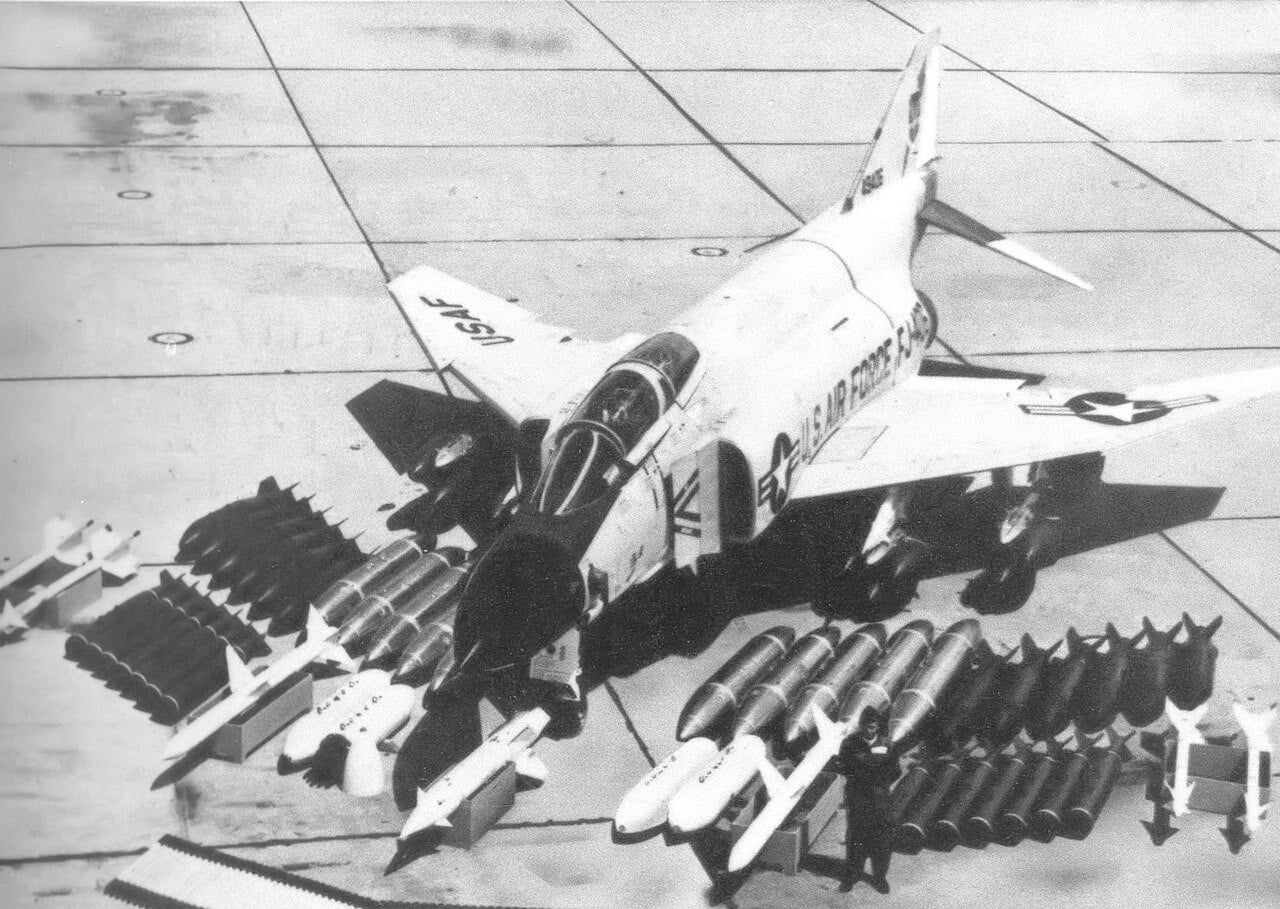
The result was that a single aircraft could carry entirely unrelated designations depending on which service flew it. For a Pentagon trying to make the Navy and Air Force buy the same aircraft, that was more than an inconvenience.
18 September 1962
DoD Directive 4505.6, “Designating, Redesignating, and Naming Military Aircraft”, was signed on 6 July 1962, and the services implemented it on 18 September 1962. The new system was based on the Air Force’s, but the number series in each mission category restarted from 1.
The Navy’s existing fleet was renumbered overnight. The FJ Fury became the F-1, the F2H Banshee the F-2, the F3H Demon the F-3 and the F4H Phantom II the F-4. The F8U Crusader became the F-8, the A4D Skyhawk the A-4, the A2F Intruder the A-6 and the HSS-2 Sea King the SH-3A. The Vigilante, the A3J, could not become the A-3 because the Skywarrior already had that number, so it became the A-5. The Army’s HU-1 became the UH-1.
USA TODAY’s report on the Oval Office announcement of the F-47 on 21 March 2025.
There are small fingerprints of the old system everywhere. The Navy’s F4H-1F became the F-4A and the F4H-1 the F-4B, while the Air Force’s F-110A became the F-4C. Later Phantoms ran through the alphabet, but there was never an F-4H: the letter was skipped to avoid confusion with the old F4H. Series letters I and O are never used at all, because they look like 1 and 0.
Why the F-111 came after the F-110
If the counting restarted at 1 in 1962, how did the F-111 get its number? The answer is timing. The Tactical Fighter Experimental, or TFX, was McNamara’s attempt to give the Air Force and Navy one common fighter-bomber, and it reached the designation stage just as the old system was being replaced.
The official 1962 redesignation lists record the TFX as becoming the F-111A for the Air Force and F-111B for the Navy, and note that a few aircraft received their first official designations while the redesignation was being prepared. The TFX was one of them. It took the next number in the old Air Force fighter sequence, 111, right after the F-110A, and kept it.
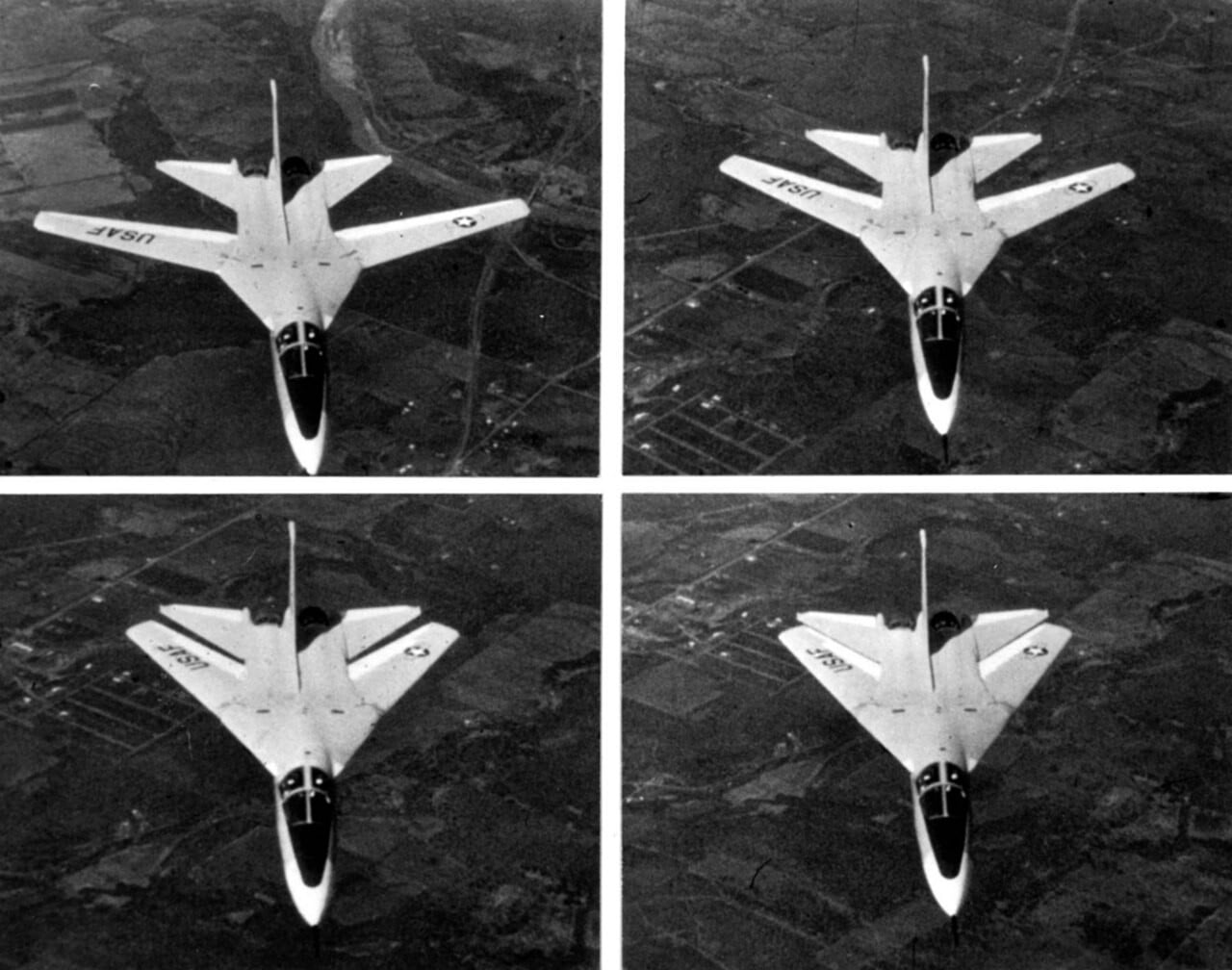
The 111 then stuck when the strategic bomber version came along: it should logically have been a new B-number, but became the FB-111A for commonality. Even in its first months, the new system had an exception built into it. It would not be the last.
How to read a designation
A modern designation is called an MDS, for Mission-Design-Series. Read it from the dash outwards. The letter immediately left of the dash is the basic mission: F for fighter, A for attack, B for bomber, C for cargo, T for trainer. Any letter in front of that is a modified mission, so an EA-6B is an attack aircraft modified for electronic warfare, and a KC-135 is a cargo design modified as a tanker.
A vehicle-type letter sits next to the dash for anything that is not a conventional aeroplane: H for helicopter, V for vertical or short take-off, Q for unmanned. So CH-47F is a cargo helicopter, MQ-9A is a multi-mission unmanned aircraft, and AV-8B is an attack V/STOL jet. Right of the dash comes the design number and then the series letter, A for the first version, B for the second, and so on.
Status prefixes go in front of everything. X is experimental, Y is prototype, N is a permanent special test aircraft and J a temporary one, so a YF-23A is a prototype fighter and an NKC-135A is a tanker-transport converted for permanent testing.
Rules made to be broken
The design numbers were supposed to run consecutively, and for a while they did: the F-14, F-15, F-16 and F-18 all came from the restarted fighter series. Then the exceptions piled up. The F/A-18 used a slash the system does not allow. The F-117 was given a century-style number and an F for an aircraft with no air-to-air role. The SR-71 continued the old bomber series, with letters chosen at the request of Air Force Chief of Staff Curtis LeMay.
The F-35 is the best-documented case. When the X-35 won the Joint Strike Fighter competition on 26 October 2001, Under Secretary of Defense Edward “Pete” Aldridge was asked at the press conference what the production aircraft would be called, and said F-35. No designation had been reserved. The Air Force’s own nomenclature office still recommended the next number in sequence.
The recommendation was ignored, and on 5 June 2002 the Air Force confirmed F-35A, F-35B and F-35C.
Why the F-47 is the F-47
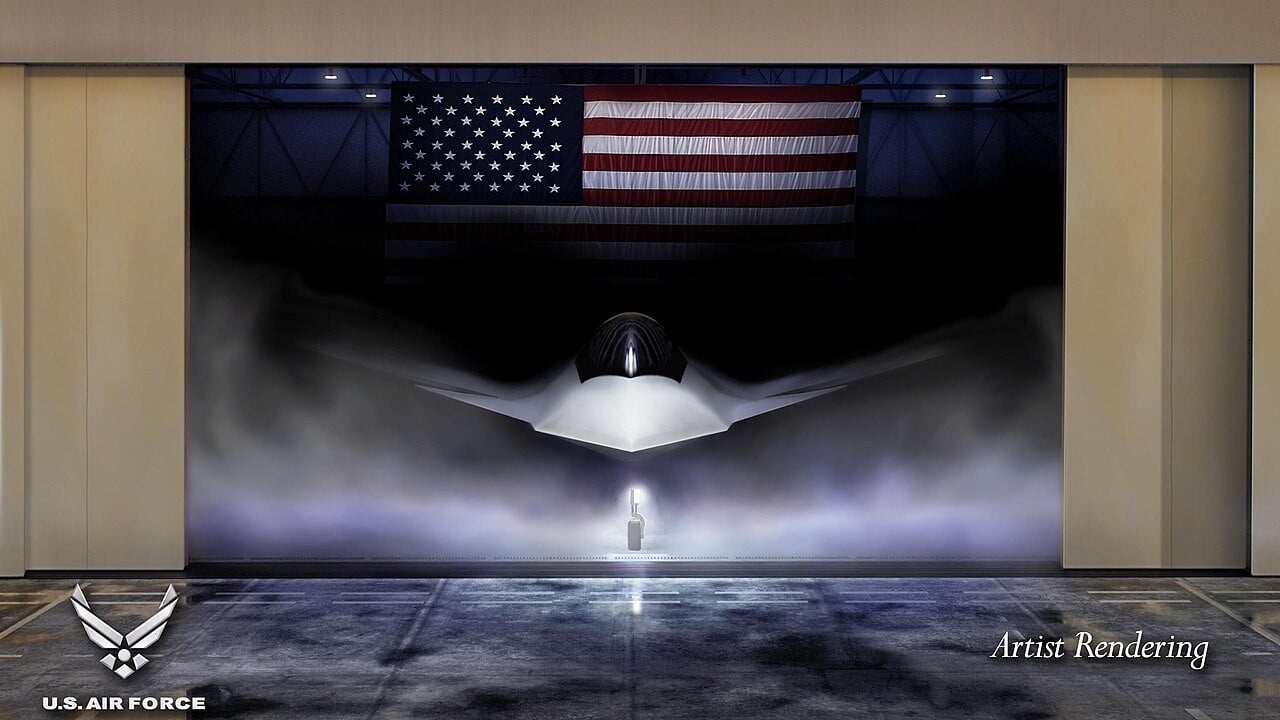
On 21 March 2025, President Donald Trump announced in the Oval Office that Boeing had won the Next Generation Air Dominance fighter contract, and that the aircraft would be the F-47. The Air Force then gave three reasons for the number, none of which had anything to do with sequence.
The P-47 Thunderbolt was itself redesignated F-47 after the war, when pursuit aircraft became fighters, so the number had technically been used before. Freedom of Information Act requests later showed that the Air Force’s statement explaining the name was drafted in a hurry after the announcement. Designation-systems.net, the most thorough public record of these rules, concludes that there is effectively no longer a sequence of F-designations at all.
DW News on President Trump’s announcement that Boeing would build the F-47.
So the next time a new American aircraft is unveiled, look at the letters before you look at the number. The letters still follow rules written in 1962. The number, increasingly, tells you who was in the room when it was chosen.
Sources: DoD Directive 4505.6 and AFR 66-11/AR 700-26/BUWEPSINST 13100.7 (1962), Air Force Joint Instruction 16-401 (1994), designation-systems.net (Andreas Parsch: Current Designations of U.S. Military Aircraft; Aircraft Redesignations in 1962; Non-Standard DOD Aircraft Designations), Wikipedia (1962 United States Tri-Service aircraft designation system; McDonnell Douglas F-4 Phantom II; Boeing F-47)

0 Comments