
On 1 January 2000, several thousand perfectly airworthy jet airliners were scheduled to become illegal. Not unsafe. Not worn out. Simply too loud for the country they were registered in.
What saved most of them was a muffler. An entire industry grew up in the 1990s around bolting acoustic hardware onto the back of Pratt & Whitney JT8D engines so that Boeing 727s, DC-9s and early 737s could clear a noise threshold written for a later generation of turbofan. The kits worked. The deadline passed. The aeroplanes kept flying.
And then Europe tried to ban them, the United States took fifteen European governments to arbitration at ICAO, and the argument ran for three years before anyone looked at a decibel meter. This is the story of the hush kit.
Quick Facts
What it is: a retrofit acoustic modification, typically a multi-lobe exhaust mixer plus treated tailpipe and revised inlet nacelle
Why: 14 CFR 91.853 bars non-compliant large jets from airports in the contiguous United States after 31 December 1999
Typical engine: Pratt & Whitney JT8D, a low-bypass turbofan
Typical price: Nordam’s low-gross-weight 737-200 kit was listed at 1.3 million dollars in 1996
The European rule: Council Regulation (EC) No 925/1999 of 29 April 1999, which barred recertificated aircraft with engines of bypass ratio below three
The fight: the United States filed an Article 84 application against 15 EU states at the ICAO Council on 14 March 2000
How it ended: Directive 2002/30/EC of 26 March 2002 repealed the regulation; the merits were never decided
The Deadline That Created a Market
The rule is one sentence long. Under 14 CFR 91.853, after 31 December 1999 no person may operate to or from any airport in the contiguous United States a covered civil subsonic jet unless it has been shown to comply with Stage 3, Stage 4 or Stage 5 noise levels.
Note what it does not say. It does not say the aeroplane must have quiet engines. It says the aeroplane must be shown to comply. That is a certification test, measured at three reference points, and anything that gets the numbers down counts.
That distinction is the entire business case. An airline with fifty 727s facing a hard date had three options: buy fifty new aeroplanes, re-engine the ones it had, or modify the exhaust. The first was ruinous, the second nearly so. The third cost a little over a million dollars an aircraft.
What a Hush Kit Actually Is
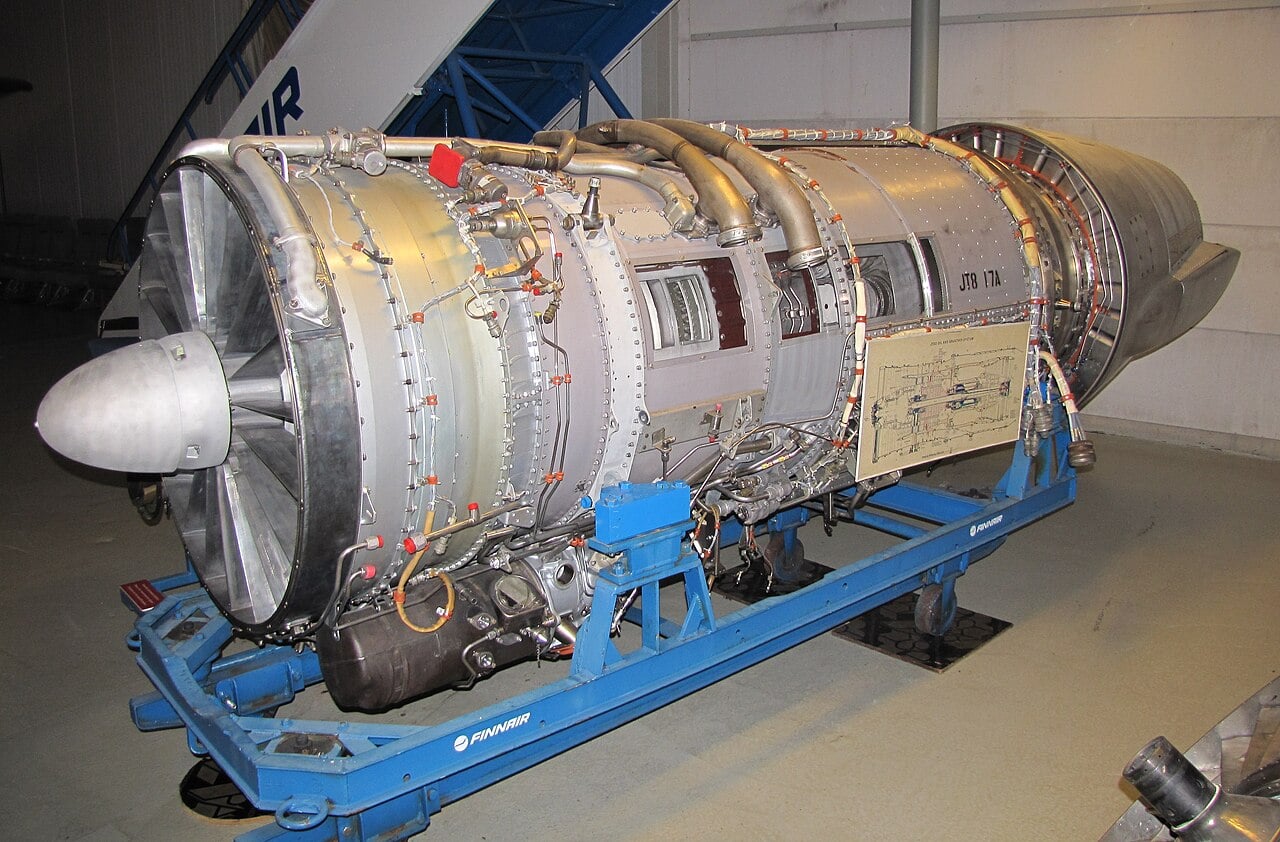
Jet noise is dominated by shear. A hot core exhaust leaving the nozzle at high velocity tears into still ambient air, and the violence of that mixing is what a person on the ground hears as a roar. A high-bypass turbofan solves the problem by design: the big fan wraps the core jet in a thick sleeve of slower bypass air, so the velocity gradient at the edge is gentler.
A hush kit fakes that. The standard component is a multi-lobe exhaust mixer, a fluted petal arrangement bolted to the rear of the engine that forces the core exhaust and the available bypass air to interleave before they meet the outside world. Nordam’s 737-200 kit, developed jointly with Pratt & Whitney, used an 18-lobe mixer.
Most kits go further. Acoustically treated tailpipes absorb what the mixer does not cancel. Revised inlet nacelles and guide vanes attack the other half of the problem, the high-pitched forward-radiated whine of a small fan spinning fast. On a modern engine that whine is a non-issue, because a large fan turns slowly.
And there was a third route that involved no hardware at all. Weight restrictions and reduced flap settings change the certificated numbers too, which is why the European rule later had to name operational restrictions explicitly alongside technical ones.
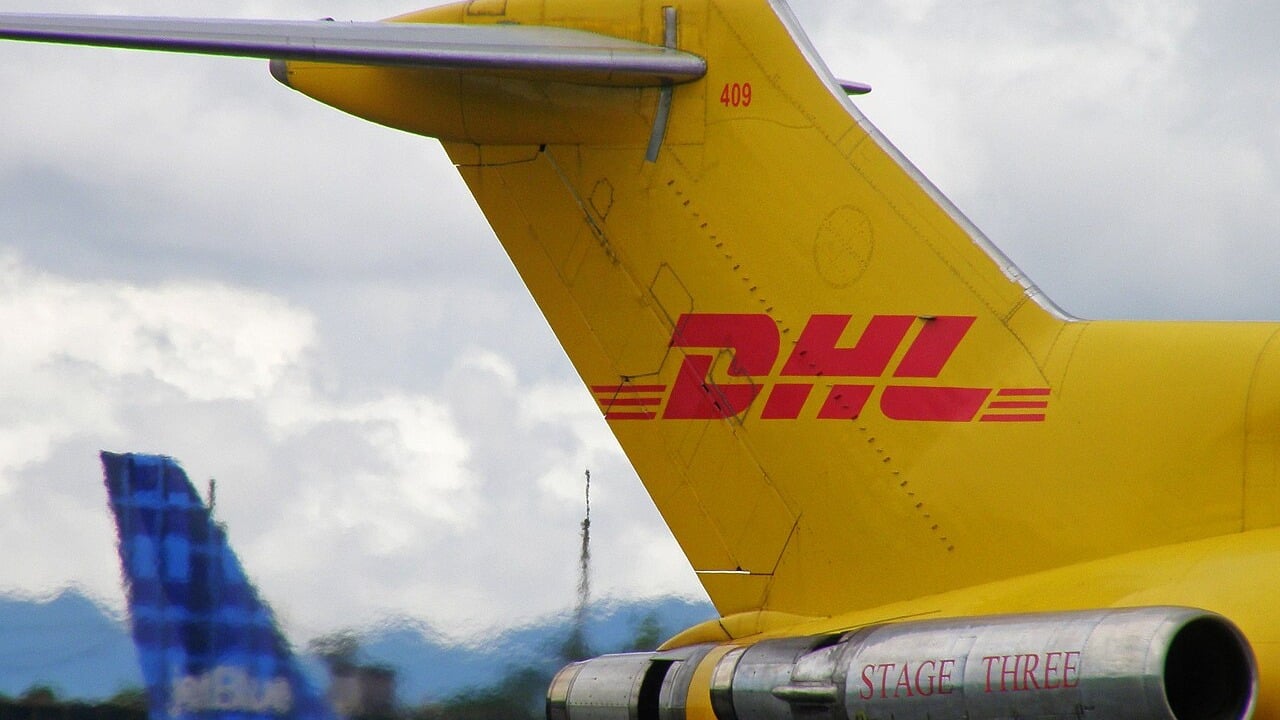
A hush-kitted Kalitta 727 departing Fort Lauderdale, above. That is what passing the test sounds like. It is worth sitting with the fact that this is the quiet version.
What It Cost, and What It Cost You
In August 1996 Delta Air Lines finalised its 737 plans, ordering Nordam Stage 3 kits for 25 aircraft firm with options on 30 more, enough to cover its entire 737-200 fleet. Flight International reported the list price of the low-gross-weight JT8D kit at 1.3 million dollars. Nordam, based in Tulsa, Oklahoma, had 210 firm orders and 146 options on the books for that one application alone. Delta had already bought FedEx Aviation Services kits for its 727-200s.
That is the scale of it. A retrofit market in the hundreds of units per type, serving an installed base of thousands of aircraft, with Avaero, Hubbard, Quiet Technology and others competing for the same deadline-driven demand.
The kits were not free in flight, either. They add weight and they cost aerodynamic and propulsive efficiency, and the penalty shows up as range. When the first Gulfstream III fitted with a Quiet Technology Stage 3 kit flew in 2003, the pilot reported a range reduction of 1.5 to 1.8 per cent against the baseline aeroplane. On a short-haul 737 that is tolerable. On a long-range business jet it is the difference between two destinations and one.
There was also a creative outlier. Raisbeck Engineering obtained FAA certification for a Stage 3-compliant 727 modification that involved neither re-engining nor hush-kitting, a reminder that when a rule is written around a measurement, engineers will go after the measurement.
Europe Was Not Impressed
By the mid-1990s the two sides of the Atlantic had diverged badly, and Flight International put its finger on why as early as July 1997. American majors could hush-kit large fleets and fly them anywhere in the United States without penalty. European carriers were largely replacing their old aircraft with new ones and buying hush kits only to protect resale value, because many European airports had already imposed local noise limits that a hush-kitted aeroplane could not meet.
So when the Council adopted Regulation (EC) No 925/1999 on 29 April 1999, it was not inventing a European position. It was codifying one. The regulation’s fifth recital states the case plainly: older aeroplanes modified to improve their noise certification level perform significantly worse, mass for mass, than aircraft originally certificated to Chapter 3; such modifications prolong the life of an aeroplane that would normally have been retired; and they tend to worsen gaseous emissions and fuel burn.
Then came the clause that started the war. Article 2 defined the targeted aircraft as those powered by engines with a bypass ratio of less than three, and explicitly carved out aircraft modified to meet Chapter 3 by being completely re-engined with engines of bypass ratio three or more. Hush-kitting was caught. Re-engining was exempt.
Article 3 barred registration of recertificated aircraft in any member state from 1 April 1999, and from 1 April 2002 barred them from operating at Community airports altogether, with narrow grandfathering for aircraft already on a register and already flying into Europe.
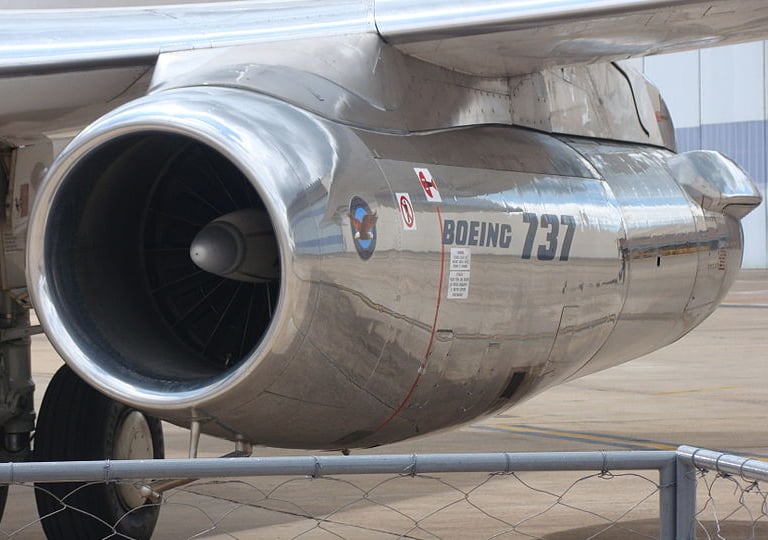
A JT8D-powered 737-200 lifting out of Bern-Belp, above. European airports had been listening to this for thirty years by 1999, which goes some way to explaining the politics.
The United States Goes to Montreal
On 14 March 2000 the United States filed an application and memorial with the Council of the International Civil Aviation Organization under Article 84 of the Chicago Convention, naming Austria, Belgium, Denmark, Finland, France, Germany, Greece, Ireland, Italy, Luxembourg, the Netherlands, Portugal, Spain, Sweden and the United Kingdom as respondents. Article 84 is the Convention’s dispute mechanism, and it is used roughly never.
The American case was not that the aircraft were quiet. It was that the regulation measured the wrong thing.
The filing alleged inconsistency with Chicago Convention Articles 11, 15, 38 and 82, and with Standard 1.5 of Annex 16, Volume I. Its sharpest phrase was that Europe had adopted a discriminatory, design-based standard. A bypass ratio is a fact about how an engine is built, not about how much noise it makes at the measuring point, and by writing the rule that way the EU had, in the American reading, rejected a certificate issued by another contracting state without ever claiming the aircraft failed the standard.
Europe replied with preliminary objections on 19 July 2000: the matter was not ripe, negotiation had not been exhausted, domestic remedies had not been pursued. The United States responded on 15 September. The Council heard the parties at its 161st Session on 15 and 16 November 2000 and, in a decision rendered that day, denied both objections, confirmed its jurisdiction, joined the third to the merits, and invited the parties to keep negotiating with the President of the Council available as conciliator.
The merits were never argued.
The hardware at the centre of all this, in a manufacturer’s own video. It is an exhaust system. Fifteen governments went to arbitration over an exhaust system.
How It Was Actually Settled
On 28 November 2001 the European Commission proposed a replacement directive, and said out loud what the proposal was for. Article 14 of the draft, the press release noted, repeals the hushkits Regulation 925/1999, which would remove the cause of a dispute between the EU and the United States over the use of hushkitted aircraft in Europe.

Directive 2002/30/EC was adopted on 26 March 2002, and its Article 15 repeals Regulation (EC) No 925/1999 as from the date the directive enters into force. The replacement does the same job by a different route, and the difference is the whole point of the quarrel.
Where the regulation defined its target by engine architecture, the directive defines marginally compliant aircraft by measurement: a civil subsonic jet that meets the Chapter 3 limits by a cumulative margin of not more than 5 EPNdB, the cumulative margin being the sum of the individual margins at each of the three reference noise points. Bypass ratio does not appear. An airport with a genuine noise problem may move to withdraw those aircraft, but it has to follow the balanced approach, assess the problem, consider the alternatives and give notice.
The Commission was candid about the sequence. Its own release records that this EU action restarted negotiations at ICAO, which culminated in agreement in 2001 on a stricter certification standard, Chapter 4, a process for recertification, and an ICAO resolution on the airport-by-airport withdrawal of the noisiest aircraft. In other words: both sides stopped arguing about hush kits and raised the bar for everyone instead.
Why Nobody Hush-Kits Anything Today
The industry did not lose the argument. It ran out of customers.
A hush kit is a bet that an airframe has enough life left to repay a seven-figure modification. Once the deadline passed, that bet stopped paying. The fleet that needed kits kept ageing, fuel got expensive, and a 1960s airframe with low-bypass engines lost on economics long before it lost on noise. Chapter 4, adopted in 2006 in US practice as Stage 4, and Stage 5 from 2017, both apply to new type certification rather than to retrofits, so they created no second wave of demand.
There was one late aftershock. In 2013 the FAA extended the Stage 3 requirement to jets of 75,000 pounds and below, with a deadline of 31 December 2015, which sent a modest number of older business jets through the same process twenty years after the airliners. After that, nothing.
What remains is an unusually clean lesson in how regulation shapes engineering. For roughly a decade, a specific sentence in a specific rule created an entire manufacturing sector, employed hundreds of people in Tulsa and Florida, moved a billion dollars of capital, set two trading blocs against each other at the United Nations’ aviation body, and produced a measurable reduction in the noise over a few hundred airports. Then the sentence stopped binding, and the sector evaporated.
The aeroplanes are mostly gone too. A handful of hush-kitted 727s and DC-9s still work the night freight runs, and when one departs you can still hear exactly what the fuss was about.
Sources: 14 CFR 91.853 (eCFR); Council Regulation (EC) No 925/1999 of 29 April 1999, OJ L 115, 4.5.1999; Directive 2002/30/EC of 26 March 2002, OJ L 85, 28.3.2002; Memorial of the United States of America to the ICAO Council, 14 March 2000, and the Decision of the ICAO Council on the Preliminary Objections, 16 November 2000 (U.S. Department of State archive); European Commission press release IP/01/1683, 28 November 2001; Flight International, 7 August 1996 and 9 July 1997.


0 Comments