
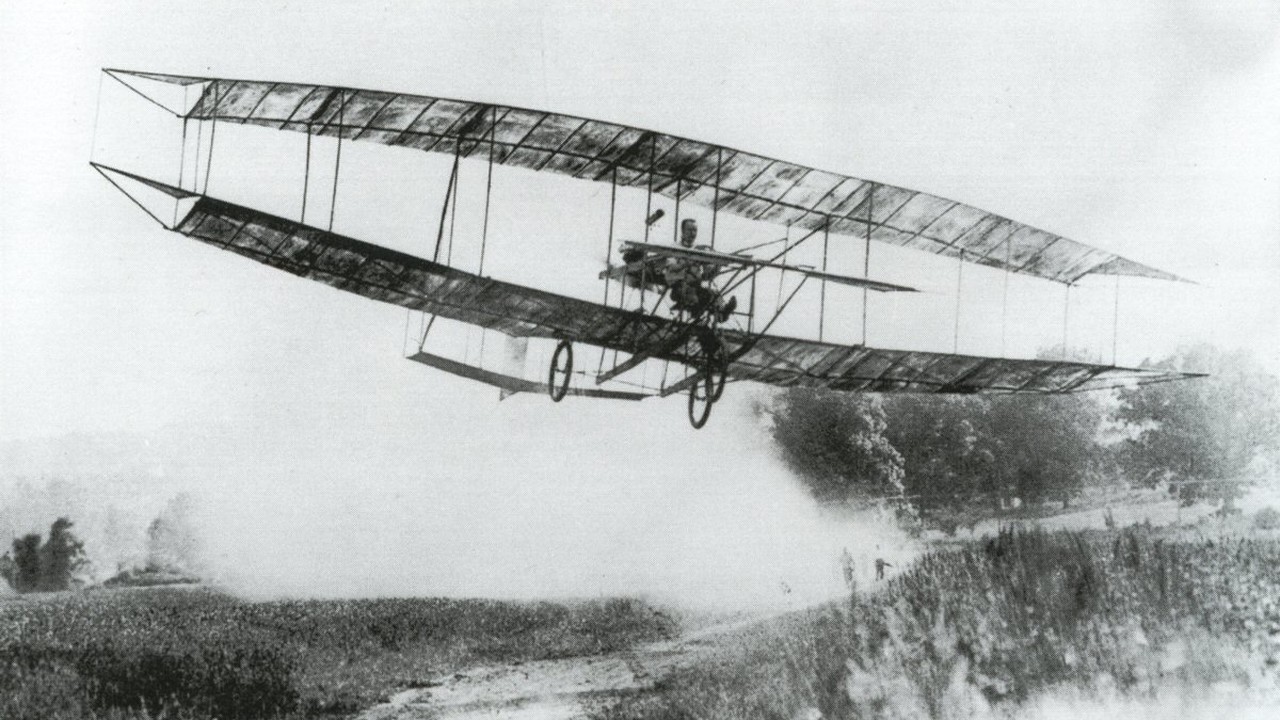
By the evening of 4 July 1908, more than 2,000 people had been waiting all day on the hillsides of Pleasant Valley, outside the little lakeside town of Hammondsport, New York. Rain and wind had pushed the show back hour after hour. Then, at around 7:30, a spindly biplane rattled down an old racetrack and climbed into the air.
Glenn Curtiss flew the June Bug for 5,090 feet, nearly a mile, in about a minute and 42 seconds. It was the first pre-announced, publicly observed and officially recognised aeroplane flight in America, and it won the Scientific American Trophy that everybody had expected the Wright brothers to collect.
Quick Facts
- Aircraft: AEA Aerodrome No. 3 “June Bug”, single-seat biplane designed by Glenn Curtiss
- Builder: Aerial Experiment Association, led by Alexander Graham Bell (formed 30 September 1907)
- Engine: Curtiss V8, about 40 hp
- Date and place: 4 July 1908, Pleasant Valley, Hammondsport, New York
- Distance: 5,090 ft (about 1.55 km) as engraved on the trophy; some accounts give more
- Time: About 1 minute 42 seconds
- Witnesses: 22 Aero Club of America members and more than 2,000 spectators
- Prize: Scientific American Trophy, first leg (one kilometre in public)
- Trophy today: National Air and Space Museum, Washington, DC
Bell’s boys
The June Bug came out of one of the most unusual research teams in aviation history. The Aerial Experiment Association was formed on 30 September 1907 under Alexander Graham Bell, the inventor of the telephone, who had spent years experimenting with giant man-lifting tetrahedral kites. His wife, Mabel Bell, put up the money, eventually some $35,000.
Bell gathered four young men around him: two Canadian engineering graduates, J.A.D. McCurdy and Frederick “Casey” Baldwin; a US Army officer, Lieutenant Thomas Selfridge; and Glenn Curtiss, a motorcycle builder from Hammondsport who had become the fastest man on Earth in January 1907 on a V8 motorcycle of his own design. Curtiss was there for his light, powerful engines.
Each member was to design at least one aircraft. Selfridge’s Red Wing flew first, in March 1908, with Baldwin at the controls. Baldwin’s White Wing followed with Bell’s hinged wingtip ailerons. The third machine, Aerodrome No. 3, was Curtiss’s design, and it would become the June Bug.
A beetle, a tent and a can of paint
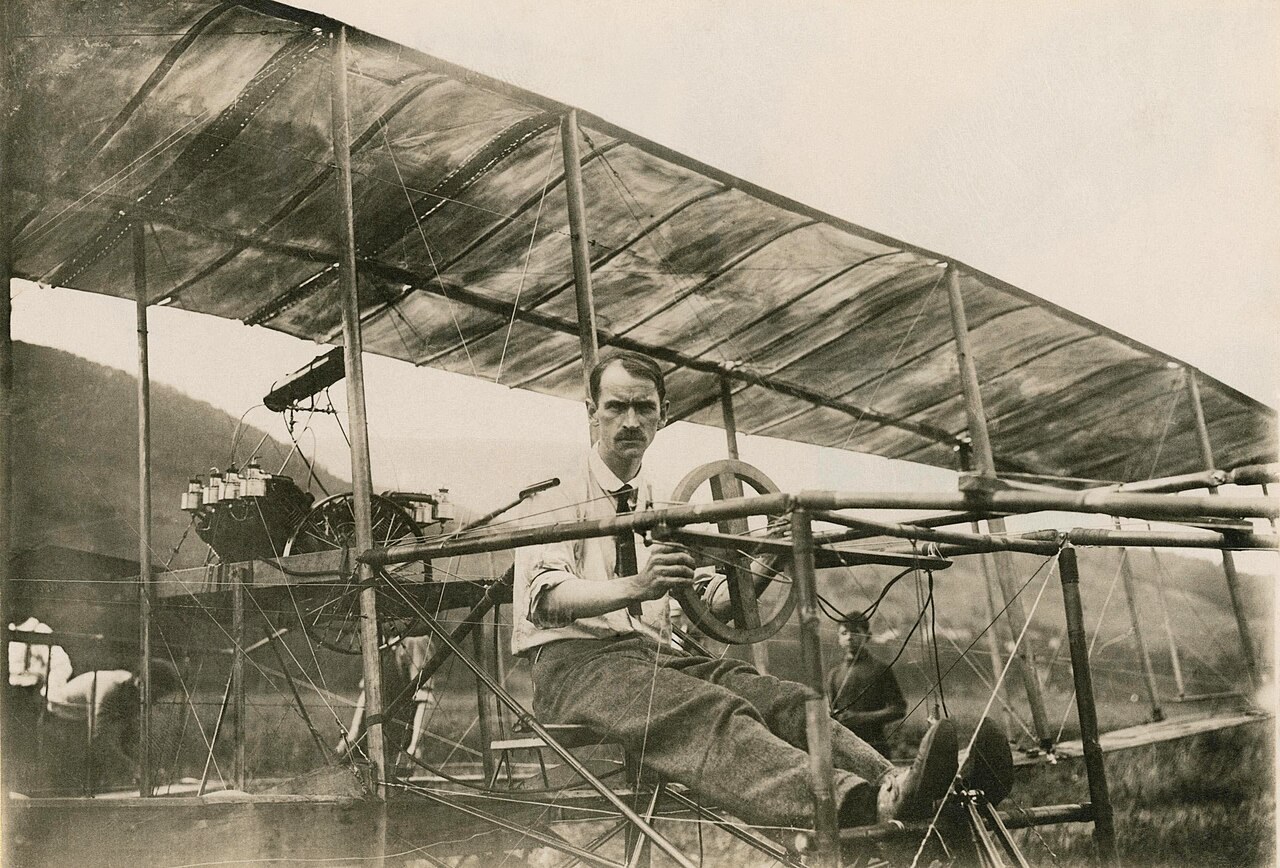
The aircraft was a single-seat biplane with a front elevator, a rear rudder, triangular ailerons at the wingtips and a Curtiss V8 engine of about 40 hp. The pilot worked the ailerons with a shoulder yoke, leaning into the direction he wanted to bank. Curtiss offered the honour of naming it to a friend, Malinda Bennitt. When she could not think of a name, Bell suggested June Bug, after the beetle.
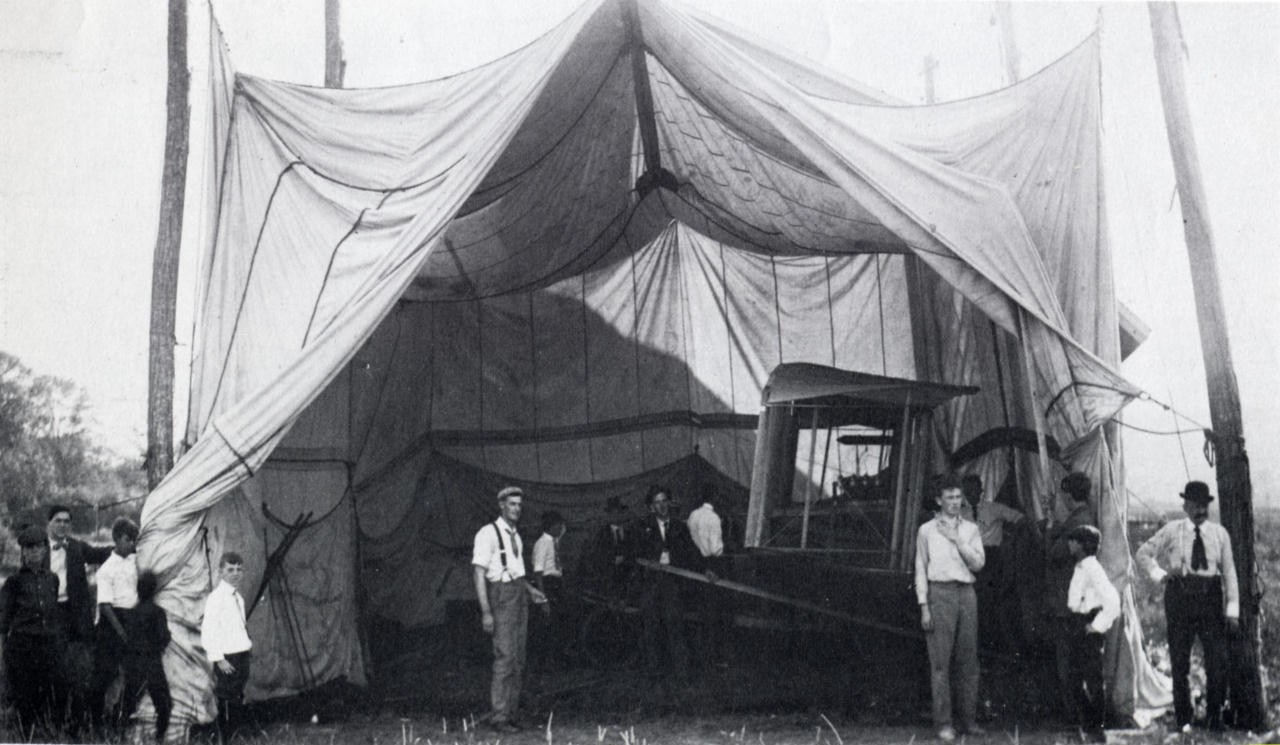
It did not want to fly at first. On 20 June 1908 three attempts to get it off the ground failed. The team, working from a tent hangar at Stony Brook Farm, decided that air was leaking through the cotton wing covering, and sealed it with a mixture that included gasoline and paraffin. The Wright Brothers Aeroplane Company’s history calls it the first recorded use of what would later be called wing dope.
The fix worked. On 21 June Curtiss made three successful flights, the longest 1,266 feet. Within days he was flying more than 3,000 feet. The AEA was within reach of a kilometre, and the team cabled the Aero Club of America that they would try for the Scientific American Trophy on 4 July.
A short video posted in July 2008, at the June Bug’s centenary, from the same place in Hammondsport.
A trophy meant for the Wrights
The Aero Club and Scientific American magazine had put up a silver trophy in 1907, to be awarded first for a public flight of one kilometre in a straight line. It was widely seen as a gift for the Wrights. The magazine had once doubted their claims and wanted to make amends, and the club counted many of their friends among its members.
The Wrights had flown much further than a kilometre years earlier, but in private. When the AEA’s entry arrived, the organisers offered Orville Wright the chance to go first. He declined: he was racing to finish an aircraft for the US Army trials, and the rules demanded an unassisted take-off, which meant fitting wheels to a machine that normally launched from a rail with a catapult.
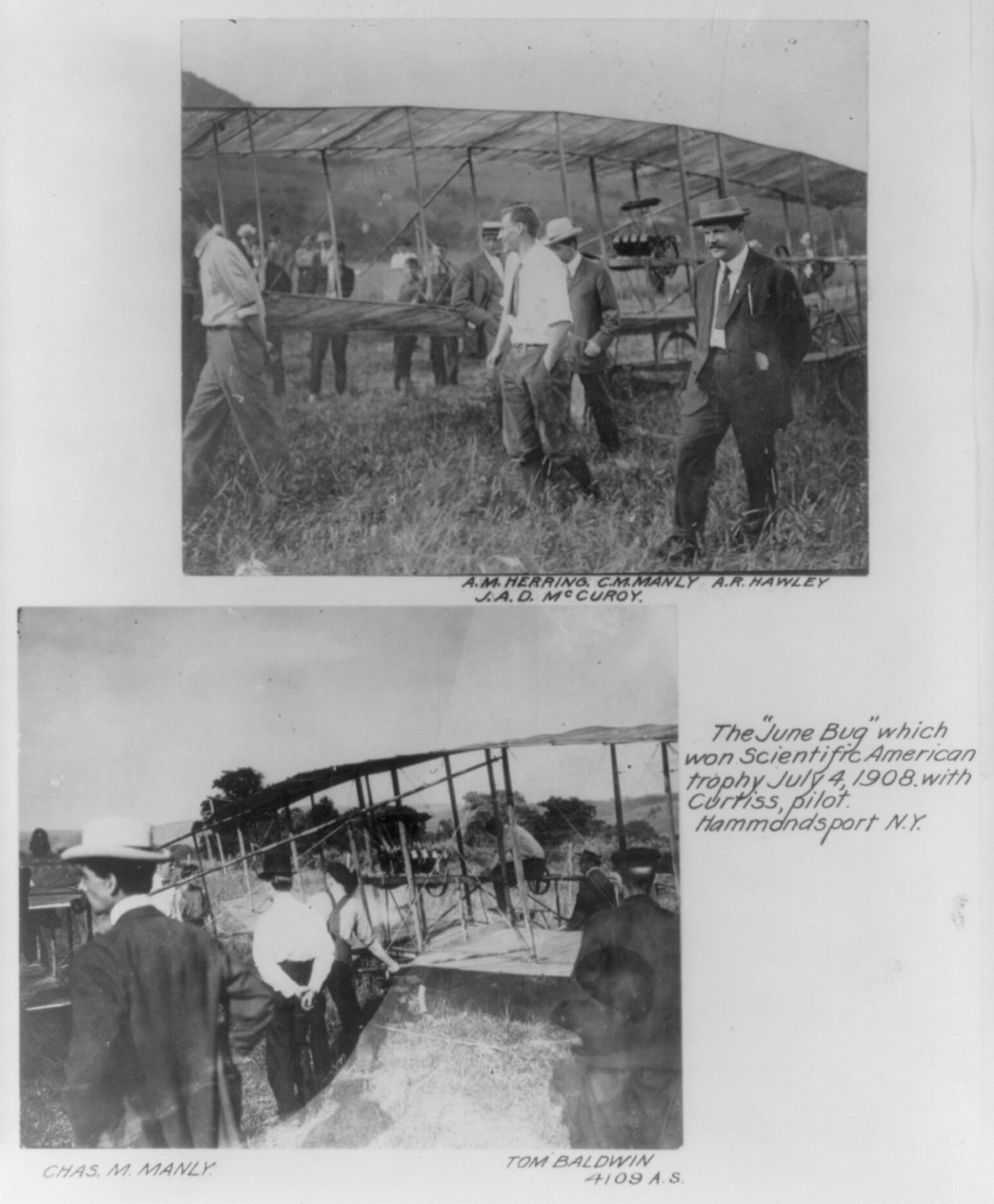
So on Independence Day, 22 members of the Aero Club travelled to Hammondsport to judge the attempt. Among them were Charles Manly, who had piloted Samuel Langley’s failed Aerodrome in 1903, and the glider pioneer Augustus Herring. A flag marked the one-kilometre point.
Past the flag
Curtiss’s first try nearly ended the day. The tail had been rigged at the wrong angle, and the June Bug climbed too steeply before he cut the engine and brought it down undamaged. The team adjusted the rigging and wheeled it back to the start.
On the second attempt the biplane bobbed unevenly 10 to 20 feet above vineyards, potato fields and the racetrack, its engine crackling and smoking. Curtiss later described the moment of take-off.
He passed the flag, kept going as far as the open field allowed and came down safely in a meadow. The officially recorded distance, engraved on the trophy, is 5,090 feet; some accounts give more. The crowd, as the Associated Press later reconstructed it, roared, honked horse-and-buggy horns and ran down into the fields to greet him.
Smithsonian Channel on how Glenn Curtiss took on the challenge the Wright brothers had declined in 1908.
The Wrights take notice
Curtiss was now a national figure, and the Wrights were not pleased. They had shared information with Bell’s group, and they regarded the AEA’s ailerons as a variation on their own patented control system. On 20 July Orville wrote to Curtiss.
It was the opening shot of a feud that would run for years and fill American courtrooms, a story Afterburner has told in Glenn Curtiss: The Man Who Invented the Seaplane and Infuriated the Wrights. Not every historian thinks it mattered as much as legend says.
The AEA itself did not last long. Selfridge was killed on 17 September 1908 as Orville Wright’s passenger during the Army trials at Fort Myer. That autumn the June Bug was fitted with floats as the Loon but could not take off from Keuka Lake. On 23 February 1909 McCurdy flew the Silver Dart off the ice at Baddeck, the first controlled powered flight in Canada, and on 31 March 1909 the association was dissolved as Curtiss went into business for himself.
Three wins and a museum
The Scientific American Trophy stayed with Curtiss. He won it again on 17 July 1909 with a 25-mile flight at Mineola, New York, and a third time on 29 May 1910 with a 71.5-mile flight from Albany down the Hudson to Camelot, New York. All three are engraved on the base. Today the silver and onyx trophy, a spread eagle on a globe carrying a small model of Langley’s aircraft, is in the National Air and Space Museum, bequeathed by Curtiss’s estate.
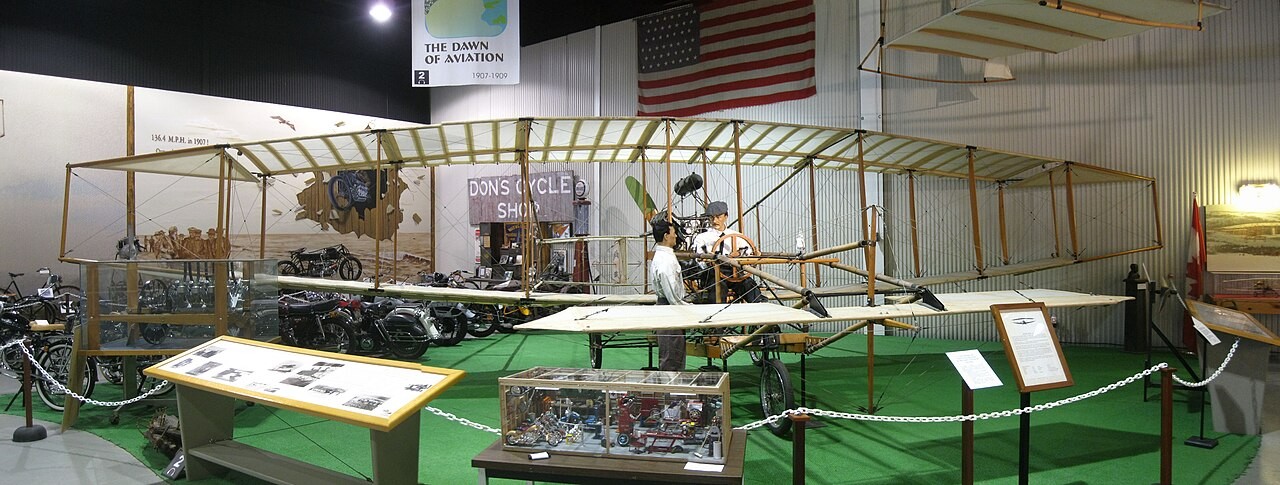
A short tour of the Glenn H. Curtiss Museum in Hammondsport, home of a full-size June Bug reproduction.
In Hammondsport, the Glenn H. Curtiss Museum keeps a full-size June Bug reproduction, and the field in Pleasant Valley looks much as it did in 1908. Kitty Hawk was where powered flight began. Hammondsport, on a rainy Fourth of July, was where America first got to watch one fly.
Sources: Scientific American (18 July 1908), National Air and Space Museum (Scientific American Trophy), Associated Press (Ben Dobbin, 2008), The Wright Brothers Aeroplane Company, Glenn H. Curtiss Museum, John Lienhard: Engines of Our Ingenuity (University of Houston), Library of Congress
Header photo: Edwin Levick, 1908 / Wikimedia Commons, public domain

0 Comments