
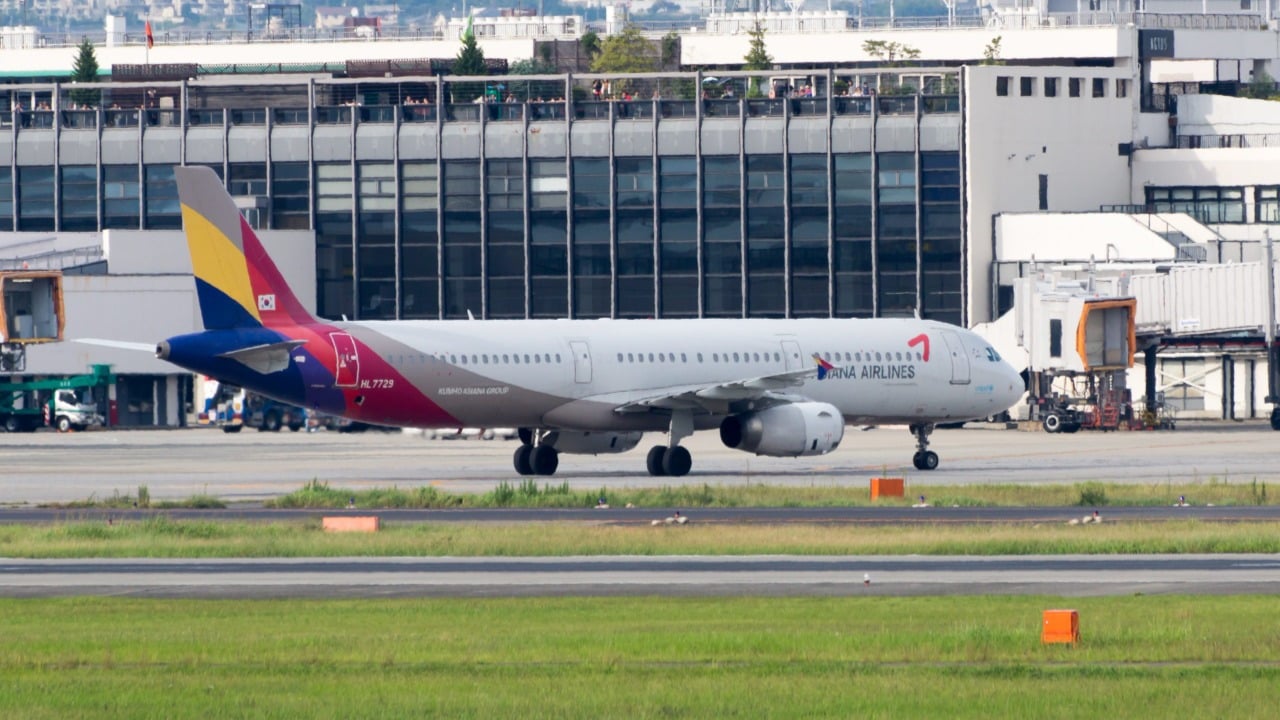
The cabin of an Airbus A321 on final approach into Daegu is a quiet place. Seatbelt signs on, flaps out, the ground coming up through the window at a walking pace. On 26 May 2023, at roughly 700 feet, a man in a seat beside one of the mid-cabin doors stood up, worked the handle, and opened it.
Video shot by other passengers shows what happened next: a rectangle of daylight where a door used to be, and the cabin lining rippling like a flag. The aircraft landed. Nobody died. And a sentence that aviation writers had been repeating for thirty years — that it is physically impossible to open an aircraft door in flight — stopped being true.
It was never quite true. What is true is more interesting, and the Federal Aviation Administration wrote it down in 2005.
Quick Facts
The force at cruise: About 17,300 lbf (7.8 tonnes-force) on an A321 forward passenger door at FL350, from a cabin held at 8,000 ft
The FAA design threshold: Opening "should not normally be possible" above 2 psi differential; handle forces over 300 lbf count as sufficient to prevent it
The window where it is possible: The last few hundred feet, when residual cabin pressure has almost gone — the FAA says so in writing
The case everyone cites: Asiana 8124, Airbus A321-200, Jeju to Daegu, 26 May 2023, opened at roughly 700 ft on final approach
What it was NOT: Not an overwing hatch. The A321-200 has four pairs of full-size doors and no overwing exits
Not the same thing at all: United 811 (1989) was a non-plug cargo door driven open by its own actuators; Alaska 1282 (2024) was a bolted structural plug, not a door
Seven and a half pounds on every square inch
Start with the number everyone gets wrong.
An airliner does not pressurise its cabin to sea level. It holds the cabin at a pressure altitude of around 8,000 feet, which is what 14 CFR 25.841 requires under normal operating conditions. Note what that rule caps: cabin altitude, not pressure difference. There is no regulation that says "the differential may not exceed X psi" — that limit is a structural number set by each manufacturer for each type. The FAA’s own Pilot’s Handbook of Aeronautical Knowledge puts it plainly: the differential is determined by the structural strength of the cabin.
Do the arithmetic in the standard atmosphere. A cabin held at 8,000 feet sits at 10.92 psi. At 35,000 feet the air outside is down to 3.46 psi. The difference is 7.46 psi, or about 51 kilopascals.
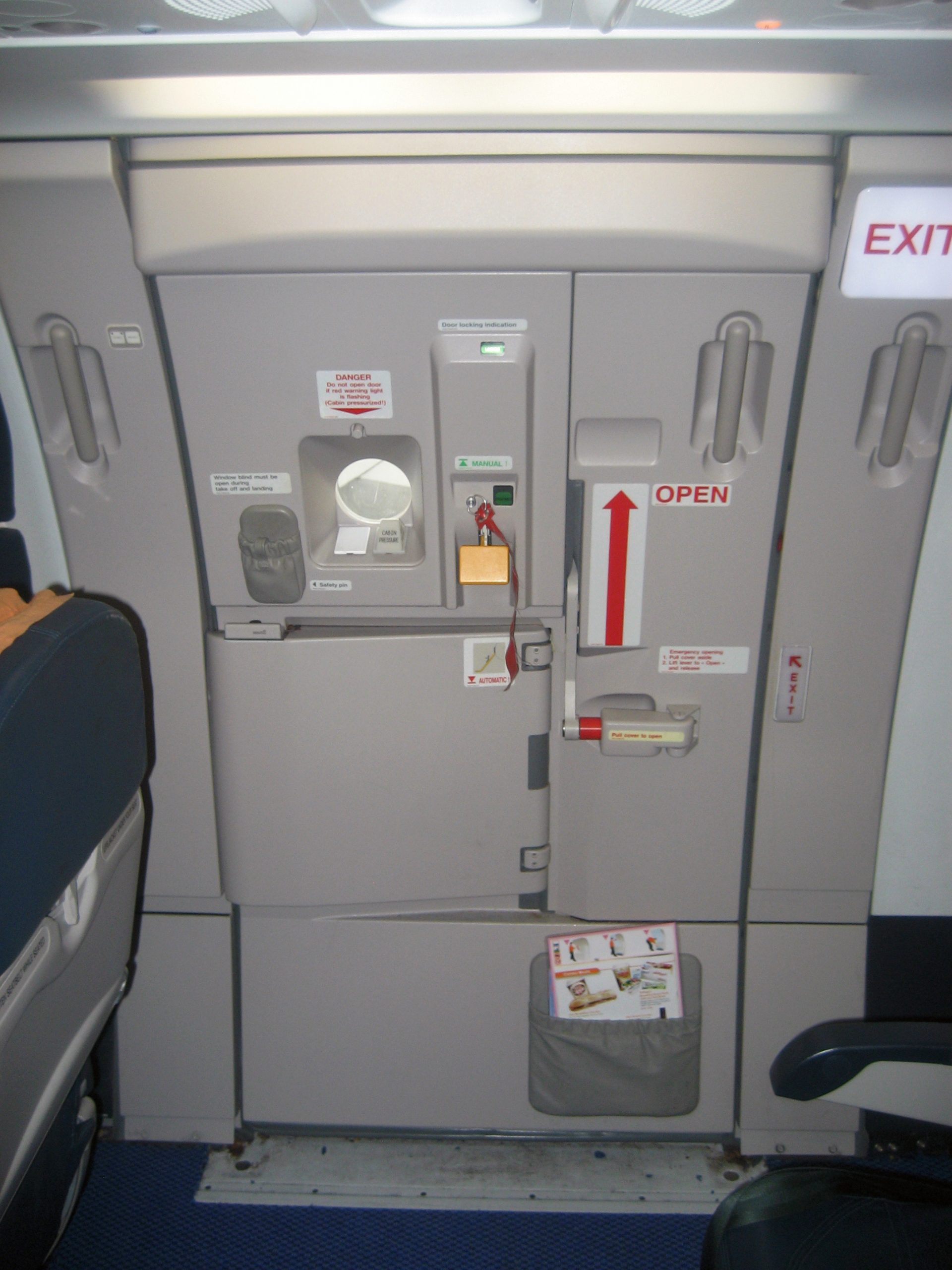
Now give that pressure something to push on. Airbus publishes the dimensions in its A321 Aircraft Characteristics — Airport and Maintenance Planning document: the forward passenger door is 0.81 metres wide and 1.85 metres high. That is 1.50 square metres, or 2,323 square inches.
Multiply it out and you get roughly 17,300 pounds of force — about 7.8 tonnes, near enough the weight of a loaded city bus, pressed flat against a door the size of a wardrobe. The mid-cabin emergency exit doors on the same aircraft are a little smaller, approximately 0.83 by 1.52 metres, which still comes to about 14,600 pounds at the same altitude.
You are not going to move that. Nobody is.
That quote is the single most recycled figure in this entire genre, and it is wrong by roughly an order of magnitude. Work backwards from it: a thousand pounds at 6 psi implies a door of 167 square inches — about thirteen inches square. A real A321 door is fourteen times that area. The correction matters, because the true number is far more convincing than the one everybody repeats.
What the FAA actually wrote down
Here is the document that settles the argument, and almost nobody who writes about this has read it.
FAA Advisory Circular 25.783-1A, Fuselage Doors and Hatches, dated 25 April 2005, tells manufacturers what their door designs have to achieve. Paragraph 9b deals specifically with somebody deliberately trying to open a door in flight. Three sentences from it are worth quoting exactly.
First, the design target: "It should not normally be possible to open the door when the compartment differential pressure is above 2 psi."
Second, how a manufacturer demonstrates it: "Operating forces in excess of 300 pounds should be considered sufficient to prevent the door from being opened."
And third, the sentence that quietly contradicts three decades of confident magazine prose: "During approach, takeoff, and landing, when compartment differential pressure is lower, intentional opening may be possible."
The regulator is not claiming the impossible. It is saying that the aeroplane should defeat you for the overwhelming majority of the flight, that the brief phases when it might not are short, and that everybody is supposed to be strapped in during them.
Captain Steeeve, a serving airline pilot, walks through the same question for a general audience — useful if you would rather hear it from somebody who flies the aircraft than read it out of an advisory circular.
Notice also that 2 psi is a system criterion, not a human one. Two psi across that A321 forward door is still about 4,650 pounds. The threshold is about what the handle mechanism must demand, not about where a determined person starts to win.
So where does a person start to win? Take the FAA’s own 300-pound figure and spread it across 2,323 square inches, and you get 0.13 psi — which in the standard atmosphere is about 245 feet of pressure-altitude difference. On a minimum-size Type III overwing hatch it is nearer 790 feet. (That last step is our arithmetic from the FAA’s figure and Airbus’s dimensions, not a published number.)
A few hundred feet. Not a few thousand. The window in which a human being can beat an airliner door is the last stretch of final approach, and that is exactly where Asiana 8124 was.
Why a plug door is not really a door
There is a second reason beyond brute force, and it is a piece of geometry so elegant that it is worth a paragraph of its own.
Most airliner cabin doors are plug doors. The door panel is slightly larger than the hole it fills, and it seats against fixed stops on the inside of the frame. Pressure therefore pushes the door into the airframe, not out of it. The load travels through the stops; the latches are not carrying it. The FAA’s own definition is mechanical rather than poetic — a non-plug door is simply one whose initial opening movement is outward — but the consequence is that you cannot blow a plug door open from the inside however hard you push.
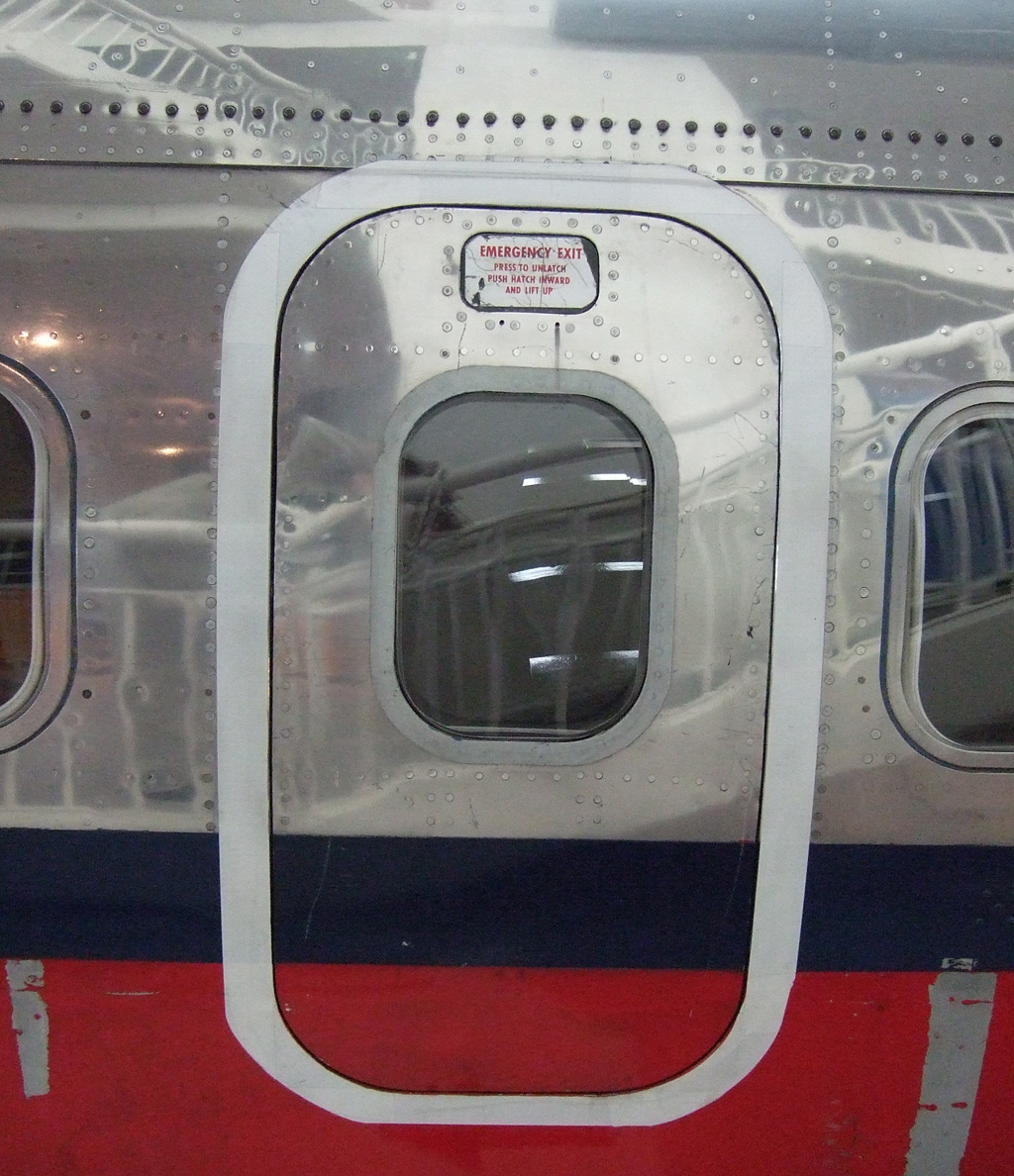
Arnold was describing the redesigned overwing exit for the 737 Next Generation, which Boeing made hinged and self-opening so it could be worked faster in an evacuation. Boeing built a production-standard mock-up and tested it until somebody off the street could open it in three seconds. That is the tension running through every exit on every airliner: it has to be impossible to open when it matters and trivial to open when it matters more.
There is no magic lock
A common follow-up is that modern aircraft must surely have an interlock — some solenoid that simply refuses to let the handle move in flight. The honest answer is that no such universal system exists, and the search for one leads somewhere more interesting.
Airbus does fit two relevant things. The Residual Pressure Control Unit, standard on A320-family aircraft built after August 2005, automatically opens the outflow valves on the ground when the aircraft is in manual pressure-control mode. And a residual pressure warning light flashes to warn anyone about to open a door that the aircraft is still pressurised. Both are explicitly ground functions. Airbus even tells crews how to detect residual pressure by feel — by the higher resistance of the door’s control handle when lifted — which is an admission that the handle still moves.
What the regulations require is narrower than people imagine. 14 CFR 25.783 says there must be a means to safeguard each door against opening in flight due to inadvertent action by persons, and that the aircraft must not be able to pressurise to an unsafe level if a door is not properly closed. The advisory circular quantifies "unsafe level" as half a psi, achieved with vent panels. None of that is a lock.
What keeps the door shut is plug geometry, seven and a half pounds on every square inch, and a handle mechanism designed to demand more than a person can give. Three ordinary engineering facts, doing the work people assume is done by a magic switch.
Asiana 8124, and what it was not
The flight was a domestic hop, Jeju to Daegu, on an Airbus A321-200 with 197 people aboard. At about 12:37, on final approach, a passenger worked the emergency door locking device and opened the door. The external escape slide tore away. South Korea’s transport ministry attributed damage to three parts of the aircraft, including the door and the slide, and estimated the repair at around 640 million won.
Almost every account of this gets one detail wrong, including several that ought to know better: it was not an overwing hatch. The A321-100, -200 and the non-ACF neo have four pairs of full-size doors and no overwing exits at all — Airbus’s own cabin arrangement drawings show it. The door the passenger opened was a full-size mid-cabin emergency exit door of roughly 1.26 square metres, nearly three times the area of the smallest hatch the regulations permit. FlightGlobal placed it at L3, just behind the left wing. Asiana’s own response corroborates it: the airline stopped selling seats 26A and 31A, the seats beside the two mid-cabin doors, from 28 May 2023.
That makes the story more remarkable, not less.
Same-day coverage of the landing at Daegu, with passenger footage of the open doorway.
Reported injuries vary depending on which stage of the proceedings you read, and it is worth giving the spread rather than picking one: contemporaneous wire reports described twelve people with breathing difficulty and nine taken to hospital, including primary-school children; the criminal court later noted that 23 of the 197 passengers had submitted medical certificates; a separate 2024 judgment refers to fifteen passengers reporting acute anxiety or stress reactions. There were no deaths and no serious physical injuries.
The aftermath is messier than the single-sentence version that circulates. In November 2023 the Daegu District Court handed down three years’ imprisonment, suspended for five years, with probation and mandated psychiatric treatment; the court found diminished mental capacity, and the prosecution appealed. In September 2024 a civil division ordered the passenger to pay Asiana 727,028,729 won. In November 2024 a separate criminal division convicted him on injury charges with a further suspended sentence. The passenger was not intoxicated; he told police he thought the aircraft had already landed and that he felt suffocated.
One small, revealing detail on regulation: asked why it had taken the airline’s own decision to block the exit-row seats, the transport ministry told the Korea Times that such a measure "depends on airlines’ own decisions" and "is not based on the aviation authorities’ regulations." Nobody had written a rule, because until then nobody had needed one.
Three different things people keep calling the same thing
Search for this subject and you will find Asiana 8124, United 811 and Alaska 1282 blended into one frightening paragraph. They belong to three entirely separate categories, and the distinction is the whole point.
United 811 was a structural failure of a non-plug door. On 24 February 1989 a Boeing 747-122 climbing out of Honolulu between 22,000 and 23,000 feet lost its forward lower-lobe cargo door, and nine passengers were ejected and lost at sea. The NTSB’s final report attributed the opening to a faulty switch or wiring that allowed the latches to be driven electrically toward unlatched, compounded by a locking mechanism that could deform. Nobody pulled a handle. Cabin pressure was the destroying force, not the restraining one — which is precisely what happens when the load runs through eight latches instead of fixed stops.
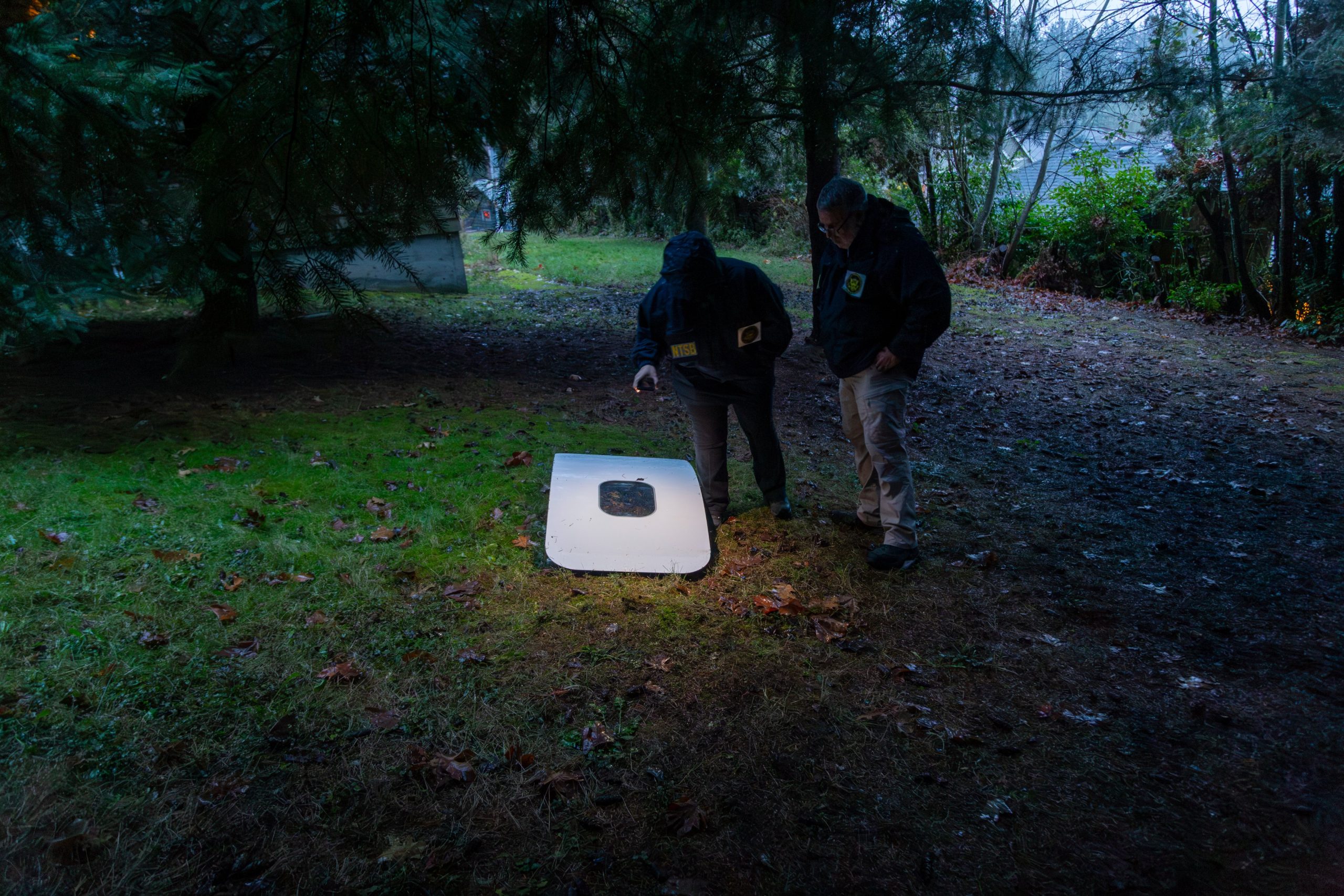
Alaska 1282 was not a door at all. On 5 January 2024 a Boeing 737-9 climbing through about 14,830 feet lost its left mid exit door plug — a rectangular structural panel roughly 29 inches by 59 inches, held against outward movement by twelve stop fittings and against upward movement by four bolts. The NTSB found the four bolts missing, and the plug had migrated upward over previous flights until its stops cleared. The advisory circular we quoted earlier defines a door as something that does not require tools to open; the NTSB found that removing this plug requires removing cotter pins, nuts and bolts after stripping interior panels and insulation. From seat 26A it looks like wall.
Asiana 8124 was a person pulling a handle, at an altitude where there was almost nothing left to stop him.
One was a manufacturing and oversight failure. One was an electrical fault in a 1960s-certified latch design. One was a human being in a seat. Only the third has anything at all to do with the question people are actually asking when they look at the door beside them.
The man who wrote "cannot" and then corrected himself
The best illustration of how the myth hardened comes from the person who did most to spread it.
That is Smith quoting his own book. In the same post, written five days after Asiana 8124, he walks the absolute back: as an aircraft descends the differential shrinks toward zero, and at a few hundred feet on approach a door can indeed be opened. His drain-plug metaphor is exactly right. His "cannot" was a simplification that worked for 99 per cent of a flight and then met the other one per cent on the evening news.
It is worth being fair to him, and to every pilot who has said the same thing to a nervous passenger. For the part of the flight when a nervous passenger is actually nervous — cruise, in the dark, over water — the absolute version is correct to several decimal places. The simplification only fails in the ninety seconds before the wheels touch, when everyone is strapped in and the ground is already there.
CNN’s report on the Asiana incident, including the passenger video that travelled around the world within hours.
And the aircraft that fly with the doors off anyway
One last thing, because it is the cleanest way to see what is really going on.
Skydiving aircraft fly with the door removed. A C-130 flies with the ramp down. Helicopters fly with the doors off all day for photography and winching. None of that is daring; it is simply that an unpressurised aircraft has no differential across the opening, so there is nothing holding anything shut. The FAA publishes a formal procedure for authorising flight with an aircraft door removed, and its sport parachuting advisory circular expects jump pilots to be trained in opening and closing the jump door.
Which tells you that the door was never the thing keeping you inside. The air was.
Sources: FAA Advisory Circular 25.783-1A, "Fuselage Doors and Hatches" (25 April 2005); 14 CFR 25.783, 25.807 and 25.841; FAA Pilot’s Handbook of Aeronautical Knowledge FAA-H-8083-25B; Airbus, A321 Aircraft Characteristics — Airport and Maintenance Planning; Airbus Safety First; NTSB/AAR-92/02 (United 811); NTSB AIR-25-04 (Alaska 1282); FAA Advisory Circular 105-2E; Flight International; FlightGlobal; Korea Times; Asia Economy; AskThePilot; National Geographic.

0 Comments