
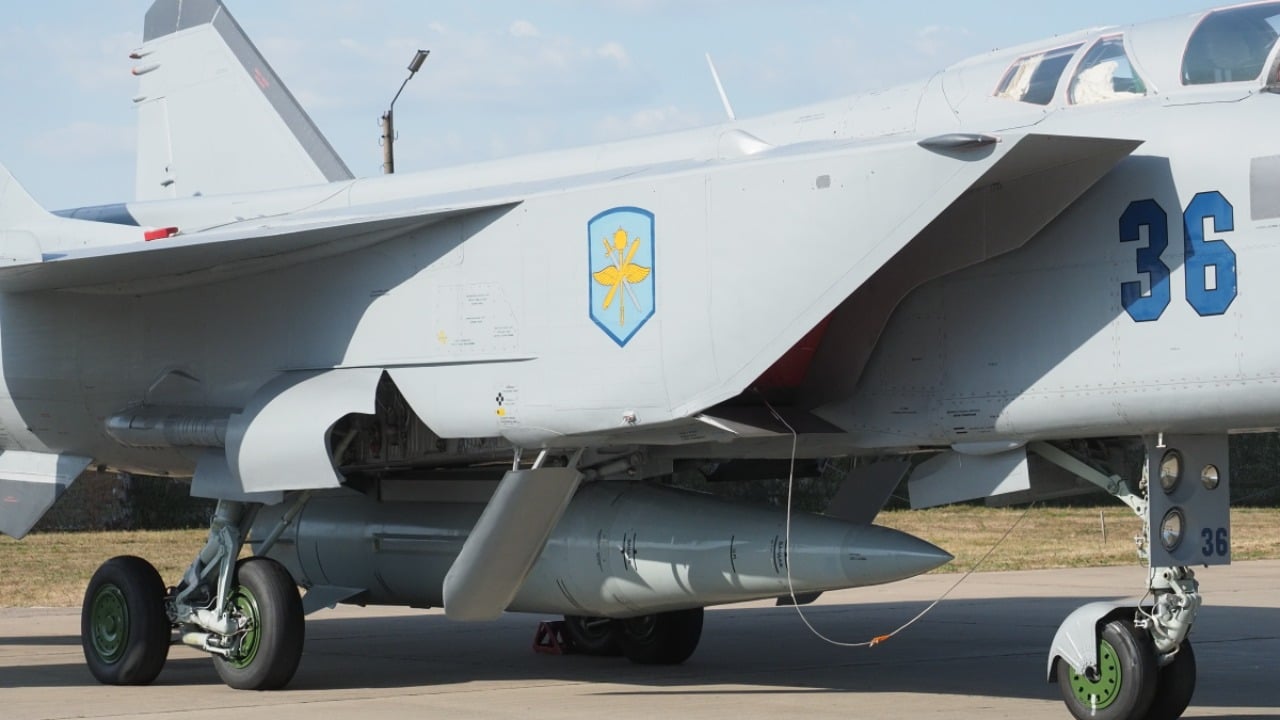
Five aircraft, one airfield, 650 kilometres from the nearest Ukrainian soldier.
On Wednesday Ukraine’s General Staff said its Defence Forces had struck Savasleyka airfield in Russia’s Nizhny Novgorod region on 24 November and overnight into 25 November, and that three MiG-31 aircraft and two Su-34 fighter-bombers had been hit. The aircraft, it said, will be unable to fly for some time.
That is the claim. Here is what is actually known, what is not, and why this particular stretch of concrete keeps appearing in Ukrainian target lists.
Quick Facts
What is claimed: Three MiG-31 aircraft and two Su-34 fighter-bombers hit — five in total
Who is claiming it: The General Staff of the Armed Forces of Ukraine, in a statement and a post on X
Status of the claim: Preliminary. Damage extent and aircraft count "still being assessed". No Russian response
When: On 24 November 2026 and overnight into 25 November
Where: Savasleyka airfield, Nizhny Novgorod region — about 12 km north-west of Kulebaki, 650–700 km from the Ukrainian border
Why this airfield: It hosts MiG-31 variants including the MiG-31K, the sole carrier of the Kh-47M2 Kinzhal
The same night: Ukraine’s Defence Ministry also reported damage to the Kuibyshev and Syzran refineries in Samara region
What the General Staff said
The statement went out on the General Staff’s own channels on 25 November, headlined around five aircraft used to attack Ukrainian civilians being hit.
The aircraft numbers came with an explicit hedge attached, and it is worth reproducing the hedge rather than the headline.
Note the verb. Hit, not destroyed. Ukrinform’s own headline on the story used the word "destroy," and its body text does not support it; Militarnyi and Kyiv Post both stayed with "hit," and Kyiv Post reported the General Staff saying the damaged aircraft would be unable to fly for "a certain period." Nobody in the reporting chain has claimed a single airframe written off.
That gap between headline and body is how a preliminary battle-damage assessment becomes five destroyed jets by the time it reaches a social feed. Russia has not publicly responded, and no satellite imagery of the airfield had surfaced at the time of writing.
Why Savasleyka
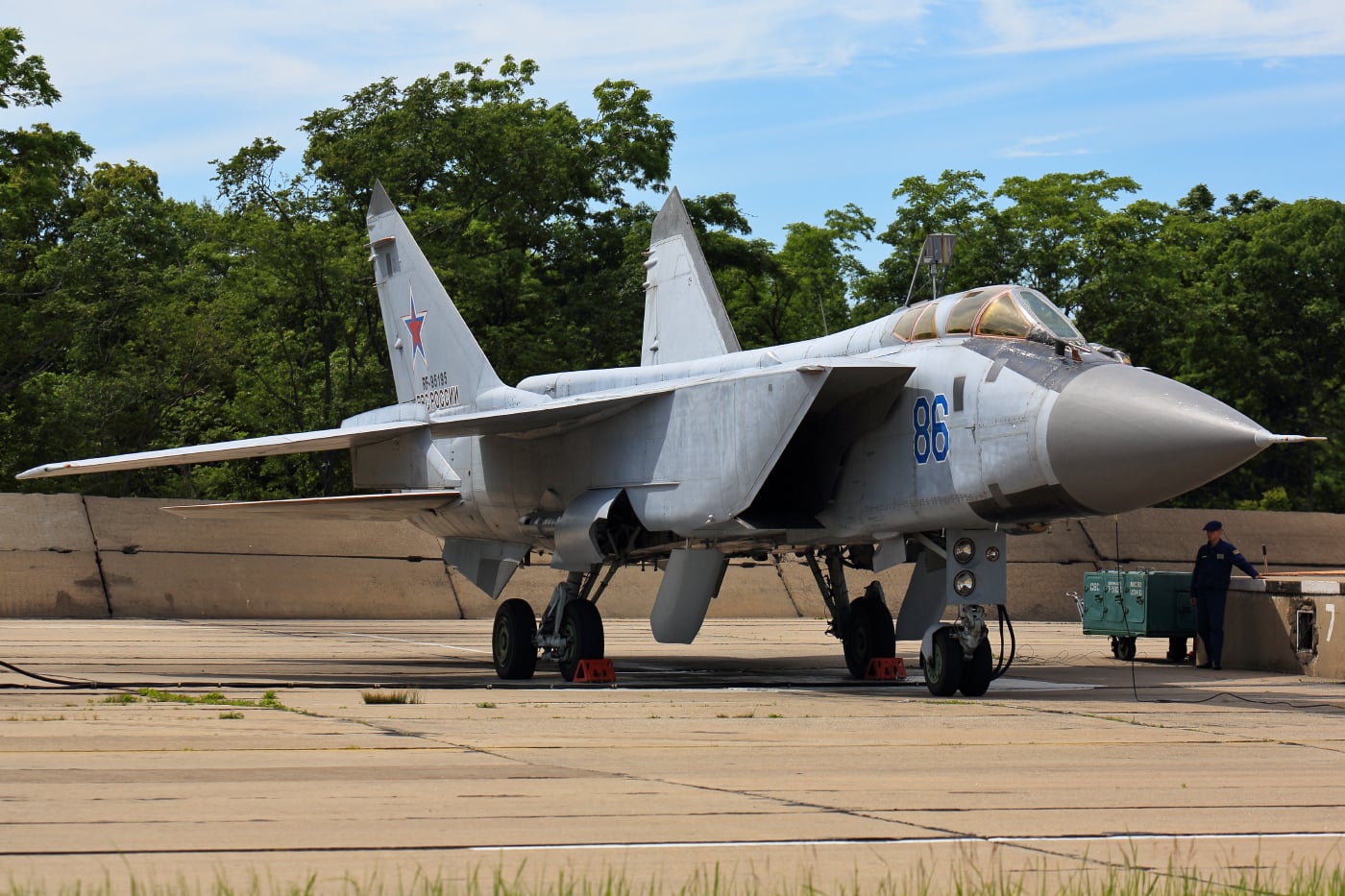
Savasleyka sits roughly 12 kilometres north-west of Kulebaki, between 650 and 700 kilometres from the Ukrainian border. In 2022 that was a synonym for safety. It is not any more.
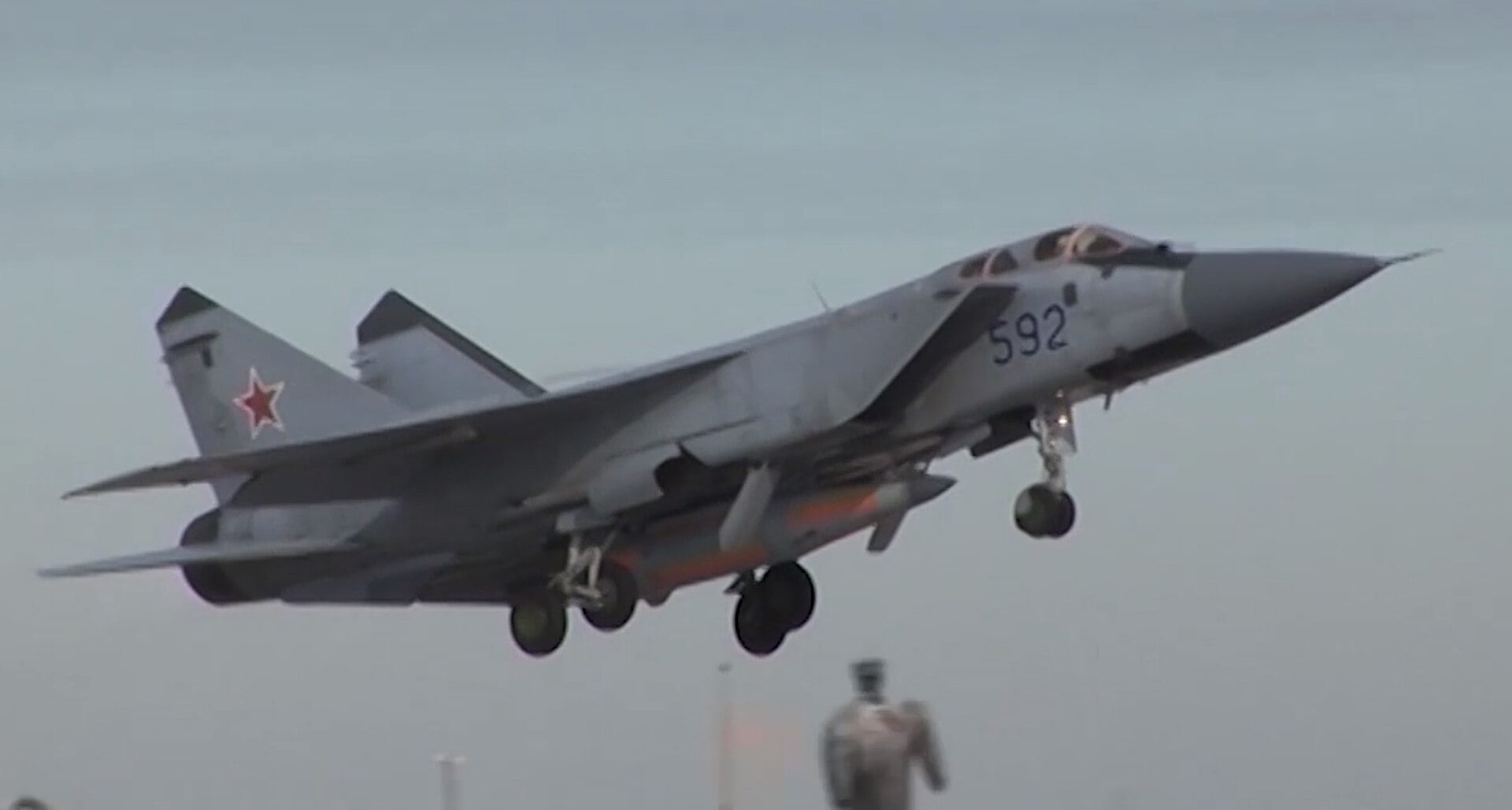
What makes the base worth the fuel is what lives on it. Savasleyka hosts several MiG-31 versions, and among them the MiG-31K — the only aircraft in the world that carries the Kh-47M2 Kinzhal, the air-launched ballistic missile Russia has fired at Ukrainian cities since the first months of the full-scale war. When a MiG-31K rolls at Savasleyka, Ukrainian air-raid sirens sound across the whole country, because the launch aircraft is detectable long before the missile’s target is.
One caveat that most coverage of this story skates over: nobody has said the three MiG-31s hit were MiG-31Ks. The General Staff said MiG-31, with no variant. The Kinzhal carriers are based there, which is why the airfield is a target, but a Kinzhal carrier being among the five is an inference, not a fact. It matters because Russia is not building new MiG-31 airframes; every conversion comes out of a finite Soviet-era pool.
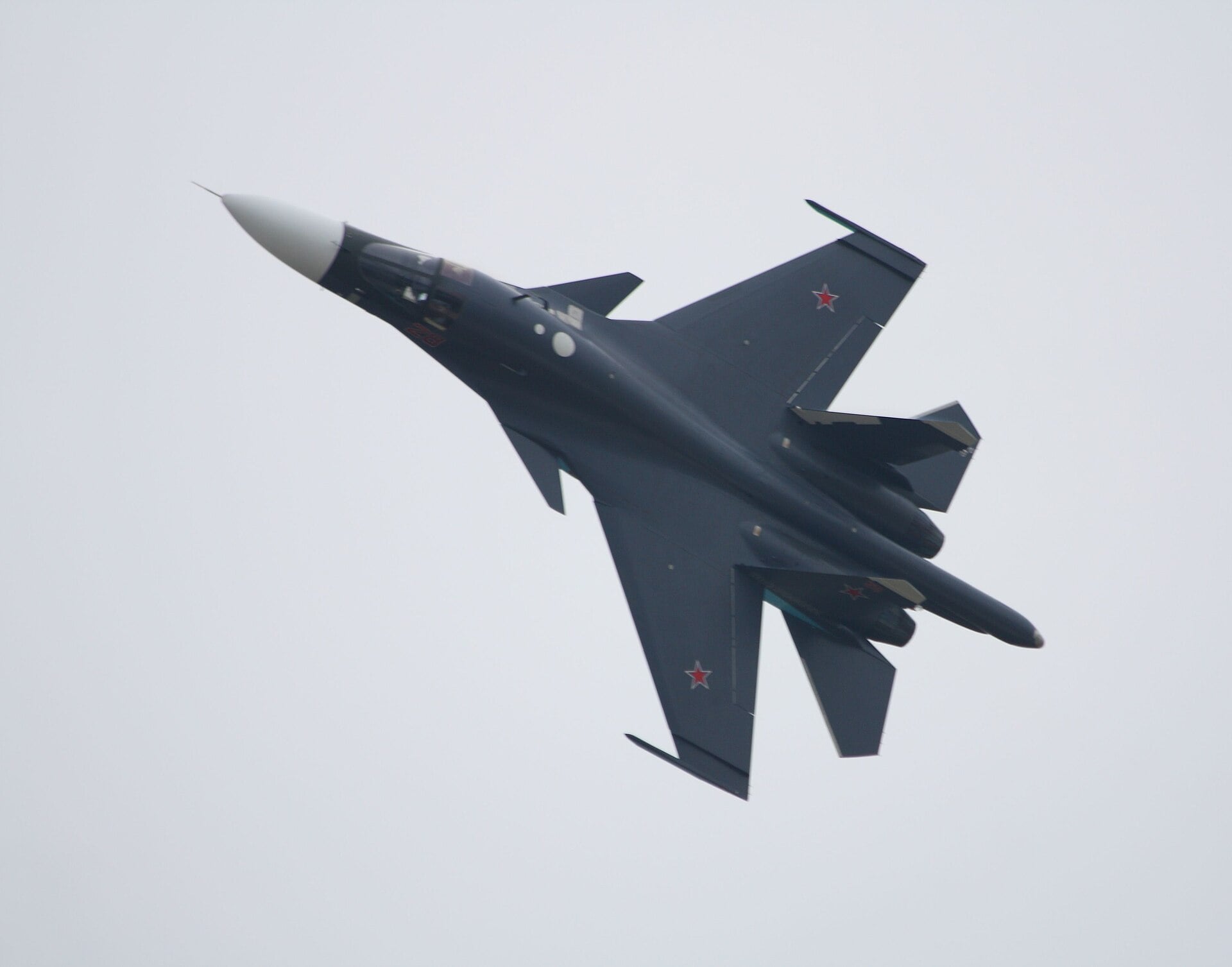
The Su-34s are the other half of the arithmetic, and arguably the more consequential half. The Fullback is the aircraft that carries the UMPK-kitted glide bombs that have done so much of the damage to Ukrainian towns within reach of the front. A MiG-31K is a rarer and more symbolic target; an Su-34 is a working one.
Not the first time, and that is the story
Savasleyka is not a lucky one-off. In June 2025 the General Staff reported two aircraft hit there — a MiG-31 and, on preliminary information at the time, a Su-30 or an Su-34. Kyiv Post has reported strikes on the base in August 2024. Militarnyi records another attack on 15 August 2026, after which footage of a fire on the airfield appeared online.
Coverage of an earlier reported strike on the same airfield in June 2025, when Ukraine’s General Staff said two aircraft had been hit. The pattern on this base is older than this week.
A base that has been struck in 2024, 2025 and twice in 2026 is not a base that has been surprised. It is a base that cannot be hardened fast enough. Hardened aircraft shelters are expensive and slow to build, and they are largely absent from Soviet-era airfields that were laid out when the threat was expected to arrive from the west at supersonic speed — not as a propeller-driven drone flying for hours at a few hundred feet.
The refineries, the same night
The airfield was not the only target. Ukraine’s Defence Ministry said the same overnight effort damaged two Rosneft refineries in Russia’s Samara region, Kuibyshev and Syzran, with a combined annual processing capacity of more than 15 million tonnes.
At Kuibyshev the ministry listed the AVT-4 and AVT-5 primary processing units, a catalytic reforming unit and two storage tanks, with a fire breaking out. At Syzran it listed preliminary damage to primary processing, sulphur treatment, catalytic reforming, hydrotreating and isomerisation units, plus two storage tanks, again with a large fire. As with the airfield, these are Ukrainian claims, published while the assessment was still running.
What to watch next
Three things will settle how much of this holds up.
The first is imagery. Previous claims on Russian airfields — Engels-2, Millerovo, Saky — were resolved one way or the other within days by commercial satellite passes, and the resolution was rarely as good as the first claim or as bad as the Russian silence implied. Expect the same here.
The second is the variant question. If one of the three MiG-31s turns out to have been a K, this becomes a materially bigger story than five aircraft on a ramp, because the Kinzhal fleet is small, unreplaceable and strategically loud.
The third is simply whether the sirens change. The clearest public evidence that something at Savasleyka has been degraded would be a quieter few weeks of MiG-31K alerts over Ukraine. That is a crude metric, and it is also the one Ukrainians will actually notice.
Sources: General Staff of the Armed Forces of Ukraine (statement and post on X, 25 November 2026); Ukrinform; Militarnyi; Kyiv Post; Ukrainian Ministry of Defence.
Frequently Asked Questions
What happened at Savasleyka airfield on 25 November 2026?
Were the aircraft at Savasleyka destroyed?
Where is Savasleyka airfield?
Why does Savasleyka matter to Russia?
Were the aircraft hit at Savasleyka MiG-31Ks?
Has Savasleyka been attacked before?
Related Posts
Engels-2: What the Satellite Imagery Showed After the Tu-95 Strike
Millerovo and Sochi: Reading Russian Airbase Damage From Orbit
Vityazevo: Ukraine Claims a Su-33 and a MiG-29 in a Drone Strike
Akhtubinsk: Ukraine Strikes Russia’s Flight Test Centre
Air-Launched Ballistic Missiles, Explained: From Skybolt to Kinzhal


0 Comments