
On 21 July 2001, the Federal Aviation Administration quietly rewrote a rule. From that day, carrying a weapon aboard a US airliner was limited to certain law enforcement officers. The people it removed from the list were the pilots.
For the previous forty years, an American airline pilot could lawfully be armed on the flight deck. FAA regulations dating from 1961 had exempted persons authorised by the carrier — in the Government Accountability Office’s own words, "such as pilots and other crew members". A 1975 amendment tightened it to require FAA approval, carrier approval and training. Then, in the summer of 2001, it was closed.
Seven weeks and three days later, four aircraft were taken.
Almost everything people believe about who is armed on an airliner is wrong, and it is wrong in both directions at once. Far fewer flights carry an air marshal than the public assumes. Far more pilots are legally entitled to be armed than anyone expects. And the numbers that would settle either question are, by design, not published.
Quick Facts
First US programme: FAA Peace Officers Program, 2 March 1962 — 18 volunteer officers, trained with the US Border Patrol at Port Isabel, Texas
The 1970 surge: Nixon ordered armed government personnel onto US airliners on 11 September 1970; Customs went on to field roughly 1,500 to 2,000 sky marshals
On 11 September 2001: 33 air marshals were operating on US flights — a figure three separate government sources agree on
What the law requires: Marshals only on flights determined to present high security risks. No coverage quota exists in statute
Armed pilots: The Federal Flight Deck Officer programme has run since April 2003. Participation is voluntary, unpaid, and limited to defending the flight deck
The numbers: Current marshal strength and coverage rates are classified. ICAO Annex 17 requires such deployments to be kept strictly confidential
Eighteen volunteers and the Border Patrol
The idea is older than most people think, and it did not begin with a law.
Public Law 87-197, signed on 5 September 1961, created the federal crime of aircraft piracy and made carrying a weapon aboard an aircraft an offence. What it did not do was create a corps of air marshals. What it created was a hook: an exception for law enforcement officers and "such other persons as may be so authorized under regulations issued by the Administrator." Everything that followed grew out of that clause.
The Federal Law Enforcement Training Center dates the service to 2 March 1962, when the FAA’s Peace Officers Program put 18 volunteer officers into the air. They were trained with the US Border Patrol at Port Isabel, Texas. Eighteen men, on a continent’s worth of airline flying.
September 1970: the month the programme exploded
In early September 1970 the Popular Front for the Liberation of Palestine seized four airliners in a single operation, flying three of them to a desert strip in Jordan that the world came to know as Dawson’s Field. The confusion in the first hours was total; a US embassy cable from Bonn, sent at 16:28 Zulu on 6 September, reported an El Al flight landing in London with three dead passengers and three taken hostage — a casualty account that turned out to be wrong.
Five days later, the President of the United States stood up and announced the response.
Agents were flying commercial routes within a day, drawn in the interim from the FBI, the US Marshals, the Defense Department and the CIA. On 28 October 1970 the Treasury and Transportation secretaries signed an agreement creating a permanent air security force inside the US Customs Service. The first training class ran from 30 November to 23 December; by the summer of 1971 the sixteenth class had graduated, including the first women.
How many were there? Customs’ own published history gives two figures that do not agree — the programme head oversaw "almost 2,000 air security officers", while a 1972 announcement cited "about 1,500 sky marshals". Report the range, not a number.
And then it was over. Not because it failed — Customs reported 3,828 arrests, some of them in flight, and 69,317 potentially lethal weapons seized or detained. It ended because of a sentence an assistant transportation secretary spoke in December 1972: "the best place to prevent a hijacking is on the ground before the plane goes into the air." Mandatory passenger screening began in 1973. By early 1974 the FAA had announced the complete phase-out of Customs security officers from flight duty.
The irony is almost too neat. The measure that killed the sky marshals — universal screening — had been announced by Nixon in the very same statement that created them.
Archive news footage of US air marshal training, from the AP Archive.
Thirty-three
By the morning of 11 September 2001, the service had shrunk to 33 air marshals operating on US flights. The GAO, the Federal Law Enforcement Training Center and a separate GAO anniversary review all give the same number, which is rare enough in this field to be worth noting.
The Aviation and Transportation Security Act of November 2001 rebuilt it at speed — FLETC records a directive to hire and train 600 marshals in a single month — and the service has since been moved twice, out of the new TSA into Immigration and Customs Enforcement in November 2003, then back to TSA in October 2005.
What the law actually says, and what it does not
Read 49 U.S.C. 44917 and the thing that stands out is how little of it is mandatory.
The Administrator may provide for deployment of air marshals on every passenger flight. The Administrator shall provide for deployment on every flight "determined by the Administrator to present high security risks" — a category the Administrator also defines. There is no percentage anywhere in the statute. Anyone who tells you the law requires marshals on a set share of flights has not read it.
What the law is emphatic about is logistics. Carriers must seat an on-duty marshal "without regard to the availability of seats on the flight and at no cost", must carry them on a first-priority basis, must assign the specific seat requested, and if the flight cancels must carry them free on another designated flight. Since 2018 the seating arrangement itself must be risk-based. A marshal does not buy a ticket and hope.
There is one lovely fossil in the regulation. A marshal’s credentials must carry a full-face picture, the marshal’s signature, and the signature of the FAA Administrator — an agency that has not run the programme since 2001. And a line that reads like it was written after an argument: "A badge, shield, or similar device may not be used or accepted as the sole means of identification."
The one per cent that was never a number
Every article about air marshals contains the same statistic: fewer than one per cent of flights are covered. It is worth following that figure back to where it came from, because the trail ends somewhere unexpected.
It entered circulation on 25 March 2008, when CNN’s Anderson Cooper 360 reported that of 28,000 daily US commercial flights, under one per cent were protected. TSA published a rebuttal on its own blog the next day, and in doing so quoted the sourcing: the contributors were anonymous marshals, pilots and experts, and the pilot who supplied the estimate had said "I would have to guess it’s fewer than 1 percent of all my flights… I’m guessing by coverage of when I go to those cities."
A guess, attributed to nobody, repeated for eighteen years.
TSA’s own counter-claim did not last a day. Having written that coverage was in the "double digits," the agency’s blogger came back the following evening and withdrew it.
The GAO has been consistent and unambiguous for longer than that. "The specific number of federal air marshals is classified." And: "FAMS’s coverage rate goals for the 10 targeted critical flight categories are classified." Its 2016 review was published as a public version of a classified report, with the coverage information removed.
There is a further wrinkle that almost nobody reports. The GAO recorded that a new concept of operations approved in March 2015 shifted domestic targets away from flight-coverage percentages and toward resource-allocation targets. If that is still how the service is run, then the question "what percentage of flights carry a marshal?" may no longer have an internal answer either.
The Transportation Security Administration’s own look inside the Federal Air Marshal Service.
The pilots with badges
Now the other direction.
The Aviation and Transportation Security Act of November 2001 is often credited with arming pilots. It did not. Its section 128 merely authorised a pilot to carry a firearm into the cockpit subject to four separate approvals — TSA’s, the carrier’s, approval of the weapon, and approval of the training — with no deadline and no programme attached. It produced no armed pilots at all.
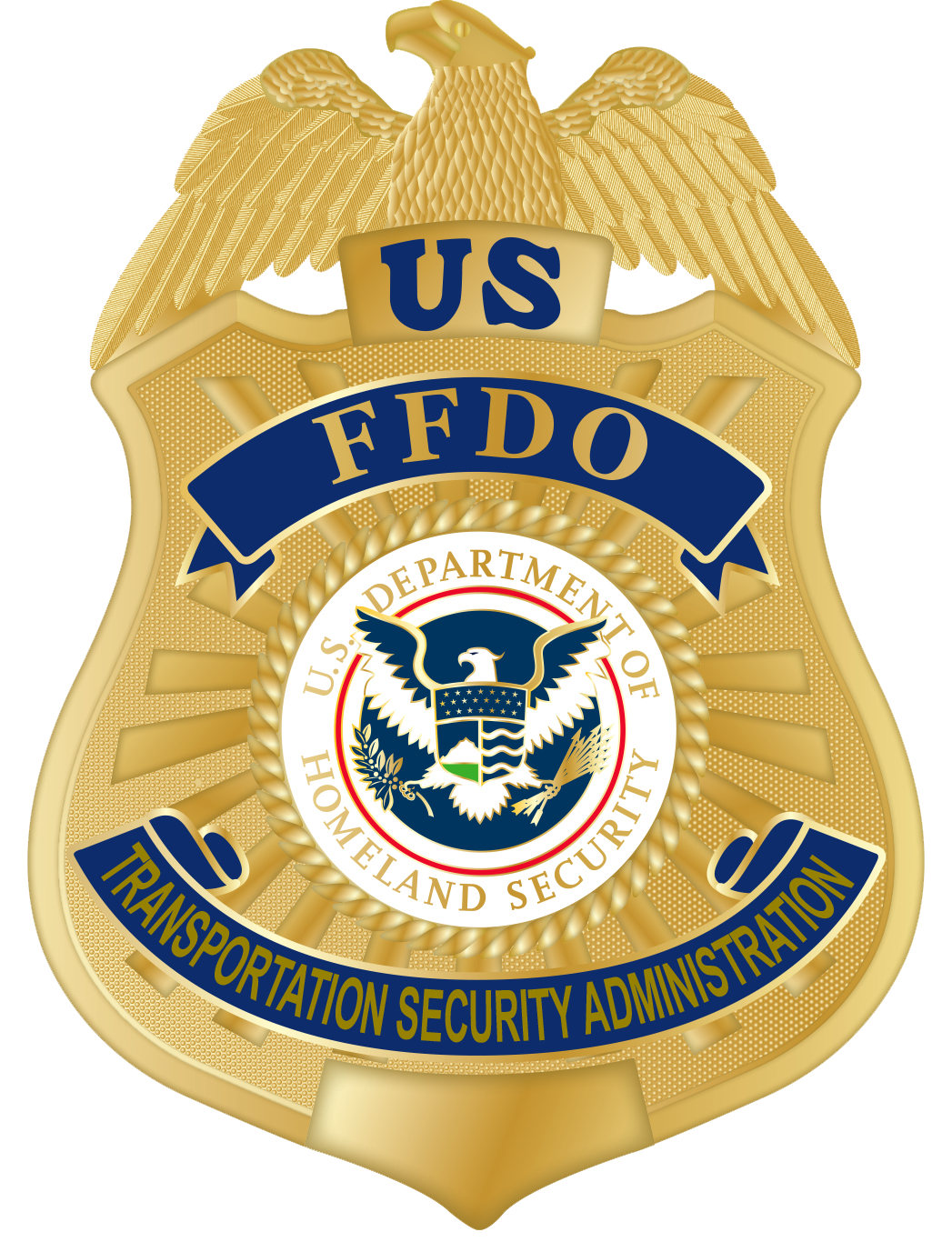
Congress came back a year later and made it compulsory. The Arming Pilots Against Terrorism Act is not a standalone statute, whatever its name suggests: it is Title XIV of the Homeland Security Act of 2002, signed on 25 November 2002, and its section 1402 created 49 U.S.C. 44921. The Administrator shall establish a programme to deputise volunteer pilots as federal law enforcement officers to defend the flight deck. The prototype class of 44 pilots graduated at FLETC Glynco in April 2003.
Three things about that programme are consistently misunderstood.
It is unpaid. The statute is explicit: participating pilots "shall not be eligible for compensation from the Federal Government for services provided as a Federal flight deck officer." Neither the government nor the airline is obliged to pay them for participating, training or requalifying. A pilot may buy the approved firearm themselves. When the programme began, volunteers were covering their own travel, lodging and daily expenses to reach the training centre at Artesia, New Mexico — a complaint aired in a congressional field hearing in January 2004, where a Southwest Airlines captain testified that the programme had been "hobbled by the TSA." Congress legislated an unpaid-leave guarantee in response. In 2018. Fourteen years later.
The authority stops at the cockpit door. An armed pilot is not a marshal and has no cabin role whatsoever. The statute required procedures ensuring the firearm does not leave the cockpit if there is a disturbance in the passenger cabin, and limits the use of force to defence of the flight deck. TSA’s requirement that the weapon travel in a locked box outside the cockpit exists, in its own words, to minimise the risk that it is used in other situations — a policy pilot groups objected to on the grounds that it conflicts with the statute’s own demand that an officer keep exclusive control of the weapon at all times.
Nobody will tell you how many there are. There is no published headcount, and the figures that circulate are not what they appear to be. The most recent official number — 1,700, from a 2024 Federal Register notice — is an estimate of annual respondents under the Paperwork Reduction Act: applicants plus deputised officers filing required incident reports. It is evidence that the programme is alive and busy. It is not a roster, and it should not be printed as one.
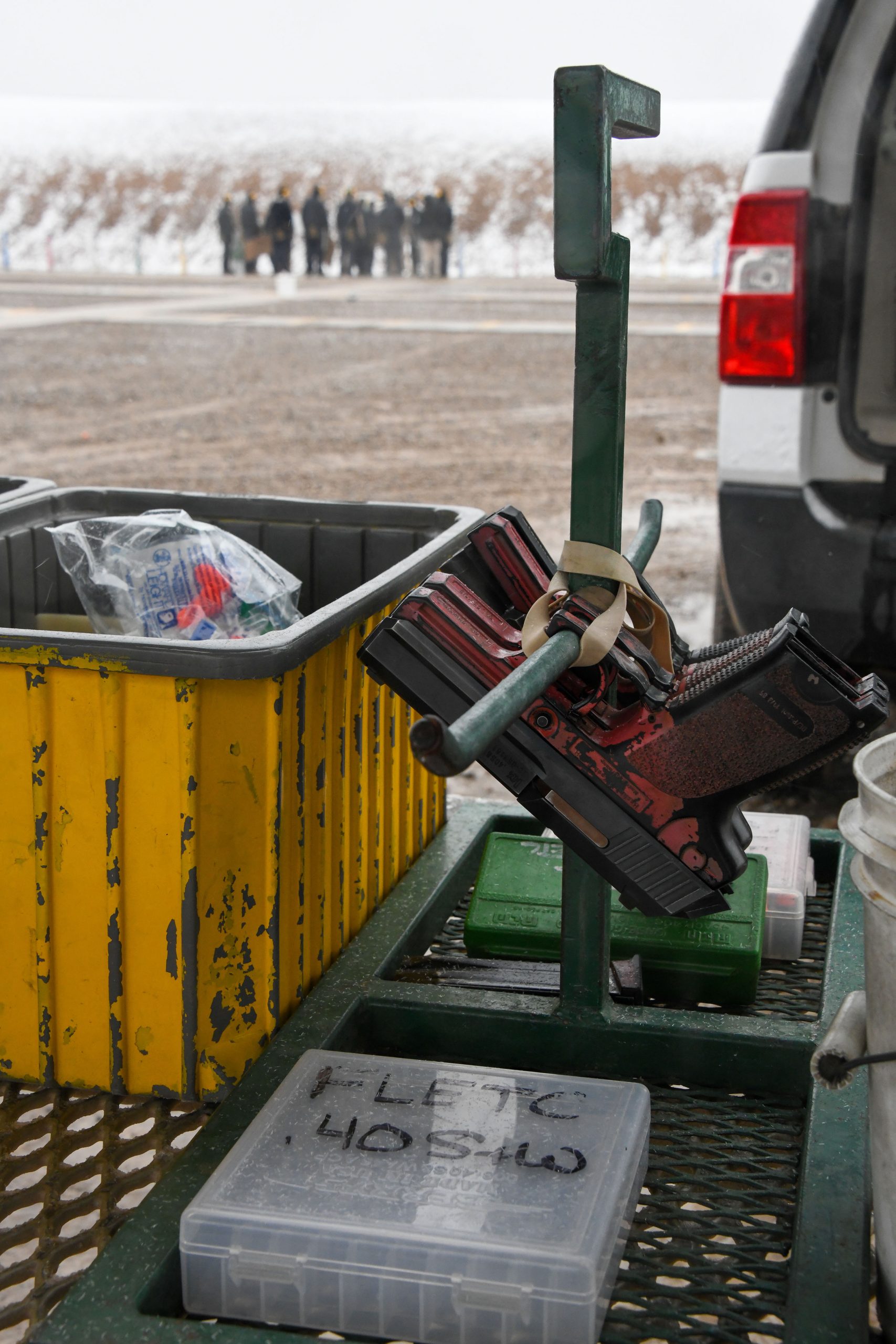
The statute also anticipated the obvious accident. If an accidental discharge injures someone, the Administrator shall revoke that officer’s deputisation; if a programme shortcoming caused it, the whole programme may be suspended until it is fixed. In late March 2008 a US Airways captain on an A319 between Denver and Charlotte accidentally discharged his weapon in the cockpit. The round went through the left cockpit wall and out of the aircraft. The hole did not depressurise the cabin, the aircraft landed normally, nobody was hurt, and passengers were reportedly unaware anything had happened. The pilot was removed from the programme; the programme was not suspended. The statute worked exactly as written.
Would a bullet bring the aeroplane down?
This was the central objection when Congress debated arming pilots, and the honest answer has two halves that are usually collapsed into one.
The fuselage is a non-issue, and the certification standard says so in numbers. Under 14 CFR 25.365, every transport-category aircraft must be designed to withstand "a sudden release of pressure through an opening in any compartment at any operating altitude" — with the opening sized by formula, and capped at 20 square feet. Continued safe flight and landing is required. A handgun hole is a rounding error against twenty square feet. Boeing’s director of aviation safety, Ron Hinderberger, told the House aviation subcommittee that commercial service history contains cases of gunfire aboard in-service aeroplanes, all of which landed safely, and that "a single bullet hole in the fuselage skin would have little effect on cabin pressurization" — quoted here as the Congressional Research Service recorded it.
The other half deserves equal weight, and it is not the fuselage. Captain Edward M. Davidson of Northwest Airlines told the Senate Commerce Committee in July 2002 that a round could pierce a flight deck window, strike one of the cockpit’s many multi-functional instruments, or reach the critical navigation equipment located beneath the flight deck. The CRS added the point that actually matters: a depressurisation demands oxygen masks and checklists, and critical system failures demand immediate attention — at the precise moment somebody is fighting for the cockpit.
Congress took it seriously enough to require a formal analysis of the risk of catastrophic failure from a discharge into the avionics, electrical systems or other sensitive areas. It then classified the result by statute. The public can see that the question was asked. It cannot see the answer.
One related myth is worth killing while we are here: the idea that a hole in the fuselage sucks people out. It has happened, once, in a well-documented case — Aloha Airlines 243 on 28 April 1988, when an 18-foot section of upper fuselage departed the aircraft at 24,000 feet and a flight attendant standing at row 5 was swept overboard. That is an eighteen-foot structural separation, the order of magnitude of the certification case, not a bullet hole. The aeroplane landed at Maui.
Everyone else with a weapon on board
Marshals and armed pilots are only two of four quite distinct categories, and the regulations keep them rigorously apart.
Police officers flying armed are governed by 49 CFR 1544.219, and the bar is higher than people assume. The officer must be a sworn, commissioned, full-time direct employee of a government agency, authorised by that agency to carry in connection with assigned duties, and must have completed the Law Enforcement Officers Flying Armed course. There must also be an operational need drawn from a closed list — protective duty, a hazardous surveillance operation, prisoner control, and so on. The carrier must be notified at least an hour before departure. State, county and municipal officers must present an original letter of authority and send a message through the national law enforcement telecommunications system. The pilot in command must be told where each armed officer is sitting, and in some circumstances the doors may not close until that notification is complete. No alcohol may be served to an armed officer, none may be consumed, and none may have been consumed in the previous eight hours. And one sentence that tells you a great deal about why the rule exists: "No individual may place a weapon in an overhead storage bin."
Prisoner escorts stack a second regime on top of the first, and it is startlingly detailed. No more than one high-risk prisoner may travel on an aircraft unless TSA authorises otherwise. A high-risk prisoner requires two officers who may control nobody else. Notification runs 24 hours ahead. The escorting officer "must be seated between the prisoner and any aisle." The prisoner sits away from exits and, where practicable, in the rearmost seat of the cabin, boards before everyone and leaves after everyone. Hands are restrained; "leg irons are not used." No metal eating utensils without the officer’s say-so, and never any alcohol.
If you have ever watched two calm men board first and sit at the very back with a third between them and the aisle, you have watched this regulation being followed.
The rest of the world, and why nobody will give you a number
The international framework comes from ICAO Annex 17, and two of its standards explain almost everything about why this subject is so hard to report.
The first is Standard 4.7.5: travel by armed personnel, including in-flight security officers, "Only after agreement by all States involved shall such travel be allowed." No country’s marshals simply fly into another country armed. Since 2018, US law has required a standard written agreement as the basis of every negotiation with a foreign government over marshal presence.
The second is Standard 4.7.7, and it is the one that reframes the whole numbers problem. A state deploying in-flight security officers must ensure they are government personnel, specially selected and trained — which means an airline cannot lawfully field its own armed guards in the role. And such deployment "shall be coordinated with concerned States and kept strictly confidential."
When an agency declines to say how many officers it has, it is complying with an international standard, not stonewalling a journalist.
Canada runs the best-documented programme outside the United States. In-flight security officers under the Canadian Air Carrier Protective Program are RCMP officers who have flown selected high-risk domestic and international flights since shortly after 2001. The RCMP’s own magazine describes a month of training in behavioural analysis, close-quarter combat, firearms drills, hostage negotiation and bomb disposal, at a facility near Ottawa with a decommissioned aircraft for scenarios — and states plainly that "the number of IFSOs with the unit is closely guarded information."
Germany’s Flugsicherheitsbegleiter belong to the Bundespolizei, and the force’s own staff magazine is unusually frank about the job. They work only in teams, never alone. They must not be identifiable as police officers, and train to maintain a cover identity. The captain is briefed before departure. The anonymous officer who wrote the account offers the best one-line description of the role anyone has managed: "Möchtegernrambos sind bei uns fehl am Platz" — wannabe Rambos have no place with us.
China takes the opposite approach to inbound weapons. Its civil aviation regulation for foreign carriers permits in-flight security officers only under a bilateral security cooperation agreement, and requires that security guards keep a weapon unloaded throughout the flight, with escorting law enforcement officers’ ammunition held by crew members or stowed in the cargo hold.
And Israel? El Al’s armed guards are the programme most often described as the oldest in the world. We are not going to tell you that, because we could not find a single primary source that establishes it — and Annex 17, by requiring these deployments to be kept strictly confidential, makes it close to structurally unverifiable. What can be said is that Nixon, in the same 1970 statement, noted that some foreign airlines had been successful in deterring hijackers and coping with piracy attempts, and that the United States wanted to learn from their experience. He named no airline. Everybody knew which one he meant.
A broadcast look behind the scenes at air marshal training.
Miami, 7 December 2005
There is one case everybody half-remembers, and it is worth stating precisely, because the half-memory is wrong in an important way.
American Airlines flight 924 was boarding at gate D-42 in Miami, having arrived from Colombia and bound for Orlando. A passenger, Rigoberto Alpizar, became agitated. A Federal Air Marshal Service official said afterwards that he had uttered threatening words including a sense that he had a bomb; a reporter on the scene said he had claimed a bomb in his carry-on bag. He ran from the back of the aircraft, remained non-compliant with instructions, and — this is the part that gets lost — he had left the aircraft. He was shot on the jet bridge. No bomb was found. Reports at the time indicated he may have been mentally unwell.
Not in the cabin. Not at cruise. On the jet bridge, during boarding.
It is the one widely known instance of US air marshals using lethal force on duty. Whether there have been others is not a question the public record answers: use-of-force statistics for the service are not published, and no official compilation exists. The absence of other documented cases is an absence of evidence, which is a different thing from a verified never.
That, in the end, is the honest shape of this subject. A programme founded by eighteen volunteers, reduced to thirty-three people by 2001, rebuilt at enormous cost, and run today to targets nobody outside it can see. A corps of airline pilots carrying federal badges, unpaid, in numbers nobody will confirm, whose authority ends at a door. And an international standard that requires all of it to stay quiet.
The next time you board, you will not know. That is the design.
Sources: Public Law 87-197 (1961); Aviation and Transportation Security Act, Public Law 107-71; Homeland Security Act of 2002, Public Law 107-296, Title XIV; 49 U.S.C. 44917 and 44921; 49 CFR 1544.219, 1544.221 and 1544.223; 14 CFR 25.365 and 25.571; GAO-02-822R, GAO-09-273 and GAO-16-582; Congressional Research Service reports RL31674 and RL33042; House Committee on Small Business field hearing, 15 January 2004 (Serial No. 108-49); Federal Law Enforcement Training Center; US Customs and Border Protection, "Riding the Planes"; Richard Nixon, Statement Announcing a Program To Deal With Airplane Hijacking, 11 September 1970; the TSA official blog, March 2008; ICAO Annex 17, 12th edition; RCMP Gazette; Bundespolizei kompakt; the Civil Aviation Administration of China; Federal Register 89 FR 97060; FAA Lessons Learned (Aloha 243); PBS NewsHour; ABC News.
0 Comments