
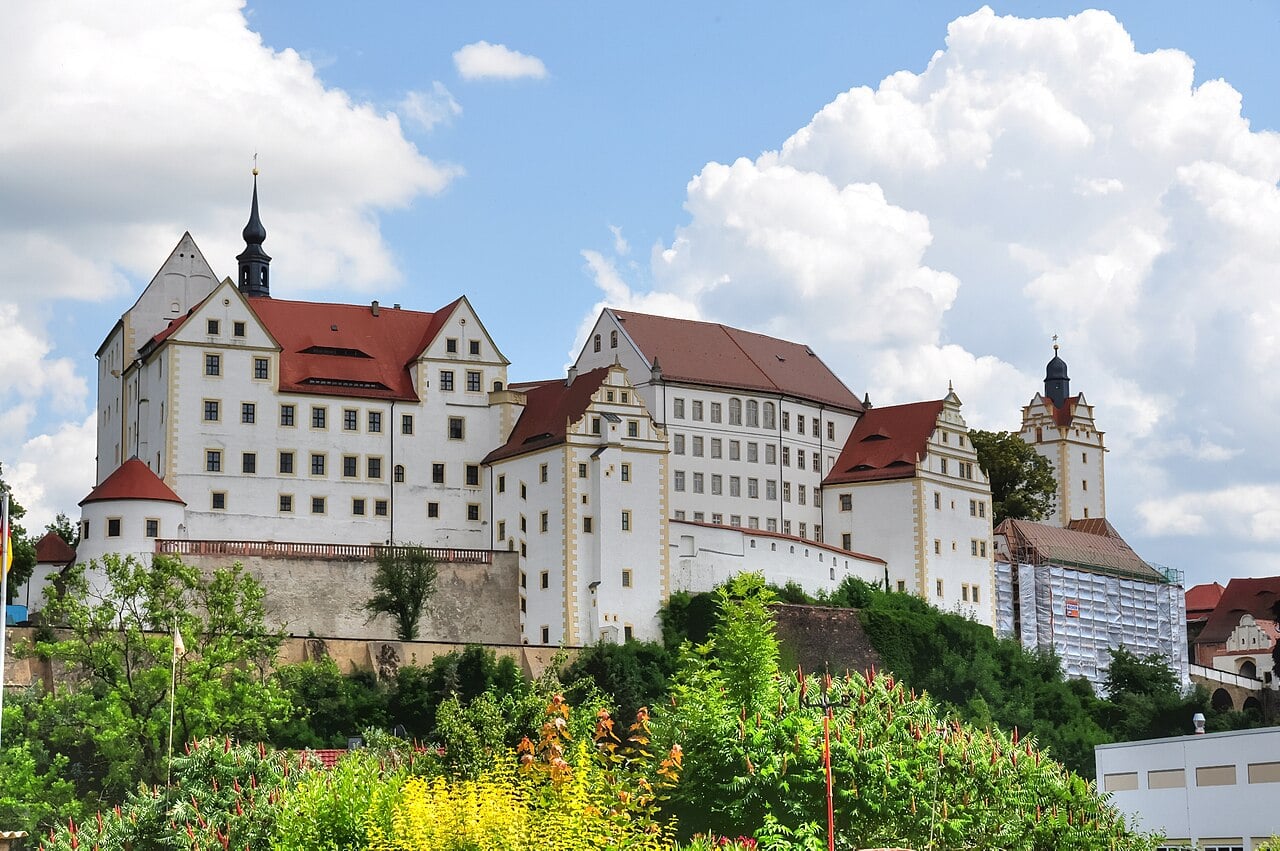
It is a winter’s day in December 1943, in Saxony. High on its rock above the little town of Colditz, the castle is under snow, and an RAF officer named Bill Goldfinch is looking out of a window at the roofs. The wind is blowing hard against the walls, and he notices something odd. The snow is not falling past the roofline. It is being carried upwards and over the top.
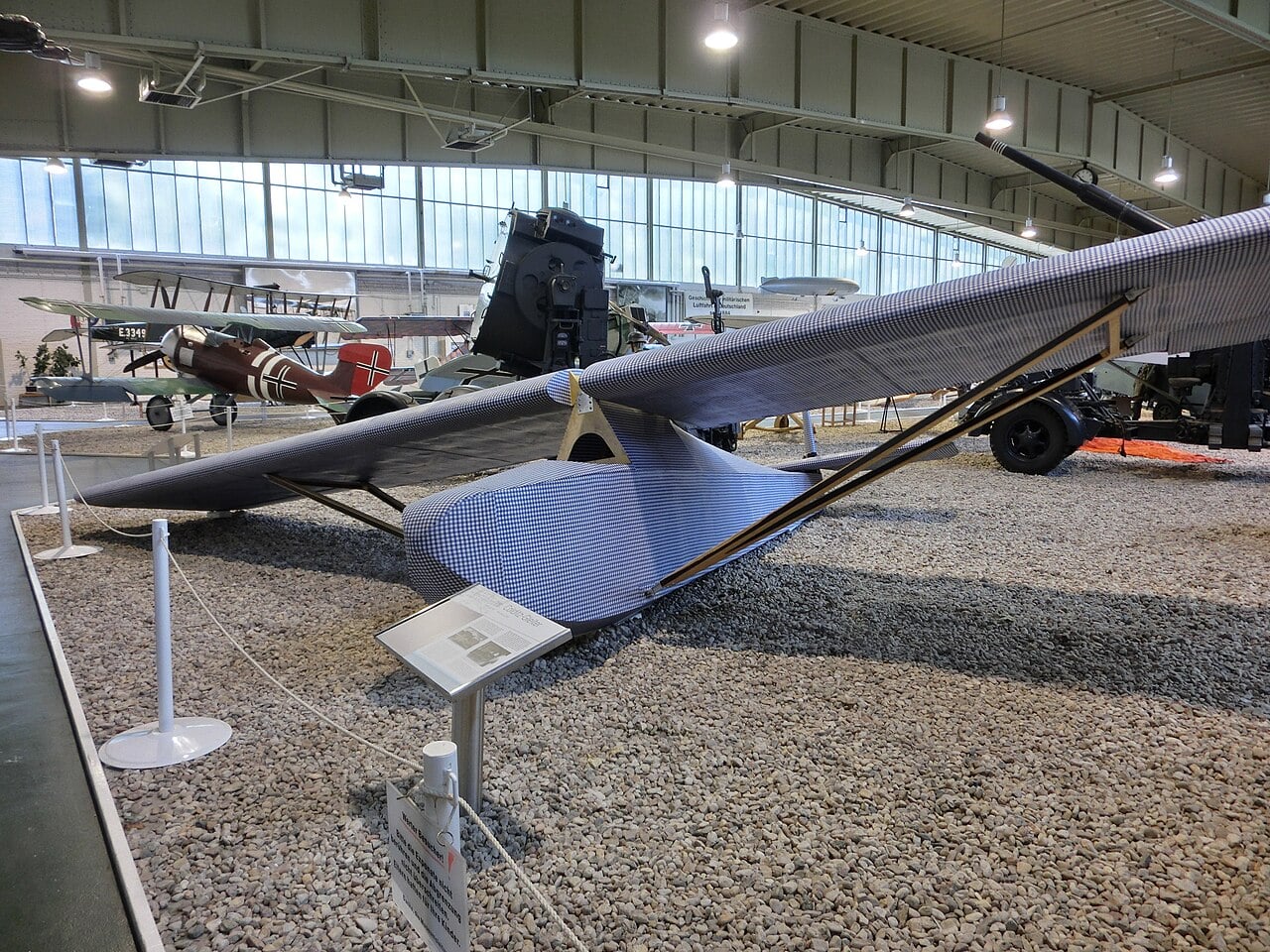
If air was rising there, Goldfinch reasoned, a man could launch himself into it and glide down to the river. Every other way out of Colditz meant tunnels, forged papers, disguises and months of risk on the ground. This one meant a short run along a roof and a flight of perhaps a minute. Within a few months he and his friends had started building an aircraft in the attic above the castle chapel. They called it the Colditz Cock.
Quick Facts
- Name: Colditz Cock (also called the Colditz glider)
- Type: Two-seat, high-wing, strut-braced glider
- Designer: Flight Lieutenant L. J. E. “Bill” Goldfinch, RAF
- Built: 1944 to early 1945, in a hidden attic above the chapel of Colditz Castle (Oflag IV-C)
- Wingspan: About 32 ft (Imperial War Museum) or 33 ft (other accounts), roughly 10 m
- Weight: About 560 lb (some 250 kg) all-up with two men aboard, according to the IWM
- Materials: Floorboards, bed boards, prison bedding, electric wire, millet-based dope
- Helpers: 52 prisoners as builders or lookouts; only four could work in the attic at once
- Launch plan: Off the chapel roof on a trolley, pulled by a falling bathtub filled with concrete
- Fate: Never flown; photographed in April 1945, then lost. Full-size replicas flew in 2000 and 2012
The castle the Germans thought was escape-proof
Colditz Castle sits on a steep spur above the Zwickauer Mulde river, between Leipzig and Dresden. In the Second World War it became Oflag IV-C, a camp for Allied officers. According to the Imperial War Museum, the Germans believed it was escape-proof and sent their hardest-to-control prisoners there. Most of its inmates had already escaped, or tried to, from other camps.
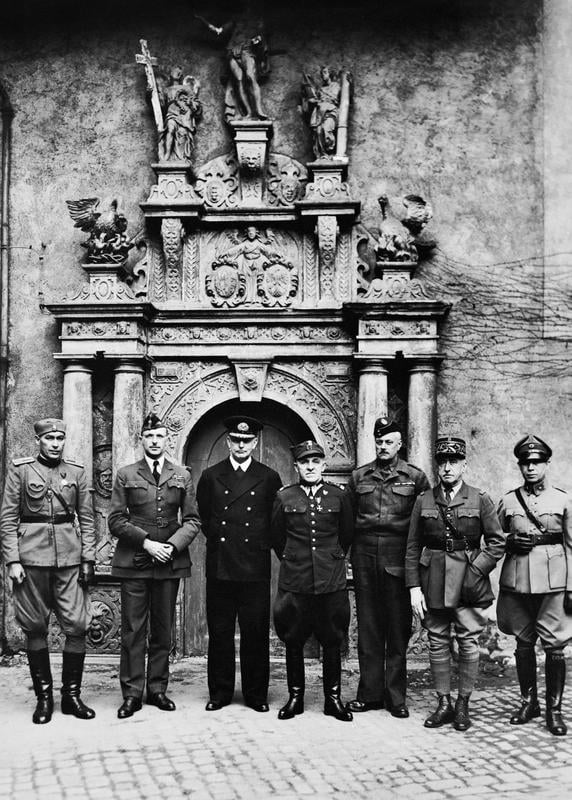
The result was a castle full of the most determined escapers in German hands, from Britain and the Commonwealth, France, Poland, the Netherlands and Belgium. The prisoners treated escape as a profession. They had an escape committee, forgers, tailors, lock-pickers and engineers, and they shared out tools and materials as carefully as a quartermaster. Colditz also held some of the war’s best-known airmen, including Douglas Bader, the legless fighter ace shot down in his Spitfire over France in 1941.
Some escapes became famous. On 5 January 1942, Lieutenant Airey Neave and a Dutch officer walked out disguised as German officers and reached Switzerland. Neave was the first British officer to make a “home run” from the castle. Pat Reid, who later wrote the books that made Colditz a household name, got out in October 1942. French prisoners spent months digging a tunnel from the clock tower that was discovered before it broke out. By 1944, however, the easy ideas had been used up, and the guards had learned every trick.
The airmen in the attic
Bill Goldfinch was not a man who gave up easily. Born in Whitstable in 1916, he had served as an engineer officer in the Territorial Army before joining the RAF. In April 1941 he was flying Short Sunderland flying boats with No. 228 Squadron during the evacuation of Greece. His overloaded Sunderland struck an object while landing in the dark at Kalamata and sank. Goldfinch was one of four survivors, badly injured, and was captured when the hospital fell to the Germans. After passing through Stalag Luft I and Stalag Luft III, and an attempted escape along the River Oder, he was sent to Colditz.
His closest partner was another RAF officer, Flight Lieutenant Jack Best, also an engineer and already a veteran escaper. In January 1944 Best and Lieutenant Michael Sinclair slipped out from a lower terrace of the castle and got as far as the Dutch frontier before they were caught. The third key figure was an army officer. Lieutenant Tony Rolt of the Rifle Brigade had been captured at Calais in 1940, where he won the Military Cross, and had tried to escape seven times before he arrived at Colditz. According to the IWM, the three devised the glider plan together in early 1944, with Rolt usually described as its organiser.
The British escape officer, Captain Dick Howe, approved the idea. That was not obvious. A glider needed a huge, hidden workshop, a great deal of timber and cloth, and months of uninterrupted work. It also needed a launch point the guards could not see. The prisoners found one in the roof of the castle chapel, whose long ridge was out of sight of the sentries.
A workshop behind a false wall
The builders first worked in their own rooms, then moved into the lower attic above the chapel, right beside the roof chosen as the runway. To hide it, they built a false wall of old shutters plastered with mud made from attic dust. According to the NOVA documentary, the wall was so convincing that the Germans never noticed the attic had become about eight feet shorter. The prisoners came and went through a trapdoor in the workshop floor.
Space was the hardest limit. The IWM records that only four men could work in the attic at a time, but 52 prisoners took part, either building parts or acting as “stooges”, the lookouts who watched the guards and signalled when to stop.
The tools were made from nothing. Best turned the spring from a wind-up gramophone and the iron frame of a window bar into saws. Nails became drills, bed boards became saw handles, and a German table knife became a plane. He described the result proudly more than half a century later.
Floorboards, bed slats and boiled millet
The design came from a book. In the prison library Goldfinch found Aircraft Design by C. H. Latimer-Needham, a British aircraft designer and founder of the small Luton Aircraft company. From its tables and formulas he drew up the plans for a two-seat, high-wing glider with bracing struts. His original drawing, on pink paper at a scale of one centimetre to the foot, is now in the Imperial War Museum. It shows front, plan and side views, with measurements and calculations written in the margins.
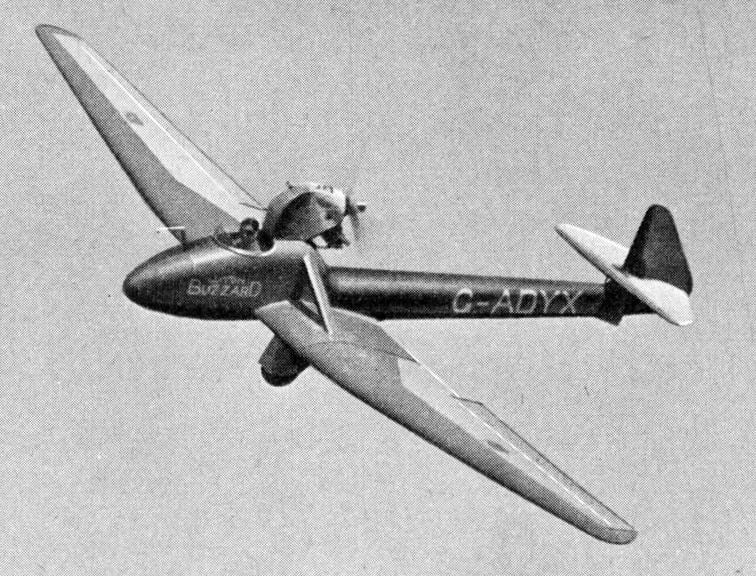
According to the IWM, the rudder shape came from the pre-war Luton Buzzard, one of Latimer-Needham’s own designs, while the rest was Goldfinch’s. The wing spars were cut from floorboards taken from quiet parts of the castle. The wing ribs came from bed slats. Each rib was shaped, steamed to make it bend, pinned and glued. NOVA counted more than 6,000 hand-made pieces in the wings alone.
Control cables were made from electric wire stripped out of unused parts of the castle. Some things could not be made, so they were bought. Casein glue and a metal drill were obtained by bribery. The skin was prison bedding, a patterned cloth that can be made out in the 1945 photograph. To tighten the cloth and make it airtight, the builders painted it with hot millet from their rations, a kitchen version of the aircraft dope used on real fabric-covered aircraft.
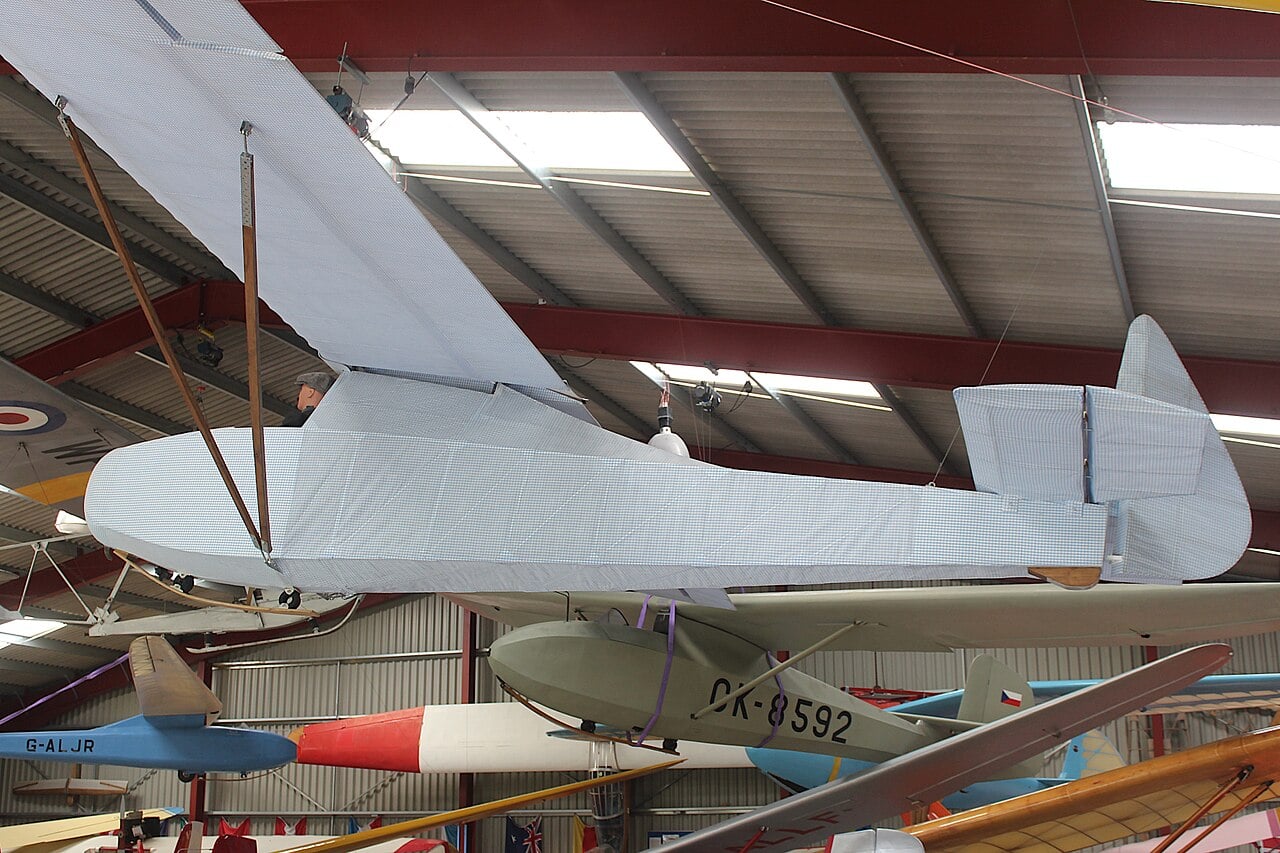
The figures that have come down to us vary slightly. The IWM gives a wingspan of 32 feet and an all-up weight of about 560 lb with two men aboard. Goldfinch’s obituary in the Daily Telegraph gave 33 feet. Either way, the Colditz Cock was about the size of a pre-war training glider, built by men who had no workshop, no proper timber and no way to test a single part in the air.
A bathtub full of concrete
Building the glider was only half the problem. It also had to reach flying speed in a few seconds from a standing start, on a roof. The plan was to assemble it in the attic, break through the wall onto the chapel roof, and set it on a wooden runway laid along the ridge. NOVA described the ridge as about 40 feet long, and some later accounts speak of a runway of about 60 feet built from tables. The exact length of the runway is not certain.
The power would come from gravity. A bathtub filled with concrete and earth, roughly a tonne according to Goldfinch’s obituary, would be dropped down through the building on a rope. Running through pulleys, the rope would pull the glider’s trolley along the ridge and fling it off the end. NOVA said the bath would fall five storeys. Goldfinch’s obituary said the glider was designed to take off into the wind at about 31 mph.
From there the pilot and passenger would glide over the walls and the river and land in the meadows on the other side, then continue on foot. The IWM puts the planned glide at about 450 metres. How far below the roof the landing ground lay is described differently: NOVA said the town lay more than 300 feet below, while Channel 4 later described a meadow about 180 metres below. By any measure it was a short flight, but over a wall, a town and a river, with no second chance.
The glider that waited
By the end of 1944 the glider was largely finished. It was never used. The war was clearly ending, and the War Office had warned that recaptured escapers were likely to be shot. The IWM says no escape was attempted because of those warnings. With liberation perhaps weeks away, the risk of two men dying on a German hillside was no longer worth taking. Spring 1945 came, and the plan stayed in the attic.
On 16 April 1945, troops of the US Army reached Colditz and the castle was liberated. Goldfinch and Best now had nothing left to hide. Best later described how the two of them went up before breakfast, knocked a hole in the ceiling and brought the glider down. They assembled it in the lower attic and showed it, with obvious pride, to their former guards and to the Americans. One of those Americans, the war correspondent Lee Carson, took a photograph. It is the only known image of the original.
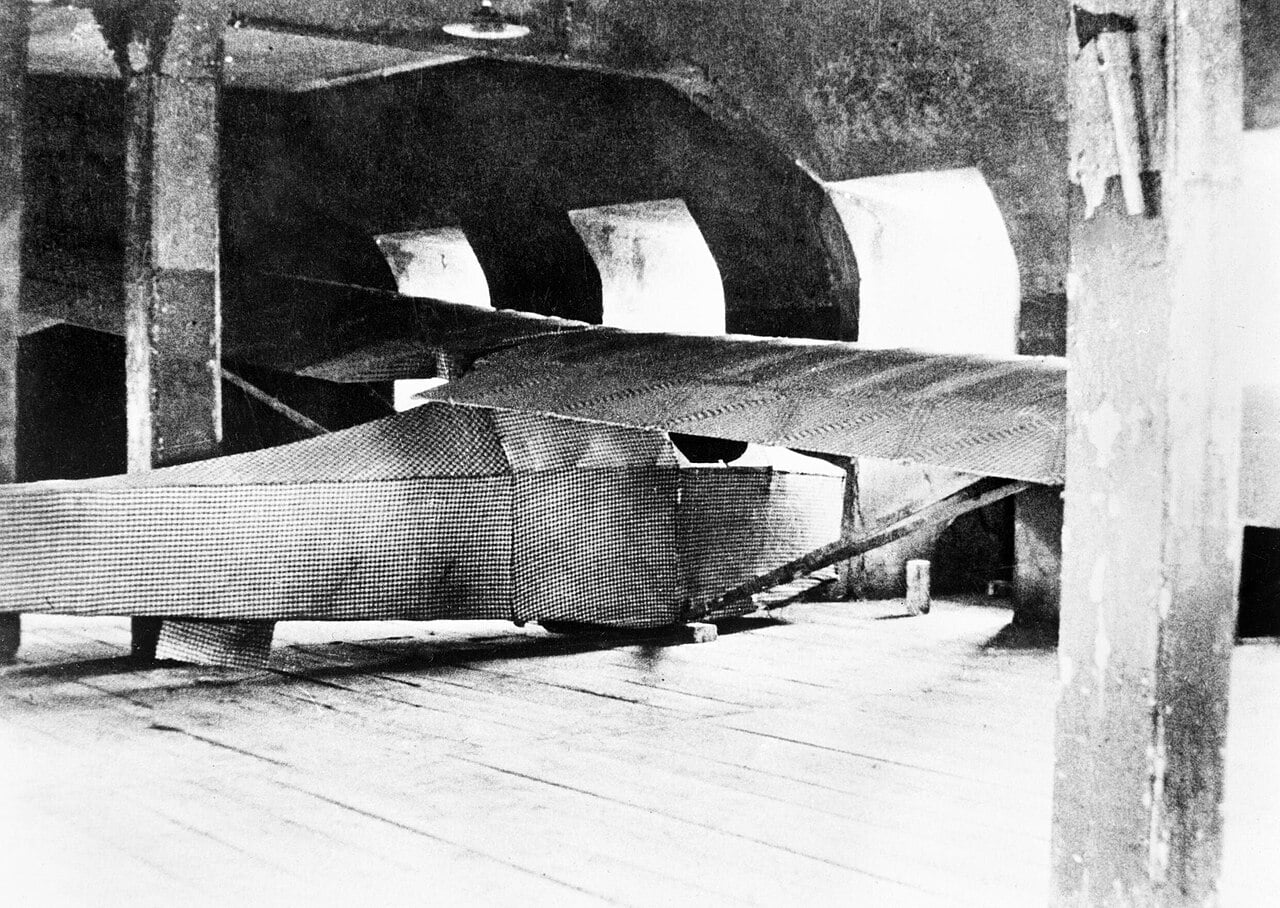
Then the glider disappeared. The prisoners were sent home and it was left behind. Colditz became part of the Soviet zone and later East Germany. The IWM says it was destroyed soon after the war. NOVA reported the rumour that it was burned. No part of it has ever been found.
Would it have flown? 2000 and 2012
For decades nobody could say whether the Colditz Cock would have worked. Latimer-Needham himself wrote about it in Flight International in 1968, and a one-third-scale model was launched from the castle roof in 1993. The real test came in 2000. For Channel 4, Southdown Aero Services in Hampshire built a full-size replica that followed Goldfinch’s plans to the inch. In March 2000 at RAF Odiham, glider pilot John Lee took off on a winch cable, released at about 150 feet, flew a circuit and landed a few feet from where he had started.
Seven Colditz veterans watched, among them Goldfinch, then 83, and Best, then 87. The Daily Telegraph reported that the replica climbed to about 500 feet; Goldfinch’s obituary later put it at 700 feet. The flight lasted about three minutes, and the glider made four short flights that day. Goldfinch was delighted.
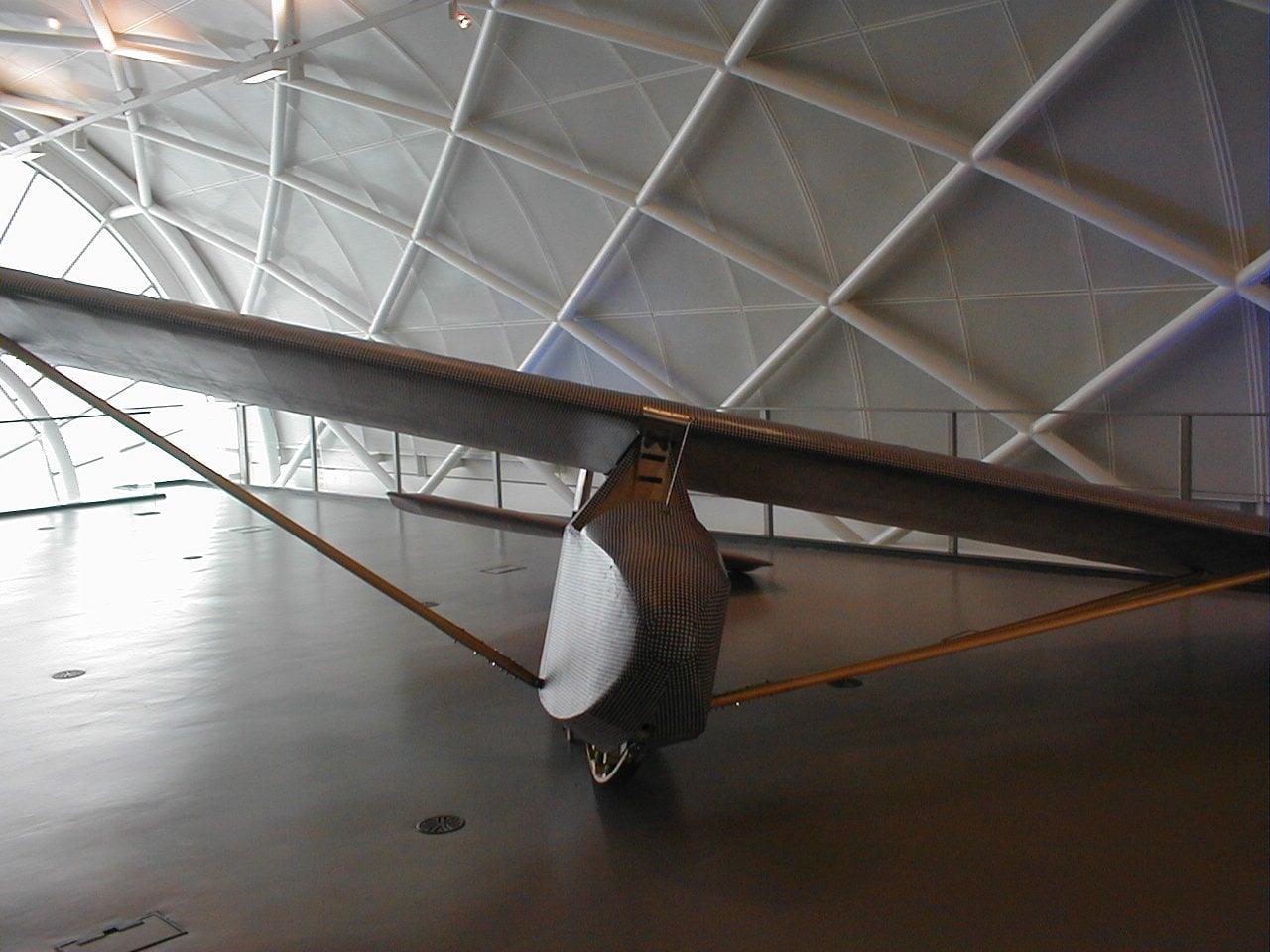
The Odiham flight proved the aircraft. It did not prove the launch. In 2012 Channel 4 and Windfall Films went back to Colditz for a documentary, Escape from Colditz, presented by the Cambridge engineer Hugh Hunt. Aircraft restorer Tony Hoskins of South East Aircraft Services led the build, working with engineers and carpenters, and they built the new glider in the same chapel attic using similar materials. The State of Saxony, which owns the castle, gave permission to launch it from the roof.
On 17 March 2012 the unmanned replica, under radio control and with a bathtub full of concrete as its catapult, was fired off the roof of Colditz Castle. It cleared the walls and the river and came down in the very field the prisoners had chosen, after a flight that lasted only seconds. The landing was hard. The Gliding Heritage Centre, which holds its sister aircraft, records that it crashed in the intended landing field; others describe a rough but deliberate arrival to avoid overflying houses. Either way, the launch system the prisoners had designed worked, and the documentary was screened on 13 August 2012.
Short footage of the Colditz glider replica being launched from the castle roof, uploaded in 2012. Video: Alex W.
Why the Colditz Cock still matters
From an engineering point of view, the Colditz Cock asked for nothing extraordinary. A glide of about 450 metres from a roof roughly 90 metres above the valley, using the figures given by the IWM and NOVA, means a glide ratio of only around five to one. Any well-made wooden glider can do better. What made it remarkable was everything else: a textbook from a prison library, tools made from a gramophone and a table knife, and dozens of men keeping a full-size aircraft secret for a year in one of the most closely guarded buildings in Germany.
The men who built it went on to quieter lives. Rolt won the Le Mans 24 Hours in a Jaguar in 1953. Goldfinch became a borough engineer in Poole and later acting city engineer of Salisbury. He built and flew a Luton Minor, another Latimer-Needham design, into his late eighties, and spent his last years building a small seaplane based on the glider, nicknamed “Son of Colditz”. He died in October 2007, aged 91, the day before it was due for taxi trials.
Today Goldfinch’s pink drawing is in the Imperial War Museum, replicas hang in museums in Britain and Germany, and the castle itself is a museum of escape. The original glider is gone. But the snow that drifted up over a roof in 1943 led to one of the most ingenious aircraft ever built, and two replicas, more than half a century later, proved that it could fly.
How the glider was planned, built and hidden in the attic of Colditz Castle. Video: Colditz TV.
Sources: Imperial War Museums, Plans for the Colditz glider, object EPH 637 (collection record 30080881); Imperial War Museums, Real-life escape attempts by Allied prisoners of war; Imperial War Museums, photographs HU 20269 and HU 49529; NOVA, Nazi Prison Escape, PBS (broadcast 6 February 2001), transcript and companion website pages on building the glider; The Daily Telegraph, Replica proves Colditz glider was a winner (March 2000); The Daily Telegraph, obituary of Flight Lieutenant Bill Goldfinch (12 October 2007), as summarised by the Old Framlinghamian Society; Channel 4 Press, Escape from Colditz (12 April 2012) and Escape from Colditz (working title); University of Cambridge Department of Engineering, Escape from Colditz (6 August 2012); Gliding Heritage Centre, Aircraft Summary Sheet: Colditz Cock replica BAPC.347 (updated July 2023); Tony Hoskins, Flight from Colditz (Pen and Sword, 2016), and review by Airscape Magazine (June 2016); Motor Sport, obituary of Major Tony Rolt MC (April 2008); Grace’s Guide, Cecil Hugh Latimer-Needham; C. H. Latimer-Needham, The Colditz Cock, Flight International (26 September 1968), as cited by the IWM.
Frequently Asked Questions
What was the Colditz Cock?
Did the Colditz glider ever fly?
What was the Colditz glider made of?
How was the Colditz glider supposed to take off?
How big was the Colditz Cock?
Where are the Colditz glider plans and replicas today?
Who built the Colditz glider?
Related Posts


0 Comments