
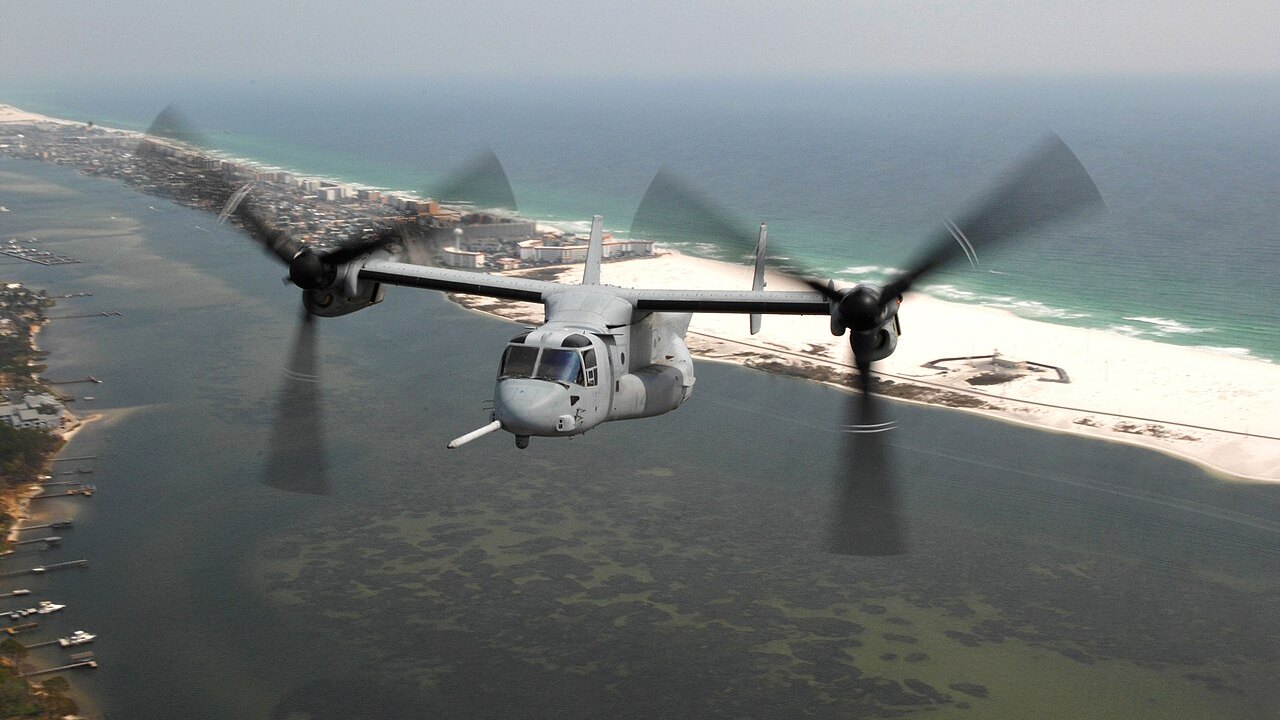
The V-22 Osprey needs two very busy engines to do its party trick, and keeping them busy costs money. On Friday 27 November 2026, the Pentagon announced that Rolls-Royce will get $88,005,612 more for V-22 Osprey engine support, keeping the tiltrotor’s AE 1107C engines running.
It was not a new contract. It was a modification, the kind that rarely makes headlines, to a support deal that was due to run out at the end of this month. The money buys the Navy and Marine Corps roughly two more months of engine care while the long-term arrangement catches up.
Quick Facts
- Contractor: Rolls-Royce Corp., Indianapolis, Indiana
- Value: $88,005,612 modification (P00007) to contract N0001925D0002
- Announced: Friday 27 November 2026, Pentagon contracts announcement
- Covers: MissionCare sustainment of AE 1107C engines on Navy and Marine Corps V-22s
- Completion: January 2027
- Funding: None obligated at award; obligated on individual orders
- Contracting activity: Naval Air Systems Command, Patuxent River, Maryland
What the Navy bought
According to the Department of War’s contracts announcement for 27 November, Rolls-Royce Corp. of Indianapolis, Indiana, received modification P00007 to contract N0001925D0002, a firm-fixed-price, indefinite-delivery/indefinite-quantity contract. The modification exercises an option to extend MissionCare engine sustainment for the AE 1107C engines on Navy and Marine Corps V-22s.
The scope is the unglamorous heart of keeping an aircraft flying: field service representatives, logistics, engineering, and organisational- and depot-level maintenance. Work is expected to be completed in January 2027. No money was obligated at award; funds will be obligated on individual orders as they are issued. The deal was not competitively procured, and Naval Air Systems Command at Patuxent River, Maryland, is the contracting activity.
The parent contract is no small thing. When it was awarded in November 2024, the Pentagon valued it at $695.3 million for support, programme management, logistics, sustaining engineering, maintenance and repair of the AE 1107C fleet across the MV-22, CV-22 and CMV-22. Federal procurement records show its ordering period ending on 30 November 2026, which is why this option matters now.
A map of the Osprey world
The work locations read like a tour of every place a V-22 calls home. The biggest share, 20 percent, is at New River, North Carolina, followed by Miramar, California, at 13 percent. Okinawa, Iwakuni and Yokota in Japan and Mildenhall in the UK take 8 percent each.
Kaneohe Bay in Hawaii, Kirtland in New Mexico and Hurlburt Field in Florida get 5 percent each, and Camp Pendleton, Cannon in New Mexico, Patuxent River, San Diego and Norfolk 4 percent each. Several of those, from Hurlburt to Mildenhall and Yokota, are Air Force special operations bases, so the support reaches well beyond the two services named in the announcement.
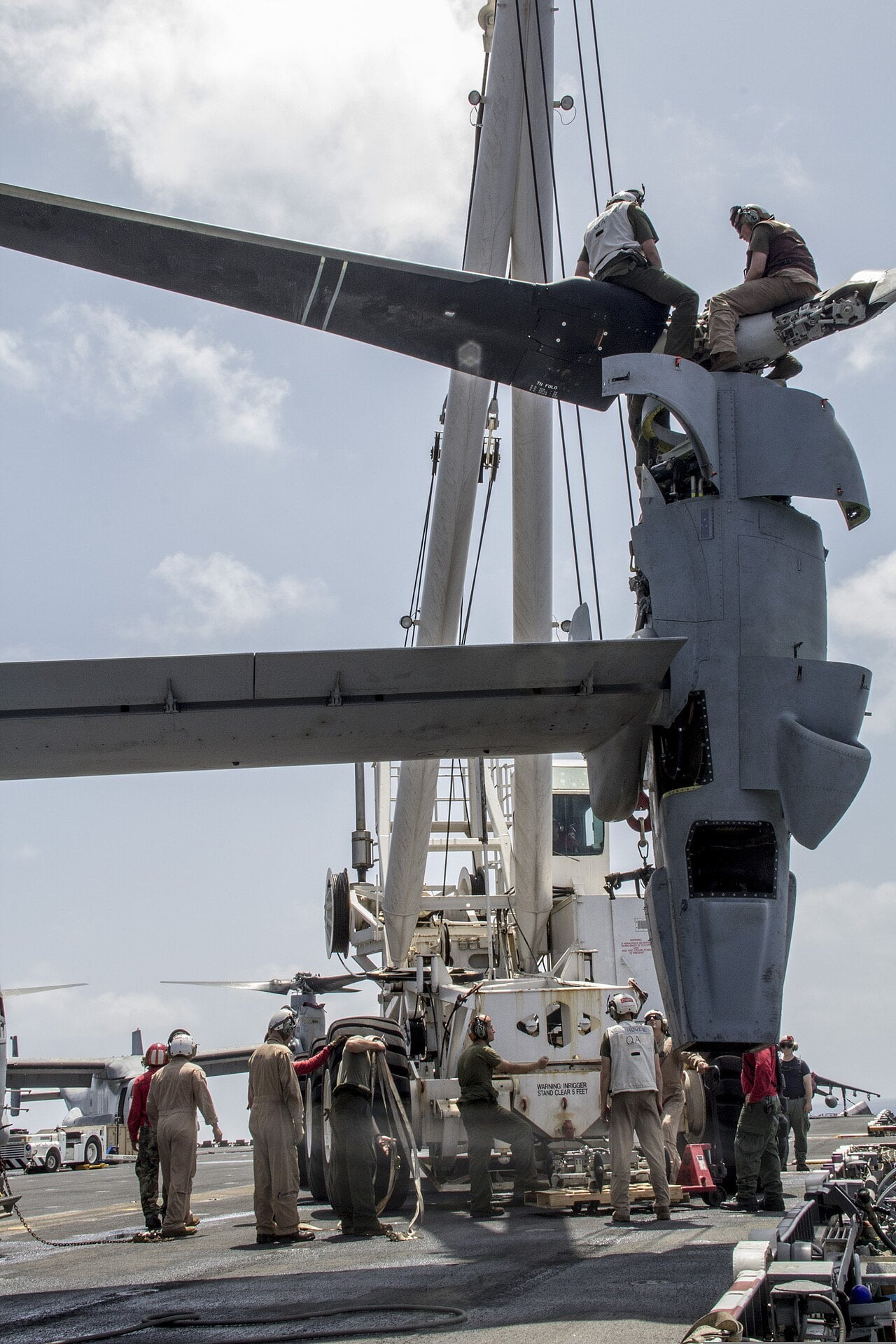
US Marine Corps mechanics maintain MV-22B Ospreys at Clark Air Base in the Philippines during Operation Damayan, the kind of field work the engine support contract backs up.
Power by the hour
MissionCare is Rolls-Royce’s name for paying for engine availability rather than parts and repairs one at a time. When the company won a five-year, $1.2 billion V-22 MissionCare deal in November 2019, it said it would handle all propulsion support for the Marine Corps, Navy and Air Force fleets under a “Power by the Hour” arrangement.
At that point Rolls-Royce had delivered almost 1,000 AE 1107C engines, and the V-22 fleet of more than 375 aircraft had passed 500,000 flight hours, about a million engine hours. The company describes the AE 1107C as a 7,000 shp turboshaft, and says it has now produced more than 1,000.
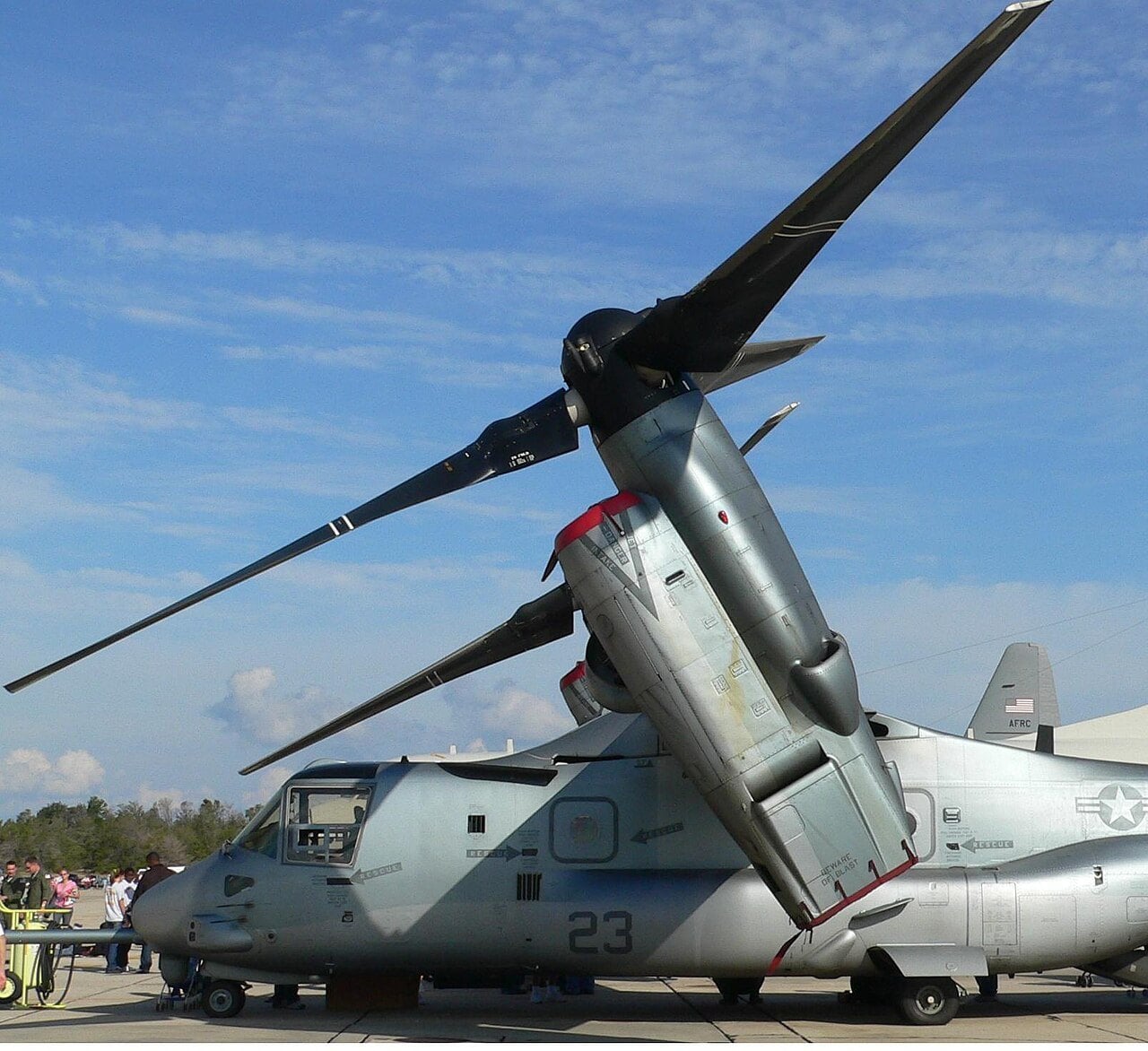
Each Osprey carries two of them, one in each wingtip nacelle that swivels from helicopter to aeroplane mode. When one is down for maintenance, the whole aircraft is down. That is why an $88 million bridge to January is a much better deal than a ramp full of grounded tiltrotors.
Sources: US Department of War contracts announcement (27 November 2026), Rolls-Royce, American Machinist, HigherGov federal contract records, Aerotech News


0 Comments