
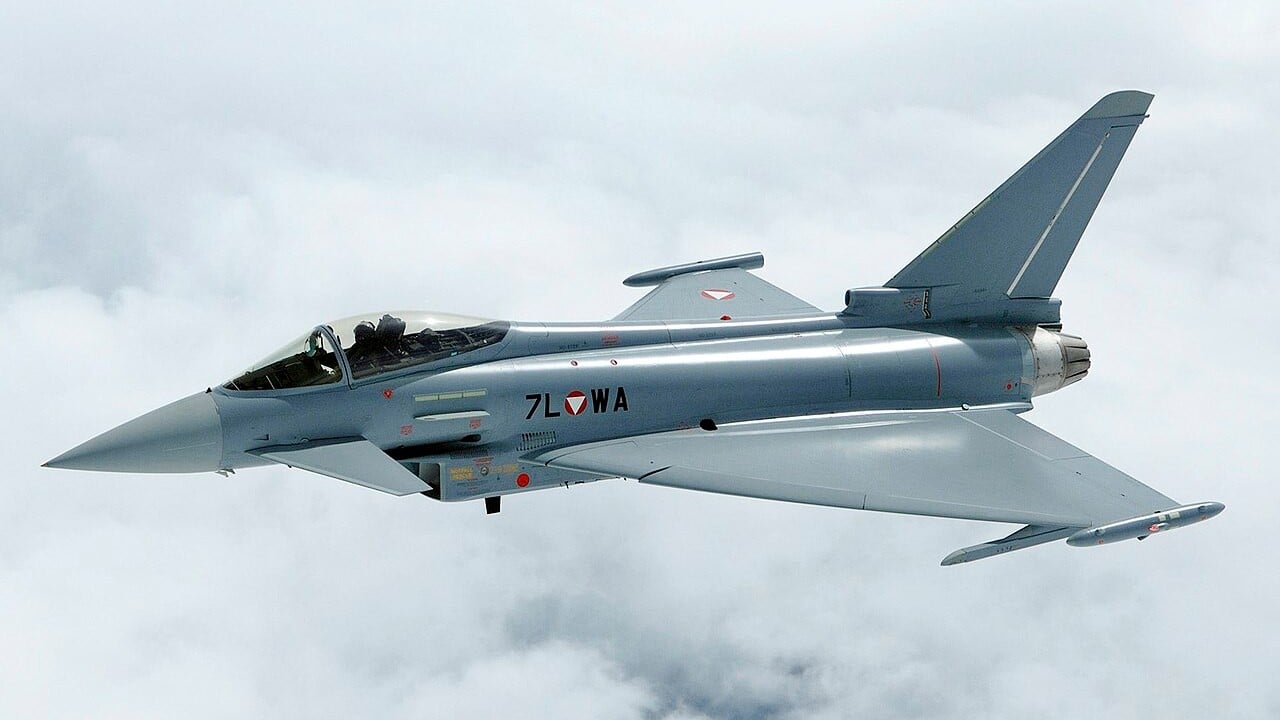
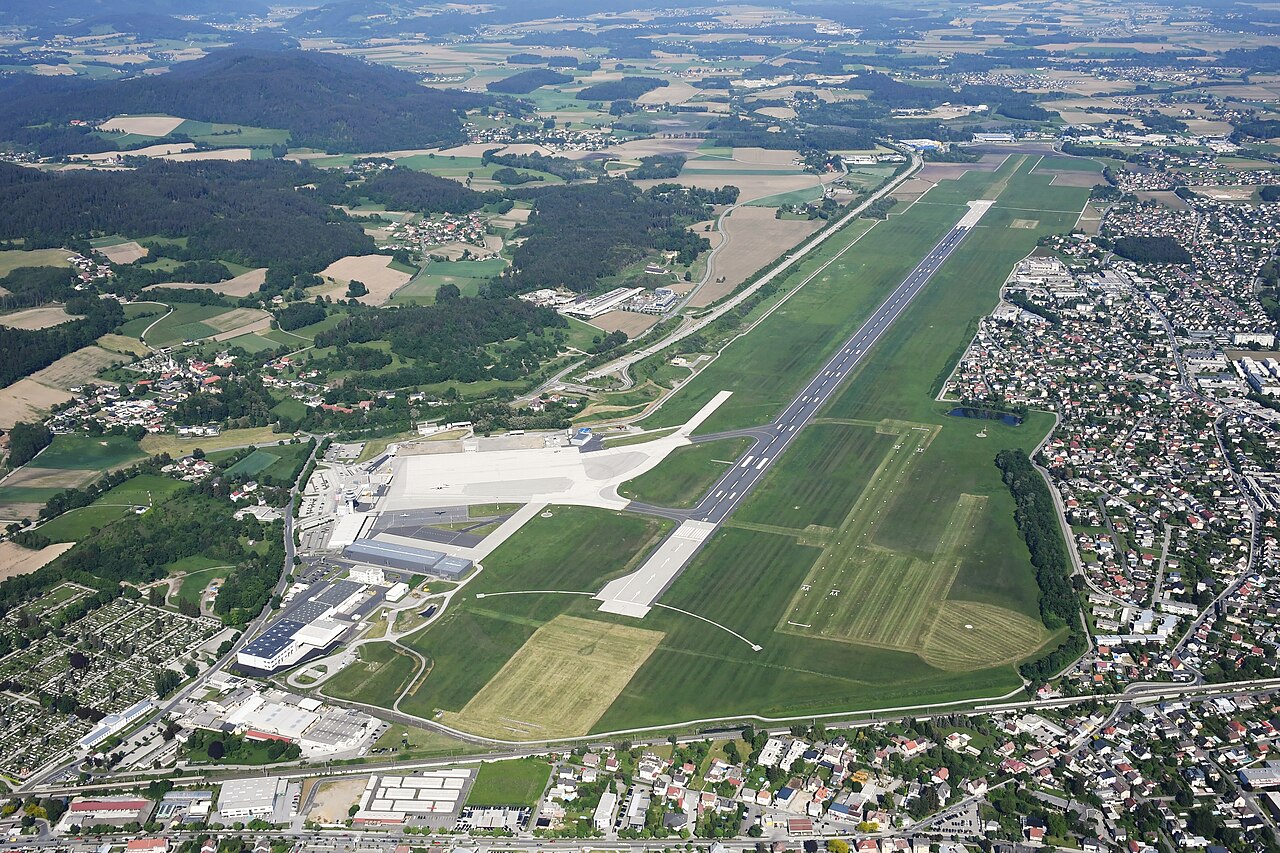
At lunchtime on Friday, 16 October, a flight of Austrian Air Force Eurofighters touched down at Klagenfurt, the civil airport of the southern state of Carinthia. Until Monday they will not train, not fly displays and not do circuits. They will sit on alert, ready to launch only if something in Austrian skies needs a fighter to look at it.
It is the 20th time the Bundesheer has moved its live air policing duty to Klagenfurt, and the pace has picked up sharply. A year ago, in October and November 2025, the deployments were only the sixth and seventh. That means 13 of the 20 have come in roughly the last twelve months.
Quick Facts
- Aircraft: Eurofighter Typhoon, Austrian Air Force
- Home base: Fliegerhorst Hinterstoisser, Zeltweg, Styria
- Deployment: 16 to 19 October 2026, Klagenfurt Airport
- Number: 20th deployment to Klagenfurt
- Missions: Priorität Alpha (live intercepts) only, no training flights
- Civil flights: Continue without restriction
- Austrian Eurofighter fleet: 15 aircraft, first delivered in July 2007
Only Priority Alpha
While the jets are in Klagenfurt they launch only for what the Bundesheer calls Priorität Alpha missions. That is Austria's highest alert category: an aircraft in Austrian airspace that air traffic control cannot raise on the radio, or foreign military aircraft crossing the country without permission to overfly. Training and exercise flights are not planned, and civil traffic at the airport continues as normal.
The jets return to their home base, Fliegerhorst Hinterstoisser at Zeltweg in Styria, on Monday. According to Austrian reports, the moves serve two purposes: they relieve the personnel and infrastructure at Zeltweg, and they exercise the procedures for moving fighters, ground equipment and crews to another airfield, which Austria would need if Zeltweg were ever unavailable.
A small fleet with a big job
Austria flies 15 Eurofighters, the first of which arrived at Zeltweg on 12 July 2007. They replaced the Saab 35 Draken, retired in 2005, with a stopgap of F-5E Tiger IIs leased from Switzerland in between. The purchase was politically controversial in Austria for years. As a neutral country outside NATO, Austria polices its airspace entirely on its own.
Dispersing to a civil airport makes a small force more resilient. It forces the support side, from refuelling to weapons handling, to work away from home, and it means more than one airfield is used to fighters operating at short notice. Carinthia's deputy governor Martin Gruber put it in geopolitical terms, calling the airport strategic and security-relevant infrastructure for Carinthia and the whole of Austria.
The Austrian Armed Forces' own film on how its air force responds to an alert.
Sources: aeroTELEGRAPH, 5 Minuten (5min.at), MeinBezirk, Aviation Direct, Austrian Armed Forces (Bundesheer), Wikipedia (Austrian Air Force)
0 Comments