
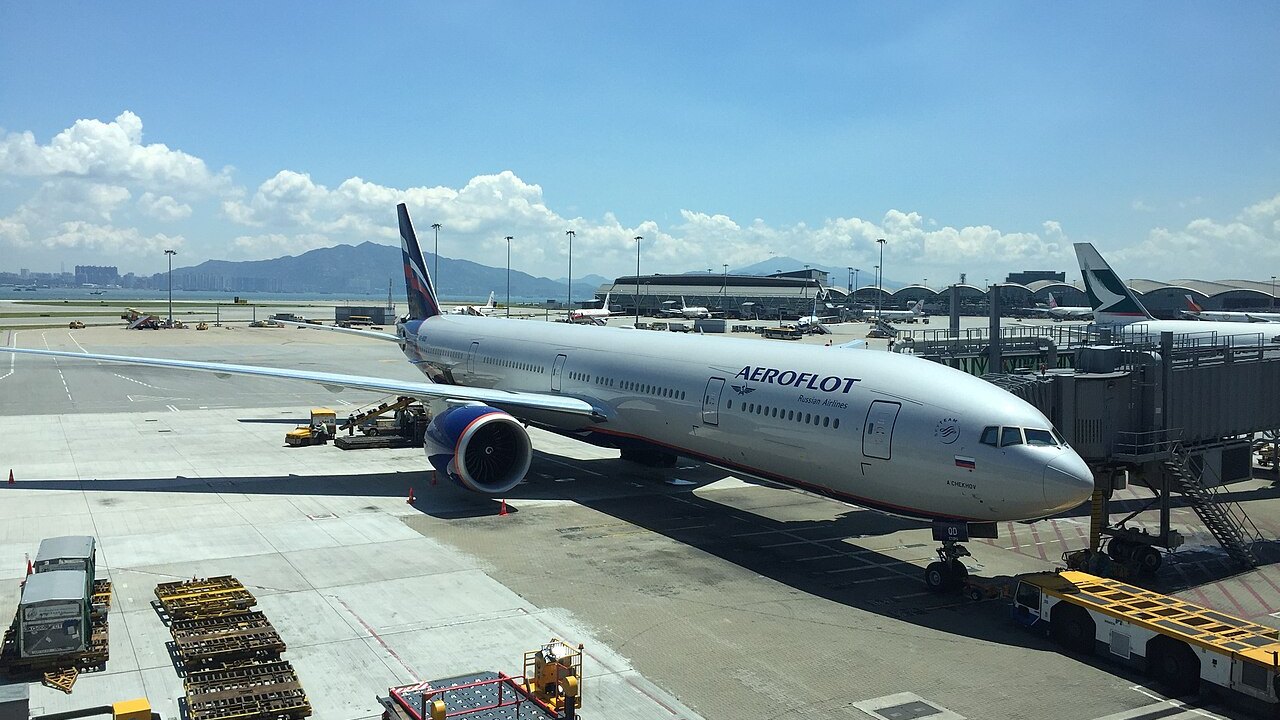
On 10 March 2022, hundreds of Western-owned airliners were sitting at airports across Russia. Not one of them crashed, burned or broke. Yet a London judge later ruled that on that very day, as far as the insurance policies were concerned, the aircraft leasing giant AerCap and its rivals had lost them.
That case is the most expensive lesson ever taught in a quiet corner of aviation: how you insure an airliner. A modern widebody is one of the most valuable moving objects on Earth, and the policies that protect it are layered, carefully worded and, as the lessors and insurers found out, worth fighting over for years.
Quick Facts
- Hull all risks: Covers physical loss of or damage to the aircraft, unless excluded
- Agreed value: Paid on a total loss; one policy in the London case allowed a constructive total loss at 75% of agreed value
- War exclusion: AVN 48B removes war, hijacking, terrorism, sabotage and government seizure from all-risks cover
- Hull war cover: A separate policy that writes those perils back in
- Lessor cover: Contingent (if the airline’s insurance fails) and possessed (when the lessor has the aircraft)
- Russia case: [2025] EWHC 1430 (Comm), judgment 11 June 2025, Mr Justice Butcher
- Finding: Aircraft lost on 10 March 2022; cause a government restraint, a war-risks peril; recovery under contingent cover
Hull all risks: the basic policy
The starting point is hull insurance, which covers the aircraft itself. The lessor policies examined in the London case cover aircraft “against all risks of physical loss or damage howsoever occasioned”, except what the policy specifically excludes. That is the meaning of “all risks”: everything is covered unless it is written out.
Aircraft are insured for an agreed value, fixed when the policy is written, rather than whatever the jet would fetch on the day. If it is destroyed, the insurers pay that figure. Most hull damage is repaired, but there is a tipping point. In one of the policies in the case, the owner could declare a constructive total loss, and be paid the agreed value, once repairs were estimated at 75 percent or more of that value.

The clause that writes out war
The most important exclusion in aviation insurance has a dull name: the War, Hi-Jacking and Other Perils Exclusion Clause (Aviation), known in the market as AVN 48B. It removes from an all-risks hull policy a whole family of perils that insurers prefer to price separately.
The list goes on: strikes and riots, acts for political or terrorist purposes, malicious acts and sabotage, hijacking, and confiscation, seizure, restraint or detention by or under the order of any government. Those are exactly the risks that matter when an aircraft is stuck in the wrong country at the wrong moment.
So airlines and lessors buy a second layer, hull war and allied perils cover, which writes those perils back in. The policies in the London case came in pairs: one lessor held an Aircraft Hull and Spares All Risks Policy and a separate Aircraft Hull and Spares War and Allied Perils Policy. Which of the two pays depends entirely on what caused a loss.
UND Aerospace’s introduction to how aviation insurance works.
Why the lessor buys its own cover too
When an aircraft is leased, the airline insures it and names the lessor on its policy. But lessors do not rely on that alone. They buy lessor policies of their own with two main parts, as the judgment describes. Contingent cover pays if the airline’s insurance fails to respond, for example if it was never properly placed or simply does not pay. Possessed cover applies when the aircraft is in the lessor’s own care, such as after it has been returned or repossessed.
Afterburner has explained how leasing works in Aircraft Leasing Explained, and how lessors try to get jets back under the Cape Town Convention. Insurance is the backstop when both of those fail. Alongside the hull, aviation policies also carry liability cover for the damage an aircraft can do to passengers and to people and property on the ground; one of the lessor policies in the London case bundled hull, war, liability and personal accident cover into a single insurance.
Russia, 2022: the test case
After Russia invaded Ukraine in February 2022, and with Western sanctions in force, the lessors issued default and termination notices to their Russian lessees. On 9 March 2022 the Russian government issued Resolution No. 311, which came into force on 10 March and banned the export of aircraft and aircraft engines. The jets stayed in Russia, and airlines such as S7 kept flying them after moving them onto the Russian register.
The lessors claimed under their own policies. Six actions were tried together in London’s Commercial Court from October 2024 to February 2025. AerCap alone said it had lost 116 aircraft and 15 engines. Some losses were partly recovered elsewhere: between August and December 2023, AerCap received more than US$1.3 billion in settlements with Russian airlines and a Russian insurer, and Dubai Aerospace Enterprise received about US$118.6 million from a settlement with Aeroflot and its Russian insurer.
On 11 June 2025, Mr Justice Butcher handed down his judgment. He found that the aircraft were lost on 10 March 2022, and that the proximate cause was Resolution No. 311 coming into force: a government “restraint” or “detention”. That is a war-risks peril, not an all-risks one. The lessors could recover under the contingent cover of their policies, but not under the possessed cover.
Even the small print was fought over. Some war-risk insurers argued that AerCap’s war-risks claim was capped at a US$300 million aggregate limit for seizure by the government of the “country of registry”, because Bermuda and Ireland had handed some oversight duties to Russia. The judge called that “a surprising argument”: the aircraft were registered in Bermuda or Ireland, and an aircraft has only one country of registry.
BWI Aviation Insurance explains the difference between aircraft hull and liability insurance.
What it means for the next jet
For insurers, the Russia case was a reminder that “war risk” is not just missiles and bombs. A government decree can be a total loss. For lessors, it showed why they pay for their own contingent layer instead of trusting the airline’s policy, and why the wording of an exclusion clause can decide who pays billions.
And for the rest of us, it explains a hidden cost in every airline ticket. Behind each aircraft at the gate sits a stack of policies: hull all risks, hull war, liability and the lessor’s own cover, often written by different underwriters. Most of the time they are never touched. When they are, as 10 March 2022 proved, the fight over who pays can last longer than the aircraft’s lease.
Sources: High Court of Justice, Commercial Court: AerCap Ireland Ltd v AIG Europe SA and others, [2025] EWHC 1430 (Comm), judgment of 11 June 2025 (The National Archives, Find Case Law)

0 Comments