
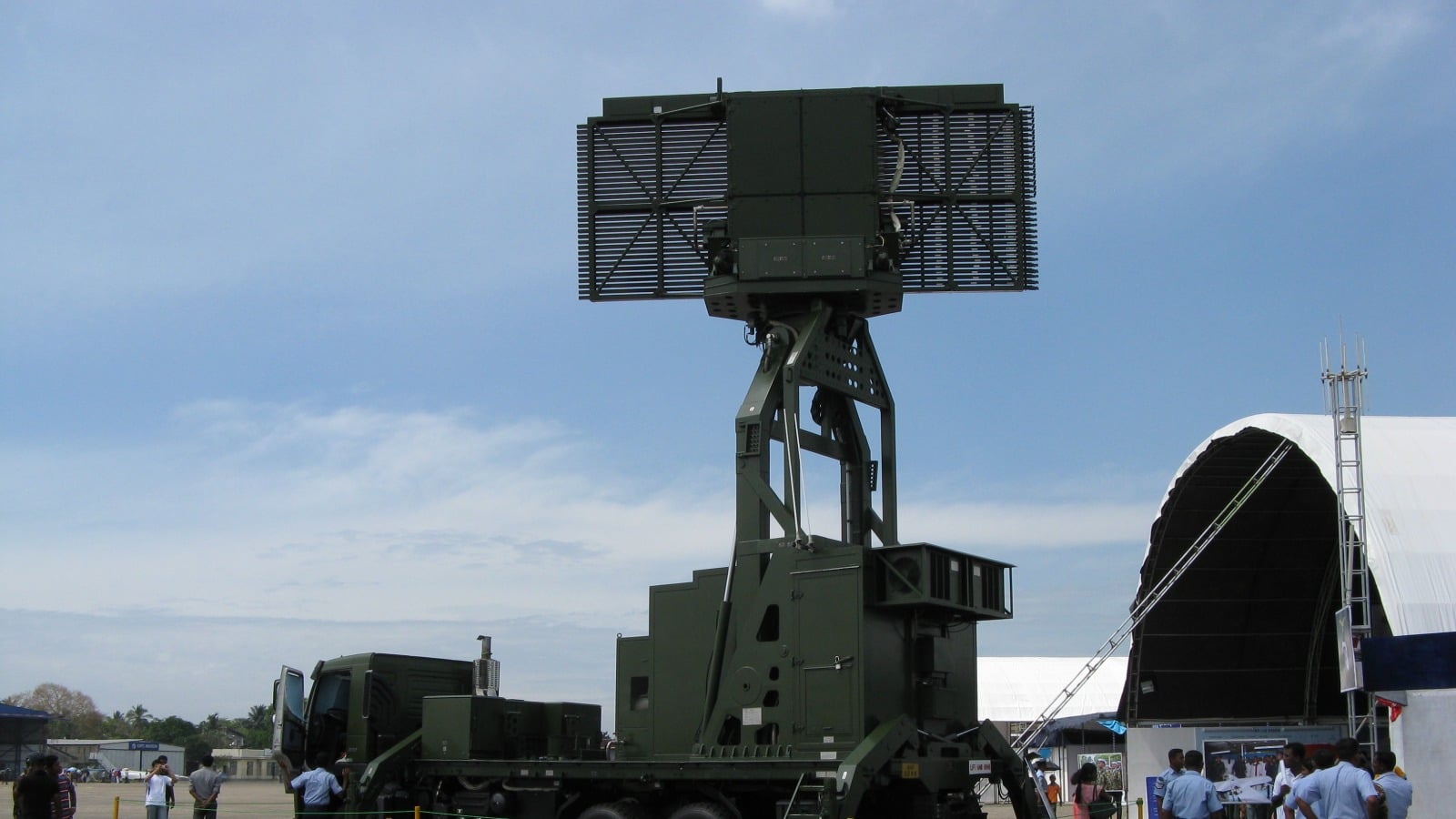
Every two years at Zhuhai, China parks a row of radar trucks on the apron and lets the world photograph them. The placards promise a great deal. Metre-wave arrays that see what microwave radars cannot. Passive sets that never transmit. Over-the-horizon systems reaching past the curve of the earth. Somewhere in the brochure copy, in English, the phrase stealth penetration capability appears.
The reaction is predictable and has been for a decade: stealth is finished, the F-35 is obsolete, the emperor has no clothes. It is a satisfying story and it is the wrong question.
The right question is narrower and much more interesting. Nobody who understands radar disputes that a long-wavelength set can get a return off a stealth aircraft. The dispute is about what happens next: whether that return can be turned into a track good enough to put a missile on. Those are two different engineering problems, and China’s network is strong at the first and, by the public evidence, weak at the second.
Quick Facts
The claim: Chinese metre-wave and passive radars are marketed with “stealth penetration” capability
The physics that works: shaping is less effective against metre and decimetre wavelengths
The physics that does not: the same long wavelengths give poor angular accuracy
Janes assessment, quoted by CASI: metre-wave radars cannot be used effectively to direct air defence weapons
Systems named in the CASI study: JY-26, JY-27A, YLC-8B, YLC-18, SLC-7, plus passive sets JY-50, YLC-29, SLR-66 and DWL002
PLA radar generation: third-generation as the main body, fourth-generation as the backbone
Networking: assessed as integrated at least at brigade level; how far fused data is shared is unclear
Sources: Hundman, China’s Air Defense Radar Industrial Base, BluePath Labs for CASI, March 2025; Bronk, RUSI Occasional Paper, 2020.
The half of the physics that genuinely works
Stealth shaping is a geometry trick, and geometry tricks have a scale. Faceting, planform alignment, swept edges and serrated panel joins all work by bouncing energy away from the receiver rather than back at it, and they work best when the wavelength is small compared with the features doing the bouncing. A modern fighter radar operates in X-band, with a wavelength of roughly three centimetres. Against three-centimetre waves, a centimetre-scale edge treatment is a very large object indeed.
Stretch the wavelength to a metre and the relationship inverts. The aircraft stops being a collection of carefully angled surfaces and starts behaving like a single lump of roughly aircraft-sized metal. Edges that scattered neatly at three centimetres begin to resonate. Shaping does not stop working, but it stops working nearly as well.
Justin Bronk put this plainly in a RUSI Occasional Paper on Russian and Chinese integrated air defences. Stealth shaping, he wrote, is less effective at reducing returns when the aircraft is illuminated by radars in the metre and decimetre wavelengths. That is the entire basis of the counter-stealth radar business, and it is real.
It is also not new, and China did not discover it at Zhuhai. Soviet metre-wave surveillance radars were in service long before stealth was, and the trade-off has been understood by both sides since the F-117 was on the drawing board. The 1999 loss of an F-117 over Serbia is routinely offered as proof that low-frequency radar defeats stealth, but the detail of what actually detected the aircraft is still contested, and the shot itself came from a 1960s-vintage SA-3 battery firing at close range. We told that story separately.
And the half that does not
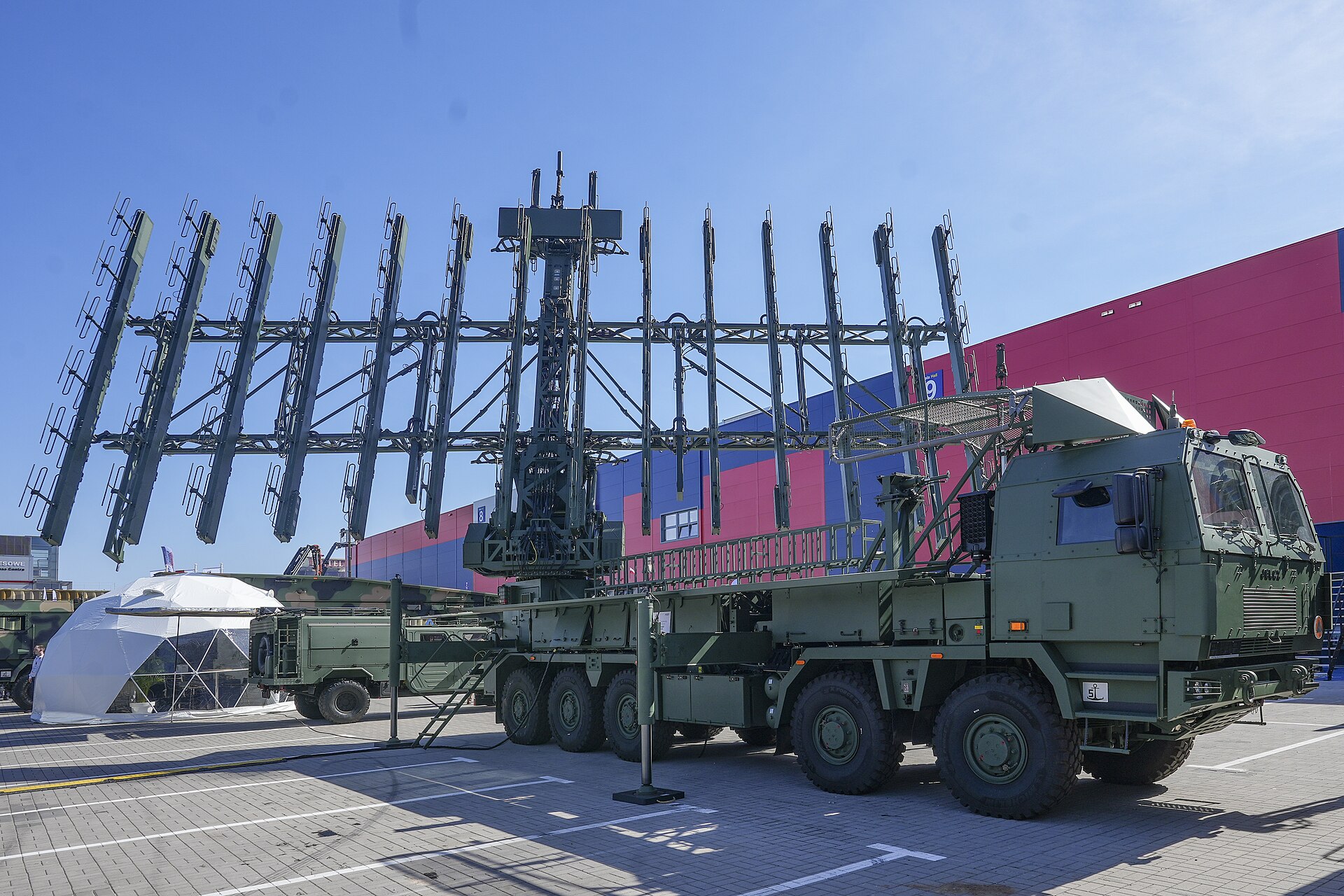
Here is the part the brochures leave out. The angular accuracy of a radar is set, fundamentally, by the size of its antenna measured in wavelengths. A dish ten wavelengths across produces a beam roughly ten times wider than one a hundred wavelengths across. That is why a fighter radar with a one-metre antenna can resolve targets usefully at three centimetres, and why a metre-wave radar needs an antenna the size of a tennis court to achieve anything comparable.
Which is precisely why metre-wave radars are enormous, and why they are still not precise. Stretch the wavelength by a factor of thirty and you need thirty times the aperture to hold the same beamwidth. Nobody builds that and then drives it around on a truck. So the beam stays wide, the angular error stays large, and the radar returns a bearing that is good enough to say something is out there, roughly that way and nowhere near good enough to hand a missile seeker.
The CASI study of China’s radar industrial base quotes Janes on exactly this point: metre-wave radars like these cannot be used effectively to direct air defence weapons. That is not an American talking point. It is the standard engineering assessment of the band, and it applies to Russian, Chinese and Western metre-wave sets alike.
So the defender is left with a sensor that detects what it cannot engage, feeding a shooter that can engage what it cannot detect. Closing that gap is the whole problem, and it is a networking and data-fusion problem rather than a radar problem.
What China actually fields
The best open accounting is China’s Air Defense Radar Industrial Base, written by Eric Hundman of BluePath Labs for the China Aerospace Studies Institute at Air University and published in March 2025. It is a US Air Force-commissioned study, which is worth saying out loud, and it is notably more careful than the trade press it draws on.
The hardware list is long. On the surveillance side, the JY series runs from the JY-9 up through the JY-26 and JY-27A; the YLC series includes the YLC-8B, the YLC-18 and the export YLC-2E; the SLC-7 is described as a fourth-generation platform. Several are explicitly marketed with what the study calls advanced stealth penetration capabilities, and the JY-26 has carried that claim publicly since 2014.
There is also a substantial passive inventory, which matters more than the metre-wave sets get credit for: the JY-50, the YLC-29, the mobile SLR-66 and the DWL002 all work by listening rather than transmitting. We covered how that trick works in a separate piece on passive radar, and China has more of it deployed than anyone else.
The study’s judgement on where the force as a whole sits is a single memorable phrase: third-generation radar as the main body and fourth-generation radar as the backbone. Most of the fleet is solid-state, three-dimensional and networkable. That is a serious air defence, and nothing in this article should be read as saying otherwise.
The networking question, which is the real one
If a metre-wave radar can see a stealth aircraft but not shoot it, and a fire-control radar can shoot what it cannot see, the obvious answer is to connect them. Let the low-frequency set cue the engagement radar into a narrow search volume, and the problem is halved.
This is exactly what China is building towards, and exactly where the public evidence gets thin. The CASI study assesses that the PLA can network air defence radar platforms of multiple types and capabilities at least at brigade level, and that it can likely fuse information from radars across the country into a centralised detection network. Then it adds the caveat that makes the whole thing an open question: it is unclear which systems can be incorporated into that network and how widely the fused data is shared.
That is not a small gap in the record. Cueing only helps if the handover is fast enough, accurate enough and survives jamming, clutter and a shooting war. A network diagram on a trade-show stand is not evidence that any of those hold.
Associated Press coverage of the Zhuhai airshow, where most of the hardware discussed here is first shown to the public, and where most of the numbers attached to it first appear.
Why every number in this field should be read twice
Detection ranges are the currency of the counter-stealth business and almost none of them are verifiable. A figure quoted for an export radar at an airshow is a manufacturer’s claim, made under conditions the manufacturer chose, against a target the manufacturer chose, and it is marketing before it is data.
This is not a Chinese vice. Western and Russian radar brochures do the same thing, and a detection range against a large aircraft at high altitude tells you very little about performance against a F-22 Raptor at low level through terrain clutter. What is unusual is how uncritically the numbers get recycled, and how often a figure that began life on a placard ends up in a headline as though a government had published it.
The CASI study is blunt about this, noting that reports of Chinese radar breakthroughs are often overblown or entirely erroneous. That is a US Air Force-commissioned assessment warning against overstating a rival’s capability, which is the opposite of the direction institutional bias usually runs, and it should carry weight accordingly.
The honest position is that we do not know the real detection ranges of China’s counter-stealth radars, that the people who do know are not publishing, and that the published figures should be treated as advertising with a plausible physical basis rather than as measurement.
What Chinese researchers say about their own problem
The most interesting corrective comes from inside China. In 2023 Xiaoqiang Lu, Jun Huang, Yacong Wu and Lei Song of Beihang University published a paper in the Chinese Journal of Aeronautics on how the fluctuating radar cross-section of a stealth aircraft affects detection probability.
Their framing is the one that matters. A stealth aircraft is not uniformly invisible; it has angles at which its return spikes, and the question is not whether a radar ever sees a peak but how long the aircraft is exposed inside one. Their conclusion is that the key to successful penetration is to shorten the RCS peak exposure time, which can be reduced by decreasing the peak width or increasing velocity, and they go on to propose turning manoeuvres as a way of cutting that exposure dramatically.
Read that from the defender’s chair and it is an admission. If penetration is a question of how briefly you sit in a peak, then detections against a competently flown stealth aircraft are intermittent by nature: a flicker here, a flicker there, separated by nothing. Intermittent detections are precisely what a tracking filter cannot turn into a stable track, and a stable track is what a missile needs.
Chinese engineers are not writing papers about how their radars have solved stealth. They are writing papers about exposure time, which is the vocabulary of a problem that is still open.
The two episodes people point at, and what they are worth
Two recent events get offered as live tests of Chinese counter-stealth hardware. Both are worth describing and neither is worth leaning on.
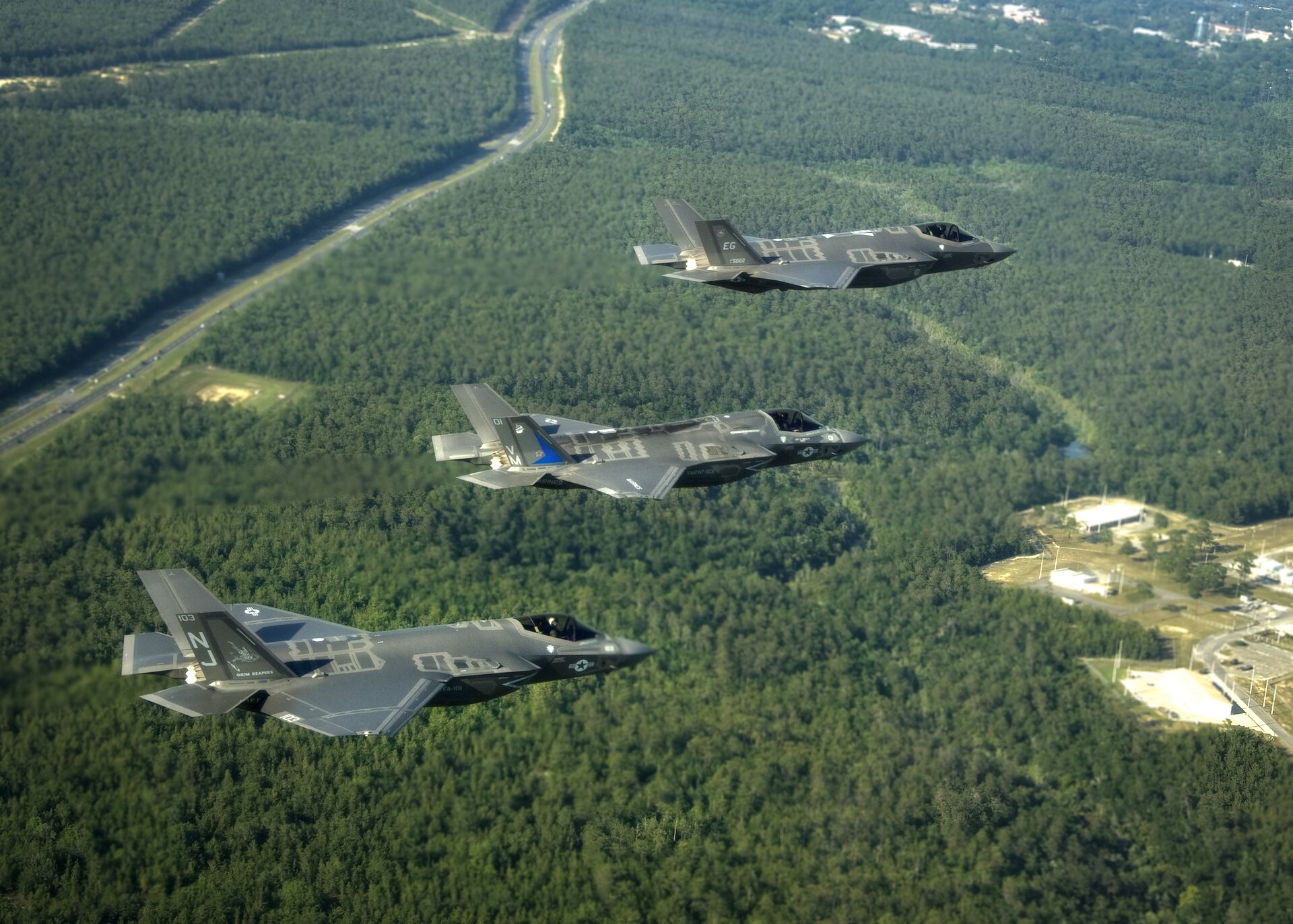
The first is Operation Epic Fury. Writing in Asia Times in July 2026, Gabriel Honrada summarised a Wall Street Journal commentary by Van Taylor arguing that Chinese-supplied radars in Iranian service did not detect low-observable American and Israeli aircraft during the opening hours of the operation, and that the network was bypassed rather than beaten. No detection ranges, probabilities or sensor logs accompany that claim, and it reaches us at two removes.
The second is Venezuela, where a JY-27A is reported to be in service. The same Asia Times piece cites a Newsweek report and an assessment attributed to the Miami Strategic Intelligence Institute that more than 60 per cent of Venezuela’s radar fleet was out of commission, with spare-parts shortages and thin Chinese technical support blamed. If that figure is right it says something about sustainment rather than about physics, and the figure itself is a single unverified assessment.
Both stories point the same way, which is suspicious in itself, and both are exactly the kind of evidence this article has just finished arguing against accepting at face value. They belong in the file marked suggestive, unconfirmed, and nowhere else.
The Ops Center works through radar cross-section and stealth shaping as part of a longer electronic warfare series, which is the background this argument sits on.
What it actually adds up to
Stealth was never a cloak and the people who built it never said it was. Its purpose is to shrink detection ranges far enough that an aircraft can get inside a defended area, do something, and leave before the defender assembles a solution. Bronk’s assessment of Russian systems, which rest on the same physics as China’s, is that the combination of modern low-frequency and multi-static radars has probably bought a limited ability to detect and track stealth aircraft at close ranges and from certain angles, but that it is highly unlikely this translates into an ability to complete the kill chain.
That is the shape of it. China has built the densest publicly advertised counter-stealth sensor network in the world. It very likely does compress the margins: fewer usable routes, tighter timing, more of the mission flown inside somebody’s detection envelope. That is a real operational cost and it is the reason the network exists.
What there is no public evidence for is the step that would actually matter, which is reliably converting those detections into weapons-quality tracks against a manoeuvring low-observable aircraft under electronic attack. Until that is demonstrated rather than advertised, “China can see the F-35” and “China can shoot the F-35” remain two different sentences, and only the first one has evidence behind it.
CNA on what China chooses to put on display at Zhuhai, and why the shop window is itself a form of signalling.
Sources: Eric Hundman, China’s Air Defense Radar Industrial Base, BluePath Labs for the China Aerospace Studies Institute, Air University, March 2025; Justin Bronk, Modern Russian and Chinese Integrated Air Defence Systems: The Nature of the Threat, Growth Trajectory and Western Options, RUSI Occasional Paper, 2020; Xiaoqiang Lu, Jun Huang, Yacong Wu and Lei Song, Influence of stealth aircraft dynamic RCS peak on radar detection probability, Chinese Journal of Aeronautics 36(3), 2023, pages 137 to 145; Gabriel Honrada, China’s anti-stealth shield has a radar reality gap, Asia Times, 18 July 2026.


0 Comments