
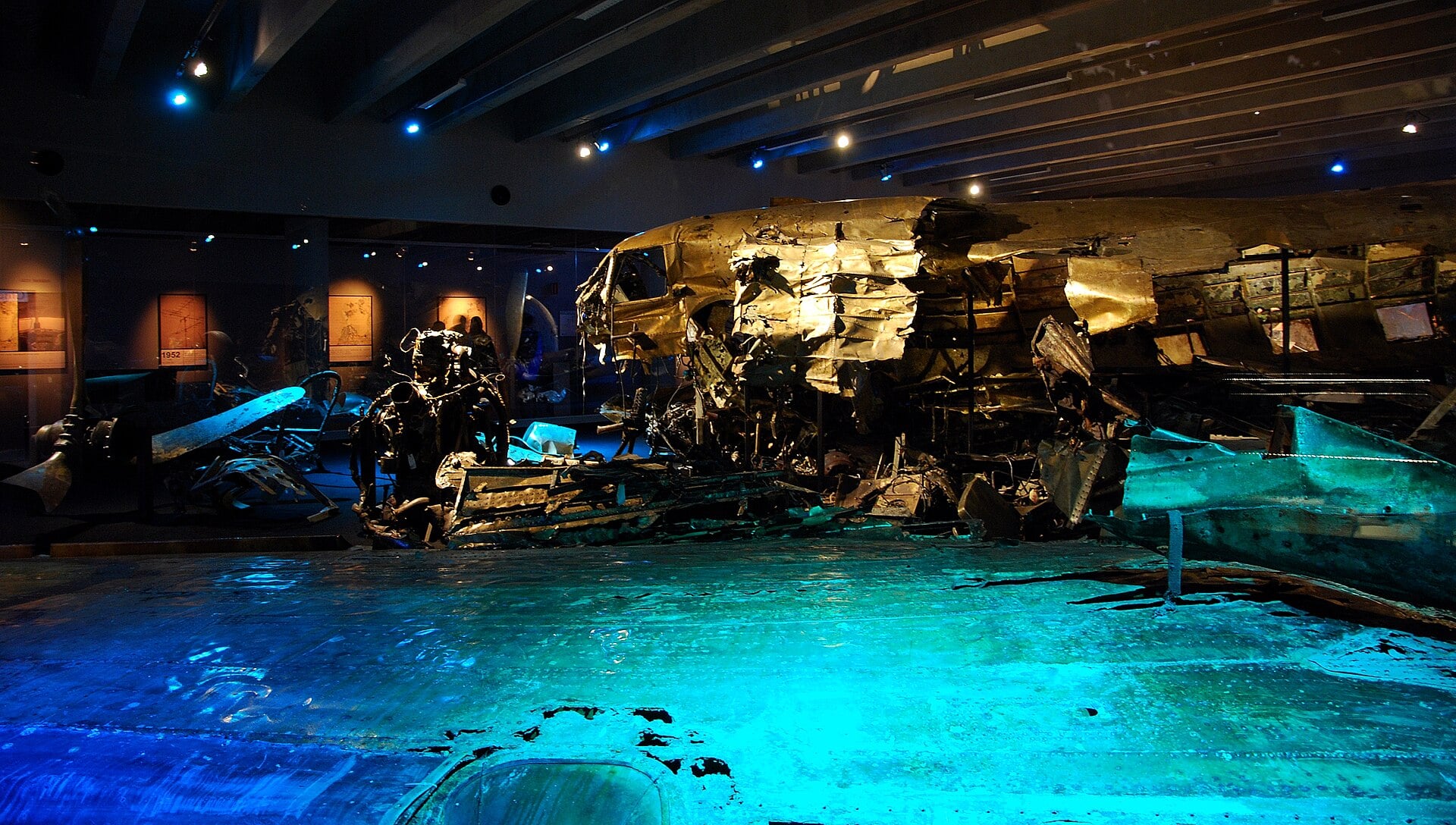
The Catalina affair is named after the wrong aeroplane.
The Catalina survived. Its seven-man crew were fished out of the Baltic by a West German freighter and went home. The aircraft that mattered was a Douglas DC-3 called Hugin, and it went into the sea east of Gotska Sandön on 13 June 1952 with eight men aboard, none of whom came back. Sweden then spent nearly forty years telling their families it had been a navigation training flight.
It was not. And the men who ordered it shot down said nothing until the country that employed them ceased to exist.
Kurzinfo
First aircraft: Swedish Air Force Tp 79, serial 79001, named Hugin — a Douglas DC-3A-360 Skytrain
Abgeschossen: 13 June 1952, east of Gotska Sandön, over international waters in the Baltic
Crew: Eight, all killed: three Swedish Air Force personnel and five civilian signals intelligence operators from the FRA
Zweites Flugzeug: Tp 47, serial 47002 — a Consolidated PBY-5 Catalina flying boat, shot down 16 June 1952 while searching for the DC-3
Catalina crew: Seven, all rescued after ditching near the West German freighter Münsterland
Soviet position: Public denial until the dissolution of the USSR in 1991
Swedish position: Nearly 40 years of calling it a navigation training flight
Wreck found: 10 June 2003, by sonar at 126 m (413 ft)
Wreck raised: 19 March 2004, after 52 years
What Hugin was actually doing
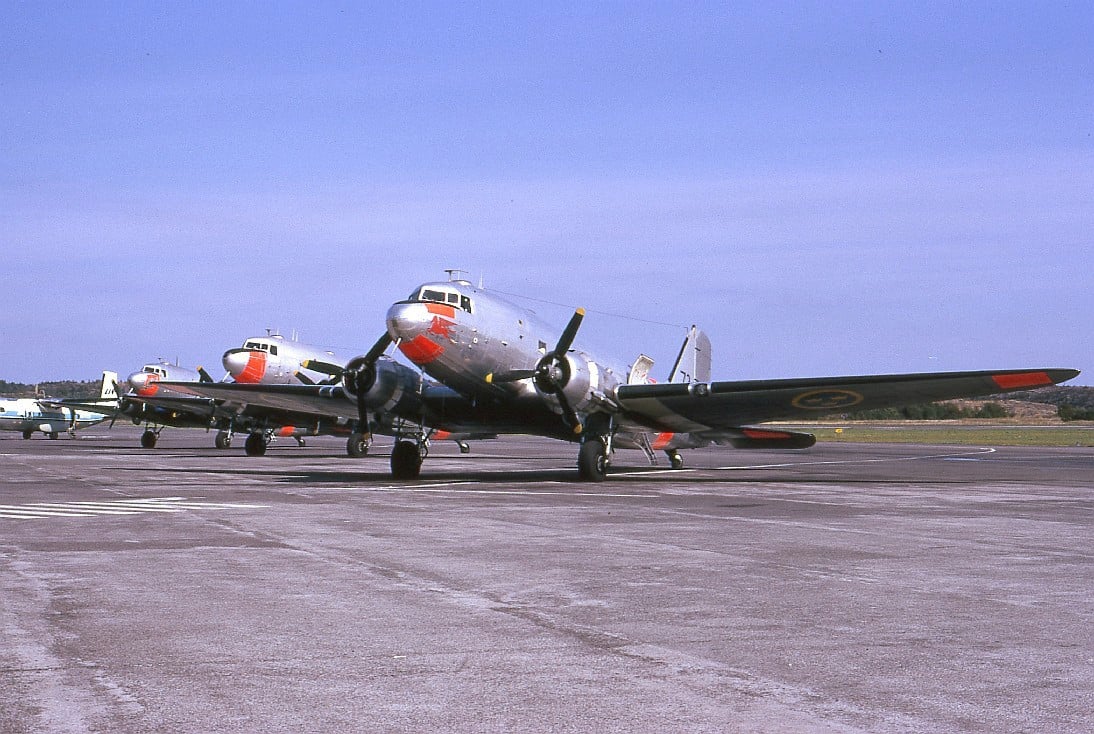
Hugin was a signals intelligence aircraft. She was flying for the Försvarets radioanstalt — the FRA, Sweden’s National Defence Radio Establishment — collecting radio and radar emissions from the Soviet side of the Baltic. Five of the eight men aboard were civilian FRA operators. Only three were Air Force.
The aircraft itself had a history. Built in 1943 as US serial 42-5694, she went to the USAAF’s 15th Troop Carrier Squadron, saw action in North Africa, and finished the war at RAF Barkston Heath. In February 1946 she was flown from Orly via Hanau to Bromma, and in May of that year she was registered in Sweden as SE-APZ. Six years later she was listening to Soviet radar.
The cover story, and why it held
Sweden was neutral. A neutral country does not fly NATO-equipped surveillance aircraft along the Soviet coastline, and it certainly does not admit to it while the Cold War is on. So the official line was a navigation training flight, and it held for nearly four decades — not because it was convincing, but because everyone with the standing to challenge it had a reason not to. It only broke when the families of the dead crew pushed hard enough. Swedish authorities then confirmed the DC-3 had carried British equipment and had been conducting surveillance for NATO.
A detailed account of the incident, the search, and the decades of official silence.
Then they shot down the search aircraft
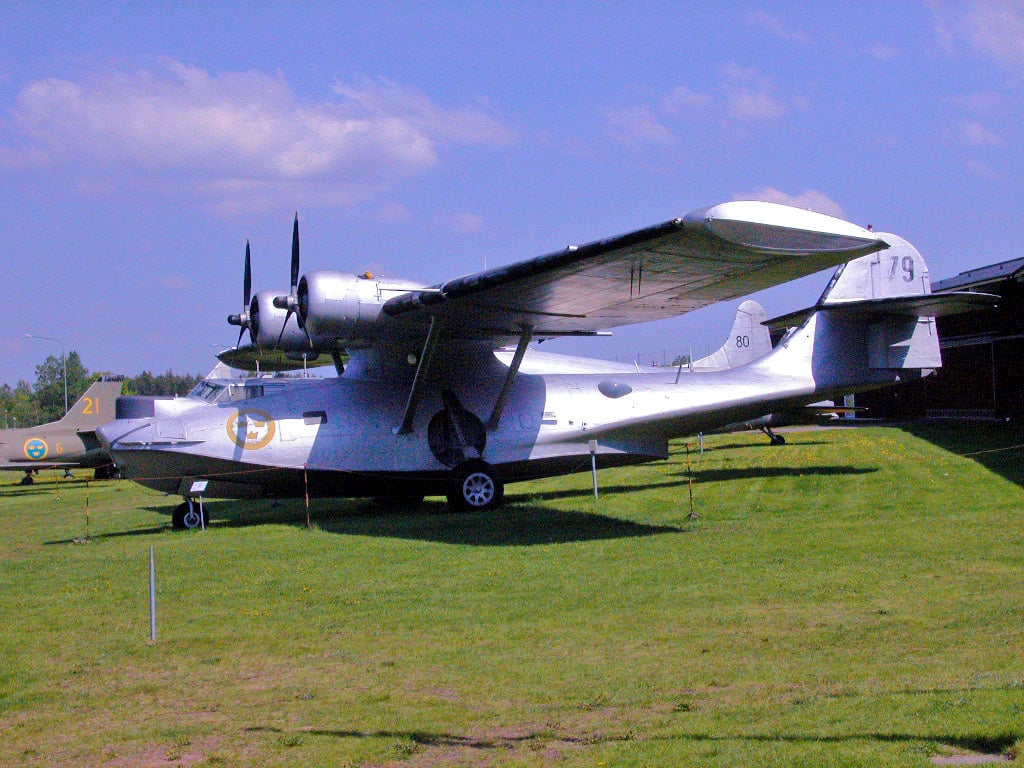
Three days after Hugin vanished, on 16 June 1952, two Swedish Tp 47 Catalina flying boats were searching north of Estonia. Soviet aircraft shot one of them — 47002 — down.
This is the part that turned an intelligence loss into an international incident. Whatever one thinks about a spy flight, an unarmed flying boat looking for missing men is a search and rescue aircraft, and shooting at one is a different order of act. The crew of seven ditched and were picked up near the West German freighter Münsterland. They lived, they talked, and because they were the survivors, the newspapers named the affair after their aircraft.
Hugin, meanwhile, was simply gone. No wreck, no bodies, no proof.
The affair as a Swedish Cold War secret — and what it cost the families involved.
1991: a Soviet general answers the question
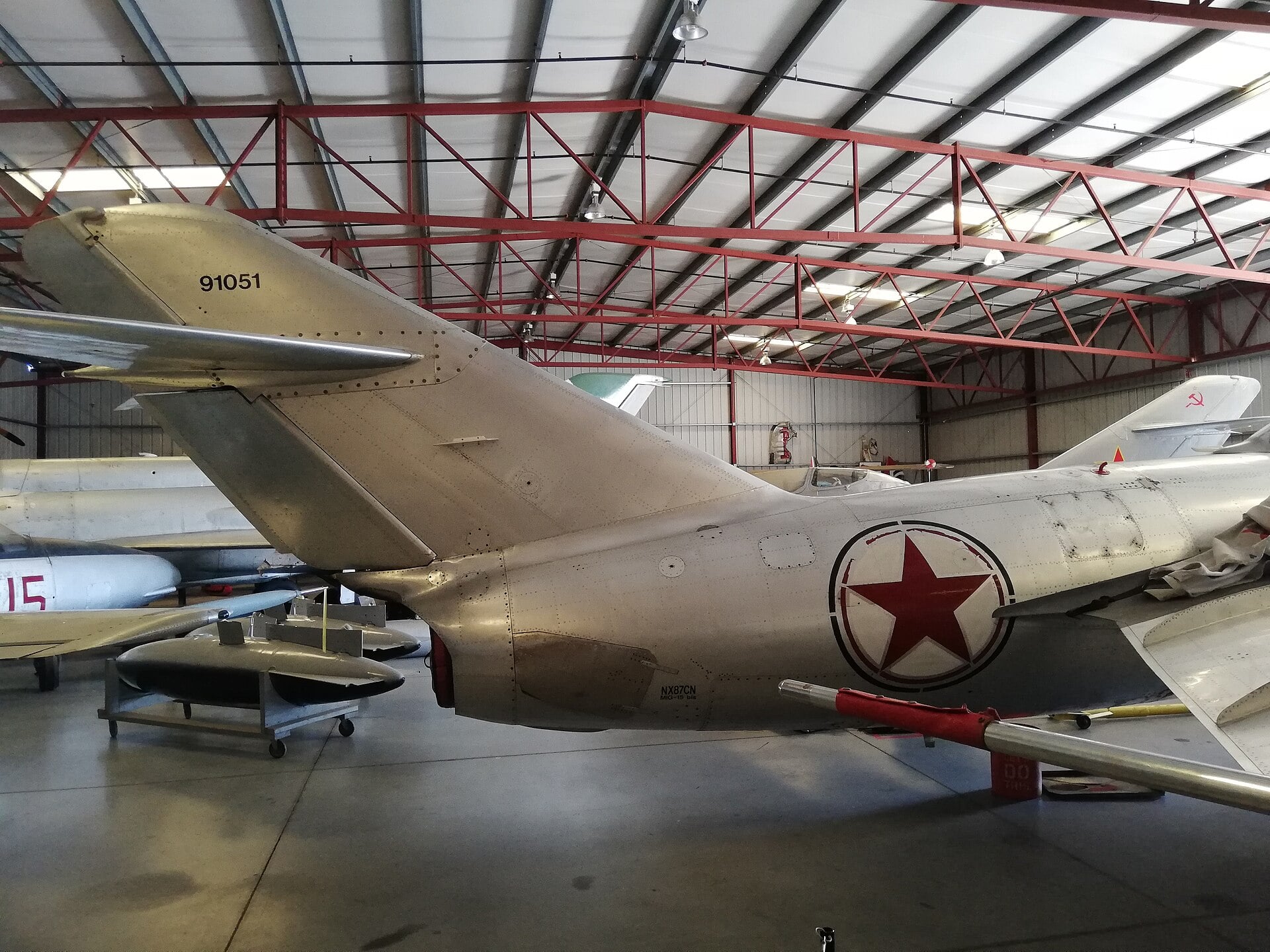
The Soviet Union denied involvement in the DC-3 shootdown right up to its dissolution. Then, in 1991, General Fyodor Shinkarenko — a colonel in the Soviet Air Forces in the early 1950s — admitted that he had ordered Hugin shot down, and that he had scrambled a MiG-15bis to do it.
Nearly forty years of nothing, and then a name, a rank and an aircraft type. It is worth sitting with how ordinary that is. Somebody made a decision on a June morning in 1952, eight men died, two governments lied about it for four decades, and the resolution came only when the political reason for the lie evaporated.
Finding her
On 10 June 2003, fifty-one years almost to the day, Anders Jallai — an airline captain and former Swedish Air Force pilot — and the historian Carl Douglas, working with the Swedish survey company Marin Mätteknik AB, found Hugin on sonar at 126 metres, 413 feet, down.
Raising her took until 19 March 2004. The method was extraordinary: rather than risk the wreck coming apart, the team used freeze dredging, freezing roughly 200 cubic metres of the surrounding seabed sediment and lifting it as one solid mass with the aircraft inside it. Everything on and in the seabed came up together.
What the wreck told them
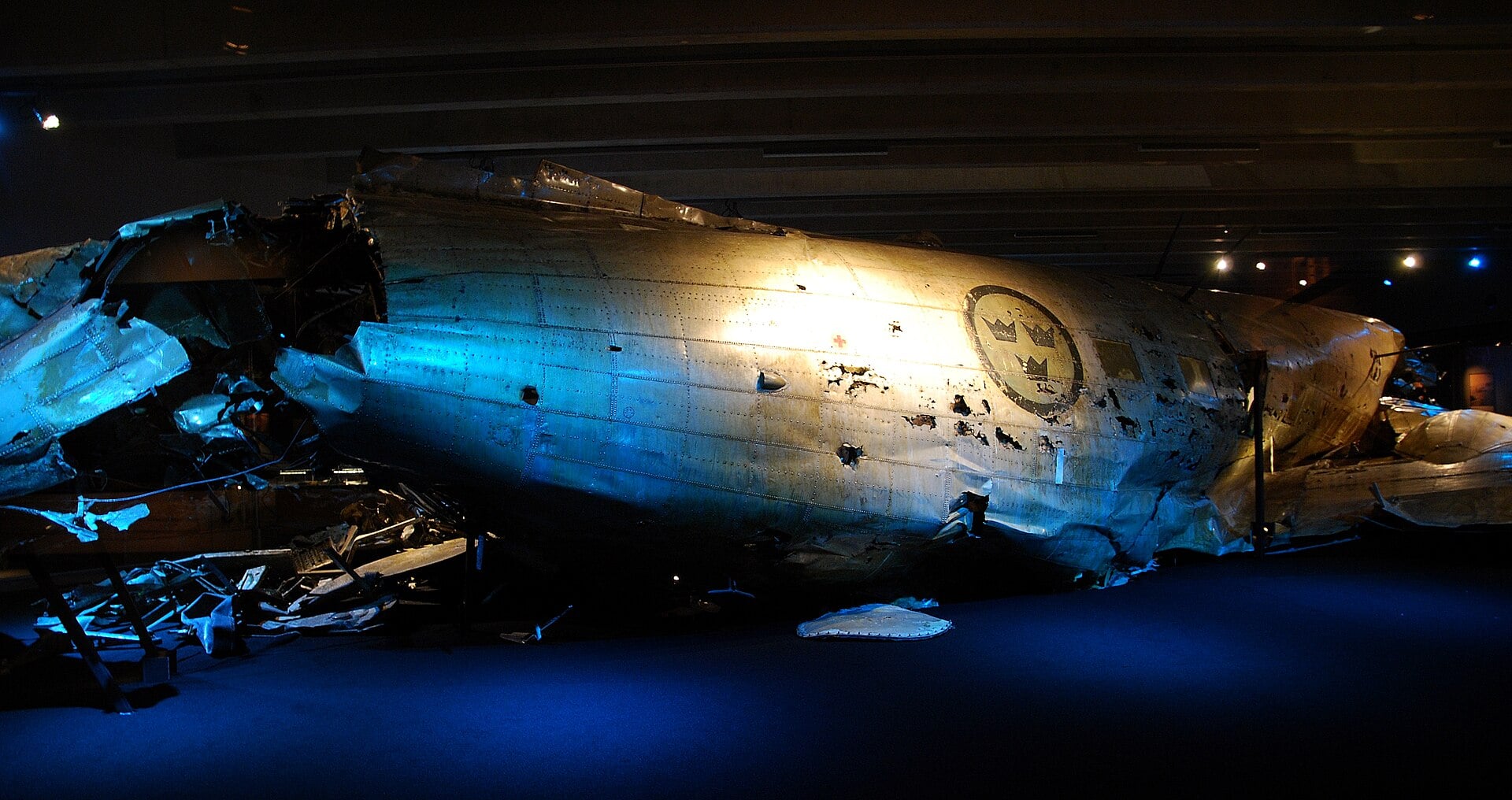
Bullet holes on 79001 confirmed the aircraft had been shot down by a MiG-15bis. One of the cockpit clocks had stopped at 11:28:40 Central European Time, fixing the moment she hit the water. And DNA analysis, 52 years post mortem, positively identified the remains of four of the eight crew. After half a century of an official story, the aeroplane itself gave the plainest evidence in the case.
A full lecture on the Catalina affair, for anyone who wants the detail.
The wreck went first to Muskö Naval Base for investigation and preservation, and then, on 13 May 2009, on display at the Swedish Air Force Museum in Linköping. You can go and look at it. It is not a restored aeroplane and it does not pretend to be: it is a broken, corroded, half-complete airframe, exhibited as evidence rather than as an exhibit.
Which is the right way round. For fifty-seven years the Swedish state’s position on those eight men was a sentence in a file. Now it is an object in a room, with the holes still in it.
Häufig gestellte Fragen
What was the Catalina affair?
A Cold War incident in June 1952 in which Soviet fighters shot down two Swedish Air Force aircraft over international waters in the Baltic Sea. On 13 June a Tp 79 — a Douglas DC-3 named Hugin, conducting signals intelligence for Sweden’s National Defence Radio Establishment — was shot down with the loss of all eight crew. On 16 June a Tp 47 Catalina flying boat searching for it was also shot down; its crew of seven survived.
Why is it called the Catalina affair if the DC-3 was the main loss?
Because the Catalina’s crew survived and could talk about it. The DC-3 simply disappeared, leaving no wreck, no bodies and no witnesses, while seven men from the Catalina ditched near the West German freighter Münsterland and were rescued. The public story was therefore built around the aircraft whose crew came home.
What was the Swedish DC-3 actually doing?
Signals intelligence. Hugin was collecting radio and radar emissions for the Försvarets radioanstalt (FRA), Sweden’s National Defence Radio Establishment. Five of the eight men aboard were civilian FRA operators and three were Swedish Air Force personnel. Swedish authorities later confirmed the aircraft carried British equipment and had been conducting surveillance for NATO.
How long did Sweden deny the truth about the flight?
Nearly 40 years. The official position was that the DC-3 had been on a navigation training flight. That only changed after sustained pressure from the families of the dead crew.
Who ordered the Swedish DC-3 to be shot down?
In 1991, General Fyodor Shinkarenko, who had been a colonel in the Soviet Air Forces in the early 1950s, admitted that he had ordered the shootdown and had scrambled a MiG-15bis to intercept the aircraft. The Soviet Union publicly denied any involvement until its dissolution that same year.
Was the DC-3 ever found?
Yes. On 10 June 2003 the former Swedish Air Force pilot and airline captain Anders Jallai and the historian Carl Douglas, working with Marin Mätteknik AB, located the wreck by sonar at a depth of 126 metres (413 feet). It was raised on 19 March 2004, 52 years after the shootdown, using freeze dredging — freezing about 200 cubic metres of surrounding sediment and lifting it with the aircraft inside.
Where is the wreck now?
On display at the Swedish Air Force Museum in Linköping, where it has been since 13 May 2009. It went first to Muskö Naval Base for investigation and preservation.
Were the crew ever identified?
The remains of four of the eight crew members have been found and positively identified, through DNA analysis carried out 52 years after their deaths. Examination of the wreck also showed bullet holes consistent with a MiG-15bis, and a cockpit clock stopped at 11:28:40 Central European Time.
Sources: Swedish Air Force Museum; Christer Magnusson, technical accident report on Tp 79 no. 001 (Försvarsmakten, 2007); Holmlund et al., Scandinavian Journal of Forensic Science (2008); Grisell et al., KTH; National Geographic News (2003); Dagens Nyheter; BBC. No verbatim quotations are reproduced here, as none could be traced to a primary source.
0 Comments