
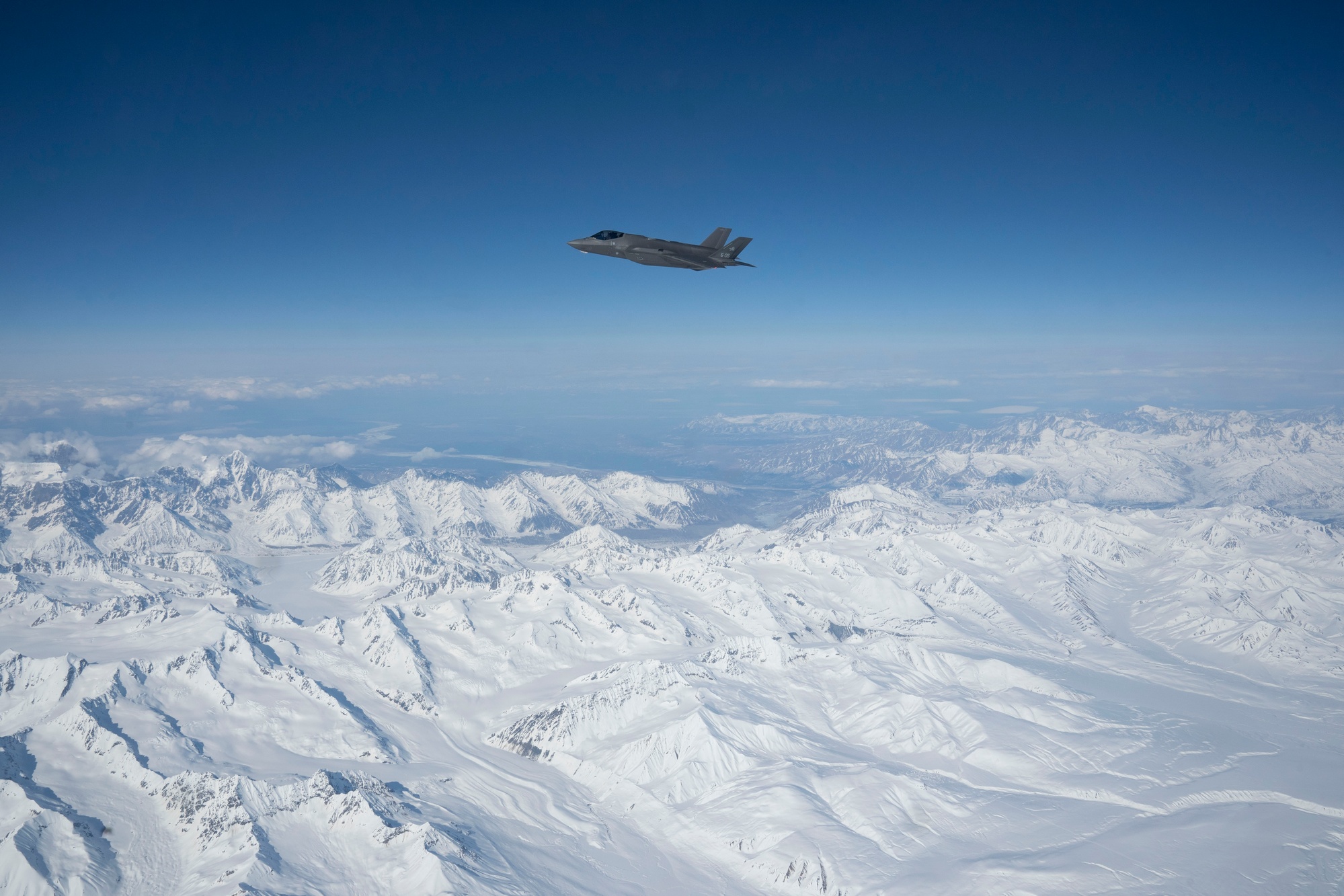
The people of the Haslital have been asking a reasonable question since 2022: what will an F-35 actually sound like when it takes off from the valley they live in?
The Swiss Air Force and armasuisse agreed to answer it the sensible way, by flying an F/A-18 and an F-35 out of Meiringen one after the other and letting residents stand there and listen. Switzerland has no F-35 of its own yet, so the Italian Air Force agreed to lend one. The date was set for 21 April this year. Five days beforehand, armasuisse cancelled without giving a specific reason, saying only that the comparison would happen at a later date.
Five months on there is still no date, and the Tagesanzeiger has now reported why. The Italian Air Force is refusing to land an F-35 at Meiringen at all.
Kurzinfo
The story: Reported by the Tagesanzeiger, 14 September 2026, by Bundeshaus correspondent Quentin Schlapbach
The obstacle: Meiringen has no certified arrestor net installation for the F-35
Italy’s counter-offer: A go-around, approaching to land and climbing away just before touchdown
Why Switzerland declined: The Swiss Air Force plans afterburner takeoffs from Meiringen, so the noise would not be comparable
Original date: 21 April 2026, cancelled five days beforehand
armasuisse position: “Operational reasons”. It will not comment on Italian safety concerns
Likely resolution: Meiringen plans to certify an arrestor net next year, roughly a year late
F-35 at Meiringen: From 2030, after Payerne in mid-2028
A net, not a cable
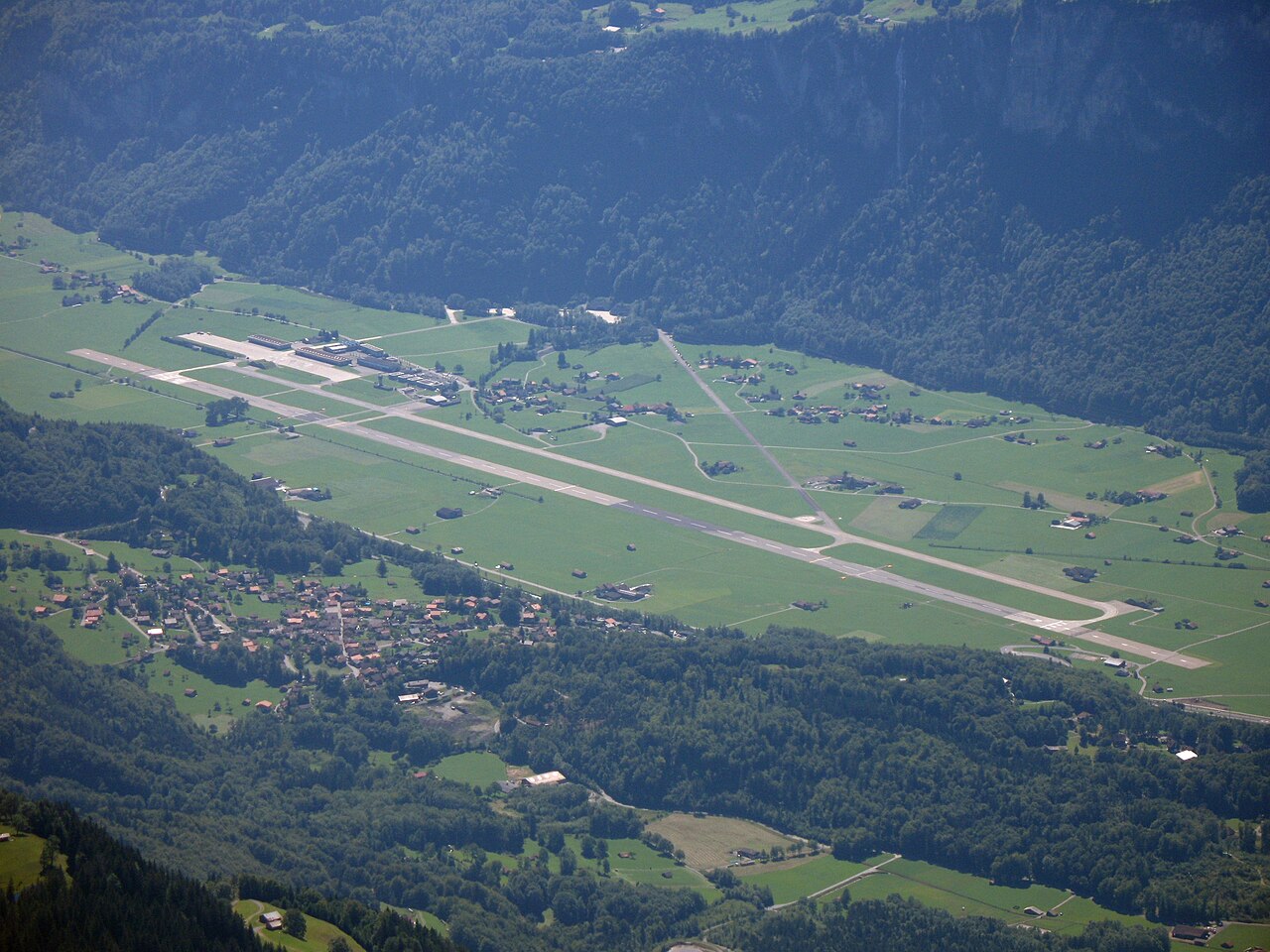
The sticking point is a specific and rather technical piece of airfield equipment. Meiringen already has arrestor gear: retractable cables at both runway ends, installed for the F/A-18 and the F-5. What it does not have is a certified barrier net rated for the F-35.
That distinction matters more at Meiringen than almost anywhere else in Europe, because the runway is 2,003 metres long and hemmed in by the Alps. There is no overrun to spare. If a fighter fails to stop, something has to catch it, and the Italians are not prepared to commit an F-35 to a runway where that something has not been certified for the type.
Italy offered a workaround: fly the approach and go around, lifting off again just before the wheels touch. Acoustically a go-around is roughly as loud as a takeoff, so on the face of it that solves the problem.
Meiringen said no, and the reasoning is actually the most interesting detail in the story. The Swiss Air Force intends to operate the F-35 out of Meiringen using the afterburner on departure, because the extra thrust cuts the takeoff run to a minimum, which is precisely what you want on two kilometres of valley floor. But the afterburner is also markedly louder. A go-around without reheat would have given the Haslital a demonstration quieter than the thing they will actually live with. The measurements would not have been comparable, and arguably the exercise would have been worse than useless.
What the noise numbers actually say
The reason residents want to hear it rather than read it is that the official figures are modelled, and modelled figures and lived experience are not the same thing.
Empa, the Swiss federal materials science and technology laboratory, measured the candidate aircraft during the 2019 evaluation trials at Payerne. Its finding was that the F-35A is around 3 dB(A) louder than the F/A-18 on takeoff, between zero and one decibel louder on landing, and roughly 5 dB(A) louder during the ground roll. Empa refined the model in 2023 and reached the same conclusion, with annual exposure at Meiringen actually coming out slightly lower than today because the F-35 flies fewer, longer sorties and leans more heavily on simulators.
The VBS puts the yardstick plainly on its own Meiringen page: 3 dB is barely perceptible as louder, while 10 dB is subjectively about twice as loud. So the official position is that individual takeoffs will be noticeably louder, but that the yearly total stays roughly where it is.
Opponents do not dispute the arithmetic so much as the framing. An annual average smooths out exactly the thing people object to, which is the individual event that rattles the windows on a Tuesday afternoon. Meiringen is projected to see around 2,040 F-35 movements a year, and roughly 70 local properties are in line for soundproof windows. Both of those numbers suggest the authorities know the single events matter.
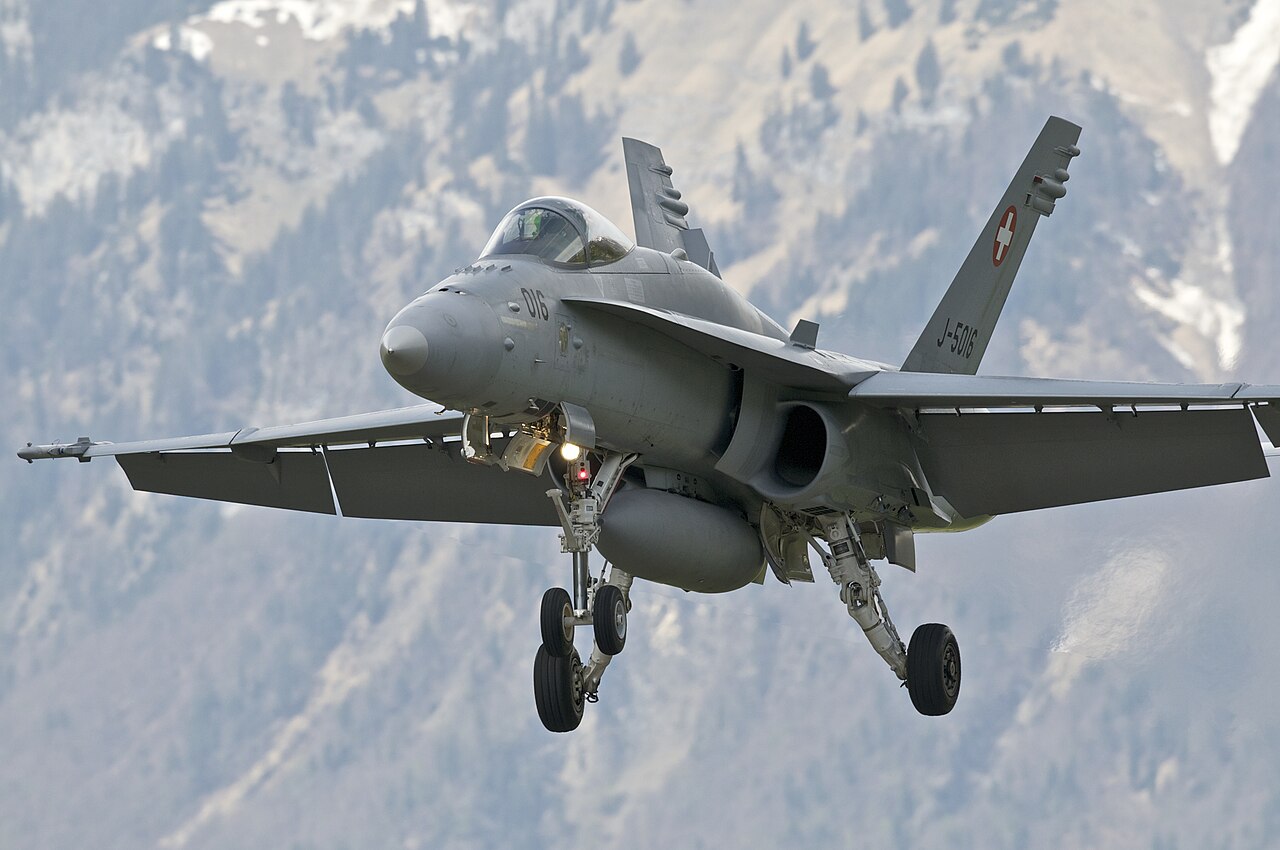
Meiringen in operation, including the taxiways running into the cavern hangars cut into the valley wall. It is the only Swiss base where the cavern is still part of daily flying.
One more thing that has not gone to plan
The delay lands on a programme that has had a difficult two years. Swiss voters approved a six billion franc ceiling for a new fighter in September 2020, and parliament signed off the commitment credit and the contract for 36 F-35As in September 2022. Since then the fixed-price understanding has come apart in public: the Americans maintain no binding lump sum was ever agreed, the parliamentary oversight committee reported in early September that this is correct, and the Federal Council decided in March to buy 30 aircraft rather than 36 to stay inside the six billion frame. SVP and FDP are pushing to restore all 36 through a supplementary credit, so that number is still moving.
Against that backdrop, a cancelled noise demonstration is small. But it is the piece of the programme that ordinary people in the Haslital were actually promised, and it is the one that would have cost almost nothing to deliver. Instead they are being asked to accept a modelled three decibels on trust until an arrestor net is certified, which is currently expected next year.
There is a certain irony in it. The aircraft cannot demonstrate how loud it is because the airfield cannot guarantee it could stop it.
Sources: Tagesanzeiger, “F-35 in Meiringen: Lärmvergleich verzögert sich um ein Jahr”, Quentin Schlapbach, 14 September 2026; armasuisse; VBS/DDPS; Empa.
0 Comments