
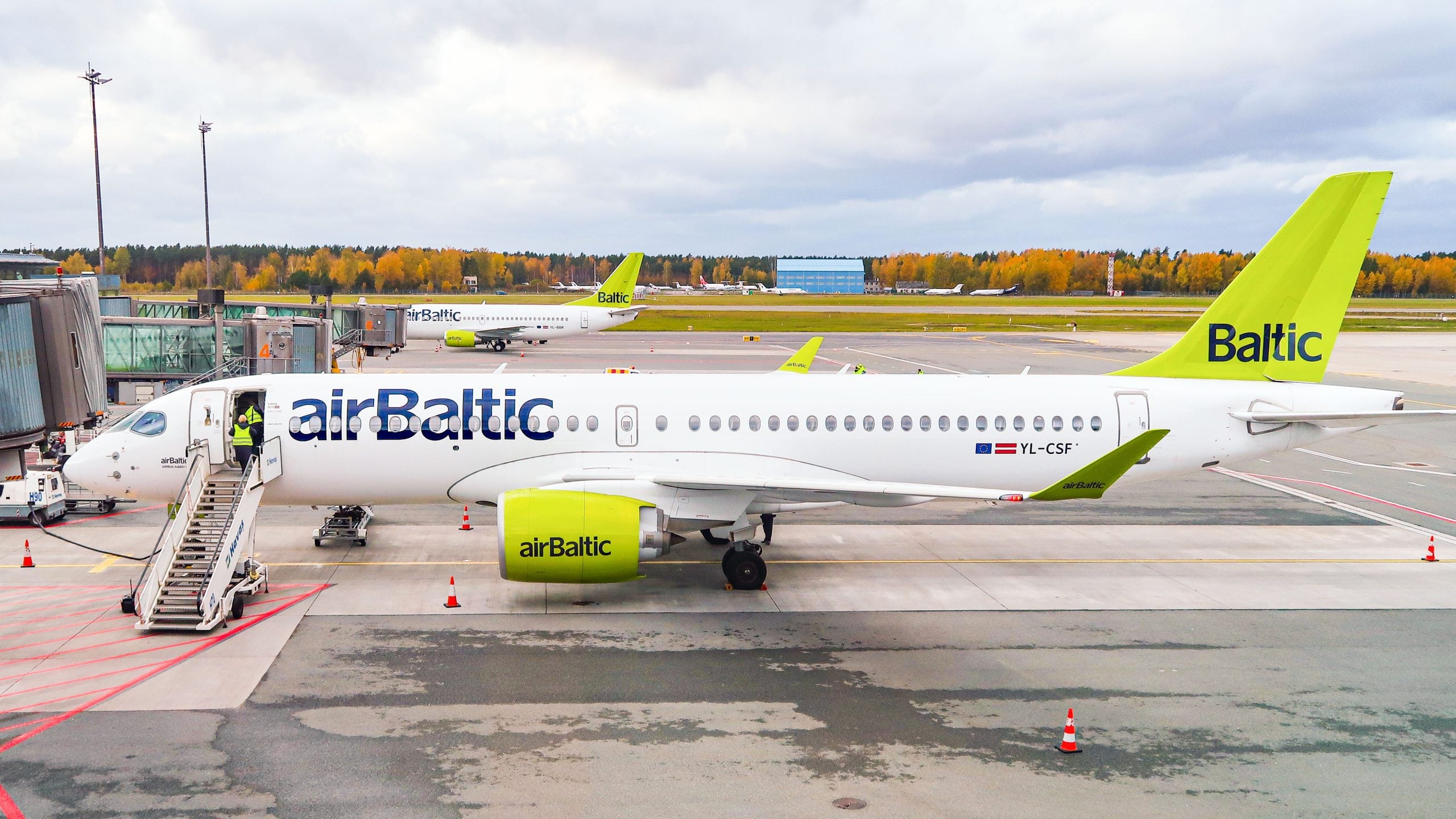
airBaltic does not fly to the United States. It never has. Its aircraft are Canadian-built, its shareholders are Latvian and German, its passengers are overwhelmingly European, and its longest route tops out somewhere around the Gulf. On Monday it walked into a courthouse in Manhattan anyway.
The Latvian flag carrier filed voluntary Chapter 11 petitions in the U.S. Bankruptcy Court for the Southern District of New York on 14 September, case number 26-12188, assigned to Judge Lisa G. Beckerman. It arrived with €350 million of fresh money already lined up and a promise that not a single flight would be cancelled. Both of those things are true. So is the fact that this is the most serious moment in the airline’s thirty-one-year history.
Kurzinfo
Fluggesellschaft: airBaltic (Air Baltic Corporation AS), Latvian flag carrier, founded 1995
Eingereicht: 14 September 2026, U.S. Bankruptcy Court, Southern District of New York, case 26-12188
New financing: €350 million debtor-in-possession facility at SOFR plus 8 percent, roughly 12 percent
Debt: About $583 million of funded debt and finance leases, plus €106 million of payroll and airline taxes and fees
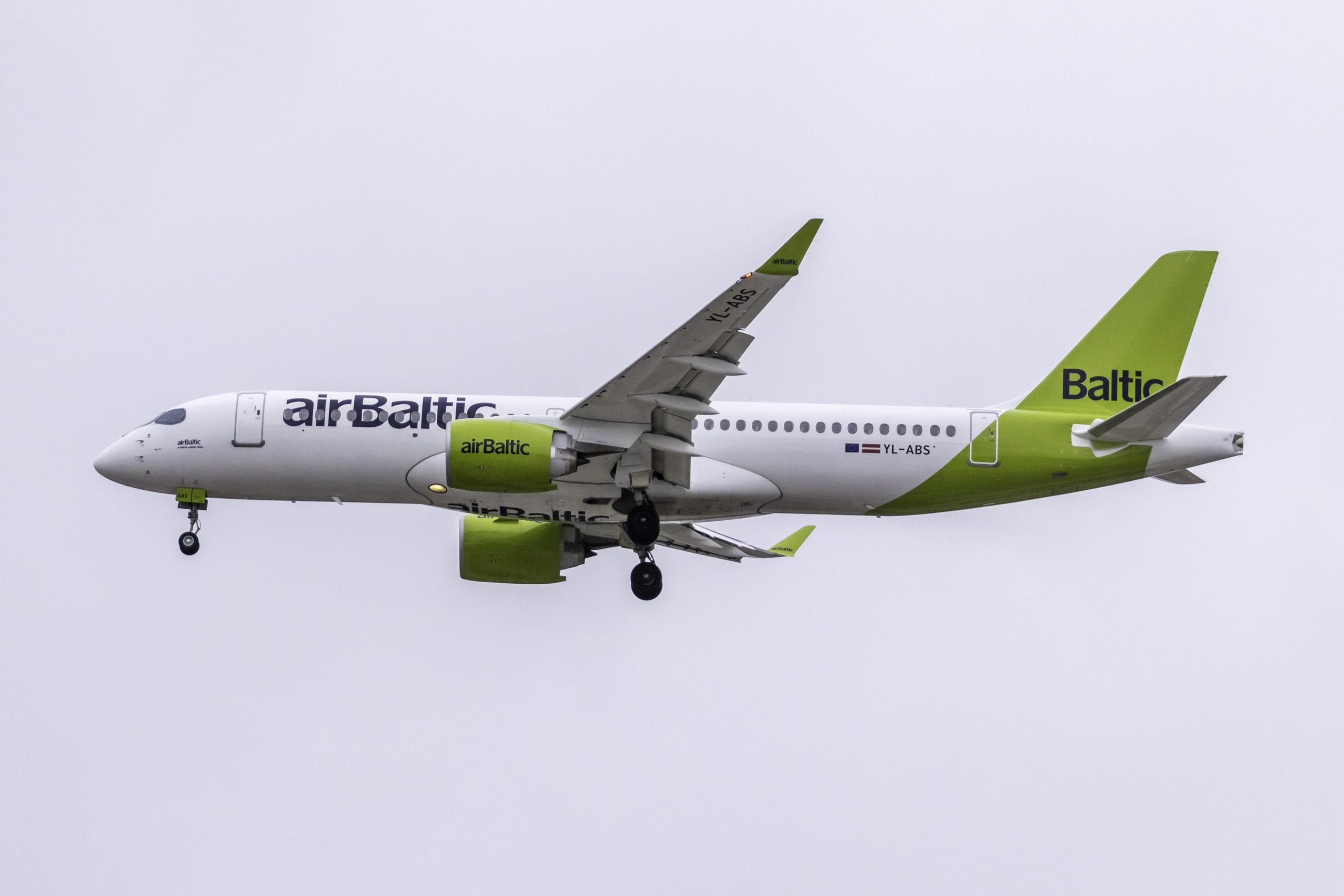
Flotte: 54 Airbus A220-300 in service, only 15 of them owned outright
Ownership: Latvian state 88.37 percent of voting rights, Lufthansa 10 percent, private holders 1.63 percent
Expected exit: Around June 2027
Flüge: Operating as scheduled. Tickets, bookings and vouchers remain valid
Why New York
The board looked at four other routes out and rejected all of them: a UK restructuring plan under Part 26A of the Companies Act, an EU state aid package, Latvian legal-protection proceedings, and simply raising private money. Chapter 11 won for an unglamorous reason. The €350 million was only available in connection with a Chapter 11 filing, and nothing else on the table came close.
There is a respectable logic underneath it. airBaltic’s creditors, its bondholders and above all its aircraft lessors are scattered across a dozen jurisdictions. Chapter 11 pulls all of them into one courtroom under one judge. The airline’s own phrasing is that its obligations are international in nature and need a single court-supervised process.
Hildén knows the ground. He was chief financial officer of SAS and helped steer the Scandinavian carrier through its own Chapter 11 between 2022 and 2024. He has said openly that airBaltic is targeting the same process. It worked for SAS. That is not a guarantee, but it is not nothing either.
The deal that did not happen
To understand Monday you have to understand last week. Before the filing, bondholders were being asked to approve up to €257 million of new super-senior debt, due February 2027, at 25 percent annual interest — money backed by Polus Capital Management in London and Klirmark Capital in Israel. Twenty-five percent is the kind of rate you pay when the alternative is the lights going out.
They said no. According to Reuters, holders of more than 70 percent of the debt by value preferred liquidation. Latvian prime minister Andris Kulbergs said the loan would have bought time without fixing anything.
The debtor-in-possession facility that replaced it is cheaper by more than half: SOFR plus 8 percent, which the company puts at roughly 12 percent. Strategic Value Partners arranged it; Barclays, Hayfin Capital Management, Morgan Stanley and Oaktree Capital Management are in alongside. It still needs the court’s blessing.
How a profitable-looking airline ran out of cash
airBaltic carried 5.2 million passengers in 2025 on €779.3 million of revenue and lost €44.3 million. August 2026 traffic was up 5 percent year on year with an 83.9 percent load factor. The aeroplanes are full. The problem was never demand.
It was, first, fuel. The war between the United States and Iran roughly doubled jet fuel prices and triggered what the industry now calls its worst crisis since the pandemic. airBaltic had not hedged. A €30 million emergency loan from the Latvian state in April 2026 was gone by June.
Second, geography. The Riga hub was built on transit traffic moving between Western Europe and Russia, Belarus and Ukraine. That traffic no longer exists, and nothing has replaced it at the same volume.
Third, ambition. The airline was planning towards a fleet of 100 A220s. Kulbergs put the counter-argument bluntly: serving Baltic and Latvian routes requires only 30 aircraft, not 100. The August 2026 business plan cuts the fleet to 36 by the end of this year and rebuilds only to about 40 by 2031.
The bill Airbus is about to get
Buried in the filing is the line that will be read hardest in Toulouse. airBaltic intends to use the bankruptcy to cancel or defer deliveries under a $3.5 billion order for 40 further aircraft from Airbus, along with $106.7 million of additional engines from Pratt & Whitney. RTX declined to comment. Airbus did not immediately respond.
Pratt & Whitney is already the airline’s largest unsecured creditor, at $66.5 million. The rest of the top of the list is a portrait of a national carrier: the Latvian Environment, Geology and Meteorology Centre at $42.4 million, the Ministry of Transport at $20.06 million, the State Revenue Service at $15.4 million, Riga Airport at $9.07 million, Eurocontrol at $5.59 million. The petition puts the total creditor count somewhere between ten and twenty-five thousand.
One clarification worth making, because the creditor list invites the wrong conclusion: Latvia’s tax authority told LETA that airBaltic paid over €40 million in taxes between January and July 2026 and has no direct tax debt. Foreign insolvency filings list every potential claimant, not just the delinquent ones.
What happens to the people
Collective dismissal consultations with the unions are already running. airBaltic employs more than 3,000 people, and a fleet cut from 54 aircraft to 36 does not leave room for all of them. Dace Kavasa, who chairs the Latvian aviation union, says there are still serious disagreements over how the selection criteria have been drawn up.
Hildén will not put a number on the job losses until the consultations finish. The airline expects to be out the other side of the process around June 2027, smaller, with the Airbus order renegotiated and the €380 million bond restructured. Latvia goes to the polls on 3 October, which means the government that owns 88 percent of this airline may not be the government that finishes the job.
Reuters on whether the airBaltic filing is a warning for the rest of Europe’s airlines.
Häufig gestellte Fragen
Is airBaltic still flying after its Chapter 11 filing?
Why did a Latvian airline file for bankruptcy in New York?
How much money did airBaltic secure, and from whom?
Who owns airBaltic?
What caused airBaltic to run out of money?
What happens to airBaltic’s Airbus order?
Did airBaltic default on its bonds?
Sources: airBaltic newsroom; Reuters; ch-aviation; Aviation Week; LSM.lv; The Baltic Times; Skift; AeroTime; Epiq Corporate Restructuring.



0 Comments