
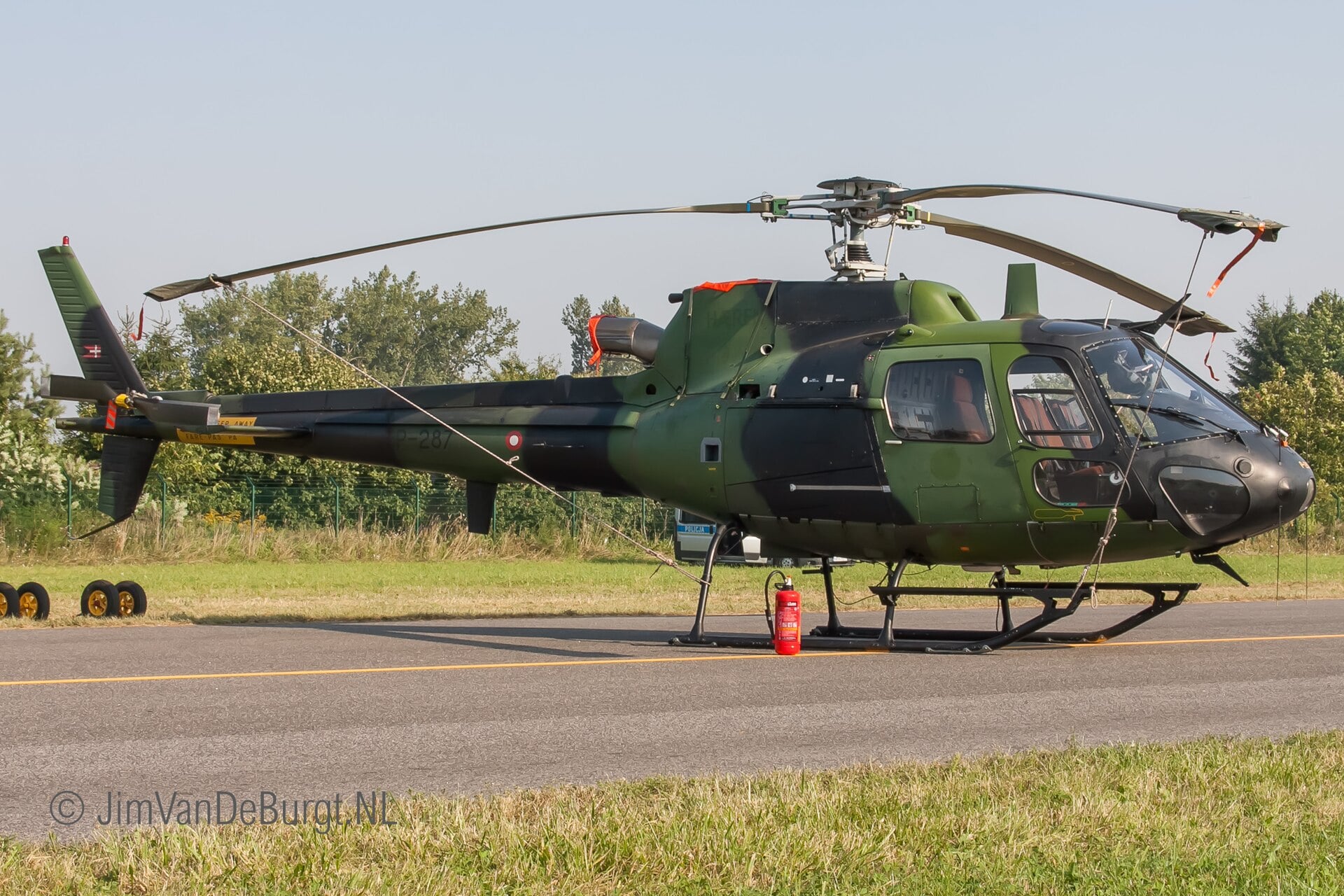
A Royal Danish Air Force Fennec helicopter was photographing a Russian frigate over the Baltic on Monday evening when the frigate fired two flares at it. One passed close to the aircraft.
Nobody was hurt and the helicopter was undamaged. It was flying in international waters off Gedser, the southern tip of the island of Falster, at the mouth of the Danish straits, on what the Danish Defence Command called a routine photographic mission. Photographing Russian warships passing through the straits is a job Danish crews do constantly.
Copenhagen summoned the Russian ambassador the following day. The Russian embassy has said nothing.
Kurzinfo
| Was ist passiert | A Russian frigate fired two flares at a Danish military helicopter. One passed close to the aircraft |
| Wann | Monday 14 September 2026. The Danish Defence Command statement came late that evening; some reports date the incident 15 September |
| Wo | International waters off Gedser, southern Falster, at the entrance to the Danish straits |
| Flugzeug | Royal Danish Air Force AS550C2 Fennec, based at Karup in central Jutland |
| Mission | Routine photographic coverage of the Russian frigate |
| Russian vessel | Not named or identified by class in the Danish statement |
| Damage or injury | None. The helicopter was undamaged and the crew unhurt |
| Diplomatic response | Russian ambassador summoned to the Danish foreign ministry on 15 September |
| Russian comment | Keiner |
What a flare is, and why this is not nothing
The instinct is to read flares as harmless. They are pyrotechnics, not weapons, and at sea they are normally a distress or warning signal.
That instinct is wrong in this context for two reasons. The first is mechanical: a flare is a burning object on a ballistic path, and a helicopter is a machine with an exposed rotor disc, engine intakes and, in the Fennec’s case, a fenestron tail rotor. Something burning that enters an intake or strikes a blade at low level over water is a serious emergency, not a nuisance.
The second is that this was aimed. A warning flare fired into the air to say we see you is one thing. Two flares fired toward an aircraft, one of which passes close to it, is a deliberate act by a crew that knows exactly what it is doing. The Danish defence minister’s phrase for it was highly unprofessional seamanship, which in the diplomatic register is close to an accusation.
“A reckless act by Russia against Danish forces during a routine flight. Russian actions are meant to intimidate and divide.”
Mette Frederiksen, Prime Minister of Denmark
“Completely unacceptable, and it could have endangered lives.”
Lars Løkke Rasmussen, Danish Foreign Minister, announcing that the Russian ambassador had been summoned
“Serious and without precedent.”
Jeppe Bruus, Danish Defence Minister, who also said Russia’s tolerance for risk had shifted
Das Flugzeug
The Fennec is a small machine for this kind of confrontation. Denmark operates twelve AS550C2s with Eskadrille 724 at Karup, in the observation and reconnaissance role; they replaced the squadron’s Hughes 500 Cayuse light helicopters in 2005, and they lost their anti-tank fit years ago. The type is a militarised Airbus AS350 Ecureuil, single-engine, crewed by two.
Sending one out to photograph a passing warship is not a provocation. It is basic maritime domain awareness, and it is a large part of what Denmark’s helicopter force exists to do, because of where Denmark sits.
Why the Danish straits are the story
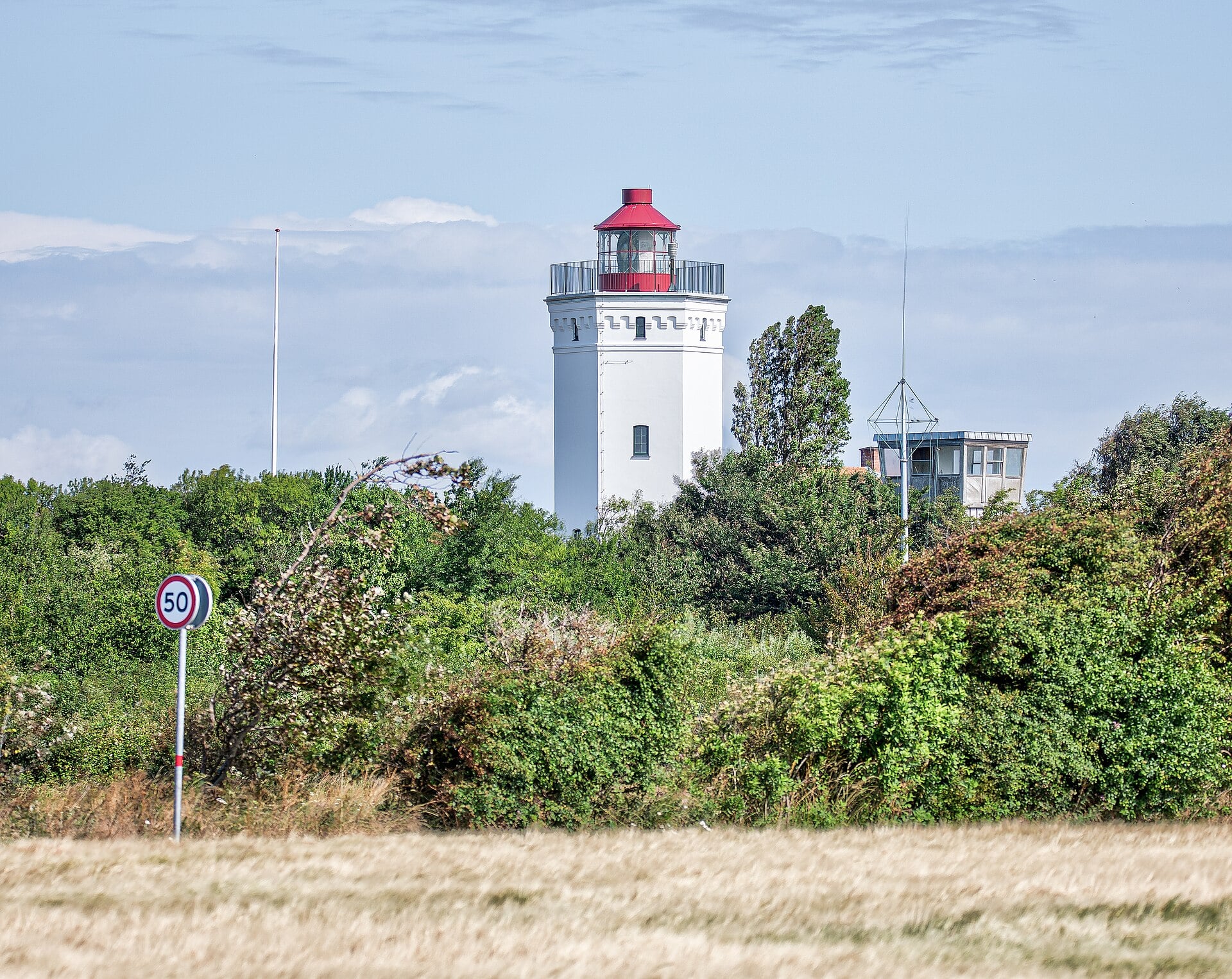
Geography explains this incident better than politics does. The Danish straits, the Great Belt, the Little Belt and the Øresund, are the only way in and out of the Baltic Sea for surface traffic. Everything that sails between St Petersburg and the world goes past Denmark, within easy reach of a Danish helicopter.
That includes the shadow fleet: the ageing, opaquely owned, often inadequately insured tankers moving Russian crude in defiance of Western price caps. Denmark watches them because somebody has to, and because a poorly maintained tanker breaking up in the Øresund would be a Danish environmental catastrophe.
Russia does not like being photographed doing it. Denmark’s own defence intelligence service has previously reported Russian warships sailing on collision courses with Danish vessels, illuminating Danish ships and aircraft with fire-control radar, and pointing weapons at them in the straits. Read against that record, two flares fired at a Fennec is not an aberration. It is the same behaviour, one notch further along.
Not the first helicopter
There is a direct precedent. In November 2024 a helicopter from the German frigate Nordrhein-Westfalen was met with red flares from a Russian vessel in the Baltic. In September 2025 Russian aircraft overflew the German frigate Hamburg twice, reportedly below 100 metres.
What has changed is the frequency and the spread. NATO has scrambled fighters around 700 times in two years in response to Russian activity near its borders. Polish fighters have been meeting Il-20s off their coast at a rate of roughly one a month. A drone crossed into Estonia at the start of this month.
The same night
The timing is the part worth sitting with. While the Danish foreign ministry was preparing to summon the Russian ambassador, NATO fighters shot down an unidentified drone over southern Lithuania, shortly after midnight on 15 September, in an incident that almost certainly began as the drone crossed from Belarus.
Two separate NATO members, several hundred kilometres apart, both dealing with a Russian-origin problem in their own airspace within hours of each other. Neither involved a shot fired in anger by either side. Both involved a NATO government having to decide, quickly, how much to escalate.
That is what the grey zone looks like from the inside: not a war, but a steady accumulation of incidents each individually too small to answer, and collectively difficult to ignore.
Häufig gestellte Fragen
What happened between the Russian frigate and the Danish helicopter?
When did the Danish helicopter flare incident happen?
What kind of helicopter was it?
Are flares dangerous to a helicopter?
Which Russian warship was involved?
Has this happened before in the Baltic?
Why does Denmark photograph Russian warships?
Sources: Danish Defence Command; Danish Ministry of Foreign Affairs; Aerotime; Brussels Signal; The Copenhagen Post; The Moscow Times; Euronews; MarineLink; Afterburner reporting
0 Comments