
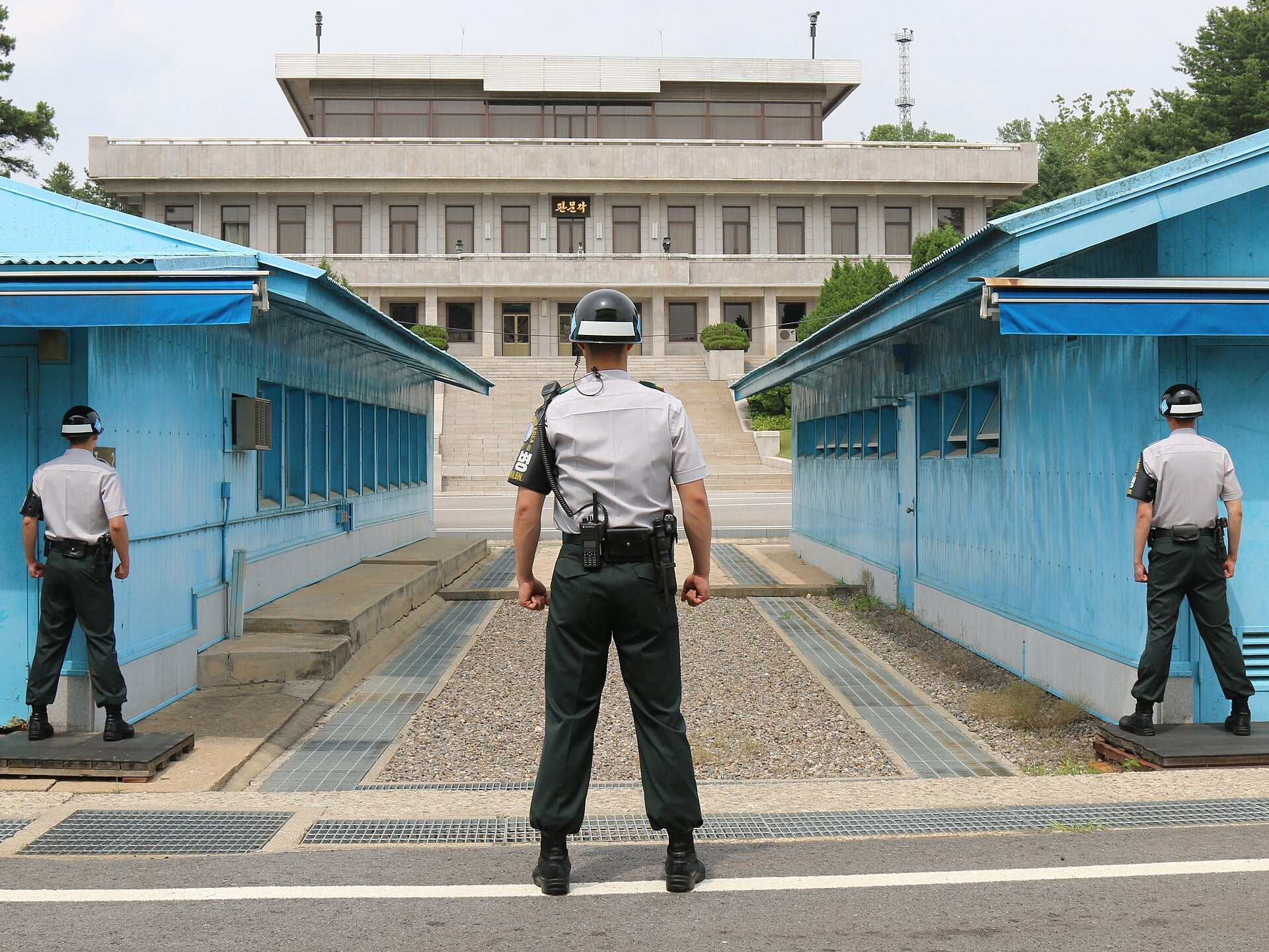
On the morning of 21 August 1976, B-52s flew in from Guam with Phantom escorts. F-111s crossed the Pacific from Idaho. Fighters launched from Kadena, Clark, Osan and Taegu. South Korean F-5s and Sabres joined the stack. An aircraft carrier task force took station off the coast. Twenty-seven helicopters orbited a patch of ground roughly the size of a tennis court.
Underneath all of it, sixteen American engineers started two chainsaws.
The target was a poplar tree.
Kurzinfo
| Betrieb | Operation Paul Bunyan, 21 August 1976, 07:00 |
| Standort | Joint Security Area, Panmunjom, Korean Demilitarized Zone |
| Objective | Cut down one poplar tree, about 30 m tall |
| Ground force | Task Force Vierra, 813 men, 23 vehicles |
| Cutting party | Two eight-man teams, 2nd Engineer Battalion, with chainsaws |
| Air cover | B-52s from Guam, F-111s from Mountain Home, F-4s from Kunsan, Kadena, Clark, Osan and Taegu, ROK F-5s and F-86s |
| Helicopters | 20 utility helicopters and 7 AH-1 Cobras |
| Naval force | USS Midway task force offshore |
| Dauer | 42 minutes |
| Ergebnis | Tree felled. No shots fired. Kim Il Sung expressed regret the same day |
Three days earlier
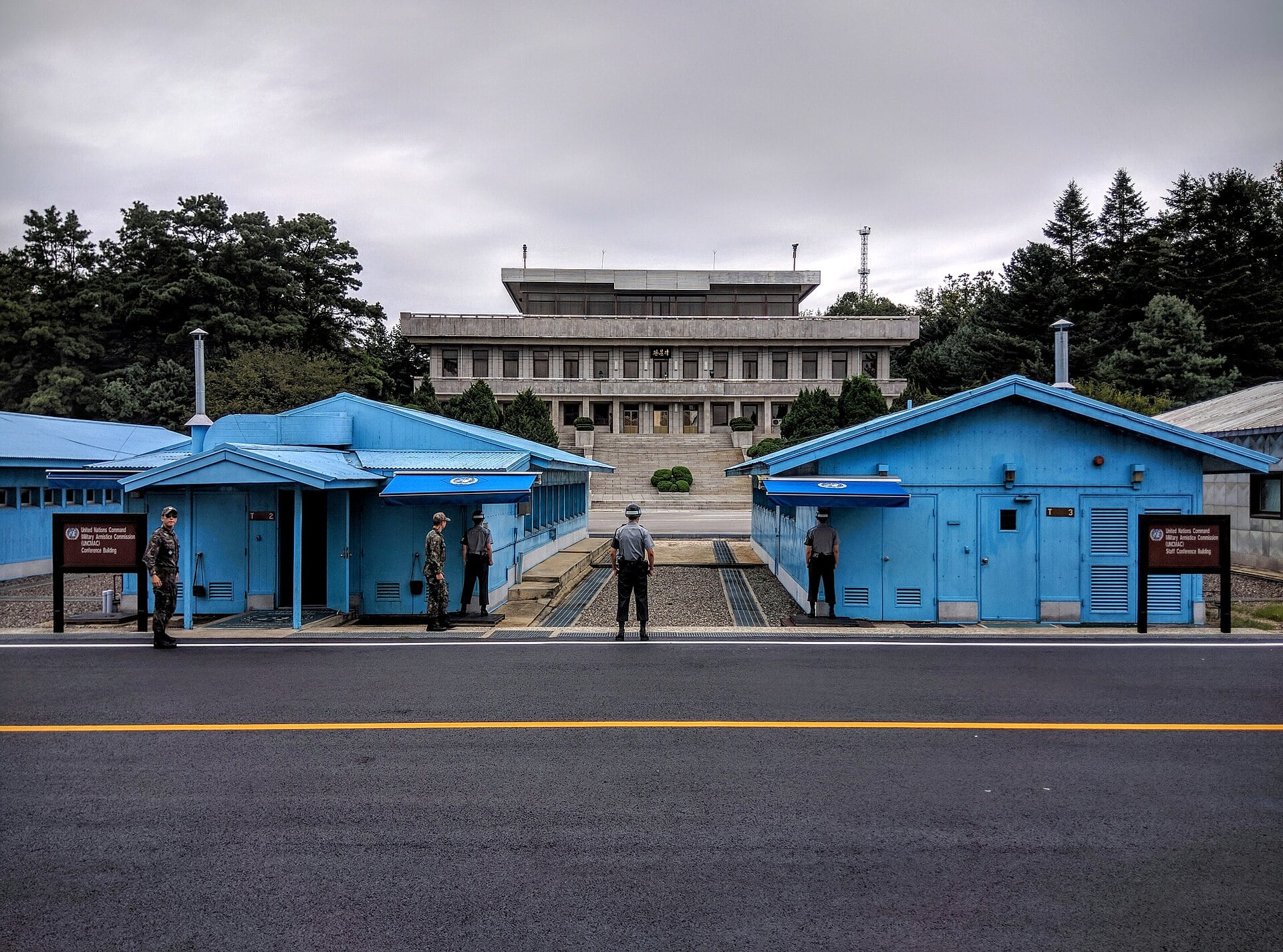
On 18 August 1976 a five-man Korean Service Corps work party went into the Joint Security Area to prune a poplar that was blocking the sightline between a United Nations Command observation post and a checkpoint. They were escorted by Capt. Arthur Bonifas, 1st Lt. Mark Barrett, a South Korean captain and eleven enlisted men.
North Korean soldiers attacked them. The whole thing lasted between twenty and thirty seconds. Bonifas was killed at the scene; Barrett died on the way to Seoul.
American forces went to DEFCON 3 the next day. Gen. Richard Stilwell and his staff at United Nations Command headquarters in Seoul then spent two days designing a response to the specific problem of how to finish pruning a tree without starting a war.
The answer was overwhelming and absurd
Task Force Vierra, named for Lt Col Victor S. Vierra, rolled in at seven in the morning with 23 vehicles and 813 men.
Two eight-man engineer teams from the 2nd Engineer Battalion carried the chainsaws. Two thirty-man security platoons carried pistols and axe handles. A 64-man South Korean special forces detachment came nominally armed with clubs and taekwondo, and actually carrying concealed M16s, grenade launchers and Claymore mines.
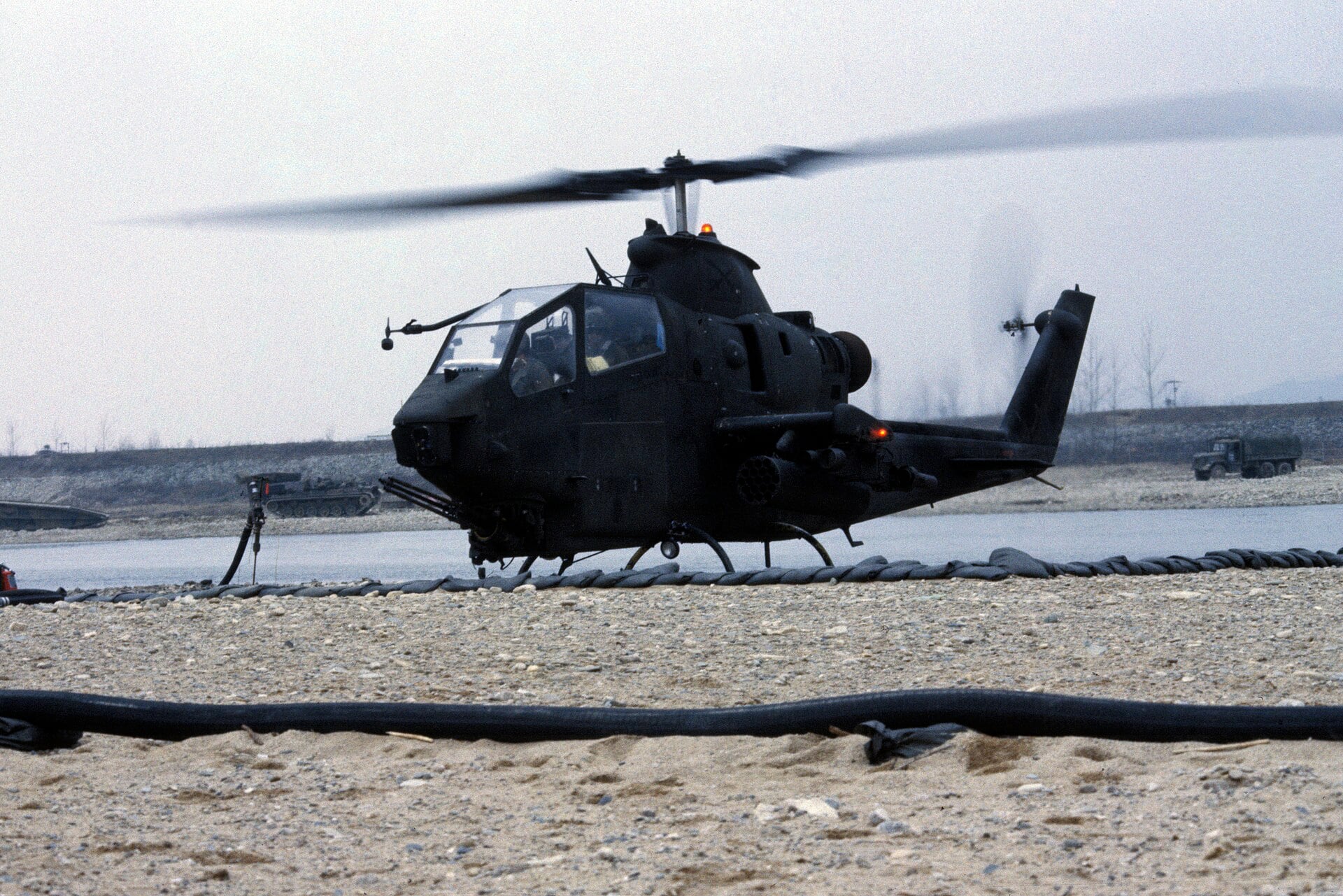
Above them sat one of the strangest air packages ever assembled for a gardening job. Twenty utility helicopters and seven Cobras circled the site. B-52s came from Guam with F-4 escort out of Kunsan. F-111s of the 366th Tactical Fighter Wing had flown from Mountain Home in Idaho. Phantoms from the 18th Tactical Fighter Wing came up from Kadena and Clark, with more F-4Es from Osan and Taegu, and South Korean F-5s and F-86s filling in. The Midway and her escorts waited offshore. Another 12,000 troops were ordered to Korea, including 1,800 Marines from Okinawa.
Roughly 150 to 200 North Korean soldiers arrived, set up machine-gun positions, and watched.
Nobody fired. The tree came down in 42 minutes, three minutes faster than Stilwell had predicted. South Korean troops took the opportunity to remove two North Korean road barriers and vandalise a pair of guard posts, which was not strictly in the plan.
What North Korea said
United Nations Command had demanded that the North Koreans punish those involved and make reparations to the families of the men killed and injured. What arrived instead, on the day of the operation, was a message from Kim Il Sung.
Read it carefully and it admits nothing at all. An incident occurred. It is regretful. No agent, no responsibility, no apology.
And yet by the standards of the peninsula it was extraordinary. It was the first time since the 1953 armistice that North Korea had acknowledged violence in the Demilitarized Zone in anything approaching those terms, and Washington chose to treat it as sufficient.
Two things everyone gets wrong
They did not remove the tree. They cut it down and deliberately left a stump about eight feet tall standing in the Joint Security Area as a marker. It stayed there until 1987, eleven years, which is a rather more pointed gesture than removing the thing entirely.
Kim Il Sung did not plant it. This story is repeated endlessly and there is no evidence for it. It appears to trace back to something North Korean soldiers reportedly told an earlier work party, recorded much later in a participant’s recollection. Treat it as folklore.
One more worth flagging: the widely repeated line that nuclear-armed B-52s circled the Joint Security Area is not well sourced. The bombers were there and they were nuclear-capable, which is not the same claim.
Why it still gets taught
Operation Paul Bunyan is funny right up until you look at what was actually being tested, which was whether an American show of force could be made so large and so visibly restrained that the other side would decline to shoot.
Every aircraft over Panmunjom that morning was there to be counted rather than used. The engineers were there to finish a job that had already killed two men. The axe handles were the point: a force capable of levelling the peninsula turned up to do the smallest possible thing, and did only that.
Forty-two minutes, one tree, no shots. It is one of the few occasions in the Cold War where the deterrent worked exactly as advertised and everybody went home.
Häufig gestellte Fragen
What was Operation Paul Bunyan?
Why did they want to cut down the tree?
What happened on 18 August 1976?
What aircraft took part in Operation Paul Bunyan?
How long did it take to cut down the tree?
Did they actually remove the whole tree?
How did North Korea respond?
Is the claim that Kim Il Sung planted the tree true?
Sources: Wikipedia, United Nations Command, US Army, Association for Diplomatic Studies and Training, DVIDS.
0 Comments