
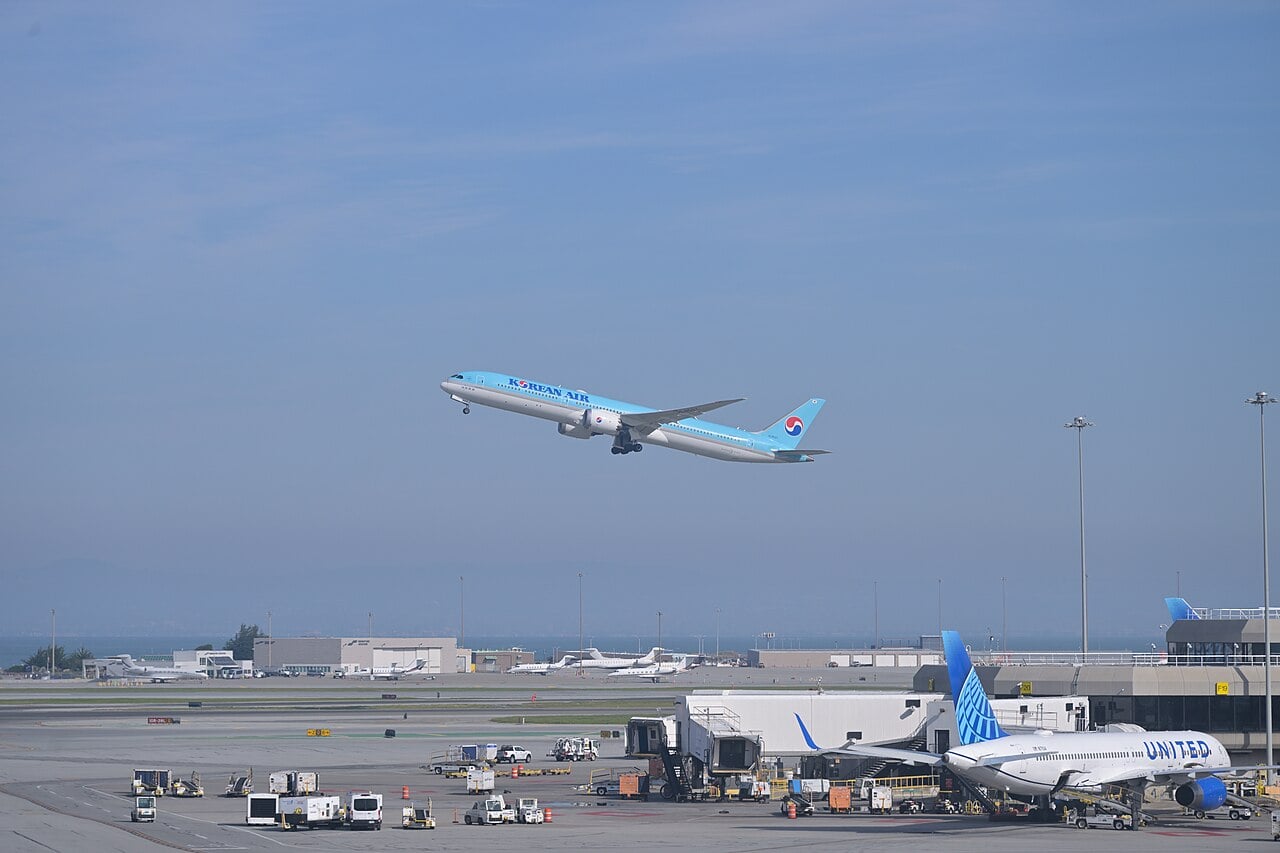
Korean Air signed the paperwork in Seoul this week, and the number on it is the largest in the airline’s history: roughly 60 trillion won, about $44.8 billion, for 103 Boeing aircraft and the engines to keep them running.
This is the moment an announcement becomes an order. The memorandum of understanding was signed in August 2025 and made headlines then. Memoranda are not contracts; they are intentions with a press release attached. This one has now converted, which is the part that actually matters to Boeing’s backlog and to Everett and Charleston.
Kurzinfo
Unterzeichnet: formalised in Seoul, announced by Boeing 16 September 2026. Converts a non-binding MOU from August 2025
Total value: approximately 60 trillion won, around $44.8 billion including engine support
Flugzeug: 103 Boeing jets worth about $36.2 billion
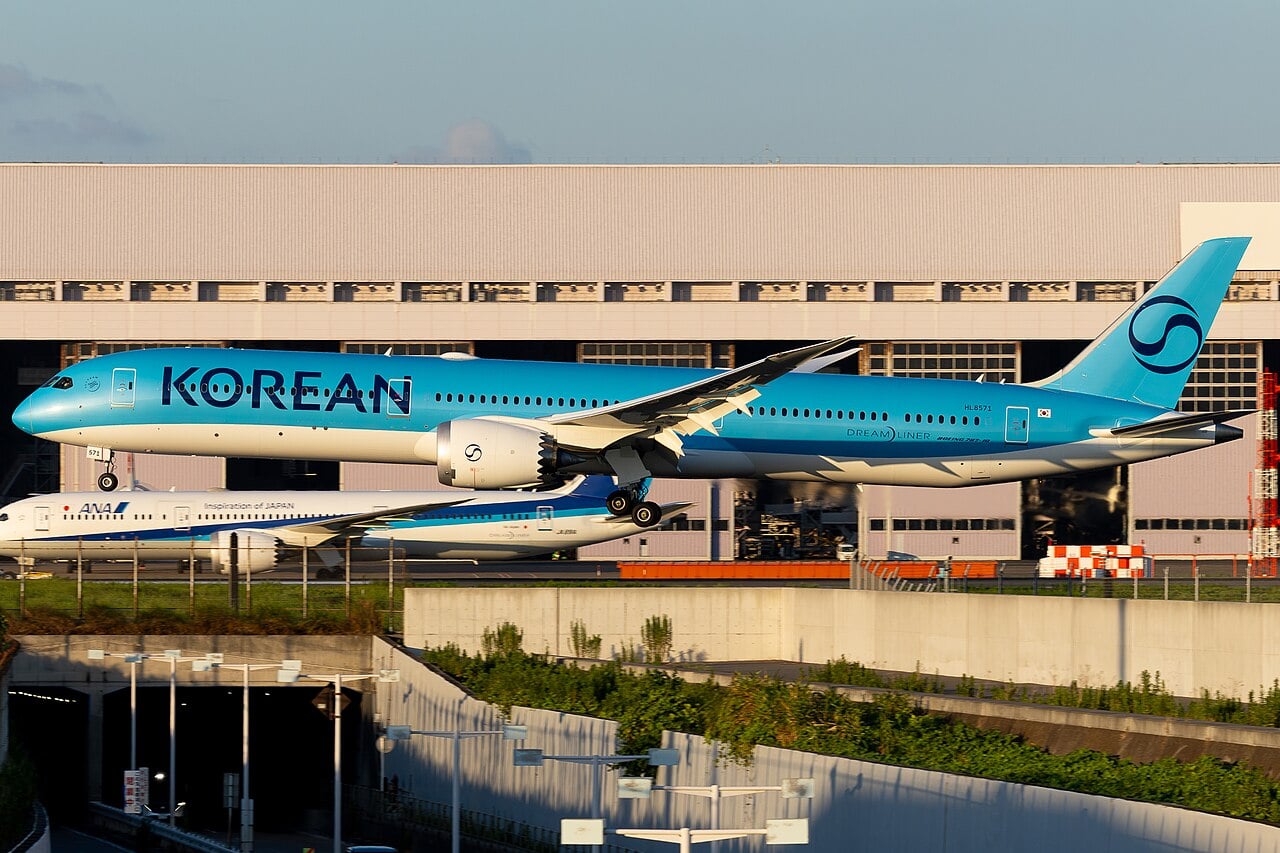
Breakdown: 20 Boeing 777-9, 25 787-10, 50 737-10 and 8 777-8F freighters
Motoren: a separate $8.6 billion agreement with GE Aerospace and CFM International covering 21 spare engines
Kontext: Korean Air is absorbing Asiana, and needs a single coherent fleet plan across both
Look at the Mix, Not the Headline
The composition is more interesting than the total.
Fifty 737-10s is a very large narrowbody commitment for an airline best known for long-haul. The 737-10 is the largest MAX, and the one whose certification has taken longest. Ordering fifty of them is a bet that it will arrive and that the short-haul and regional network coming out of the Asiana merger needs a common type to fly it.
Twenty 777-9s puts Korean Air among the significant 777X customers at a point when the programme is years late. The aircraft is enormous, efficient per seat, and only makes sense on routes you can reliably fill. Korean Air clearly thinks the transpacific market supports that.
And eight 777-8F freighters is the quiet strategic item. Korean Air Cargo is one of the largest freight operators in the world, and the 777-8F is the replacement for a 747-400F and 777F fleet that will not last forever.
The Engine Deal Is Not a Footnote
The $8.6 billion engine agreement with GE Aerospace and CFM International covers 21 spare engines, and it is worth pausing on that figure.
Twenty-one spare engines cost roughly a fifth of what 103 complete aircraft cost. That ratio surprises people outside the industry every time, and it is the single clearest illustration of where the money in modern commercial aviation actually sits. Airframers sell metal once. Engine manufacturers sell thrust for thirty years.
It also tells you Korean Air has learned from the last few years. Airlines that ordered aircraft without securing spare engines spent 2023 to 2025 watching fuselages sit on the ramp waiting for powerplants.
Why Now
The Asiana merger is the answer. Combining two full-service carriers produces a fleet that is an accident of two separate histories: overlapping types, mismatched cabins, and sub-fleets too small to be efficient.
An order this size is how you resolve that. It lets Korean Air retire the odd corners of both fleets, standardise on a smaller number of types, and do it on a delivery schedule stretching far enough out to be financeable. The signing date matters less than the delivery stream behind it.
For Boeing, coming off several years in which almost every headline was about delays, a firmed-up $36 billion order from a flag carrier is the kind of news it has not had many of.
Sources: Boeing media release; Korean Air; ch-aviation; Aerospace Manufacturing and Design.
0 Comments