
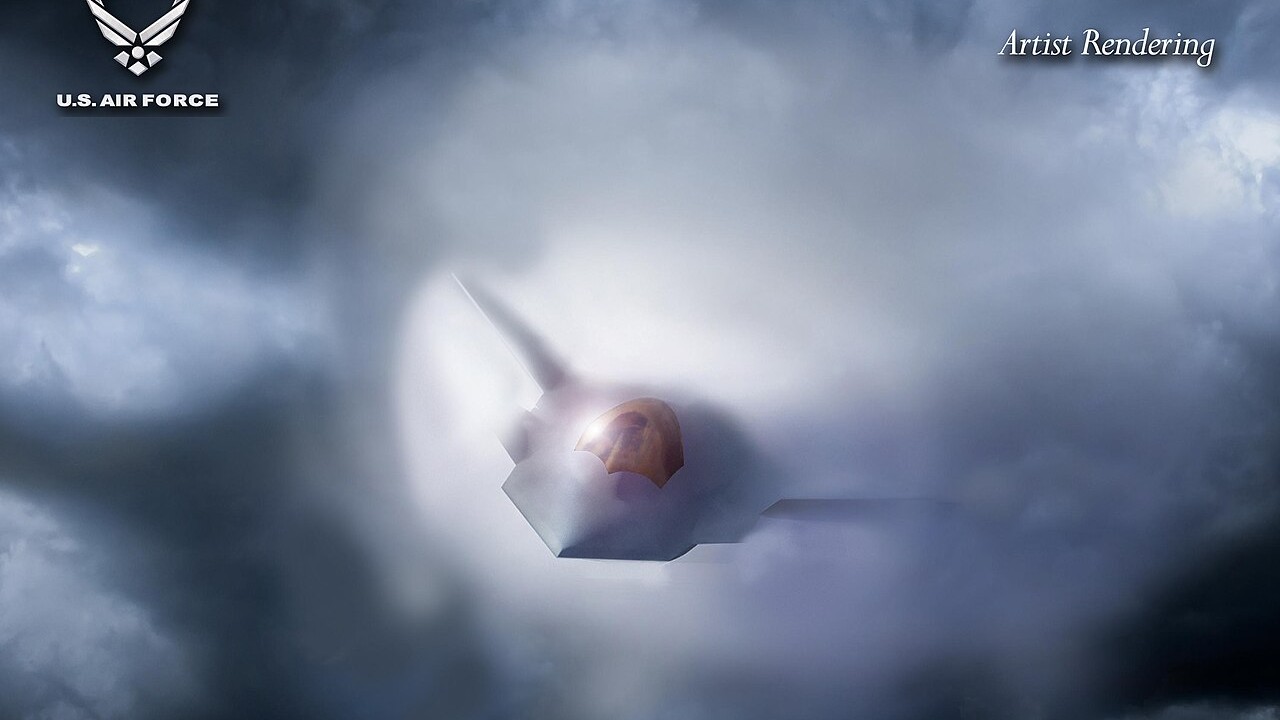
When the Pentagon shelved the Navy’s sixth-generation fighter last year, the official reason was that American industry could not develop and build two of them at once. A lot of people did not believe it.
The Air Force general who advises the Pentagon on buying major weapons has now said, on the record, that the worry is real — and also that it is not really about the two fighters at all.
Gen. Dale R. White, Director of Critical Major Weapon Systems and the senior acquisition adviser to the Secretary of the Air Force, spoke to reporters at the Air & Space Forces Association’s Air, Space & Cyber Conference on 15 September 2026. His verdict on the F-47: on track, flying within two years, no problems visible. His verdict on the industrial base that has to build it: less cheerful.
Kurzinfo
WHO: Gen. Dale R. White, Director, Critical Major Weapon Systems
Wann: Media roundtable, AFA Air, Space & Cyber Conference, 15 September 2026
F-47: Boeing-built USAF sixth-generation fighter; first airframe in production about a year; first flight expected 2028
F/A-XX: The US Navy carrier-based sixth-generation fighter; Boeing and Northrop Grumman still competing
The snag: A prime-contractor decision was expected by August 2026 and has not come
White’s concern: Capacity of the industrial base overall, in people and in production rate
His caveat: The problem is “not unique” to F-47 or F/A-XX
The quiet part, said out loud
Asked about the Navy’s difficulties building its own sixth-generation fighter alongside the F-47, White did not reach for reassurance.
That last clause is the interesting one. The original justification for putting F/A-XX on ice was specific: two sixth-generation fighters at the same time is one too many. White’s framing is broader and, if anything, more worrying. The constraint is not the fighters. The constraint is everywhere.
“Trade space” is acquisition language for something losing. White did not say which programmes, and nobody in the room was going to get him to.
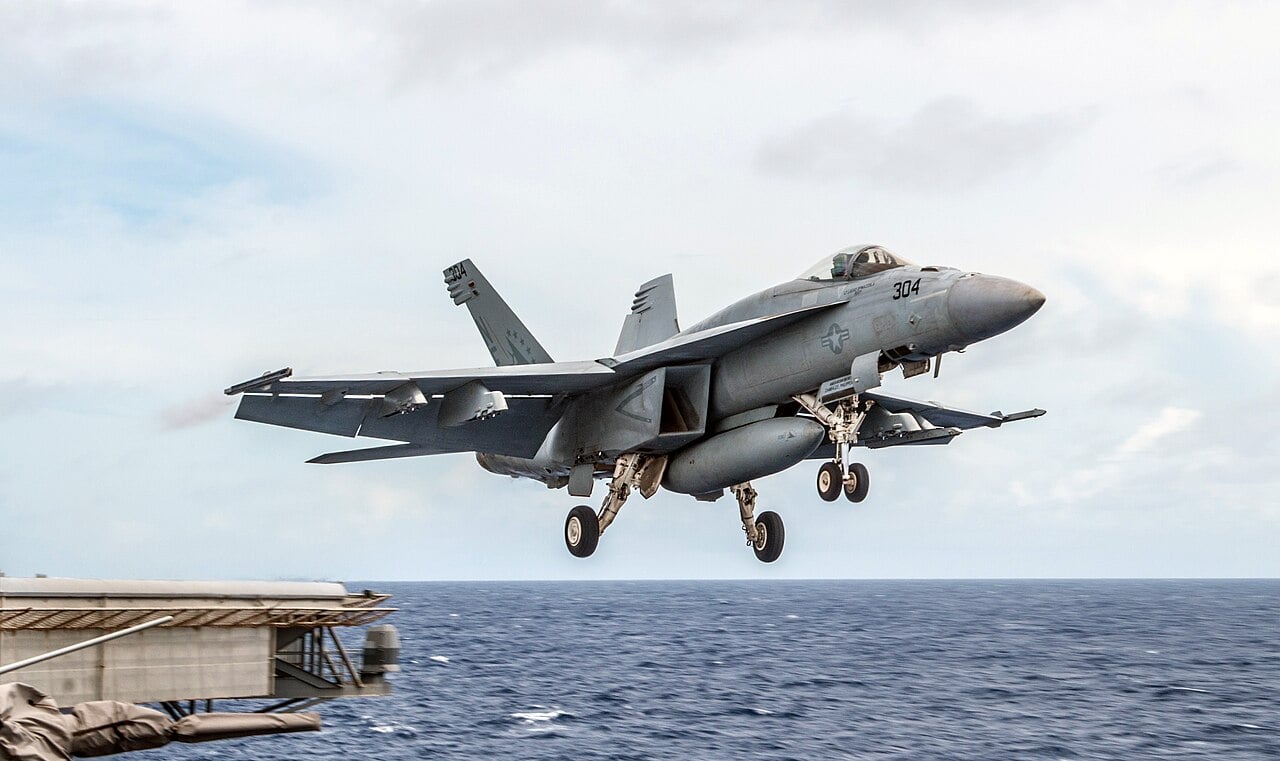
The F-47 is, by his account, fine
On the Air Force side, White was unambiguous. The programme “continues to progress exceptionally well,” and the long run-up matters.
He also had a specific compliment for Boeing, which is not a sentence that has appeared often in defence reporting recently: the company is making “smart investments” and pouring in capital expenditure. The caution that followed was about sequence, not willingness — the design has to be closed out before flight test and software milestones arrive.
The first F-47 has been in production for roughly a year. First flight is expected in 2028.
The Navy is still waiting
The contrast is stark. The Air Force has an aeroplane being built. The Navy does not yet have a company to build one.
F/A-XX has been in and out of limbo for over a year: shelved in a budget proposal, rescued by Congress, then promised a decision by August 2026 that did not arrive. Boeing and Northrop Grumman remain the two competitors. Asked last week, a Navy official offered the most content-free sentence available: the programme remains on track, and there is no further information to provide.
The Chief of Naval Operations has been more candid about why the Navy wants it at all, and his argument is not the one people expect.
In other words: it is not about China alone. Capable air defences are getting cheap enough that second-tier opponents can field them, which is precisely the lesson the last year has been teaching in Yemen and Iran.
One jet, two services?
There is an obvious way to make the industrial-base problem smaller, and Boeing being a finalist for both programmes makes it hard to ignore. If the Navy picks Boeing, F/A-XX could end up as a navalised relative of the F-47 rather than an entirely separate aircraft.
Boeing’s own published F/A-XX concept art looks conspicuously like its F-47 artwork, a resemblance that has not gone unnoticed.
Commonality would cut risk and cost, and there is already meaningful sharing between the two services’ sixth-generation efforts. It would not be free. Turning a land-based design into a carrier aircraft is historically where optimism goes to die — the structure, the approach speed, the landing gear and the corrosion environment all impose their own tax. And building both at volume still needs the capacity White is worried about.
The decision on who builds F/A-XX is expected in the coming weeks. Until then, the honest position is the one the general took: the F-47 looks healthy, and the system that has to produce it does not entirely.
Sources: TWZ; Air & Space Forces Magazine; US Air Force; US Navy.

0 Comments