
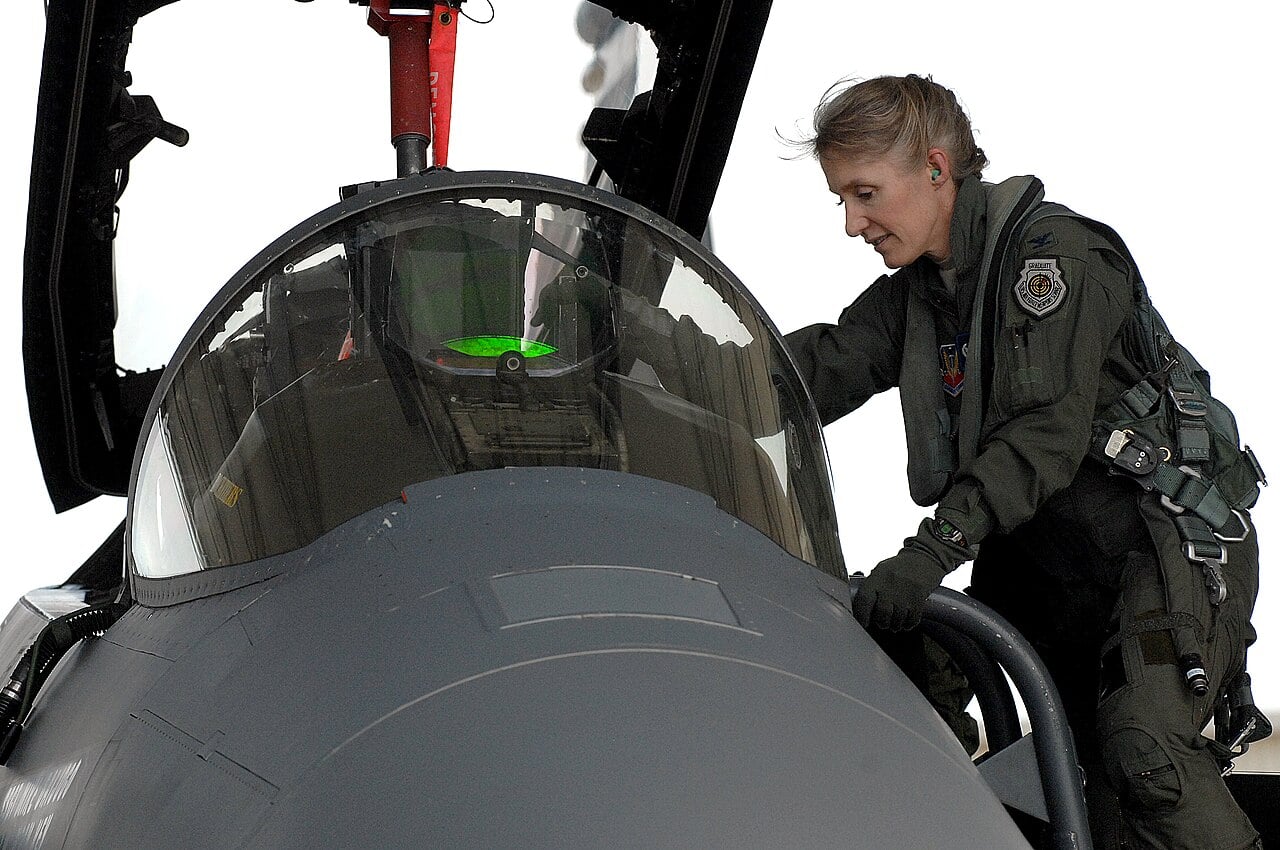
When Jeannie Leavitt finished US Air Force pilot training at Laughlin Air Force Base, Texas, in early 1993, she had the grades to choose almost any aircraft. She asked for the F-15E Strike Eagle. The answer was no: women were not allowed to fly combat aircraft. Within weeks the policy changed, and Leavitt became the Air Force’s first woman fighter pilot.
Kurzinfo
- Full name: Jeannie M. Leavitt, call sign “Tally”
- Ausbildung: Aerospace engineering, University of Texas at Austin; aeronautics and astronautics, Stanford
- Commissioned: 1992, as a distinguished graduate of Air Force ROTC
- Kämpfer: F-15E Strike Eagle, from 1993
- Erste Male: First female USAF fighter pilot; first woman to graduate from the Weapons School’s fighter track; first woman to command a USAF combat fighter wing
- Flying: More than 3,000 hours, including more than 300 in combat
- Im Ruhestand: 2023, as a major general
- Heute: Dean of the College of Aviation, Embry-Riddle Aeronautical University, Prescott, Arizona
“Instead, Tankers”
Leavitt had already earned an aerospace engineering degree in Texas and a master’s at Stanford when she entered the Air Force in 1992. Women had been flying military jets as instructors and in non-combat roles for years, but combat aircraft were closed to them. According to Air & Space magazine, all but a few of her instructors warned her that asking for a fighter would mark her as a troublemaker and could damage her career. She asked anyway, and was assigned to fly tankers. Her official record shows that she went first to Vance Air Force Base, Oklahoma, to train as a T-38 instructor.
On 28 April 1993, Defense Secretary Les Aspin opened combat aircraft to women. At the Pentagon the same day, the Air Force Chief of Staff, General Merrill McPeak, named the first women who would train on fighters, with Leavitt heading for the F-15E. Asked whether she was jumping the queue ahead of male pilots, McPeak replied that she was not leapfrogging anyone, she had been delayed.
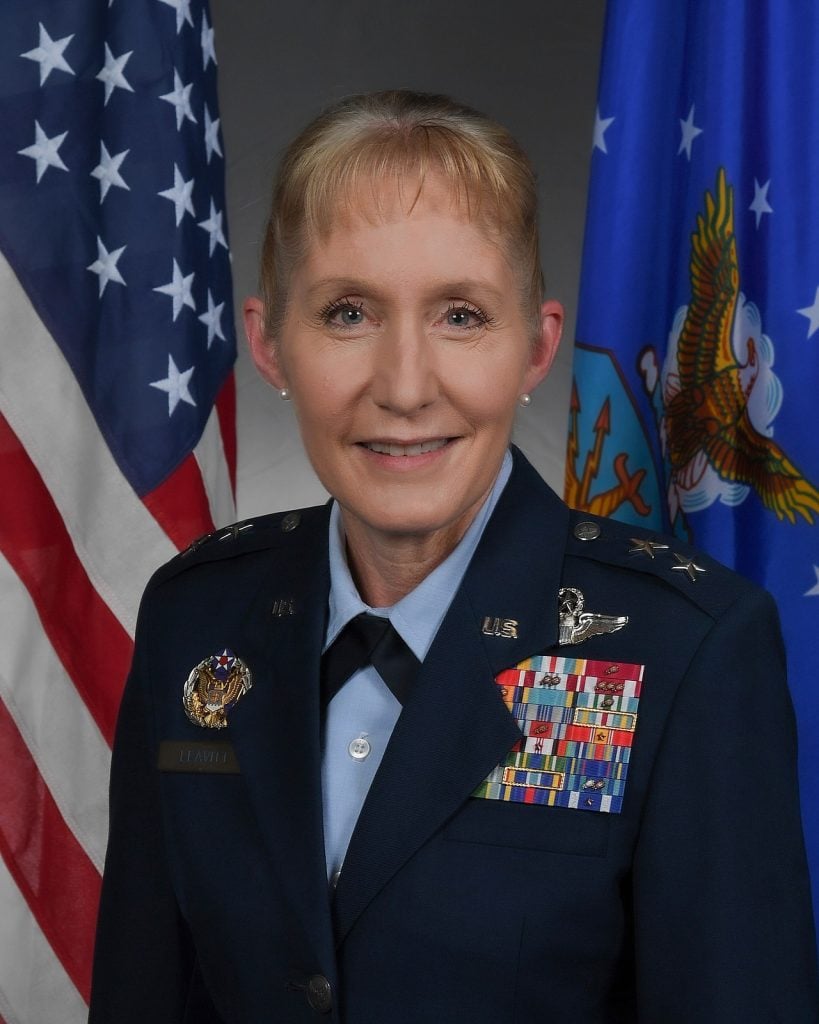
Luke, Seymour Johnson and “Tally”
Leavitt began F-15E training with the 555th Fighter Squadron at Luke Air Force Base, Arizona, in July 1993. Not everyone welcomed her.
In April 1994 she joined the 336th Fighter Squadron at Seymour Johnson Air Force Base in North Carolina. Her call sign, “Tally”, comes from “tally ho”, the call for visually spotting an enemy aircraft. She has never told the whole story, saying only that call signs are usually earned for doing something silly.
Weapons School and Combat
In 1998 Leavitt became the first woman to graduate from the fighter track of the US Air Force Weapons School at Nellis Air Force Base, the service’s graduate school for tactics instructors, and later returned there to teach. She flew combat missions over Iraq in Operations Southern Watch and Northern Watch, and later in Iraqi Freedom and Enduring Freedom, logging more than 300 combat hours.
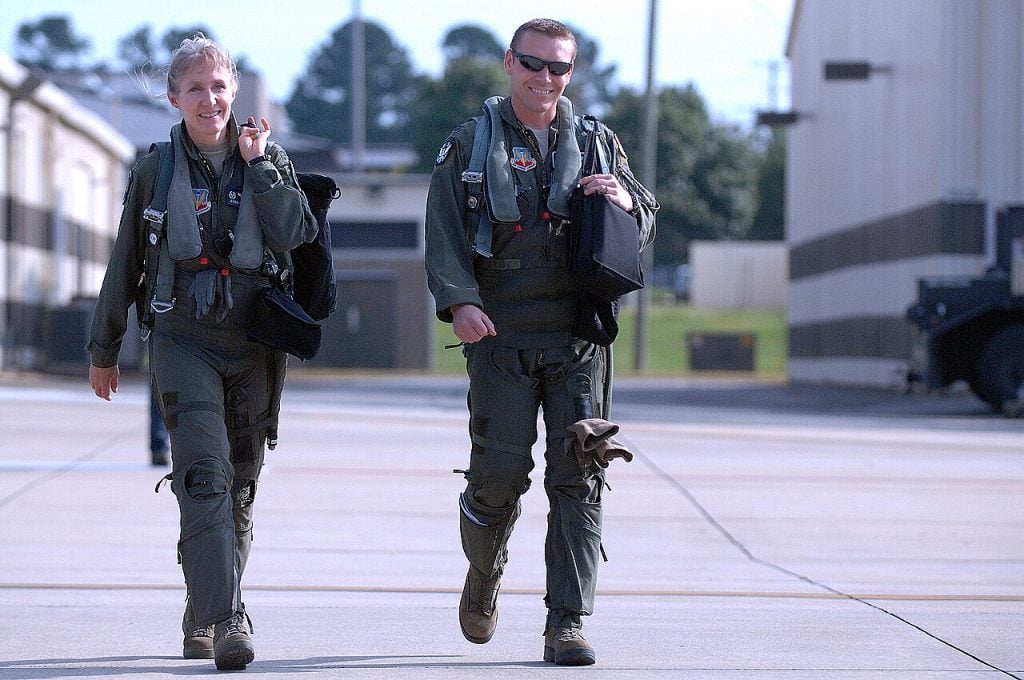
Back to North Carolina, in Command
She went on to command the 333rd Fighter Squadron at Seymour Johnson, and in June 2012, eighteen years after first arriving there as a lieutenant, she took command of the whole 4th Fighter Wing, the first woman to command a US Air Force combat fighter wing. Later commands included the 57th Wing at Nellis, home of the Weapons School and the Thunderbirds, and the Air Force Recruiting Service. Her final post was as the Department of the Air Force’s Chief of Safety and commander of the Air Force Safety Center. While at Nellis, she advised the makers of the film Captain Marvel and shared her experiences with its star, Brie Larson.
Leavitt flew her last Air Force flight in 2023 and retired at the end of September that year as a major general, after more than three decades of service. She is now Dean of the College of Aviation at Embry-Riddle Aeronautical University’s Prescott campus in Arizona. Another F-15E pioneer, Nicole Malachowski, became the first woman to fly with the Thunderbirds; we tell her story in Nicole Malachowski.
What the Popular Version Gets Right
The story as it is usually told is accurate in its essentials: first in her class, refused a fighter, the 1993 policy change, McPeak’s defence of her, the hostility in training, the call sign Tally, the Weapons School, the wing command eighteen years after she first arrived at Seymour Johnson, Captain Marvel, and her retirement as a two-star general now teaching at Embry-Riddle. Some details need care. The ban was lifted weeks rather than months after her pilot training ended. Some lines often attributed to her, including the dialogue from her assignment call, do not appear in published interviews we could find. Popular claims that the film copied her car and leather jacket are not confirmed by any official source. And her best-known quote is usually paraphrased; her own words are above. Accounts differ on whether her service ran to 31 or 32 years.
Sources: US Air Force official biography, Maj. Gen. Jeannie M. Leavitt; Morgan Smith, “A Woman’s Right to Fly and Fight”, Air & Space/Smithsonian (August 2020); Air Education and Training Command, “First female fighter pilot takes last Air Force flight” (2023); Embry-Riddle Aeronautical University faculty profile; California Aeronautical University (2019); The Daily Courier, Prescott.

0 Comments