
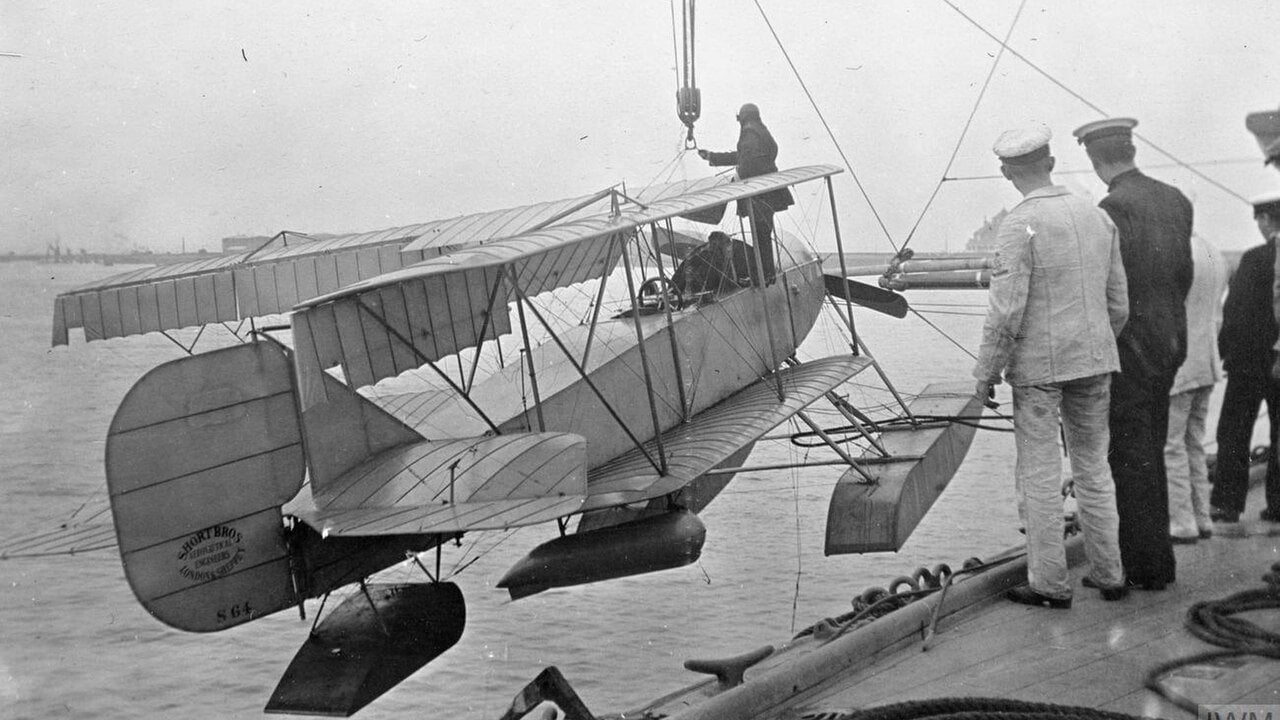
On the morning of Christmas Day 1914, in the freezing murk of the Heligoland Bight, sailors on three converted cross-Channel ferries swung nine canvas-and-wire seaplanes over the side and lowered them onto the sea. The air was barely above freezing. Two engines refused to start. The other seven coughed into life, and the aircraft lumbered off the water towards Germany, each carrying three 20-pound bombs.
Their target was the Imperial German Navy's Zeppelin base near Cuxhaven, far beyond the reach of any aircraft flying from England. It was the Royal Navy's first combined sea and air strike, and in hindsight one of the earliest ancestors of the carrier raid. The bombs did very little. What happened over the next three hours, on the water, in the air and beneath the surface, mattered a great deal more.
Kurzinfo
- Datum: 25 December 1914
- Attacker: Royal Naval Air Service, with Harwich Force and submarines
- Ziel: Zeppelin sheds at Nordholz, near Cuxhaven
- Seaplane tenders: HMS Engadine, Riviera and Empress (converted ferries)
- Flugzeug: 9 Short seaplanes lowered, 7 took off
- Bomb load: Three 20 lb bombs per aircraft
- Flugzeit: More than three hours
- Verluste: No airmen lost; four seaplanes did not return to their tenders
- Rescuers: Submarine E11 and the Dutch trawler Marta van Hattem
The Zeppelin Problem
By the winter of 1914 the Royal Navy had a specific fear, and it was shaped like a cigar. At Nordholz, about 13 kilometres south of Cuxhaven among the orchards of the north German coast, the Imperial German Navy had made its Naval Airship Division headquarters. Its centrepiece was a colossal double shed, 182 metres long and weighing around 4,000 tons, built on a turntable so that its doors could be swung into the wind.
Inside were Zeppelins, each 158 metres long, filled with hydrogen, crewed by 24 men and capable of lifting several hundred pounds of bombs. Together with a base near Hamburg, Germany had four naval airships available for operations over the North Sea. They were the High Seas Fleet's long-range eyes, and potentially a weapon that could reach Britain itself.
Osprey Publishing's account of the Cuxhaven Raid makes the strategic logic plain. Admiral Tirpitz had built a battleship navy and too few scouting cruisers, so Germany leaned on its airships to see over the horizon. Knock out the Zeppelins, and the High Seas Fleet would be partly blind. The trouble was that Nordholz lay beyond the range of any aircraft that could take off from England.
Ferries With Wings
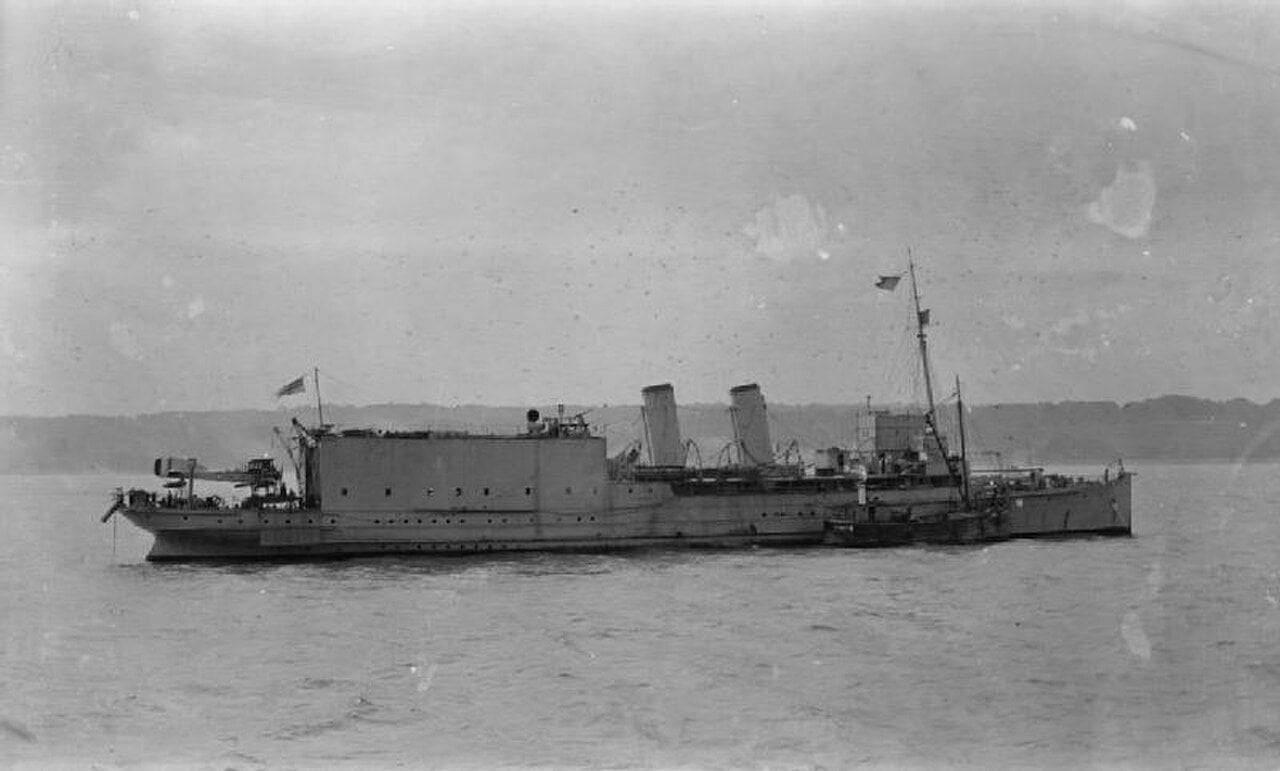
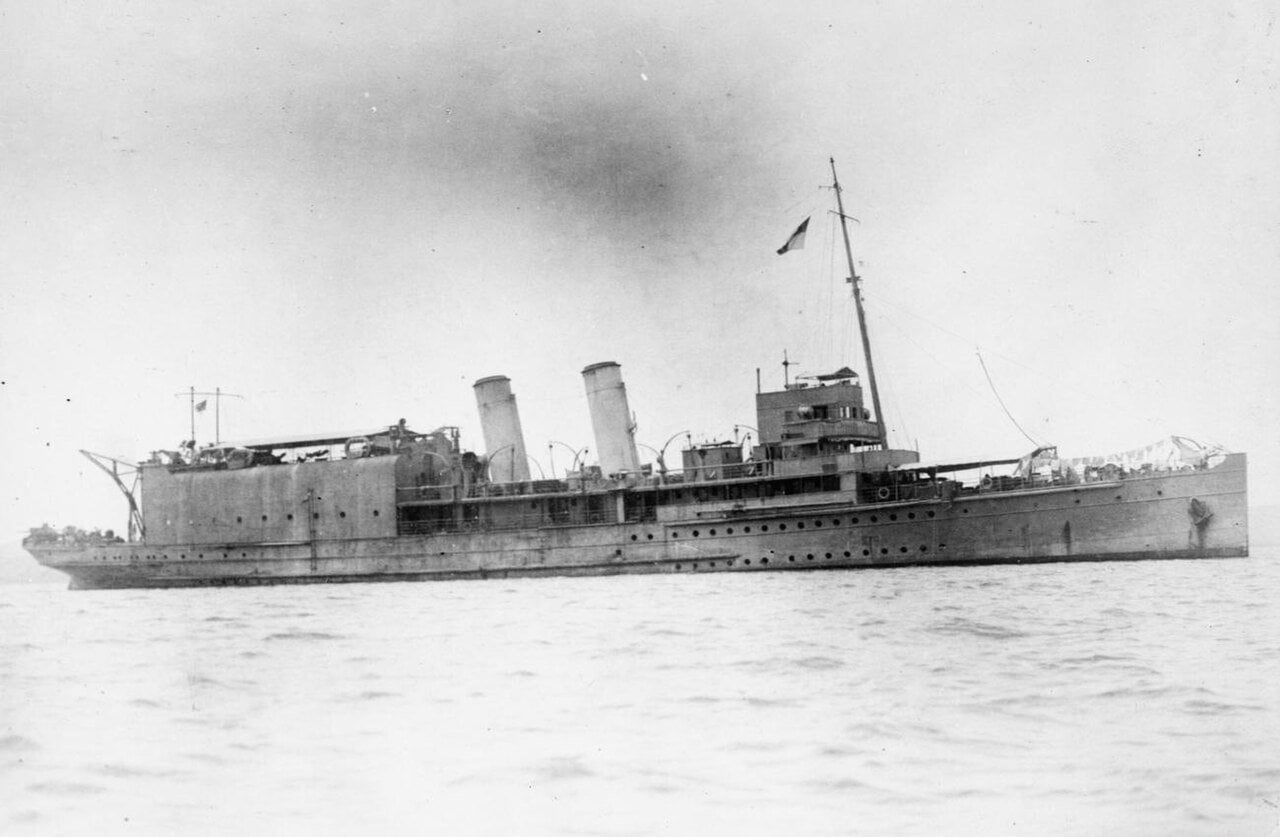
The Admiralty's answer was to bring the aircraft to Germany by sea. At the start of the war it had requisitioned three fast cross-Channel ferries, Engadine, Riviera and Empress, and hurriedly converted them into seaplane tenders. Conversion in 1914 meant little more than booms to lift the aircraft in and out of the water and canvas shelters to keep the weather off them. Engadine and Riviera could make 20 knots, Empress 18.
Each ship would carry three Short seaplanes. Squadron Commander Cecil Malone commanded Engadine and the air operation as a whole, with Lieutenant E. D. M. Robertson in Riviera and Lieutenant Frederick Bowhill in Empress. Commodore Reginald Tyrwhitt's Harwich Force provided the escort: the light cruisers Arethusa, Fearless and Undaunted, destroyers and submarines of the Oversea Submarine Flotilla.
The plan was to launch from a point north of Heligoland, scout German naval installations, and bomb the Zeppelin sheds if the aircraft could find them. For navigation the airmen had an unusual adviser. Lieutenant Erskine Childers of the Royal Naval Volunteer Reserve, author of the spy novel The Riddle of the Sands, had sailed these shoals and channels before the war. He gave the navigational briefing and then climbed into a seaplane himself, as observer to Flight Commander Cecil Kilner.
Seven Engines on a Freezing Sea
On the morning of 25 December the force reached its launch position. Nine seaplanes went into the water: Short Improved Type 74 Folders, Short Type 81 Folders and Short Type 135 Folders, all with wings that folded back so that they would fit aboard ship. In a temperature just above freezing, two engines would not start, and a Type 81 and a Type 74 were winched back aboard. Seven took off.
Then the weather took over. Over the coast, fog and low cloud swallowed the aircraft and they quickly lost sight of each other. According to Osprey, one pilot stumbled on the German fleet and was driven off by its gunfire, another attacked a German destroyer, and another spotted the cruisers Stralsund and Graudenz. Others, lost, jettisoned their bombs to lighten their loads. Anti-aircraft fire added to the confusion. Several sites were attacked, but nobody found and hit the Zeppelin sheds at Nordholz.
The Lions Led By Donkeys podcast devotes a full episode to the Christmas Day raid.
Germany, meanwhile, fought back with its own air arm. Its naval seaplanes and airships went out looking for the British ships. One Friedrichshafen FF.19, seaplane No. 85, stayed in the air for five hours and 52 minutes, a remarkable endurance for the period. Another seaplane from Heligoland found the British force but, with no wireless, had to fly back to the island to report.
Empress, struggling with her boilers, had fallen behind the formation and became the target. Two German seaplanes bombed her, one small bomb bursting only about six metres off the bow. Then the Zeppelin L6 came over with bombs and machine guns. The ship's 12-pounder gun was masked by her superstructure, so her crew fought back with rifles. Nobody was hurt and nothing was damaged on either side.
Picked Up by a Submarine
The seaplanes were airborne for more than three hours, and getting them home was always going to be the hard part. Three made it back to their tenders and were hoisted aboard: Flight Lieutenant Charles Edmonds in Type 74 No. 811, Flight Commander R. P. Ross in Type 81 No. 119, and Kilner and Childers in Type 135 No. 136.
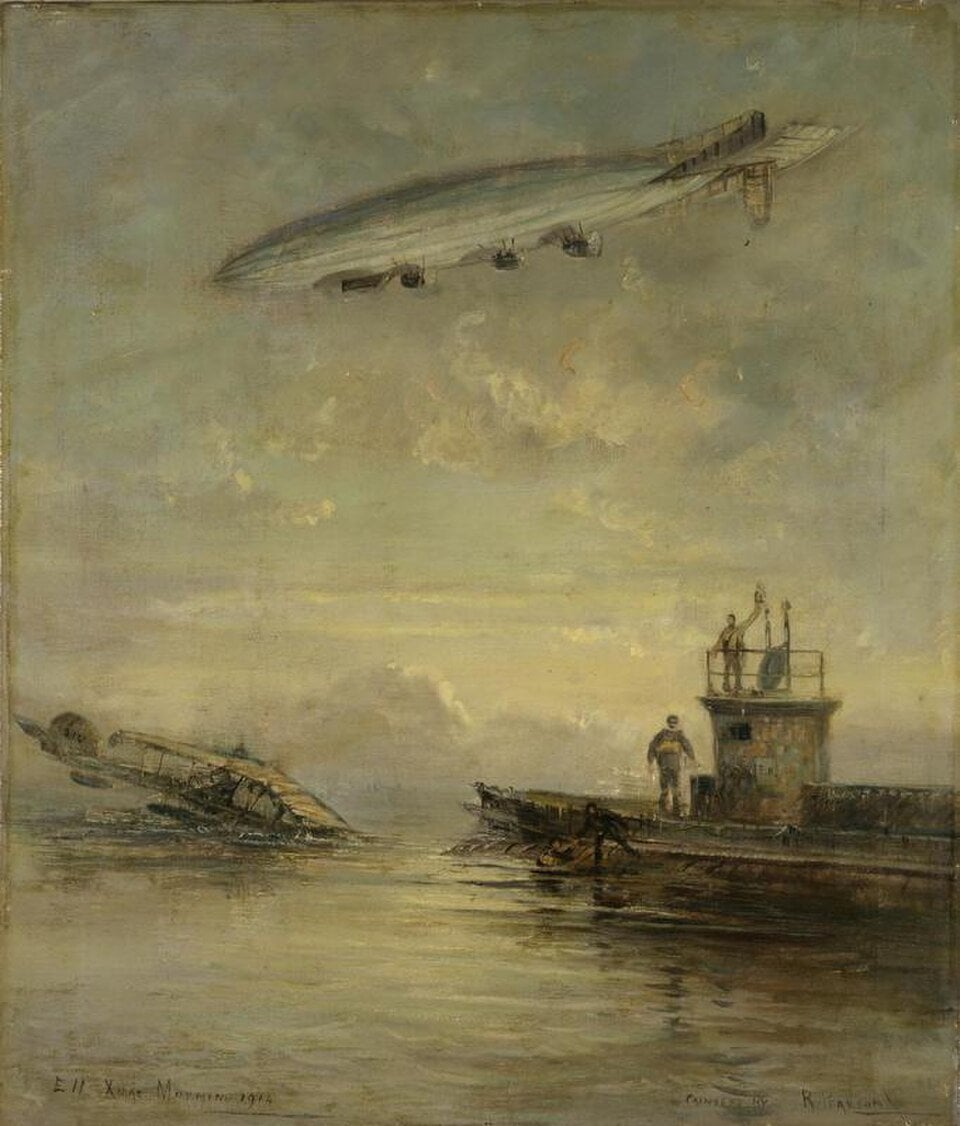
Three more, short of fuel, came down on the sea off the East Frisian island of Norderney. Waiting for them was the submarine E11, commanded by Lieutenant-Commander Martin Nasmith. Her crew took Flight Lieutenant A. J. Miley, Flight Sub-Lieutenant V. Gaskell-Blackburn and Flight Commander D. A. Oliver aboard, and the seaplanes were scuttled so the Germans could not have them.
That scene gave the raid its most striking image, and a phrase that summed up what the Admiralty had just done. Aircraft, surface warships and a submarine had all fought the same action at the same moment.
The seventh crew had the longest Christmas of all. Flight Lieutenant Francis Hewlett's Short Type 135, No. 135, developed engine trouble and was seen to ditch about eight nautical miles off Heligoland. He was posted missing. In fact a Dutch trawler, the Marta van Hattem, had pulled him out of the water. He landed at IJmuiden in the neutral Netherlands on 2 January 1915 and made his way back to Britain.
German submarines U-20, U-22 and U-30 tried to catch the retiring force, but its manoeuvres defeated them. Every ship came home undamaged, and every airman came home alive.
The Fleet That Stayed in Port
The most remarkable thing the German High Seas Fleet did that day was nothing. A small British squadron was sitting in German home waters, far from the main Grand Fleet, and even a handful of German cruisers could have outgunned it. But the German Naval Staff had misread British intentions. It had been tipped off on 24 December that a major operation was coming, and believed the Grand Fleet itself might be involved, perhaps escorting old merchant ships disguised as battleships to be sunk as blockships. Risking the fleet against that would have broken the Kaiser's standing order, so it stayed at anchor.
In early January a censor intercepted a message to the Daily Mail from Copenhagen claiming the raid had pushed the German Admiralty into moving much of the High Seas Fleet from Cuxhaven to the Kiel Canal. Whether that was true or merely good news for a British newspaper is hard to say. Kilner and Edmonds received the Distinguished Service Order, and Chief Petty Officer Mechanics James William Bell and Gilbert Howard William Budds the Distinguished Service Medal.
WW2TV traces British naval aviation from the RNAS of 1914 to the Fleet Air Arm of 1945.
The Ancestor of Every Carrier Raid
It was not quite the first time an aircraft had flown from a ship to attack an enemy. Earlier in 1914, Osprey notes, a seaplane from the Japanese carrier Wakamiya had bombed German and Austrian warships at Tsingtao. But the Cuxhaven Raid was a deliberate, planned strike by a squadron of ship-borne aircraft against a defended enemy coast, coordinated with cruisers, destroyers and submarines.
The naval historian Paul Halpern later called it an imaginative endeavour, one that showed naval leaders willing to embrace new technology and that foreshadowed the air-sea battles to come. A quarter of a century on, the line from those canvas shelters on a requisitioned ferry ran straight to the Fairey Swordfish crews who crippled the Italian fleet at Taranto in 1940.
Nine seaplanes went into the water that Christmas morning. Seven flew, none hit what they were sent to hit, and four never came back to their ships. Yet the idea flew home with all of their crews, and it has been aboard every aircraft carrier since.
Sources: Wikipedia (Raid on Cuxhaven), Osprey Publishing, Flight magazine (1915), Paul Halpern, A Naval History of World War I, Imperial War Museums, Lions Led By Donkeys, WW2TV
0 Comments