
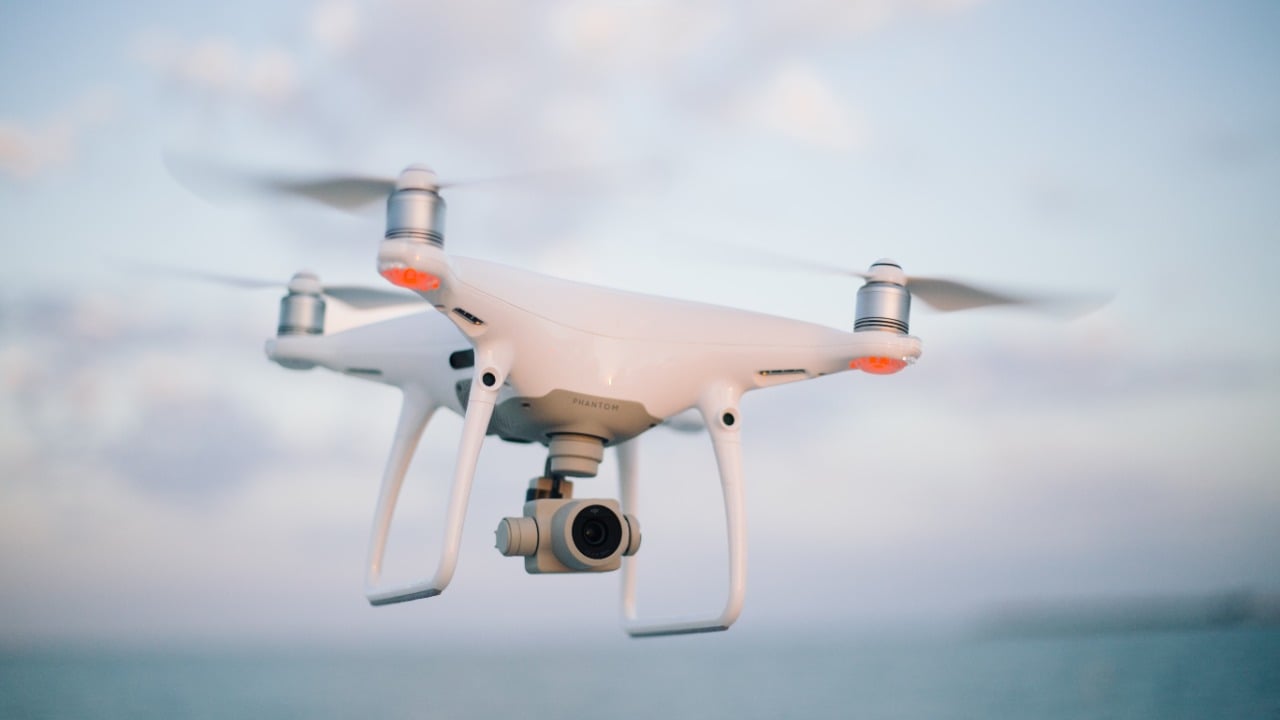
Stand in an American park on a Saturday morning, open a free app on an Android phone, and you can read the serial number of the drone buzzing over the trees. You can read its height, its speed and its position. And in most cases you can read something the pilot may not realise he is giving away: the latitude and longitude of the spot where he is standing.
That is not a hack. It is federal law, and it has been enforced since March 2024. The rule is 14 CFR Part 89, the FAA calls the result Remote ID, and the agency’s own shorthand for it is a digital licence plate. Like most licence plates, it tells a stranger more than the driver expects and less than the police would like.
Here is what the regulation actually requires, what the broadcast actually contains, where you can still legally fly without it, and the honest limitation that nobody at the FAA disputes: a drone flown by somebody who means harm simply will not broadcast at all.
Quick Facts: FAA Remote ID
Regel: 14 CFR Part 89, published 15 January 2021 (86 FR 4390)
Operator compliance date: 16 September 2023
Enforcement discretion ended: 16 March 2024
Three ways to comply: a standard Remote ID drone, a broadcast module, or flying inside an FAA-recognised identification area
Message rate: at least one message per second, from take-off to shutdown
Position accuracy required: within 100 feet of true position, 95 percent of the time
Drones registered in the United States: 837,513 (FAA, November 2025)
Not allowed as a substitute: ADS-B Out
The rule in one sentence
Section 89.105 is short enough to quote whole. After 16 September 2023, it says, no person may operate an unmanned aircraft within the airspace of the United States unless the operation meets the requirements of § 89.110 or § 89.115. Everything else in Part 89 is the explanation of those two cross-references.
Section 89.110 is the easy route: fly a drone that was built to broadcast, and leave the broadcasting switched on. Section 89.115 is the awkward route, and it splits in two. You can bolt a broadcast module onto a drone that was not built with Remote ID, or you can fly a drone with no Remote ID equipment at all — but only inside a patch of ground the FAA has blessed for the purpose.
The rule applies to anyone operating an unmanned aircraft that is registered or required to be registered. That thread is worth pulling, because it leads somewhere useful. A drone flown purely for recreation and weighing 250 grams or less does not have to be registered, so in practice it does not need Remote ID either. Fly the same aircraft for money under Part 107 and it must be registered whatever it weighs — and then Remote ID applies. This is a large part of why so many camera drones sold since 2021 weigh exactly 249 grams.
The FAA’s own explainer, published two weeks after the compliance date. Worth watching for the regulator’s framing as much as the content.
The eight things a standard drone shouts every second
Section 89.305 lists the message elements a standard Remote ID aircraft must be capable of broadcasting. There are eight of them, and the ordering tells you what the FAA was worried about.
| Broadcast by a standard Remote ID drone (§ 89.305) | Broadcast by a bolt-on module (§ 89.315) |
|---|---|
| Serial number of the aircraft, or a session ID | Serial number of the module |
| Latitude and longitude of the aircraft | Latitude and longitude of the aircraft |
| Geometric altitude of the aircraft | Geometric altitude of the aircraft |
| Velocity of the aircraft | Velocity of the aircraft |
| Latitude and longitude of the control station | Latitude and longitude of the take-off location |
| Geometric altitude of the control station | Geometric altitude of the take-off location |
| UTC time mark | UTC time mark |
| Emergency status of the aircraft | — |
Source: 14 CFR §§ 89.305 and 89.315.
Read the fifth and sixth rows again. A standard Remote ID drone does not merely announce where it is. It announces where its pilot is, live, and § 89.310(a) makes that explicit: the control station location must correspond to the location of the person manipulating the flight controls. The aircraft is required to give up its operator’s position continuously, to anyone within radio range, with no warrant and no request.
The performance floor underneath those elements is unglamorous and strict. Position accurate to within 100 feet of truth, 95 percent of the time. Control-station altitude accurate to 15 feet. At least one message per second. No more than one second between measuring a position and broadcasting it. The equipment must self-test before flight, and § 89.310(c)(2) says the aircraft must not be able to take off if the remote identification equipment is not functional. Disabling Remote ID is not a software toggle the manufacturer is allowed to give you.
The module is not the loophole people think
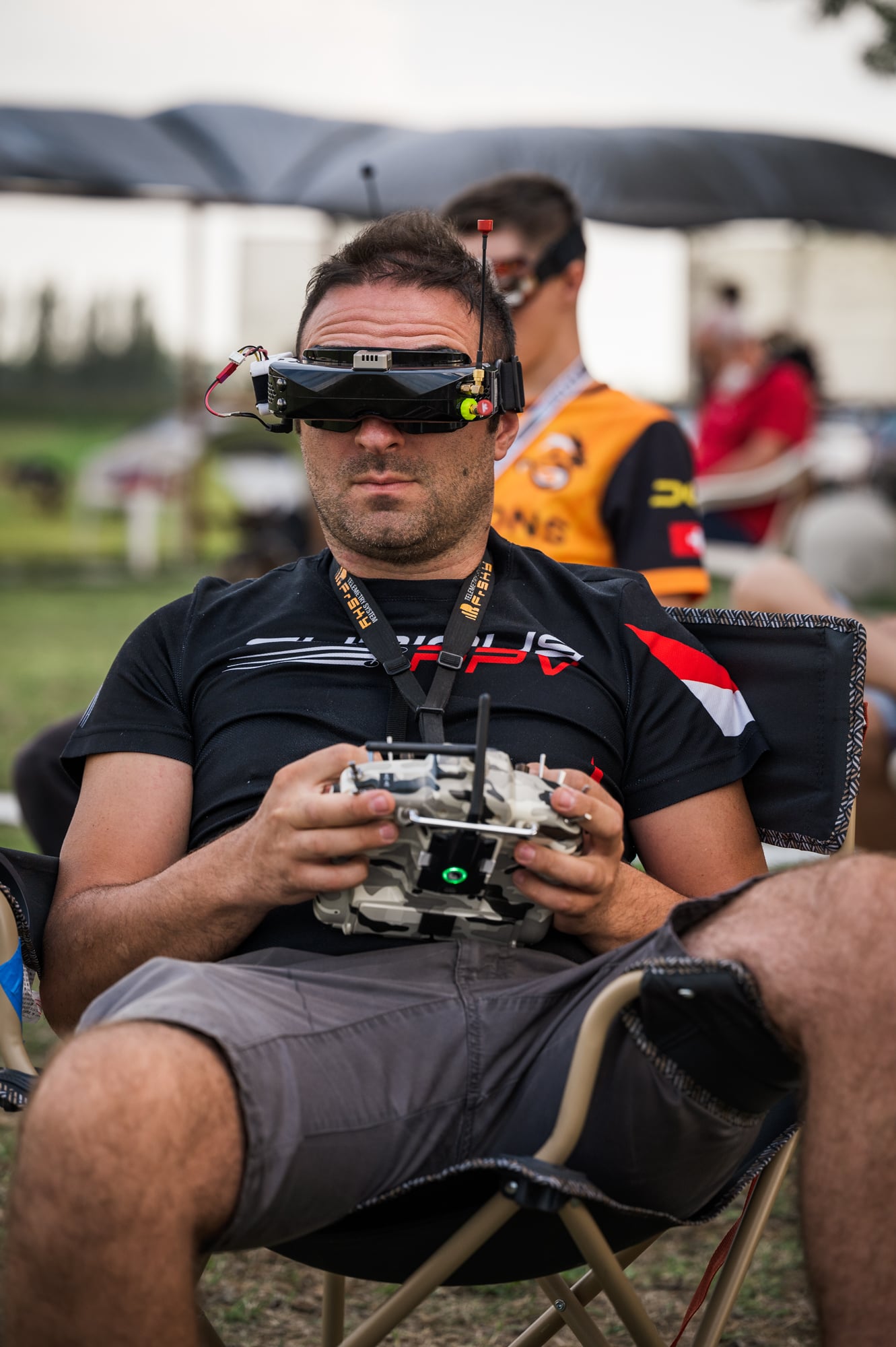
A broadcast module is a small transmitter you strap to an older airframe, and the obvious question is whether it leaks less. It does, in one specific way. Section 89.315 requires the module to broadcast the latitude, longitude and altitude of the take-off location rather than the live control station. Launch the aircraft, walk away, and the broadcast keeps pointing at the empty patch of grass you launched from.
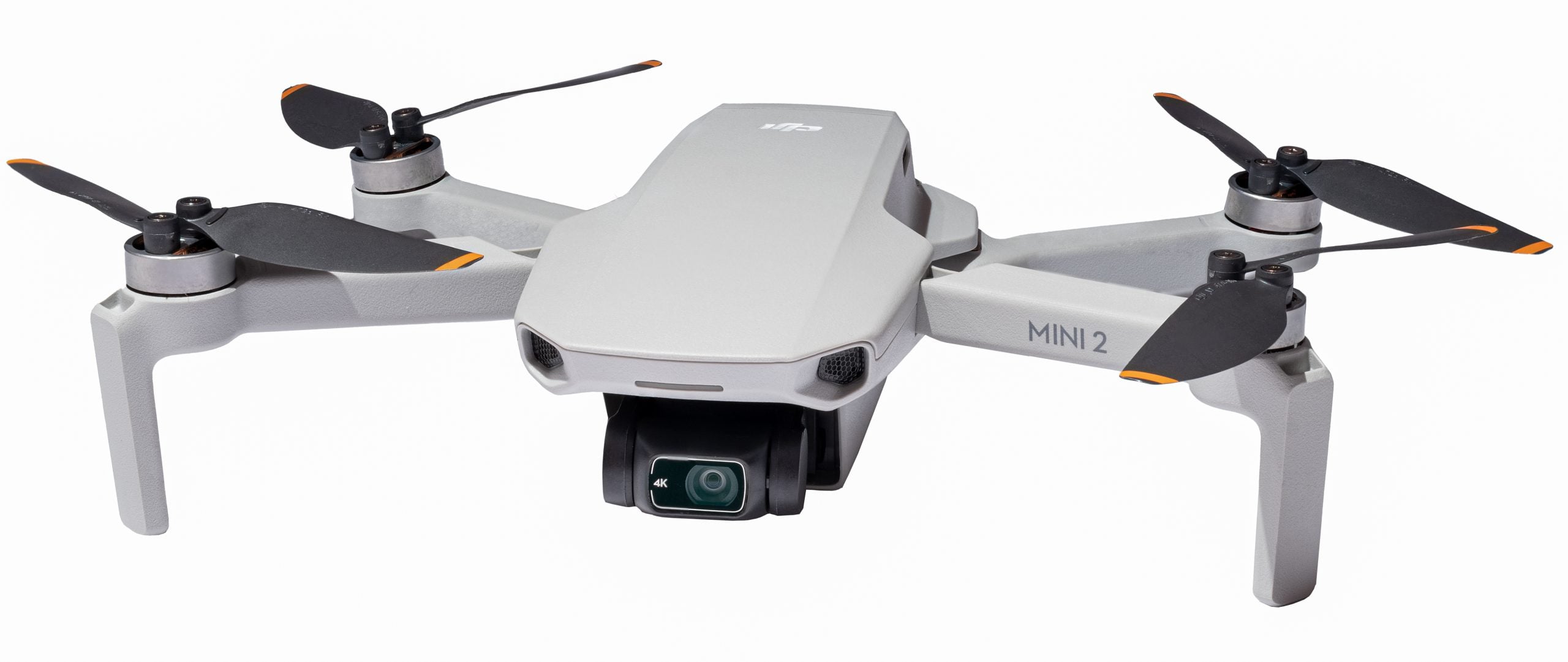
The FAA closed that door in the same breath it opened it. Section 89.115(a)(2)(ii) says the person flying a module-equipped aircraft must be able to see the unmanned aircraft at all times throughout the operation. No beyond-visual-line-of-sight work, no first-person-view goggles without a visual observer arrangement, and in practice not much walking away either. The privacy you buy with a module is paid for in operational freedom.
Both routes share a quieter requirement. Under § 89.110(a)(2) and § 89.115(a)(4), if the broadcast stops, the pilot must land as soon as practicable. A dead Remote ID transmitter is not a nuisance to be dealt with after the battery runs out; it ends the flight.
Where you can still fly with nothing fitted at all
The third compliance route is geographic. Section 89.115(b) lets you fly a drone with no Remote ID equipment whatsoever, provided both the aircraft and the pilot stay inside the boundaries of an FAA-recognised identification area and the pilot keeps the aircraft in sight.
FRIAs are deliberately hard to create. Section 89.205 limits eligibility to apply to two kinds of body: a community-based organisation recognised by the Administrator, and an educational institution — explicitly including primary and secondary schools, trade schools, colleges and universities. An individual cannot apply for one over his own back garden, and neither can a business.
That eligibility rule quietly handed the model-aircraft clubs a role nobody had asked them to play. A club field that has had a mown strip and a pilot box since the 1970s could keep flying unequipped aircraft only if its parent organisation went and asked the FAA for the designation. The FAA publishes the approved areas on a public map rather than as a running total, so the honest answer to “how many FRIAs are there” is that you have to go and count them.
A court was asked whether this is surveillance. It said no.
Tyler Brennan, who runs the FPV retailer RaceDayQuads, petitioned the D.C. Circuit to throw the rule out. His central argument was a Fourth Amendment one: requiring an aircraft to broadcast its operator’s live position to anyone with a receiver is a warrantless search of every drone pilot in the country.
The court disagreed, unanimously, on 29 July 2022. Writing for the panel in Brennan v. Dickson, No. 21-1087, Circuit Judge Cornelia Pillard held that the challenge failed because drone pilots generally lack any reasonable expectation of privacy in the location of their drone systems during flight.
The opinion drew a careful line around Carpenter, the 2018 case on 127 days of cell-site location data. The limited, local, real-time information sharing the Rule requires, Pillard wrote, is a far cry from the continuous surveillance the Supreme Court has held violates reasonable expectations of privacy.
One sentence in that opinion is more interesting than the result. Because Brennan brought a facial challenge — an attack on the rule in every possible application — the court only had to find that it was lawful somewhere. It held that Brennan had not shown that such data collection offends the Fourth Amendment in every application of the Rule. That leaves an as-applied challenge, by a specific pilot in specific circumstances, still standing on the table. Nobody has brought one yet.
What Remote ID cannot do
Start with the technology it is not allowed to use. Section 89.125 is a single sentence: ADS-B Out equipment cannot be used to comply with the remote identification requirements of this part. The transponder system that makes airliners visible to each other is explicitly ruled out — fitting it to hundreds of thousands of small drones would congest the very frequencies it exists to keep clear.
What is used instead is deliberately humble. Section 89.310(g) requires a non-proprietary broadcast specification on radio spectrum compatible with personal wireless devices under 47 CFR part 15 — which is regulatory language for Bluetooth and Wi-Fi, the radios already in every phone. That is why a bystander with a free app can read the broadcast. It is also why the range is a few hundred metres on a good day and the signal does not reach anybody who is not already standing nearby.
A practical demonstration of scanning Remote ID broadcasts, and of the difference the radio layer makes to what a phone can actually pick up.
Then there is the limitation nobody at the FAA pretends away. Remote ID is a broadcast standard, not a network. Part 89 contains no provision for a central feed, no live national picture, and no mechanism for a controller or a police dispatcher to query a drone remotely. Somebody has to be standing close enough to hear it. The FAA’s own description of what the rule achieves is correspondingly modest: it says Remote ID will help the agency, law enforcement and other federal agencies locate the control station when a drone appears to be flying in an unsafe manner or where it is not allowed to fly.
And the obvious one: a drone flown by someone who means harm will simply not broadcast. Tamper resistance under § 89.310(d) is a requirement that the manufacturer make interference difficult, not a guarantee it is impossible, and a home-built airframe with no FAA-accepted declaration of compliance behind it was never going to transmit in the first place. Remote ID is an accountability tool aimed at the careless and the merely curious. It is not an air defence system, and reading it as one is the commonest mistake made about it.
Which is the fair way to judge it. The rule does what a licence plate does. It makes the ordinary operator identifiable, it makes the reckless one findable, and it makes the determined one go to the trouble of breaking the law on purpose.
Sources: 14 CFR Part 89 (eCFR); Remote Identification of Unmanned Aircraft, final rule, 86 FR 4390, 15 January 2021; Enforcement Policy Regarding Operator Compliance Deadline for Remote Identification of Unmanned Aircraft, 88 FR 63518, 15 September 2023; FAA newsroom releases of 28 December 2020 and 15 March 2024; FAA Drones by the Numbers, November 2025; Brennan v. Dickson, No. 21-1087, U.S. Court of Appeals for the D.C. Circuit, 29 July 2022.



0 Comments