
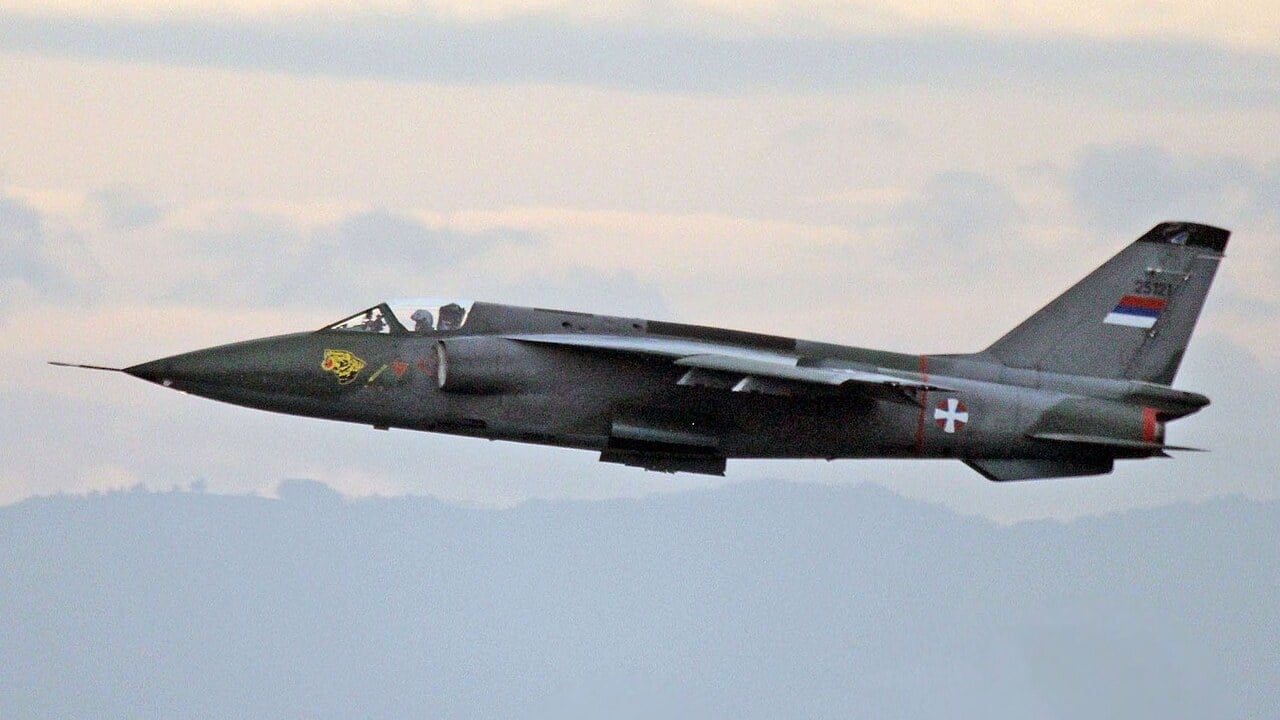
On 31 October 1974, two identical jets took off for the first time on the same day, in two different countries. One left Batajnica, near Belgrade. The other left Bacău, in Romania. The timing was deliberate: for political reasons, the two first flights were arranged to coincide.
In Yugoslavia the aircraft was called the Soko J-22 Orao. In Romania it was the IAR-93 Vultur. Both names mean “eagle”. It was a twin-engined attack jet built by two socialist countries that did not want to depend on Moscow, and for the aviation industries of both countries it was a major technological leap.
Half a century later, it is still flying in Serbia, and being modernised.
Kurzinfo
- Names: Soko J-22 Orao (Yugoslavia), IAR-93 Vultur (Romania); both mean “eagle”
- Programm: YuRom, agreed 20 May 1971
- Erste Flüge: 31 October 1974, Batajnica and Bacău, on the same day
- Rolle: Subsonic ground attack, reconnaissance and two-seat training
- Motoren: Two Rolls-Royce Viper turbojets, afterburning on later versions
- Waffen: Two twin-barrel 23 mm cannon
- Max weapons: About 2,800 kg
- Gebaut: Roughly 200 between the two countries
- Wars: Yugoslav wars of the 1990s
- Heute: Serbia only; Orao 2.0 modernisation
An eagle for the non-aligned
The idea took shape in 1970. On 20 May 1971, the governments of Romania and Yugoslavia signed the agreement that created YuRom, a joint research and development programme. Josip Broz Tito’s Yugoslavia and Nicolae Ceaușescu’s Romania both wanted military aircraft that did not come from the Soviet Union.
Yugoslavia needed a replacement for its F-84 Thunderjets and a heavier partner for the light J-21 Jastreb. Romania wanted to replace its MiG-17 fighter-bombers. The requirement called for a rugged, simple, easy-to-maintain jet that could fly from grass or damaged runways and use locally built equipment.
The original plan was more ambitious: a supersonic aircraft in the class of the Anglo-French Jaguar. It died on the engine. Britain would not allow the modern engine the designers wanted to be licence-built in Eastern Europe, so YuRom settled for two Rolls-Royce Vipers, an engine Soko already knew from licence production.
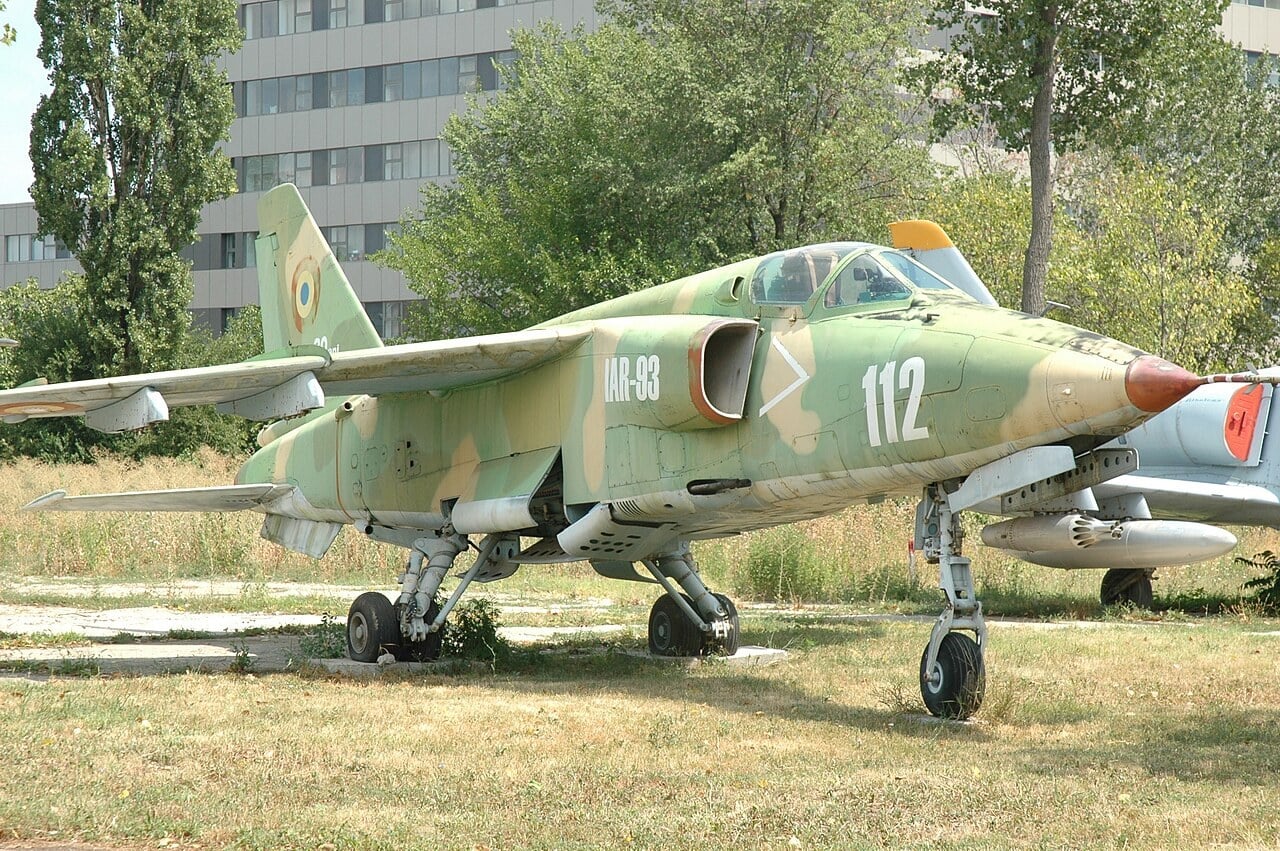
Twin Vipers and a missing afterburner
The result was a conventional, shoulder-winged twin-jet with swept wings and tail. It carried two twin-barrel 23 mm cannon in the lower fuselage and up to 2,800 kg of bombs, rockets and missiles, and pilots sat on Martin-Baker zero-zero ejection seats. It combined Western and Eastern avionics and weapons.
The weak point was thrust. An afterburner for the Viper was supposed to follow, but development dragged on for years, so the pre-production and early series aircraft flew without it. Many of the early non-afterburning jets in Yugoslavia were completed as reconnaissance aircraft.
Afterburning versions arrived in the 1980s: the J-22 Orao in Yugoslavia and the IAR-93B in Romania, with more fuel and heavier weapons loads. Even then, the jet stayed subsonic in level flight. It was never the Jaguar its designers had imagined.
Weapon Detective’s history of the IAR-93 Vultur and J-22 Orao, the joint jet of Romania and Yugoslavia.
Two production lines, one war
Romania built its Vulturs at Craiova, in the factory now known as Avioane Craiova, for the Romanian Air Force. Yugoslavia built its Oraos at Soko near Mostar. Series production ran from 1981 to 1992, and between them the two countries produced roughly 200 aircraft.
Then Yugoslavia broke apart. The Mostar plant was abandoned in early 1992 and heavily damaged in the fighting that followed. The Yugoslav Army stripped out what equipment it could, but series production of the J-22 never restarted anywhere.
The Orao went to war in the conflicts that destroyed the country that built it, flying ground-attack missions in the Yugoslav wars of the 1990s. Most of the surviving jets ended up in Serbia.
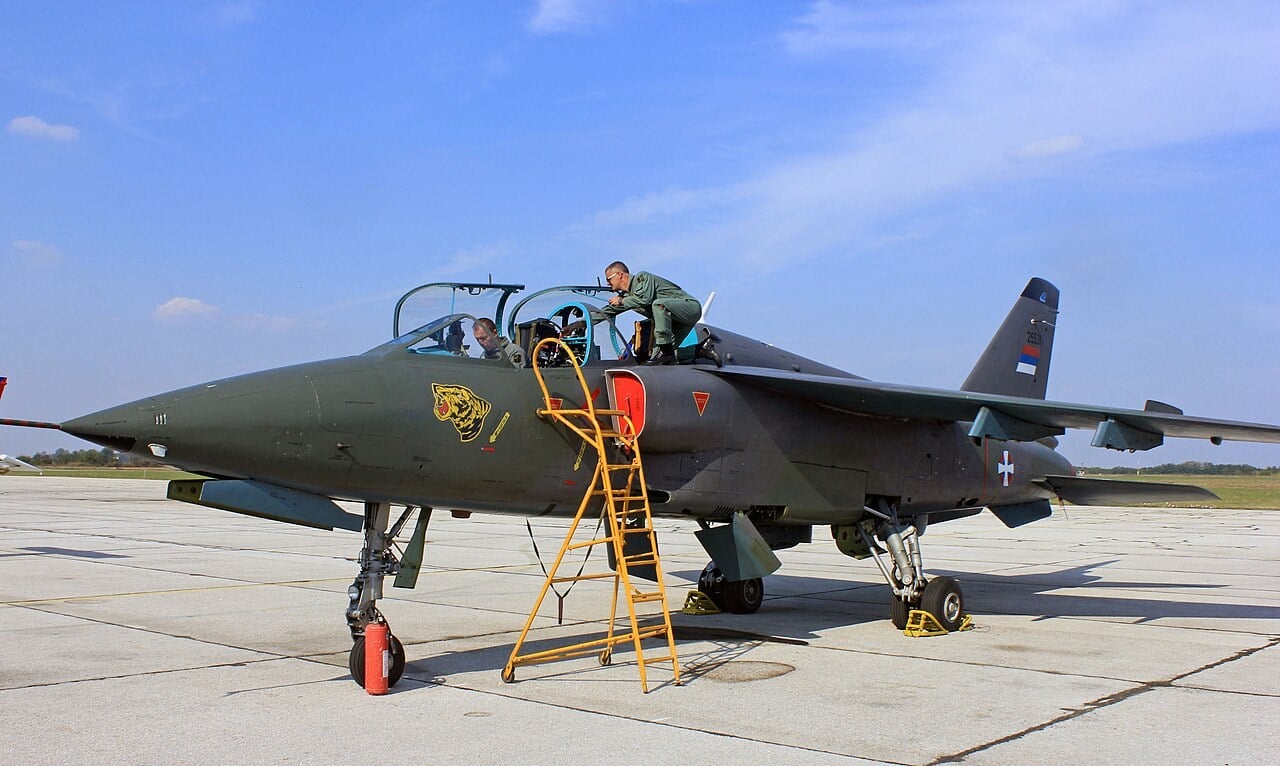
Romania, under a UN embargo on its former partner and in the turmoil after the fall of Ceaușescu, ended its programme in 1992 with airframes still unfinished on the line, and had retired the Vultur by the early 2000s. Several are preserved, including examples at the National Museum of Romanian Aviation in Bucharest.
Orao 2.0
That left Serbia as the last operator. By the mid-2010s only a few of its Oraos were airworthy. In April 2016, at the opening of a new hangar at Batajnica, the Serbian Air Force and Air Defence presented a modernisation programme for the type, unofficially known as Orao 2.0, with new navigation and targeting systems and new weapons.
In 2019 the Serbian Ministry of Defence went further and began examining Oraos that had been stored since the 1990s, because many had flown only around 500 hours against an expected airframe life of 3,000. The plan drew public criticism, and the ministry answered it directly.
Serbia’s Oraos still train with rockets on exercise ranges, and the airworthy jets are concentrated with the 241st Fighter-Bomber Squadron at Lađevci. For a jet whose prototype first flew when Tito and Ceaușescu were still in power, that is a remarkable run.
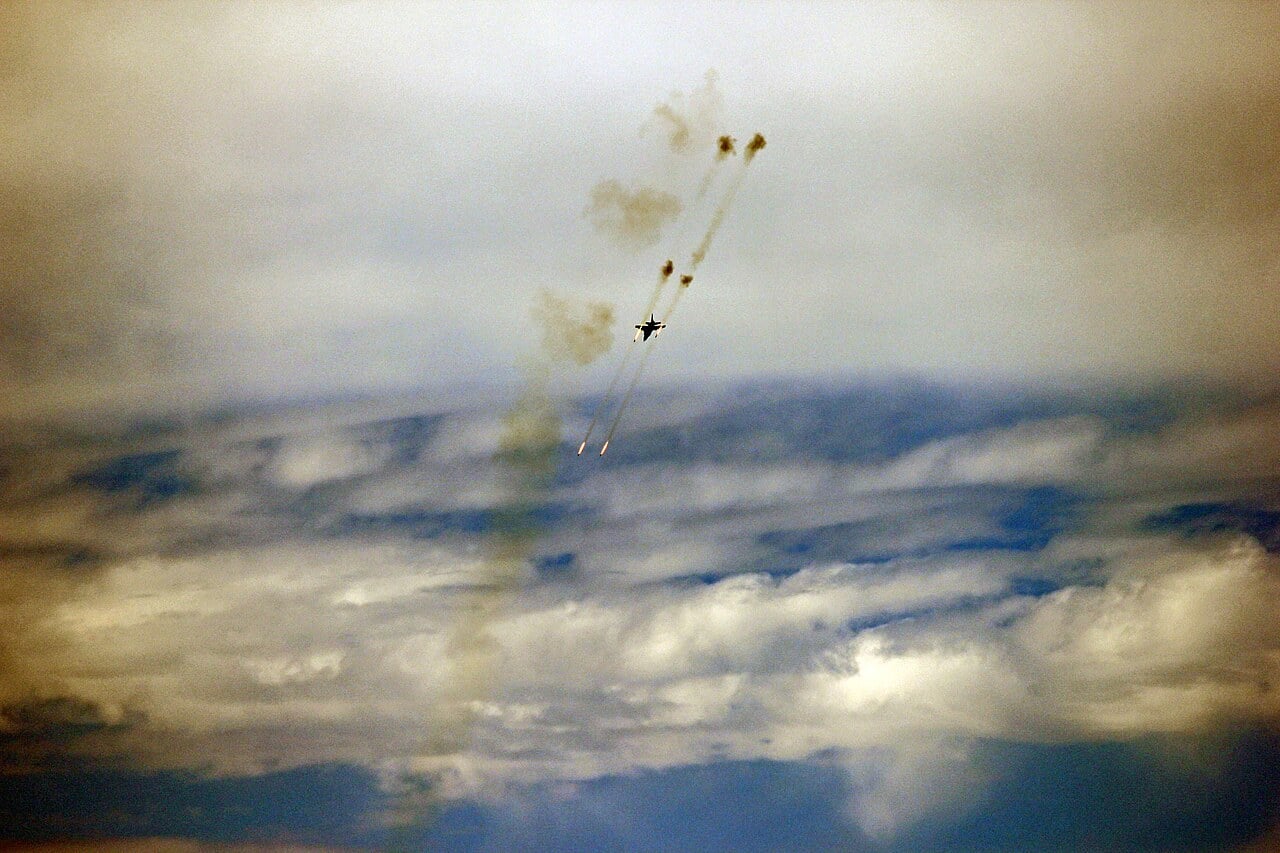
Serbian aviation outlet TangoSix at the presentation of the Orao 2.0 modernisation project.
The Orao never became the fighter of the non-aligned world its founders imagined. It was too slow for that, and the countries that built it did not survive in their original form. But two small air forces got a modern attack jet of their own design, and one of them still trusts it with its ground-attack mission.
Sources: GlobalSecurity.org, afterburner.com.pl (Poland), Serbian Ministry of Defence, TangoSix, Weapon Detective
Header photo: Srđan Popović / Wikimedia Commons, CC BY-SA 4.0
0 Comments