
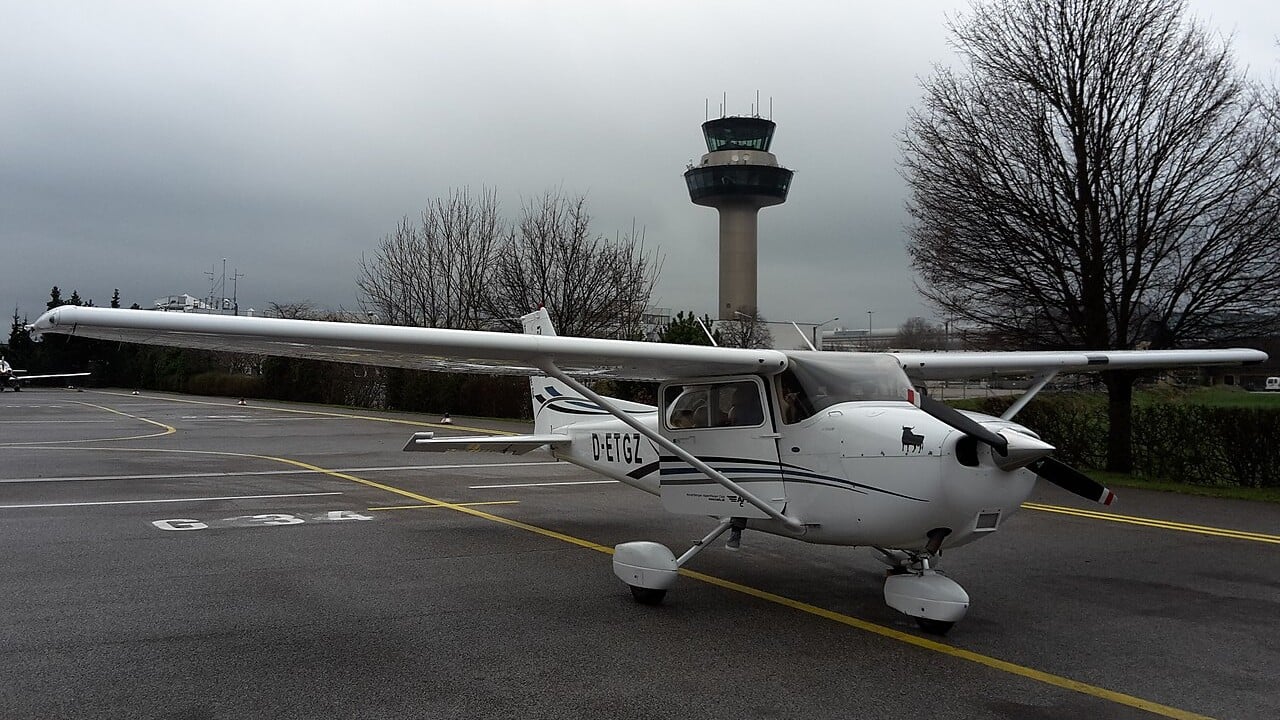
It is 7 a.m. on a clear Saturday. You are doing the walk-round on a club Cessna 172, flip the master on, and the beacon on top of the fin stays dark. Everything else works. The sky is blue, the flight is a local VFR hop, and you have a decision to make: go or no-go?
An airline pilot in that position would reach for a thick binder called the Minimum Equipment List. Afterburner explained how that works for airliners in our guide to the MEL, MMEL and CDL. But ask whether a Cessna 172 has a Minimum Equipment List and the answer surprises most student pilots: almost certainly not. Light aircraft live by a different, simpler and in some ways stricter set of rules.
Kurzinfo
- Short answer: Most Cessna 172s have no MEL, although an owner can obtain one
- Three routes: An MEL with a letter of authorisation, 14 CFR 91.213(d), or a special flight permit
- 91.213(d) eligible: Non-turbine small aeroplanes such as the 172; not turbine-powered aeroplanes
- Four checks: Type-certification VFR-day equipment, equipment list and KOEL, 91.205 and other rules, airworthiness directives
- Then: Remove or deactivate, placard “Inoperative”, and a pilot or mechanic decides it is not a hazard
- Repair deadline: Next required inspection; MEL repair categories A to D do not apply under Part 91
- KOEL: Section 2 of the 172S Nav III manual; strobes required, beacon not
- FAA guidance: AC 91-67A, October 2023
Three ways to fly with something broken
The starting point is blunt. Under US rules, every instrument and item of equipment installed on an aircraft must work before take-off, unless the regulations give you a way out. The FAA’s advisory circular on general aviation equipment, AC 91-67A, issued in October 2023, lists exactly three.
The first is a Minimum Equipment List with a letter of authorisation. The second is the procedure in 14 CFR 91.213(d), written for aircraft that have no MEL at all. The third, for an aircraft that cannot meet either, is a special flight permit to fly it somewhere it can be fixed, which we covered in our ferry permit explainer.
For the typical Skyhawk at a flying club, the second route is the one that matters. And it is the one most pilots half-remember from their checkride.
Can a Cessna 172 have an MEL?
Yes, it can, and that is the first surprise. An owner does not have to be an airline. Under 91.213(a), any operator can ask its local FAA Flight Standards office for a letter of authorisation to use an MEL. For single-engine aircraft without a type-specific master list, AC 91-67A says the operator may use the FAA’s generic Single-Engine Airplanes MMEL as the starting point.
The regulation then does something remarkable. The Minimum Equipment List and the letter of authorisation together constitute a supplemental type certificate for the aircraft. A club Cessna operating under an MEL is, legally, a modified design.
The second surprise is what happens to the famous repair categories. Airline MELs put each deferrable item into category A, B, C or D, each with its own repair clock. For a Part 91 MEL, the FAA says plainly that those letters do not bind the operator.
Instead, any interval written into an individual item’s conditions must be honoured, and every deferred item must be repaired, replaced, removed or inspected at the next required inspection, such as the annual, whichever comes first. Most club and private 172s, though, simply have no MEL. Which brings us back to the dark beacon.
91.213(d): the four-question test
Section 91.213(d) lets you take off with inoperative equipment and no MEL, provided the aircraft qualifies and four conditions are met. A non-turbine small aeroplane like the 172 qualifies; a turbine-powered aeroplane does not, according to AC 91-67A. The test itself runs in order.
One: is the item part of the VFR-day equipment required by the airworthiness rules the aircraft was certificated under? Two: is it shown as required on the aircraft’s equipment list, or on the Kinds of Operations Equipment List for the flight you are about to make? Three: is it required by 91.205 or any other operating rule for that kind of flight? Four: does an airworthiness directive require it to work? A yes to any of these and the aircraft stays on the ground until it is fixed.
Four noes, and you still are not quite done. The broken item must either be removed, with its cockpit control placarded and the maintenance recorded, or deactivated and placarded “Inoperative”. Then a certificated pilot or an appropriately rated mechanic must decide that the inoperative item does not constitute a hazard to the aircraft.
FlightInsight walks through how to tell whether an inoperative item grounds a light aircraft.
The KOEL: the list in your POH that answers question two
The Kinds of Operations Equipment List, or KOEL, is the least-read page in many pilots’ handbooks. AC 91-67A explains that aircraft certificated under Part 23, which includes the 172, may have one, and that it specifies the kinds of operation the aircraft is approved for, VFR or IFR, day or night, and the equipment each one requires. There is no standard format.
In Cessna’s Information Manual for the G1000-equipped 172S Nav III, it sits in Section 2, Operating Limitations, as a table with four columns: VFR day, VFR night, IFR day and IFR night. A 1 means required, a 0 means not required. Some of the entries are not what you would guess.
The anti-collision strobes are required for every kind of operation, but the beacon on the fin is listed as zero across the board. The taxi light is zero too. The landing light is required only at night, and the comment column limits even that to operations for hire. The position lights are not needed for VFR by day, but are required for IFR even in daylight. The stall warning system, the electric fuel pump, the flap position indicator and the elevator trim indicator are required for everything. The wheel fairings, as you would hope, are optional.
So in that particular aircraft, the dark beacon passes question two. It is not obviously caught by the other three either, although the pilot still has to check the aircraft’s own equipment list and any applicable ADs. Older 172s may not have a KOEL at all, in which case the type certificate data and the equipment list do more of the work.
91.205 and ATOMATOFLAMES
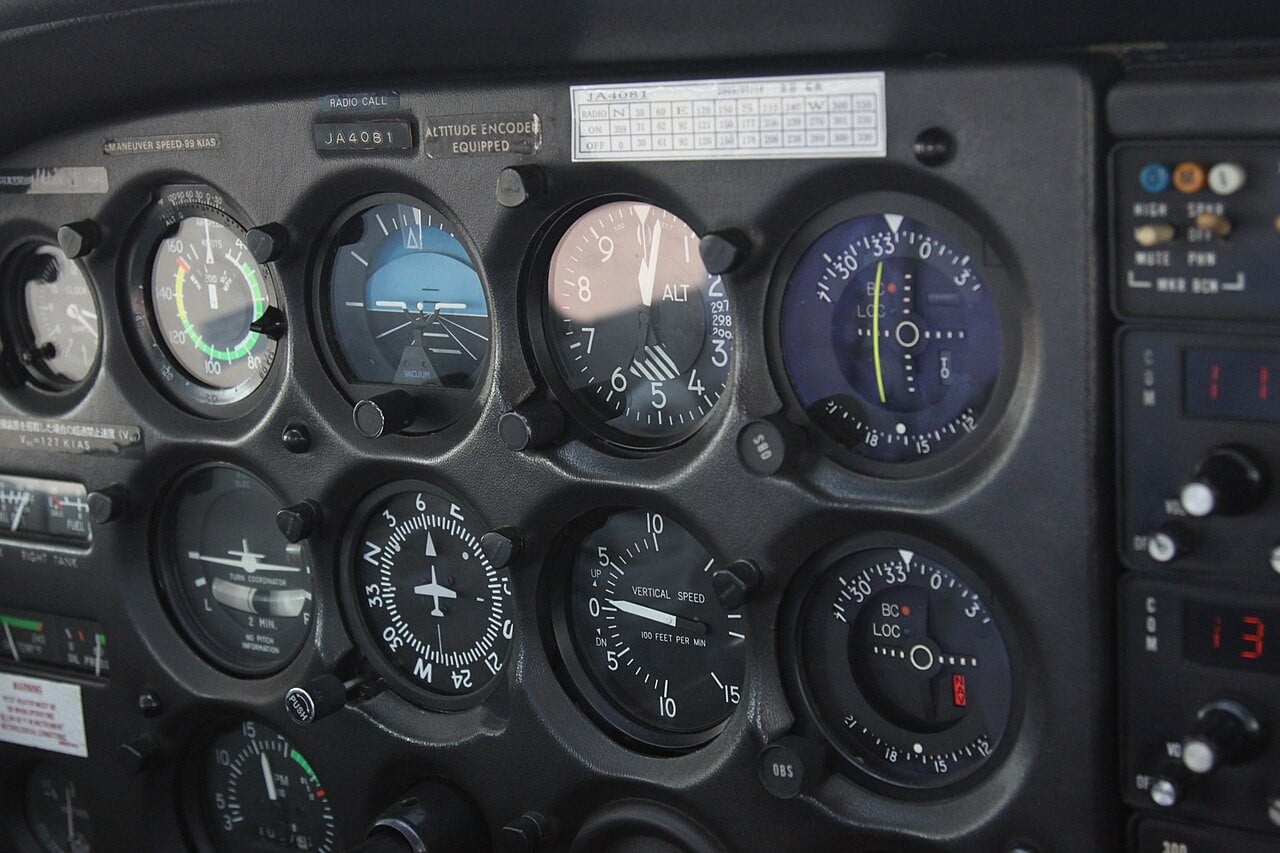
Question three sends you to 14 CFR 91.205, the general list of instruments and equipment every powered aircraft with a standard airworthiness certificate must carry for each kind of flight. Flight schools teach the VFR-day list with the mnemonic ATOMATOFLAMES: airspeed indicator, tachometer, oil pressure gauge, manifold pressure gauge for an altitude engine, altimeter, temperature gauge for a liquid-cooled engine, oil temperature gauge, fuel gauge for each tank, landing gear position indicator if retractable, anti-collision lights on small aeroplanes certificated after 11 March 1996, magnetic compass, ELT if required, and safety belts and shoulder harnesses.
The anti-collision item is worth reading carefully. For VFR by day, 91.205 requires an anti-collision light system only on small aeroplanes certificated after 11 March 1996, and it lets a flight continue to a place where repairs can be made if one light of the system fails. At night it requires anti-collision lights on all US-registered civil aircraft, plus position lights, a landing light if flying for hire, an adequate source of electrical power and spare fuses.
That is why the KOEL and 91.205 must be read together. The regulation sets the floor, the aircraft’s own limitations can raise it, and 91.213(d) only works if the broken item clears both.
Deactivating is maintenance, not a flick of a switch
Here is the part that catches owners out. The rule says the item must be deactivated and placarded, and it adds that if deactivation involves maintenance, it must be done and recorded under Part 43. The FAA’s guidance takes a firm line on what that means.
AC 91-67A goes on to say that deactivating an inoperative system is not preventive maintenance in the Part 43 sense, and that a person authorised to approve the aircraft for return to service must make the logbook entry. Pulling a circuit breaker and sticking a label on it may be the right physical action, but the paperwork behind it is a mechanic’s job.
The placard itself has no set form. According to the AC, it should be legible and visible to the crew, sit next to the affected control or indicator where practical, and not obscure anything else. “INOP” on a strip of tape next to the switch is the familiar result.
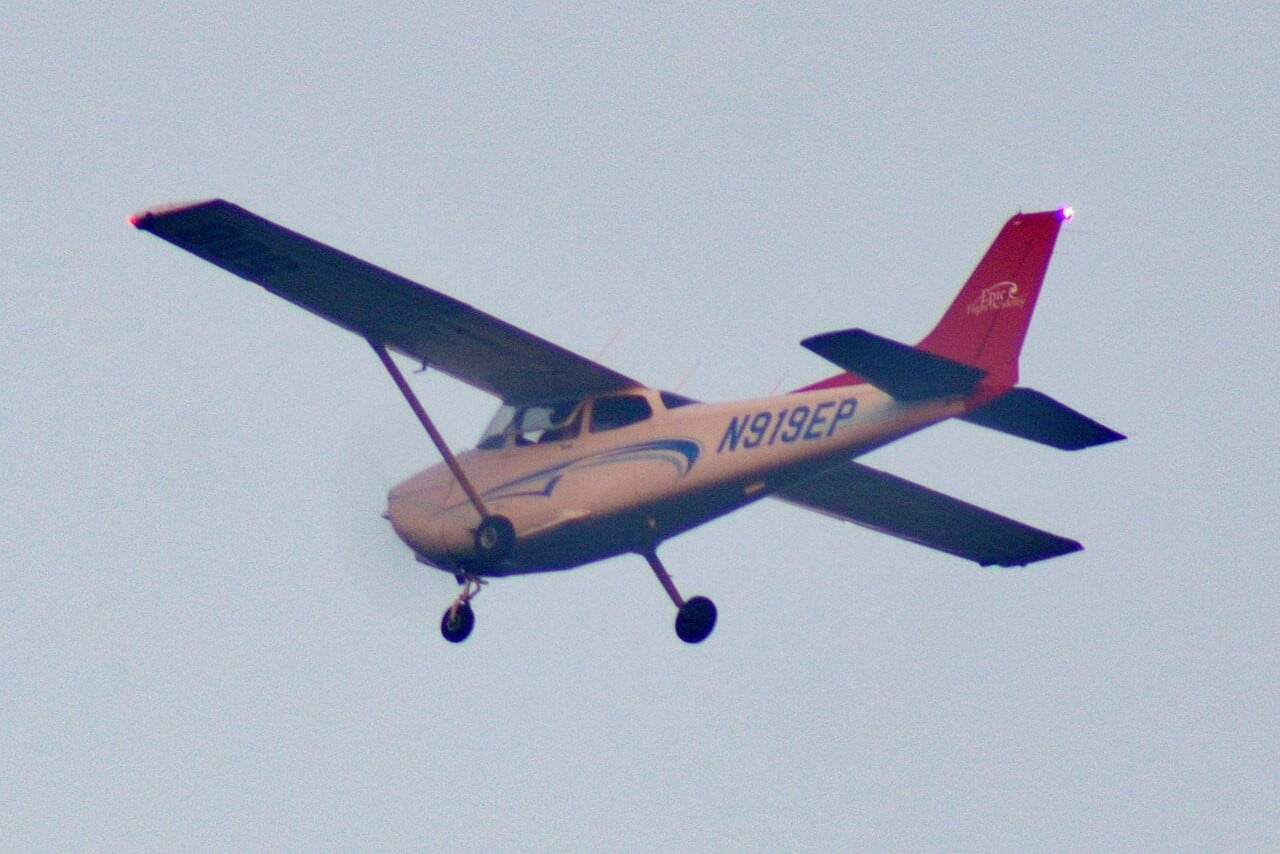
Epic Flight Academy on handling inoperative equipment in a training aircraft.
How long can it stay broken?
Without an MEL there is no 3-day or 10-day clock. AC 91-67A says the operator must make sure any item that was allowed to be inoperative under 91.213(d) is repaired, replaced, removed or inspected at the next required inspection. For most private 172s that means the annual inspection, or the 100-hour inspection for aircraft carrying people for hire or rented out for flight instruction.
At that inspection, the inspector must give the owner a signed and dated list of discrepancies not repaired and make sure every item still inoperative is properly placarded. The system relies on the aircraft returning to a mechanic regularly, rather than on a calendar.
The AC also asks pilots to think beyond the checklist before flying with anything broken: whether several small failures combine into a bigger problem, what the weather will do, whether the flight runs into night, and what the departure and destination airports demand.
The short answer
Does a Cessna 172 have a Minimum Equipment List? Usually not, though an owner can obtain one. Most fly instead under 91.213(d): check the type certificate requirements, the equipment list and KOEL, 91.205 and the ADs; have the item properly deactivated or removed and placarded; decide it is not a hazard; and get it fixed by the next inspection.
Back on the ramp at 7 a.m., the dark beacon on a 172S Nav III is not the end of the day. A dead stall warning system would be. Knowing which is which is exactly what the examiner is checking for when the question comes up on the checkride.
Sources: US eCFR (14 CFR 91.213, 91.205), FAA Advisory Circular 91-67A (16 October 2023), Cessna Model 172S Nav III Information Manual (Section 2, Kinds of Operations Equipment List), Sporty’s Pilot Shop (ATOMATOFLAMES)
Header photo: Asurnipal / Wikimedia Commons, CC BY-SA 4.0

0 Comments