
Shortly before 2 a.m. Eastern time on 15 November 2021, the seven people aboard the International Space Station were woken up and told to get into their spacecraft. A few hours earlier a Russian missile launched from Plesetsk had smashed into Kosmos 1408, a dead Soviet spy satellite, and its debris was now crossing the station’s orbit every hour and a half. Two of the people sheltering in their capsules were Russian cosmonauts.
Washington called the test reckless. Moscow said it posed no threat. What almost nobody claimed was that it was illegal. That is the uncomfortable answer to a question that comes up every time a country shows off a new counterspace weapon: are space weapons legal? Mostly, yes. Here is what international law actually bans in space, what it does not, and why destroying a satellite sits in the gap.
Kurzinfo
- Main treaty: Outer Space Treaty, opened for signature 27 January 1967, in force 10 October 1967
- Banned in orbit: Nuclear weapons and other weapons of mass destruction (Article IV)
- Moon and celestial bodies: Peaceful purposes only; no bases, weapons tests or manoeuvres
- Not explicitly banned: Conventional weapons in orbit, ground-launched ASAT missiles, lasers, jammers
- Liability: Launching state liable for damage by its space objects (Article VII, 1972 Liability Convention)
- Destructive ASAT tests: US 1985 and 2008, China 2007, India 2019, Russia 2021
- Test moratorium: UN General Assembly resolution 77/41, 7 December 2022: 155 for, 9 against, 9 abstentions; non-binding
What the Outer Space Treaty bans
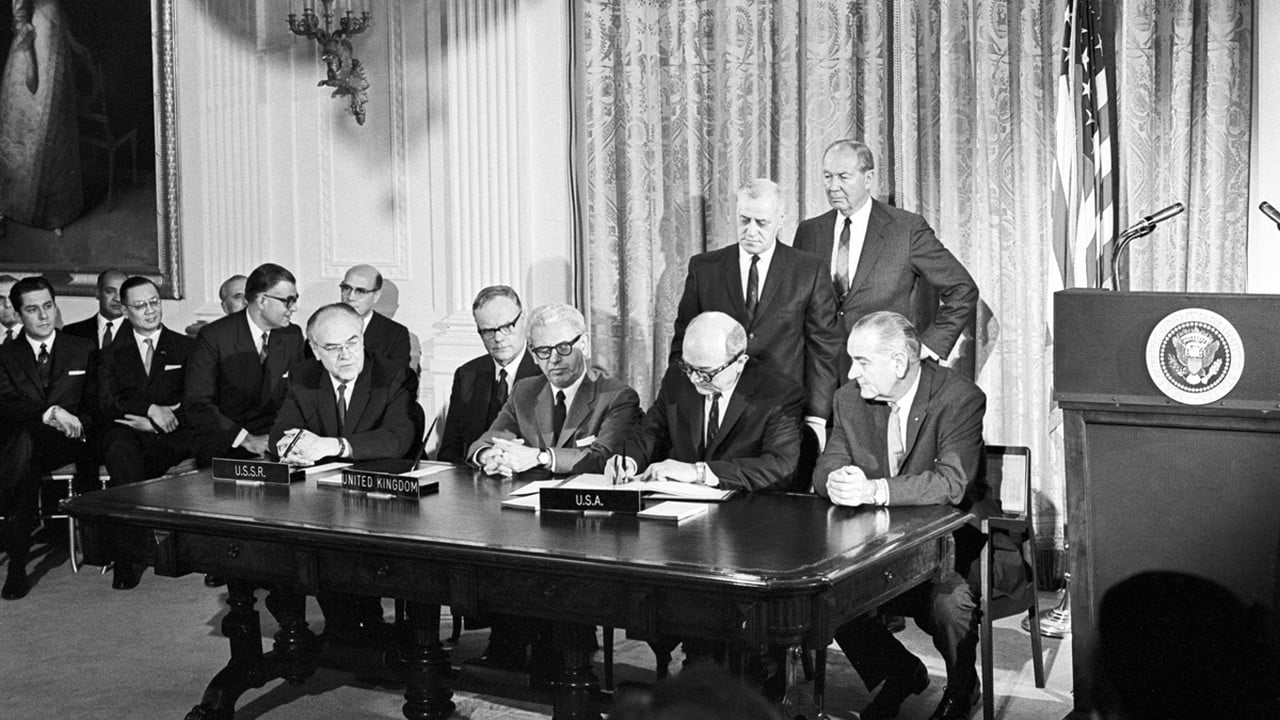
The foundation of space law is the 1967 Outer Space Treaty. It opened for signature in Washington, London and Moscow on 27 January 1967 and entered into force on 10 October that year. All the major spacefaring nations are parties. Its weapons rules sit in a single article, and they are worth reading in full.
Read carefully, Article IV does two different things. For Earth orbit and space in general, it bans only one category: nuclear weapons and other weapons of mass destruction. For the Moon and other celestial bodies, it goes much further, reserving them exclusively for peaceful purposes and banning bases, weapons tests and manoeuvres there.
What Article IV does not mention is just as important. It says nothing about conventional weapons in orbit, nothing about missiles fired from the ground or from aircraft at satellites, and nothing about lasers, jammers or cyber attacks. Afterburner has looked at the orbit-to-ground side of that gap in its coverage of the MBDA and ATMOS PODS study and of the ETH Zurich warning about weapons in orbit. This piece is about the other side: shooting satellites down.
Is it legal to destroy a satellite?
No treaty directly prohibits anti-satellite (ASAT) weapons that use conventional warheads. That includes the direct-ascent type, a missile launched from the ground, a ship or an aircraft to collide with a satellite. Every country that has tested one has done so against its own satellite, which removes the most obvious legal problem: nobody else’s property was attacked.
That does not mean there are no rules. Article III says space activities must follow international law, including the UN Charter, so attacking another country’s satellite would be judged by the same rules on the use of force that apply on Earth. Article VI makes states responsible for their national space activities. Article VII, expanded by the 1972 Liability Convention, makes a launching state liable for damage its space objects cause to other states, on Earth, in the air or in space. Debris from a test is still that state’s space object.
Then there is Article IX, the treaty’s closest thing to an environmental clause. States must act with “due regard” to the interests of others, and a state that has reason to believe an activity it plans would cause potentially harmful interference with other states’ peaceful activities must hold appropriate international consultations first. Critics of debris-producing tests argue that blowing up a satellite in a busy orbit is exactly that kind of activity. But the treaty sets no penalty, and nobody has ever been taken to court over it.
Wendover Productions explains the treaties that govern what countries can and cannot do in space.
Four countries, four debris clouds
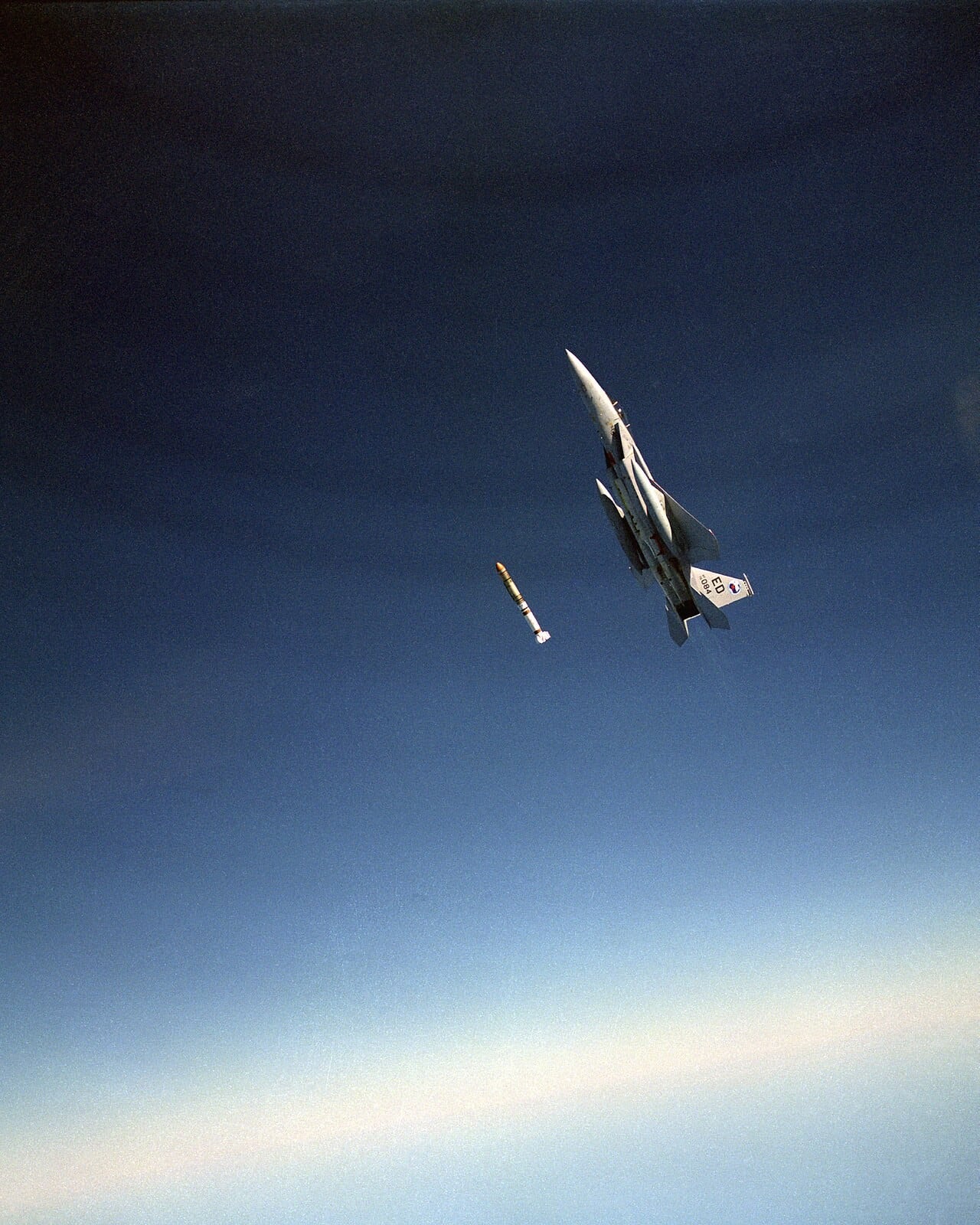
Four countries have destroyed satellites in orbit. The first was the United States. On 13 September 1985 an F-15 Eagle climbing over the Pacific fired an ASM-135 missile that destroyed the Solwind P78-1 research satellite at about 555 km, a story told in Afterburner’s ASM-135 history. The programme was cancelled in 1988.
On 11 January 2007 China destroyed its own Fengyun-1C weather satellite at about 860 km with a missile launched from near Xichang. The altitude made the result far worse than earlier tests, because debris at that height stays in orbit far longer than debris close to the atmosphere. In February 2008 the US Navy used a ship-launched SM-3 interceptor to destroy the failed reconnaissance satellite USA-193 at about 247 km. Washington said the aim was to stop its toxic hydrazine fuel reaching the ground; Russia’s defence ministry accused Washington of testing an anti-satellite weapon.
India followed on 27 March 2019 with Mission Shakti, destroying a test satellite at about 300 km and saying the low altitude would bring the debris down within weeks. Then came the Russian test of 15 November 2021. The US government said it generated more than 1,500 pieces of trackable debris and would likely produce hundreds of thousands of smaller fragments.
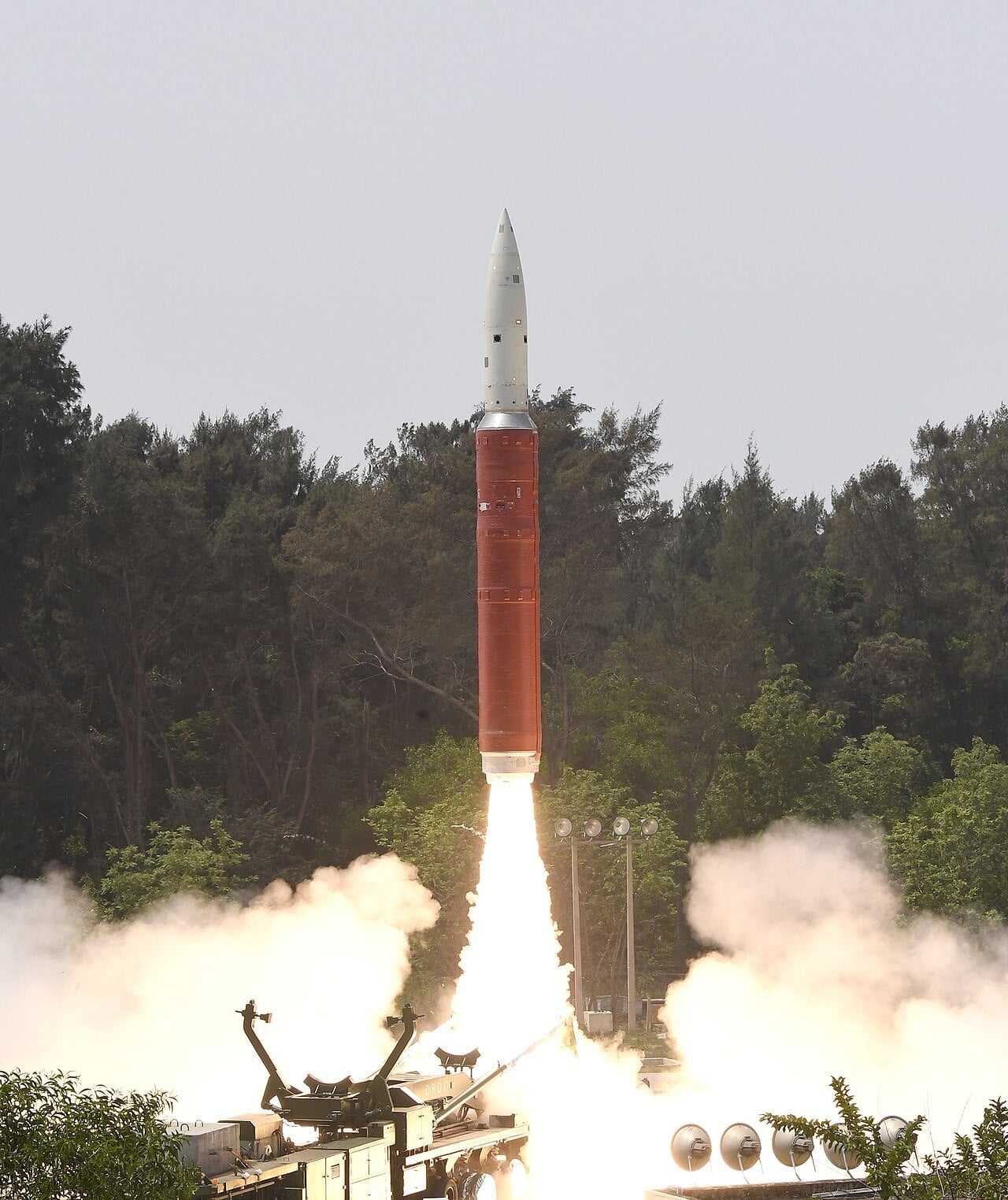
Russia’s defence minister Sergei Shoigu acknowledged the test and said the debris posed no threat to space activities. NASA’s administrator saw it differently.
From outrage to a norm: the testing moratorium
Because the law was silent, the response came as politics rather than prosecution. On 18 April 2022 US Vice President Kamala Harris announced that the United States would not conduct destructive direct-ascent ASAT missile tests, and asked other countries to make the same commitment. Several allies followed.
On 7 December 2022 the UN General Assembly adopted resolution 77/41, calling on all states not to conduct destructive direct-ascent anti-satellite missile tests. It passed by 155 votes to 9, with 9 abstentions. China and Russia voted against; India abstained.
The moratorium is narrower than it sounds. It does not ban owning ASAT missiles, developing them, or testing them against a point in space rather than a real satellite, which is how Russia tested its Nudol system several times before 2021. And a General Assembly resolution is a political commitment, not a binding treaty. What it does create is a norm: the next country to fill an orbit with debris will be breaking a standard that most of the world has publicly endorsed.
Why there is still no space weapons treaty
There have been attempts to close the gap. In February 2008 Russia, with China as co-sponsor, presented a draft treaty at the Conference on Disarmament in Geneva that would ban placing any weapon in orbit and the threat or use of force against space objects. The United States rejected it, arguing among other things that it would do nothing to stop ground-, sea- and air-launched anti-satellite weapons, exactly the kind China had used a year earlier, and that dual-use satellites make a ban hard to verify.
Even the one firm rule in Article IV has come under pressure. On 24 April 2024 Russia vetoed a UN Security Council resolution, drafted by the United States and Japan, that would have reaffirmed the ban on nuclear weapons in orbit. The vote was 13 in favour, Russia against and China abstaining. Russian President Vladimir Putin said publicly that Russia had no intention of putting a nuclear weapon in orbit.
The 1979 Moon Agreement, which builds on the Outer Space Treaty’s rules for the Moon and other celestial bodies, adds little. Fewer than 20 states have joined it, and none of them is the United States, Russia or China.
Guardian News reports US reaction to the Russian anti-satellite test of November 2021 and the debris it created.
So, are space weapons legal?
The short answer: nuclear weapons and other weapons of mass destruction in orbit are banned, and so is any military use of the Moon and other celestial bodies. Almost everything else is not explicitly prohibited, including conventional weapons in orbit, ground-launched ASAT missiles, lasers and jammers. Using any of them against another country’s satellite would be governed by the UN Charter like any other use of force, and the attacker would be liable for the damage.
What has changed since 2021 is not the law but the cost of breaking the norm. A destructive ASAT test now carries a diplomatic price, and the debris it creates threatens everyone in orbit, including the country that fired the missile. Kosmos 1408 made that point with the station’s own crew sheltering in their capsules. The treaty written in 1967 never imagined that the most dangerous thing about a space weapon might be the mess it leaves behind.
Sources: UN Office for Outer Space Affairs (Outer Space Treaty text), NASA, US Office of Space Commerce, SpacePolicyOnline, UN General Assembly (A/RES/77/41), Arms Control Association, Associated Press, Wikipedia (Outer Space Treaty; Anti-satellite weapon; Kosmos 1408; Moon Treaty)
Header photo: ITU / Wikimedia Commons, CC BY 2.0

0 Comments