
In April 1994, the city of Denver invited reporters to watch the first public test of the baggage system at its brand-new airport. It was meant to be the future: an underground, computer-driven railway that would whisk every suitcase from check-in to aircraft without a human hand. Instead, the reporters watched carts fling luggage off the tracks and saw clothes and personal belongings scattered beneath the rails.
The mayor cancelled the planned opening. Denver International did not open until 28 February 1995, sixteen months late, and the automated system that was supposed to be its crowning feature was eventually switched off for good in 2005.
That story is the extreme version of something that happens quietly billions of times a year. Every checked bag has to cross a building it cannot see, pass through machines that X-ray it, find its own flight among hundreds, and be in the hold before the door closes. Here is how a suitcase actually gets from the check-in desk to the aircraft, and why, according to SITA, 24 million bags still went astray in 2025.
Kurzinfo
- Bag tag number: Ten-digit IATA licence plate in barcode form
- Tracking rule: IATA Resolution 753: track at acceptance, loading, transfer and arrival
- Mishandled bags, 2025: 24 million, with about 5 billion passengers flying (SITA)
- Change: Mishandling rate down 23% in 2025 (SITA)
- Main cause: Transfers: 39% of mishandled bags in 2025 (SITA)
- Kosten: US$6.3 billion a year, average US$260 per bag (SITA)
- Denver lesson: US$250 million automated system, abandoned by United in 2005
Step one: the tag is the bag
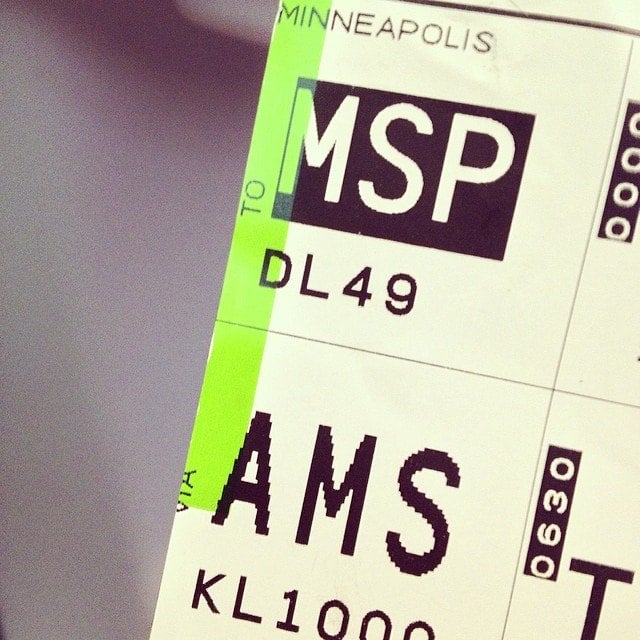
Everything starts with the strip of sticky paper the agent or the self-service bag drop wraps around your handle. To the baggage system, that tag is the bag. Its barcode carries a ten-digit number that IATA calls the licence plate.
The licence plate itself says almost nothing about where you are going. It contains the airline’s three-digit numeric code and a serial number, with the first digit used as a flag: zero for a normal airline tag, one for a fallback tag printed by the airport’s own system, two for a rush tag on a bag flying alone to catch up with its owner. The real information sits elsewhere, in an electronic Baggage Source Message that the airline’s departure control system sends to the airport, linking that number to your flight, your connections and your destination.
That is why the printed tag shows the big three-letter airport code and the flight numbers in human-readable form too. If the scanners fail, a person can still read it. And it is why a bag tag with a missing or smudged barcode is the start of most problems.
Step two: into the machine, and through the X-ray
Behind the check-in wall, the bag drops onto a conveyor and enters the baggage handling system, a network of belts that can run for kilometres through the basement of a large terminal. Automatic tag readers, arrays of lasers or cameras that look at the bag from every angle, read the licence plate as it passes. The system looks up the matching message and knows where the bag has to go.
Before it goes anywhere near an aircraft, though, it has to be cleared by security. In the United States, the Transportation Security Administration builds this into the conveyors as a Checked Baggage Inspection System. According to the TSA, explosive detection system units generate a 3D X-ray image of each bag and decide whether it is cleared for travel or needs follow-up screening.
If the machine flags something, the image goes to a screening officer elsewhere in the building. If the officer cannot clear it on screen, the bag is pulled off and opened, on camera, and the passenger later finds a notice of inspection inside. Most bags pass through in seconds without anyone touching them.
BBC Earth Science follows a suitcase through the baggage system after check-in, from the series City in the Sky.
Step three: sorting and make-up
Cleared bags are then sorted. Diverters push them off the main line onto the correct branch, or, in newer installations, each bag rides in its own tray or tote that the system can route individually. The destination is the make-up area: the row of chutes or carousels where each departing flight has its own position.
Make-up is where machines hand over to people. Handlers lift each bag into a baggage cart or, for a wide-body flight, into an aircraft container, scanning it as they go. That scan matters. It tells the airline the bag has been loaded for that flight, and it feeds reconciliation, the check that every bag in the hold belongs to a passenger who is actually on board.
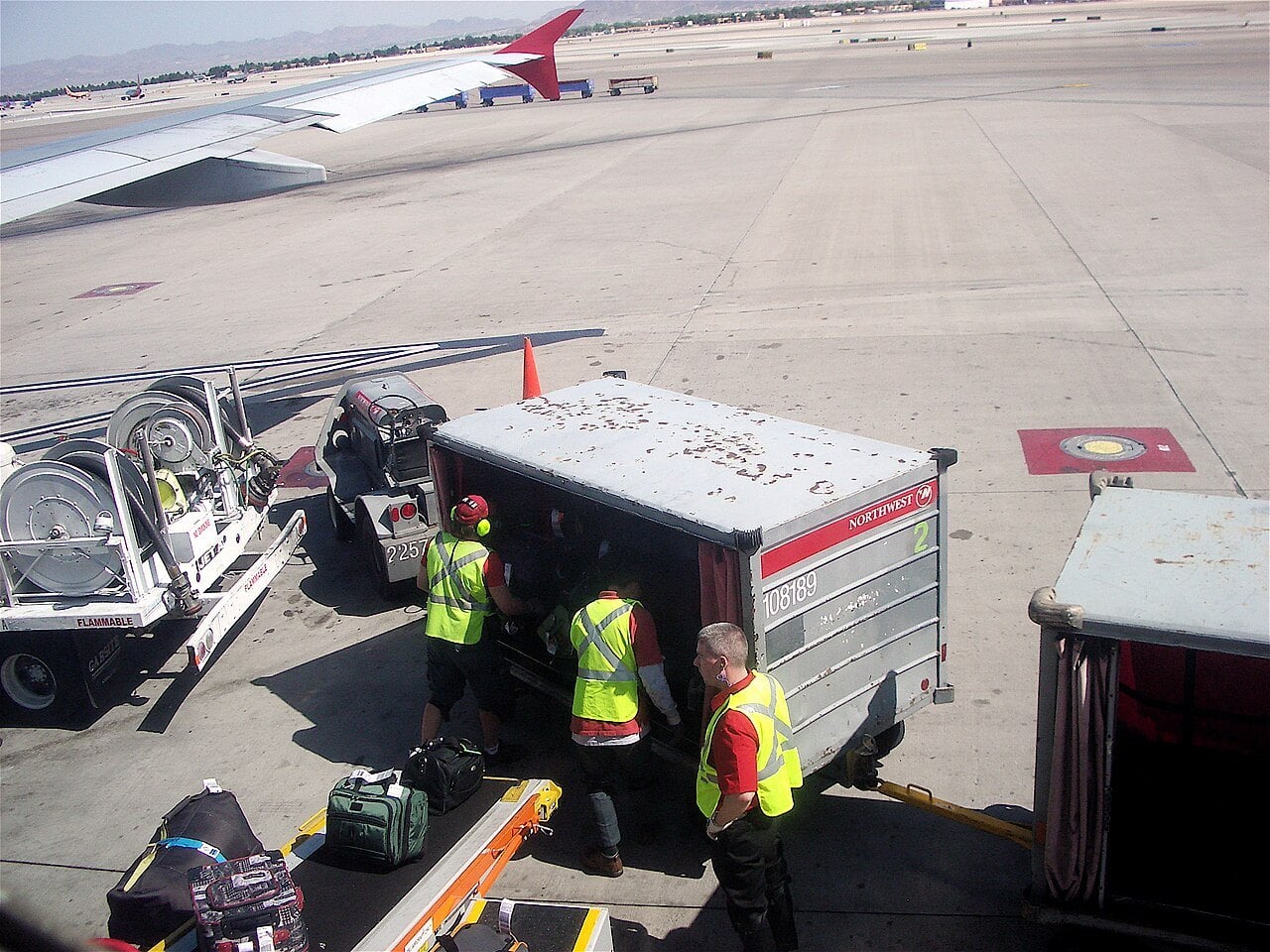
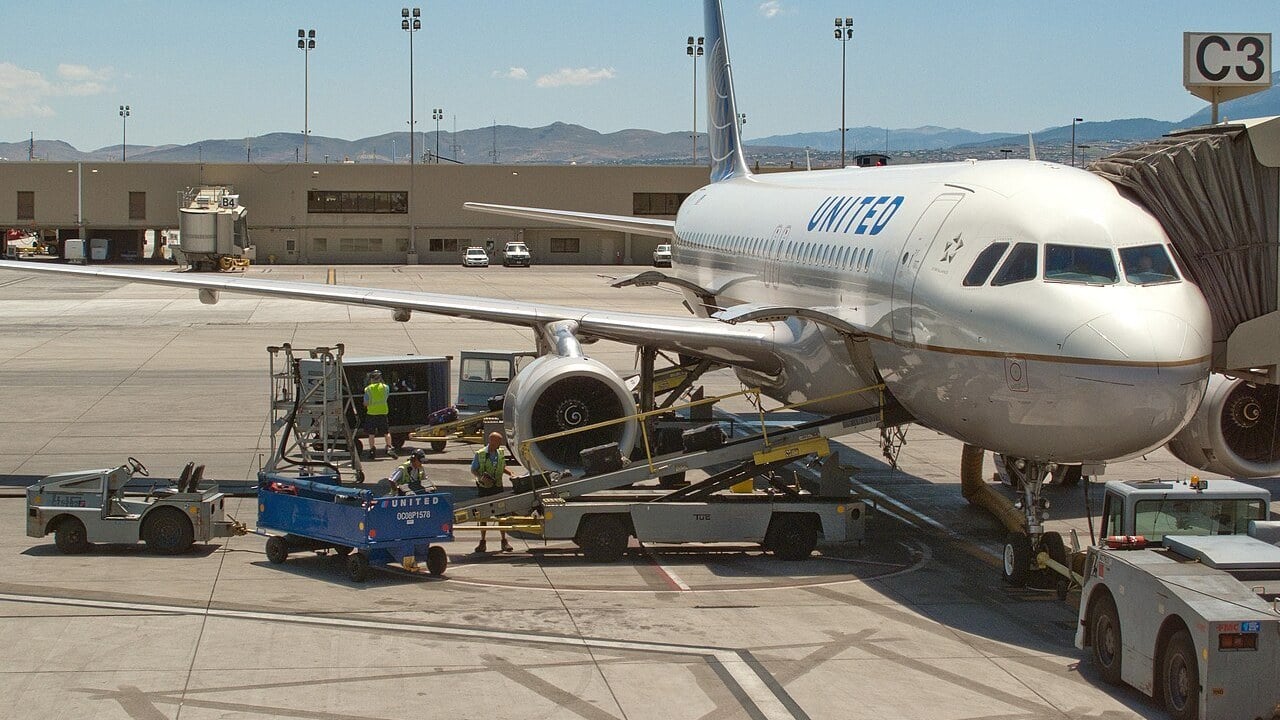
From make-up, a tug tows the carts or containers across the apron to the aircraft. On a narrow-body, a belt loader carries each bag up into the hold, where a handler stacks it by hand. On a wide-body, the containers roll straight in on a lift. Either way, the clock is running: the bags have to be in before the aircraft can push back, and every late passenger or late connection makes the job harder.
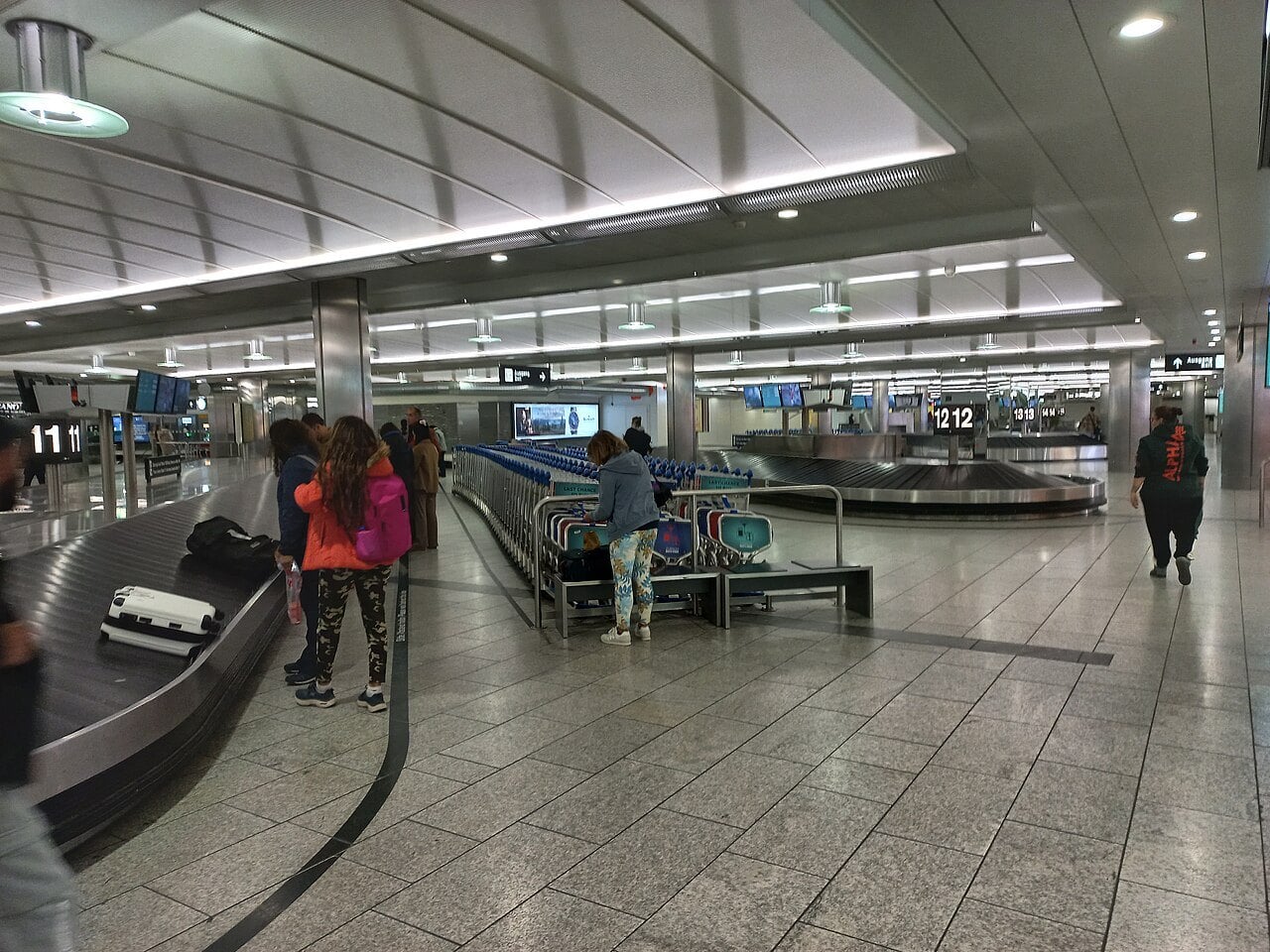
At the other end the process runs in reverse. Handlers unload the hold, and the bags are split on the apron or in the arrivals system: local bags head for the reclaim carousel, while bags with an onward connection go back into a sorting system to be routed to another departing flight.
Why transfers are where bags go missing
If you fly direct, your bag passes through one system on the way out and one on the way in. If you connect, it has to come off one aircraft, re-enter a second airport’s system, pass security again where the rules require it, find a different flight and get loaded, often within an hour. The second airline may be a different company with its own systems.
That is where most of the trouble happens. In its 2026 Baggage IT Insights report, SITA found that transfers caused 39% of mishandled bags in 2025, down from 41% the year before. IATA says most baggage issues happen during connections, where complex sorting and timing create the highest risk.
Those words were about Denver. United Airlines had agreed to move to the new airport on condition that it had an automated baggage system. According to the Associated Press, the US$250 million system turned into a major problem: bags were misdelivered, luggage was chewed up, and carts derailed and jammed the tracks. The city spent an extra US$100 million on construction and US$341 million in interest trying to make it work.
In June 2005 United announced it would abandon it and switch to a conventional system with human handlers, expecting to save about US$1 million a month in operating costs, while still paying around US$60 million a year under its lease. The system was finally shut down in September 2005.
Denver broadcaster 9NEWS looks back at the failure of Denver International Airport’s automated baggage system.
The numbers on lost luggage
The good news is that the industry is getting better at this. SITA’s 2026 report, published on 30 June 2026, found that the rate of mishandled bags fell by 23% in 2025, its biggest improvement outside the pandemic years, even as passenger numbers reached about 5 billion. SITA says mishandling has fallen by close to three-quarters since 2007.
The bad news is the price. SITA puts the industry cost of mishandling at US$6.3 billion a year, at an average of US$260 per bag. Delayed bags, those that turn up a day or two late, account for around 70% of that cost, mostly in recovery, rerouting and delivery to the passenger’s door. IATA, using its own estimate, counted 33.4 million mishandled bags in 2024, or 6.3 for every 1,000 passengers.
Tracking every handover
The industry’s main fix is not a better conveyor but better data. IATA’s Resolution 753 requires member airlines to track every bag at four points: acceptance at check-in, loading onto the aircraft, transfer between flights and arrival. Each handover becomes a recorded scan, so when a bag goes missing the airline knows at which step it was lost. SITA says tracking under the resolution has now passed the 50% mark, with full compliance targeted for 2027.
Some airports have gone further with RFID chips embedded in the tag, which can be read without a line of sight to the barcode. Las Vegas Harry Reid International and Hong Kong International have both installed RFID systems. Passengers have joined in too: SITA says the integration of Apple’s Find My with its WorldTracer lost-bag system cut permanently lost luggage by 90% in its first year.
Most bags still make it, and most of the ones that do not are simply late. But the next time you watch your suitcase disappear through the rubber curtain behind the check-in desk, remember what it has to do: be read by a laser, pass an X-ray machine, find its own flight in a basement, and get past a connection that, in 2025, was behind four in ten of the industry’s failures. Denver learned the hard way that it is harder than it looks.
Sources: SITA (2026 Baggage IT Insights report, press release 30 June 2026), IATA (Baggage tracking and Resolution 753), US Transportation Security Administration, Associated Press via NBC News (June 2005), The National
Header photo: Downtowngal / Wikimedia Commons, CC BY-SA 3.0

0 Comments