
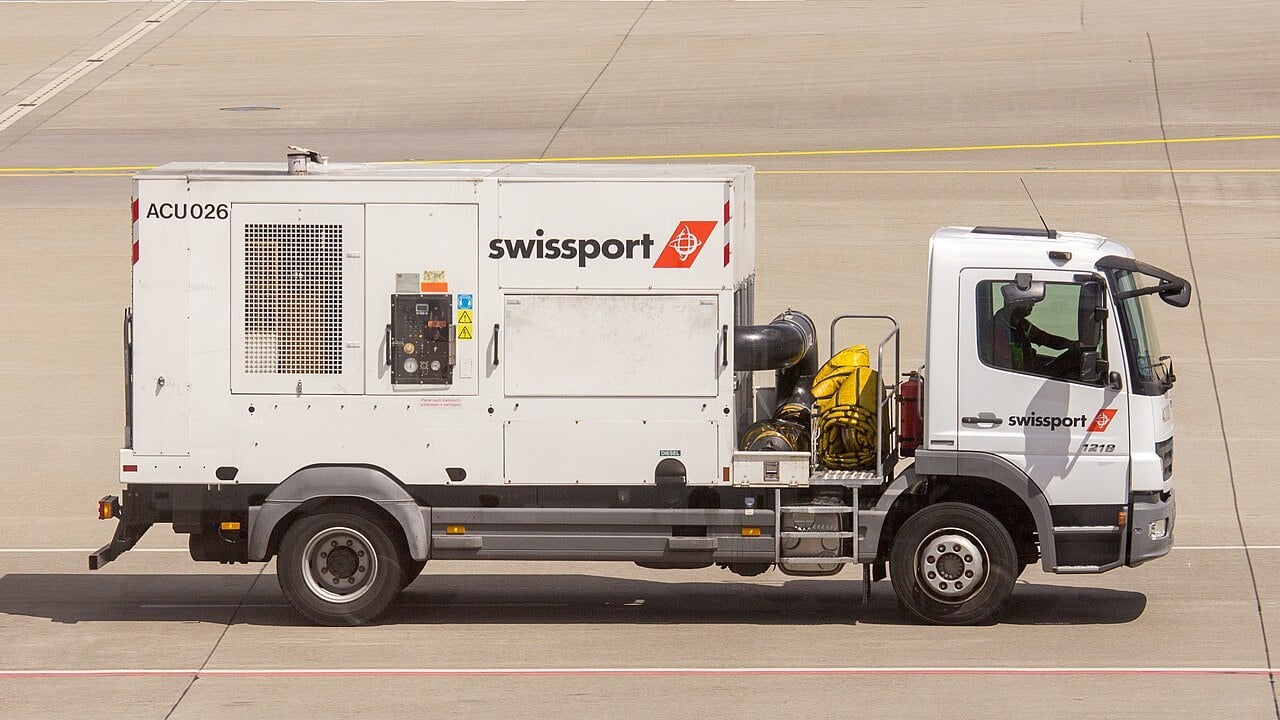
Look closely at the vehicles around your aircraft next time you board. The tug that pushes you back, the truck pumping cool air into the cabin, the belt loader, the cargo lift: many of them carry a name you have never booked a ticket with. Swissport. Menzies. dnata. WFS. Aviapartner.
These are the ground handlers, the contractors who actually turn a large share of the world’s airliners around. Swissport alone says it handled 4 million flights and 243 million passengers in 2025. Most travellers have no idea it exists.
Afterburner has already explained what has to happen during a turnaround. This is the other half of the story: who the companies are, how airlines buy their services, why Europe forced the market open, and what the pandemic did to the people on the ramp.
Kurzinfo
- Was: Ground handling: passenger, ramp, baggage, fuel, cargo and mail services at airports
- Self-handling: An airline doing its own ground handling
- Third-party handling: An airline buying services from a handler, often under IATA’s Standard Ground Handling Agreement
- Largest handler: Swissport: 312 airports, 49 countries, 243 million passengers handled in 2025
- Other major groups: Menzies (Agility), dnata (Emirates Group), WFS (SATS), Aviapartner
- EU law: Directive 96/67/EC (1996): airports with 2 million passengers or 50,000 t of freight; at least two suppliers for restricted airside categories
- OTP: On-time performance: commonly within 15 minutes of schedule
Self-handling or third party
Every airline has the same basic choice at every airport it serves. It can do the work itself, with its own staff and equipment, which the industry calls self-handling. Or it can pay someone else, a third-party handler. Large airlines often self-handle at their home hubs and buy services everywhere else, because it makes no sense to keep tugs, loaders and trained staff at an outstation that sees two flights a day.
The third party can be an independent company, the airport itself, or even another airline with spare capacity. Contracts are commonly written on IATA’s Standard Ground Handling Agreement, a template published in the association’s Airport Handling Manual, with local terms setting out exactly which services are bought and at what price.
Ground handling is a broad term. It covers passenger services such as check-in and boarding gates, ramp work such as loading, pushback and cleaning, baggage handling, fuelling, and cargo and mail. A single airline at a single airport may buy its ramp work from one company, its fuel from another and its cargo handling from a third.
The big names
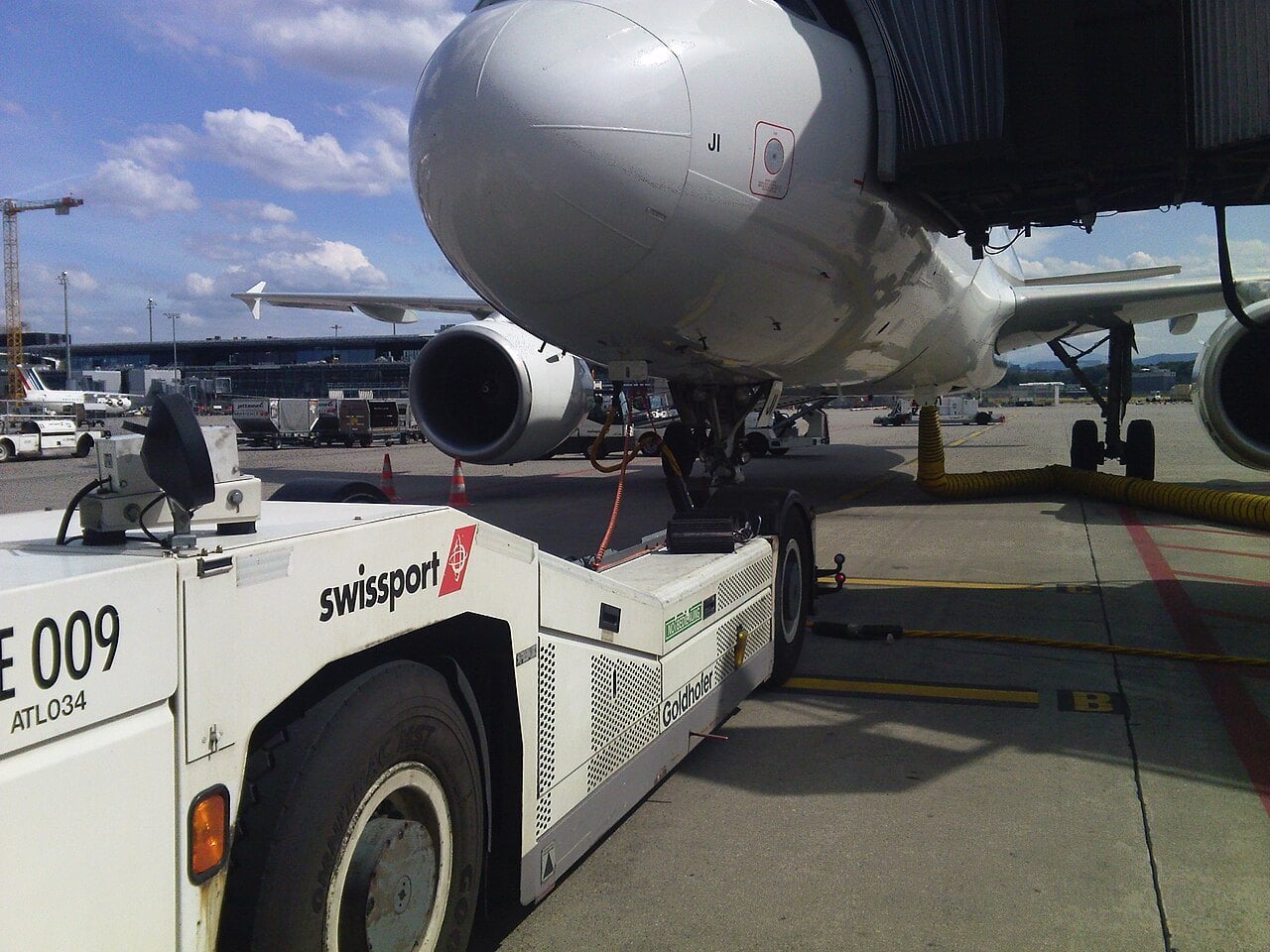
Swissport calls itself the global leader in aviation services. It began in 1996 as Swissair Ground Services and outlived the airline that created it. In 2025 it reported record revenue of €3.9 billion and operations at 312 airports in 49 countries, with about 63,000 staff and more than 850 airline partners. Its owners have changed repeatedly: private equity, the Spanish group Ferrovial, the French investor PAI Partners, China’s HNA Group, and since a 2020 restructuring a group of its former lenders.
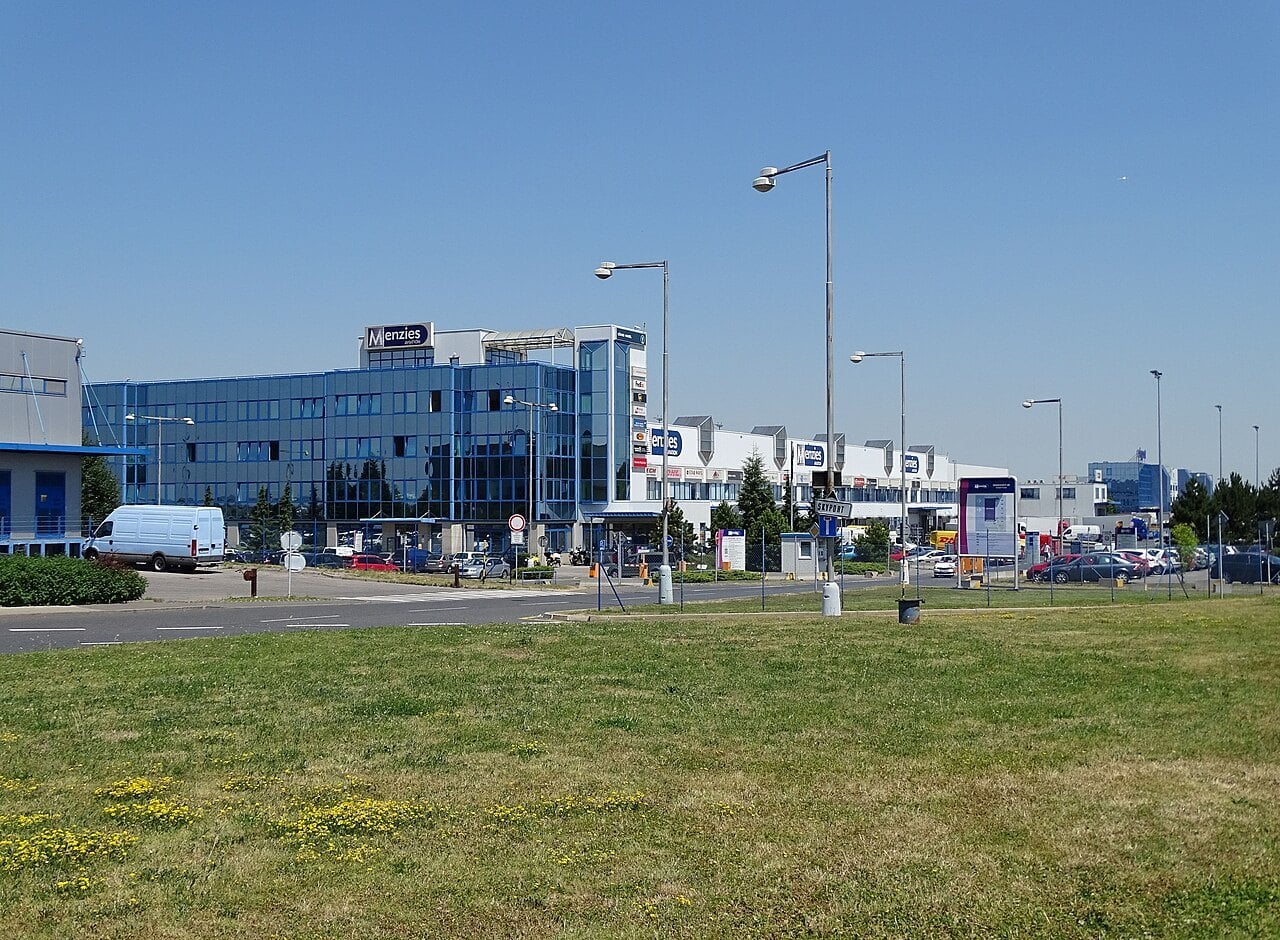
Menzies Aviation traces its name to an Edinburgh bookseller founded in 1833 and moved into aviation services from 1987. In August 2022 the Kuwaiti logistics group Agility completed its £763 million purchase and merged Menzies with its own National Aviation Services. At the time, the combined business said it would be the world’s largest aviation services company by number of countries, with about 35,000 staff at 254 airports in 58 countries.
dnata, founded in Dubai in 1959 as the Dubai National Air Travel Agency, is part of the Emirates Group and runs ground handling, cargo and catering on six continents, with more than 55,000 employees by its own count. WFS, Worldwide Flight Services, specialises in cargo and is now part of Singapore’s SATS, which says the combined group runs more than 215 stations in 27 countries. Aviapartner, a Belgian company with roots going back to 1949, handles flights at about 70 airports, most of them in Europe.
Ownership tells you a lot about how the industry grew. Several of the big handlers began inside an airline or a national travel company and were later spun off or sold: Swissport out of Swissair, SATS out of Singapore Airlines, which divested it in 2009. Others, like Menzies, came from completely different businesses. Today the biggest belong to financial investors, a logistics group or, in dnata’s case, the same group that owns Emirates.
How Europe forced the market open
Until the 1990s, many European airports had a ground handling monopoly, often held by the airport itself or the national airline. The European Union changed that with Council Directive 96/67/EC of 15 October 1996 on access to the groundhandling market. It requires member states to ensure free access for third-party handlers and the freedom to self-handle at airports above set traffic levels, applying in full from 2001 to airports with at least 2 million passengers or 50,000 tonnes of freight a year.
There is an important exception. For four airside categories, baggage handling, ramp handling, fuel and oil handling, and the physical handling of freight and mail, governments may limit the number of suppliers, because aprons have only so much space. But they may not limit it to fewer than two for each category, and at least one of the authorised suppliers must be independent of the airport operator and of any airline that carried more than 25% of the airport’s passengers or freight in the previous year.
Where a government uses that power, handlers have to win one of a limited number of authorisations through a selection procedure laid down in the directive. Even then, an airline at a large European airport must be left an effective choice between at least two suppliers in each restricted category.
Swissport’s own overview of its ground handling, cargo and lounge business.
Service levels and the 15-minute rule
Ask anyone in the business what OTP means and they will say on-time performance. By the industry’s common definition, a flight is on time if it departs or arrives within 15 minutes of schedule. The aviation data company OAG points out that this is not formally set by ICAO or any other industry body, but it has become the standard measure.
According to OAG, punctuality is now used as a benchmark in the relationships between airports, airlines, ground handlers and other service providers. For a handler, that makes punctuality one of the numbers its customers watch most closely.
IATA lists safe and on-time performance, together with labour shortages, among the current challenges in ground handling.
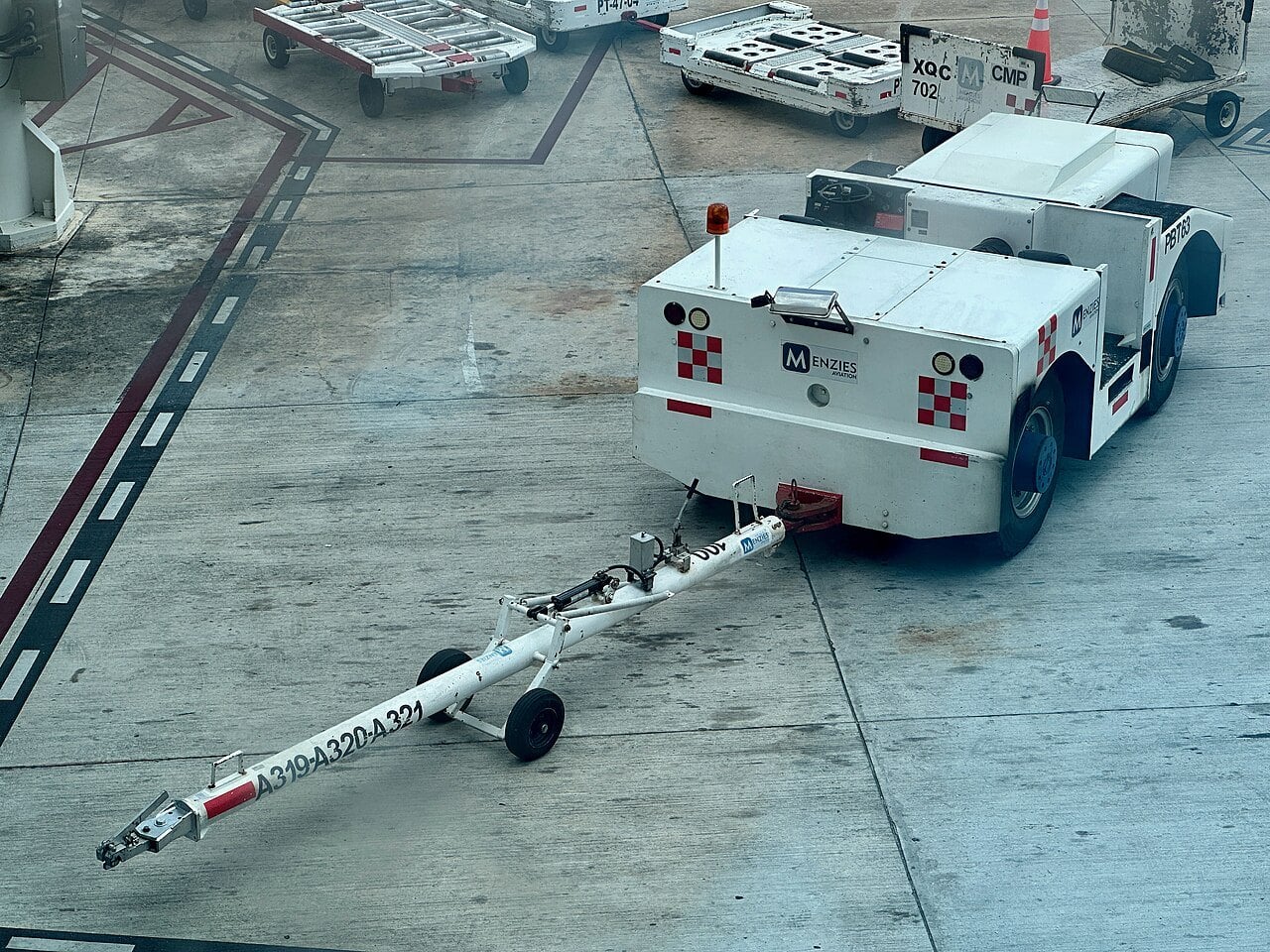
The business is broader than the ramp. In 2025 Swissport also processed 5.2 million tonnes of cargo through 126 warehouses and ran 110 airport lounges under its Aspire brand, which welcomed 6.4 million guests. Menzies, at the time of the Agility deal, counted 600,000 aircraft turns, 2 million tonnes of air cargo and 2.5 million fuelling operations a year. For these groups, cargo and fuel are as important as the people who load your suitcase.
2020: when the flights stopped
Ground handlers earn money only when aircraft move. When the pandemic grounded most of the world’s fleets in spring 2020, the industry was hit harder than almost anyone. In June 2020 Swissport told staff it planned to cut about half its UK workforce of 8,500, more than 4,500 jobs, and its Belgian subsidiary declared bankruptcy the same month.
Swissport’s owner, HNA, was itself in deep financial trouble. In December 2020 Swissport completed a financial restructuring that handed ownership to a group of investors led by its former senior lenders and cut its debt by about €1.9 billion.
That loss of experience showed when demand returned. As Menzies’ then chief executive Philipp Joeinig said when the Agility deal closed in 2022, the new owner’s backing would help the company support customers in tackling supply chain challenges and labour shortages. IATA still lists labour shortages among the industry’s current challenges.
Consolidation and the next phase
The answer most handlers have chosen is to get bigger. Swissport bought ASC at Heathrow and Gatwick, entered China at Shanghai Pudong and expanded its Saudi network in 2025. Menzies agreed to buy the US company G2 Secure Staff in 2025. SATS bought WFS. Each deal adds airports, airlines and equipment to a shrinking number of global groups.
Safety oversight has tried to keep pace. IATA’s Safety Audit for Ground Operations, ISAGO, launched in 2008, audits a handler’s headquarters and individual stations against the IATA Ground Operations Manual and other standards, so that airlines can rely on one audit instead of each running its own. Registrations are valid for 24 months.
Technology is the other bet: Swissport is piloting autonomous vehicles at Zurich and running a monthly steering group on artificial intelligence. But for now, turning an airliner around is still a job for people in high-visibility vests, working for a company whose name is on the tug and not on your ticket.
Sam Chui goes behind the scenes with Qatar Aviation Services, the ground handler at Doha.
So when your flight pushes back on time, it is worth knowing who made it happen. Very often it is not the airline at all, but a contractor competing for that same airline’s business at the next tender, and measuring its success fifteen minutes at a time.
Sources: Council Directive 96/67/EC (Official Journal L 272, 25 October 1996), Swissport via Air Cargo Week (May 2026), Menzies Aviation (August 2022), dnata, SATS, IATA (Ground Operations; ISAGO), OAG, RTÉ (June 2020)
Header photo: Raimond Spekking / Wikimedia Commons, CC BY-SA 4.0


0 Comments