
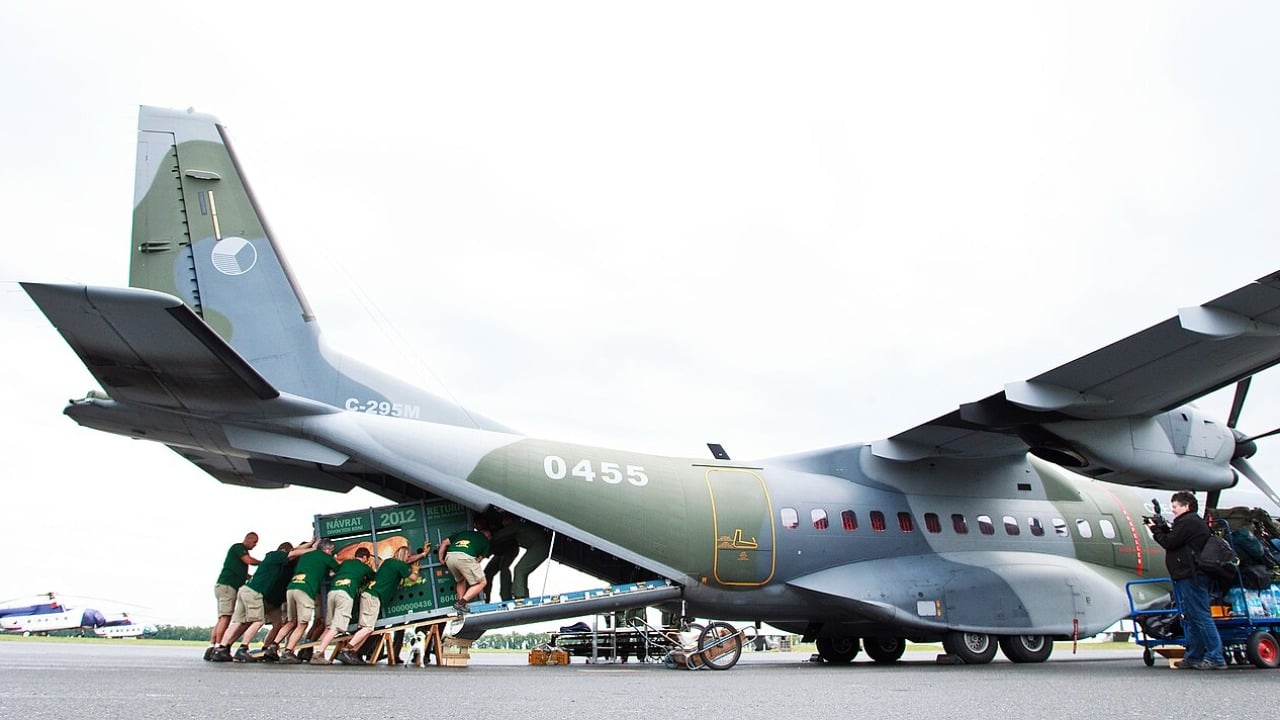
On the evening of 9 November 2023, an Air Atlanta Icelandic Boeing 747-400 freighter, registration TF-AMM, lifted off runway 22R at New York JFK bound for Liège. Twenty minutes into the climb, at flight level 320, the crew turned back. A horse had broken out of its stall on the main deck, and the people in the hold could not get it back in.
The aeroplane dumped about twenty tonnes of fuel over the ocean near Martha’s Vineyard, which took roughly twenty minutes, and landed back at JFK. The pilot told Boston Center the horse was in difficulty and asked for a veterinarian. On the approach he said, simply, “We’re so heavy.” The horse was reportedly injured badly enough that it had to be put down.
There is no accident report, because there was no damage to the aircraft and no human was hurt. And that is the thing about live animals in the hold: an enormous, highly regulated industry operates almost entirely below the threshold at which aviation writes anything down.
Kurzinfo
Governing standard: IATA Live Animals Regulations, first published 1969, updated annually; new edition in force 1 January 2026
Scale of the manual: about 500 pages, more than 3,400 scientific names, 56 container requirements
US pets carried in 2024: 161,335, with 10 deaths and 3 injuries reported
US pets carried in 2017: 506,994, with 24 deaths — 18 of them on one airline
Measured hold temperature in flight: usually 10 to 14 °C in a peer-reviewed study of 118 horses
Horse classes: three to a stall is economy, two is business, one is first
Horses per freighter: sources give 75 to 90, depending on operator and stall configuration
Largest equine airlift: 500 horses to the 2018 World Equestrian Games, 19 flights
The Rulebook Is Not a Law, Except Where It Is
The International Air Transport Association calls its Live Animals Regulations “the worldwide standard for transporting live animals by commercial airlines,” and says all IATA members are expected to adhere to them. The first edition appeared in 1969, alongside the Live Animals and Perishables Board that still maintains it. The manual and the training courses are updated every year. The current edition took effect on 1 January 2026.
IATA is careful about its own authority, though. On the same page it says that it is the role of governments to set and enforce the rules on transporting live animals. The association writes the standard; it does not enforce it.
Except in Europe, where it has teeth. Council Regulation (EC) No 1/2005 covers the transport of live vertebrate animals within the Community, and its definition of a means of transport explicitly includes aircraft. Annex I, Chapter II, point 4.1 then requires that animals be carried in containers, pens or stalls that comply with the IATA Live Animals Regulations. Point 4.2 adds that animals may be transported only in conditions where air quality, temperature and pressure can be maintained in an appropriate range for the whole journey. An industry manual becomes a legal requirement by citation.
There is one more provision in that regulation that nobody quotes and everybody should. Chapter V exempts air transport from the journey-time and rest-interval limits that apply to road transport. A lorry has to stop. An aeroplane does not.
What the Hold Is Actually Like
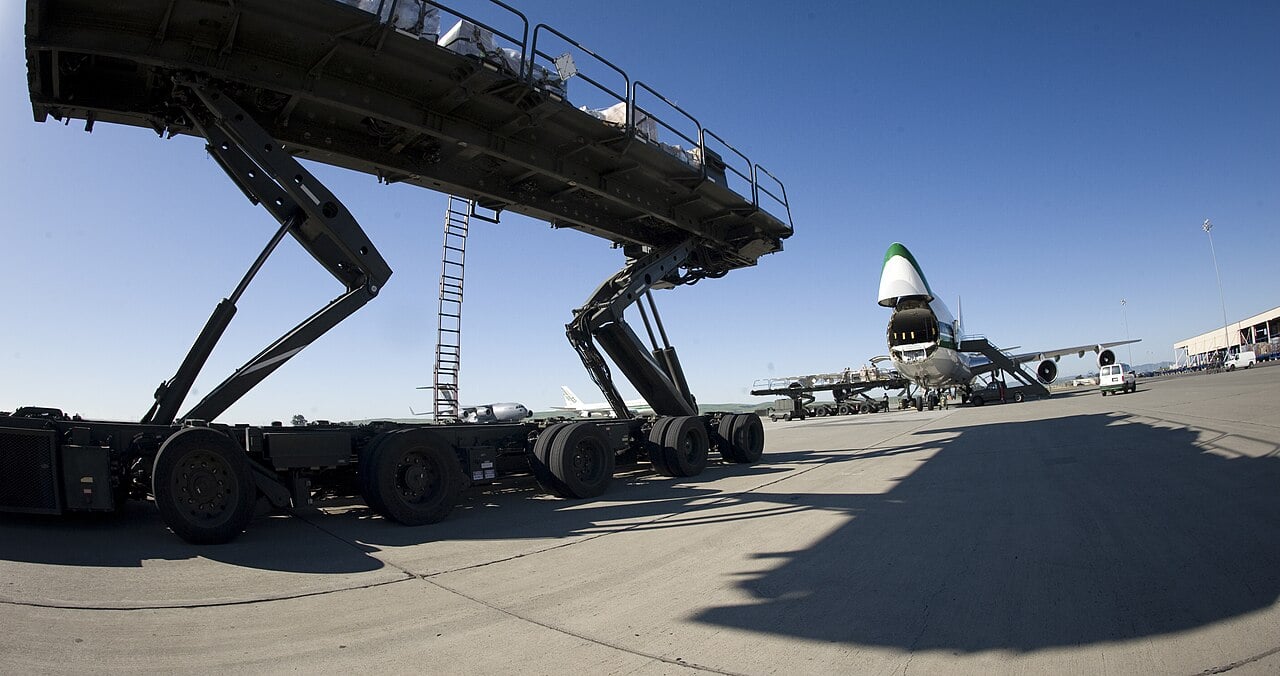
Start by throwing away the sentence “it is the same as the cabin.” Nobody authoritative says that, and at least one airline says the opposite in writing.
Air Canada’s own pet page is unusually honest, going aircraft by aircraft. Pets travel in the pressurised cargo compartment of most of its fleet, it says, but not all of its aircraft have temperature-controlled and ventilated baggage compartments. On the A319, A320 and A321 the cargo compartment is not heated and temperatures can be as low as 2 °C. On the Boeing 737 MAX 8 it accepts no pets at all between 1 November and 31 March because of minimal heating in the hold.
Finnair Cargo explains the dynamics. At the start of a flight the hold is whatever temperature it was during boarding, and it takes about an hour after departure to reach the set value. Most types, it says, have thermostat-controlled heating that keeps the hold near cabin temperature.
The only properly measured numbers come from an unlikely source: a 2024 paper in BMC Veterinary Research that instrumented 118 horses across 32 commercial air journeys. Cargo-hold air temperature in flight was controlled and usually 10 to 14 °C. During stops with the horses still aboard it was uncontrolled and ranged from 12.0 to 21.5 °C. Humidity in the hold was not controlled at all, running between 16 and 58 per cent. The inside of a jet stall ran a median four degrees warmer than the hold around it.
For livestock, the Australian air-freight best-practice manual is blunter still: the captain should set the environmental control system to hold 10 to 26 °C, ideally about 18, record the temperature half an hour in, at one hour, at two hours and then every two hours, and run the auxiliary power unit to keep the system going whenever animals are aboard, including on the ground at transit stops. Above 25 °C is a cause for concern; above 30 is critical.
As for pressure, no airline, manufacturer or IATA document puts a number on it. The only authoritative statement is the European one quoted above: conditions in which air quality, temperature and pressure can be maintained. Anyone quoting you a cabin altitude for the dog hold is guessing.
The American Numbers, and the Industry That Walked Away
The United States is the only country that publishes hard data on this, because 14 CFR 235 obliges its larger carriers to report every animal death, injury and loss, and to declare how many animals they carried.
In calendar year 2024, US carriers reported 161,335 animals transported, with 10 deaths, 3 injuries and no losses. Delta carried 41,352 and reported two deaths. Alaska carried 64,201 with three deaths and three injuries. American carried 17,858 with two deaths. Hawaiian carried 10,178 with three deaths. United carried 408.
Read that last figure again. In 2017, United Airlines carried 138,178 animals. It also had the worst year any US airline has had: 18 deaths and 13 injuries, 31 incidents, a rate of 2.24 per 10,000, out of a national total of 24 deaths that year. The national denominator in 2017 was 506,994 animals. By 2024 it was 161,335, and nine carriers — Allegiant, Avelo, Breeze, Frontier, JetBlue, Mesa, Southwest, Spirit and Sun Country — reported carrying no animals at all.
The collapse is the story. US airlines have largely left the pet-in-hold business, and American Airlines now accepts checked pets only from active-duty military and State Department Foreign Service personnel travelling on orders. Everyone else goes through the cargo division.
What broke it was two weeks in March 2018. On 12 March, a French bulldog puppy named Kokito died on a United flight from Houston to New York after a flight attendant required its carrier to be stowed in an overhead bin. United admitted the incident on 14 March. On the same day it emerged that Irgo, a ten-year-old German shepherd belonging to Kara Swindle, whose family was moving from Oregon to Kansas, had been put on a flight to Japan; the family was handed a Great Dane at Kansas City that had been destined for Tokyo.
United stopped taking new PetSafe reservations on 20 March 2018 and said it expected to finish its review by 1 May. The programme came back with 21 dog breeds and four cat breeds barred from the hold, plus a summer embargo on Las Vegas, Palm Springs, Phoenix and Tucson.
Congress was less patient. Section 417 of the FAA Reauthorization Act of 2018, signed on 5 October that year, created 49 U.S.C. 44739 and runs to two sentences: it is unlawful to place a live animal in an overhead storage compartment of an aircraft operated under part 121, and the Administrator may impose a civil penalty for each violation. One dead puppy, one federal statute.
Why Short-Nosed Dogs Cannot Fly in the Hold
The brachycephalic bans are the single most consistent rule across the industry, and the reason is documented rather than guessed.
Data released by the Department of Transportation in July 2010, cited by the American Veterinary Medical Association, found that roughly half of 122 dog deaths associated with airline flights over the preceding five years involved short-faced breeds. Of those 122, twenty-five were English bulldogs and eleven were pugs. The AVMA’s explanation is that short-nosed breeds seem to be more vulnerable to changes in air quality and temperature in the hold.
Alaska Air Cargo states the mechanism plainly on its own restrictions page: veterinary experts advise that these animals may have breathing difficulties which the stress of air travel can worsen. Its barred list runs Boston Terrier, Boxer, Bulldog, Brussels Griffon, Chow Chow, English Toy Spaniel, Japanese Chin, Mastiff, Pekingese, Pug and Shih Tzu, plus Burmese, Exotic Shorthair, Himalayan and Persian cats, and any mix containing them. American Airlines bars a similar list and gives no reason at all. All of them may still fly in the cabin, under the seat, where the air is the passengers’.
Temperature embargoes sit alongside the breed rules and they are stricter than most owners expect. American will not carry a checked pet if the current or forecast temperature anywhere on the itinerary is above 85 °F (29.4 °C) or below 45 °F (7.2 °C); the cold limit can be waived with a veterinary acclimation letter dated within ten days, but below 20 °F (−6.6 °C) nothing flies at all. It also refuses non-cabin pets to, through or from Phoenix, Tucson, Las Vegas and Palm Springs between 1 May and 30 September. Air Canada adds a capacity embargo that has nothing to do with the animals: no pets as checked baggage or cargo between 18 December and 4 January, because the aeroplanes are full.
One more rule that catches people out: no airline will accept a sedated animal, and the AVMA advises against tranquillising pets for air travel at all.
Economy, Business and First, for Horses
At the other end of the market, the economics invert completely. A thoroughbred is a seven-figure asset with a competition diary, and the industry that moves them has borrowed the airline vocabulary wholesale.
A jet stall is a container on a pallet, loaded on the ground and raised into the aircraft by lift. Three horses to a stall is economy. Two is business. One horse to itself is first. Airlines charge per container, so a first-class horse costs about three times an economy one. The partitions move, which means a last-minute upgrade is a real thing.
The measured dimensions, again from the 2024 veterinary study, are a standard stall of 317 by 243 by 243 centimetres, giving 114 centimetres of usable width per horse in a two-horse configuration and 77 centimetres in a three-horse one. Of the 118 horses studied, 87 per cent travelled three to a stall.
Capacity figures vary by who is telling you. Cargolux capacity data via FreightWaves gives 90 horses on a 747-8F, 84 on a 747-400F and 81 on a 777F. Emirates says a maximum of 75 per 777F. IRT, which moves around 10,000 horses a year, says 85 is the maximum per aircraft at any one time for safety reasons.
The groom-to-horse ratio is the one number everybody quotes differently. Brooks gives roughly one to five. Henry Bullen, also of Peden, says one to three. Marc Boyer of Quadriga says one accredited groom for every two crates. FedEx runs two grooms a flight and carries eight to twelve horses. And the veterinarian Des Leadon points out the other extreme: on moves made in the belly of a passenger aircraft, space is so tight that not even the horses’ own grooms travel with them.
Shipping Fever, and the Flight That Is Meant to Be Boring
The marketing on all of this is relentless and the independent evidence is more interesting.
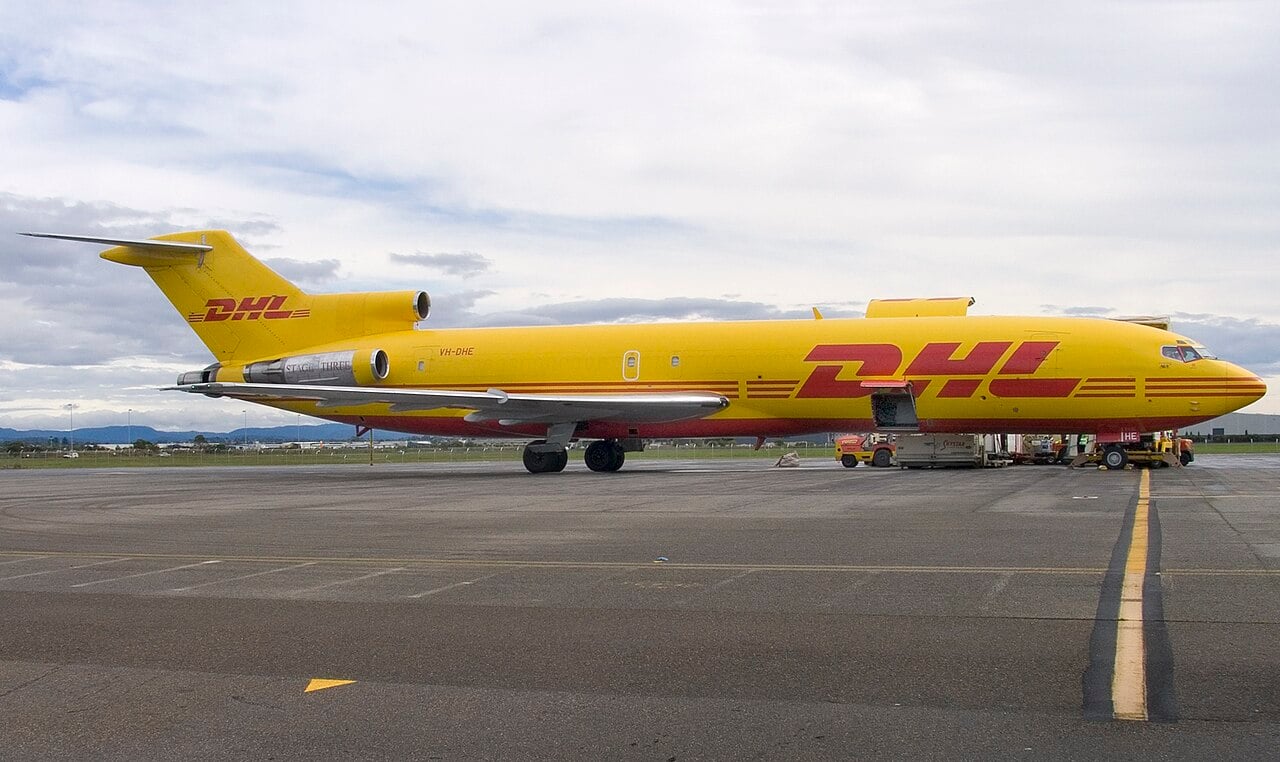
That 2024 study followed 118 horses on 32 journeys between 2020 and 2023, median flight duration 11 hours 30 minutes, range 7 to 28 hours, median time-zone shift 7 hours, mostly on 747 and 777 freighters. No horse died. Ten were injured, mostly in the road legs or in quarantine rather than in the air. But 22 of the 118, nearly a fifth, developed a transport-related health problem, and eleven — 9 per cent — developed pleuropneumonia. That is shipping fever, and it is what the trade actually fears.
Ninety of those 118 horses showed at least one abnormal clinical sign at some point, most of them without consequence. Three very agitated animals were sedated in flight. Leadon’s view on that is worth keeping: sedation is like any other medication, you do not give it unless it is justified. He also recalls one horse going from England to Australia that needed sedating seventeen times between Heathrow and Sydney.
The authors’ conclusion is a corrective to the brochures. Air transport, they write, is a complex procedure with several different phases affecting horse health and behaviour, and it should be treated as a welfare hazard rather than assumed to be gentler than a lorry. Their recommendations are specific: get the travel history and temperament before shipping, do not ship unbroken or very poor-tempered horses, do not tie them short in flight, monitor water intake, unload during long stops, avoid stops made purely for cargo logistics, and increase both groom access to the hold and the groom-to-horse ratio.
Matt Brooks puts the same idea in one sentence from the other side of the stall door: for the horse and the team of people with them, the best thing is a boring flight, free of drama.
The Set Pieces
When an entire equestrian sport has to cross an ocean at once, the operation is genuinely aviation-scale.
For the 2018 World Equestrian Games at Tryon in North Carolina, Emirates SkyCargo flew about 500 horses from Liège to Greenville-Spartanburg and back across 19 freighter flights, each carrying 50 to 60 animals, using 220 horse stalls and 227 grooms, with more than 50 tonnes of feed and 240 tonnes of other equipment, and two freighters dedicated to the project.
For Tokyo in 2021, the Internationale Reiterliche Vereinigung counted 325 horses for the Olympics and Paralympics. Emirates flew 247 of them from Liège to Tokyo on eight chartered Boeing 777 freighters, in 131 stalls at two horses apiece, with 59 grooms, 20 tonnes of in-flight food and drink and 100 tonnes of equipment, via a short stop in Dubai. Each horse had been under 60 days of health surveillance followed by seven days of pre-export quarantine. The first flight carried 36 dressage horses into Haneda, where 11 air-conditioned horse trucks belonging to the Japan Racing Association were waiting.
Emirates reports carrying more than 2,600 horses in 2025, along with more than 14,600 cats, dogs and other domestic pets, roughly forty animals a day, and keeps 45 horse stalls and a permanent horse ramp at Al Maktoum International.
The strangest set piece was not sport. In June 2017, when the blockade cut Qatar’s dairy supply, Qatar Airways Cargo began flying Holstein cows in from Europe aboard Boeing 777 freighters. The first flight carried 165; the first two shipments together carried 230, against a planned herd of 4,000.
And not every live-animal flight is a happy story. An Animal Justice report built on Japanese government quarantine records and Canadian Food Inspection Agency documents found at least 21 horses dead during or shortly after transport across 24 shipments from Canada to Japan between June 2023 and May 2024, on flights carrying 85 to 132 horses with total times without food, water or rest of between 25.8 and 35.41 hours. Canada’s own Health of Animals Regulations set a 28-hour limit. Several of those flights exceeded it.
Which brings us back to TF-AMM over Martha’s Vineyard, dumping twenty tonnes of kerosene into the Atlantic because one animal on the main deck had decided it had had enough. There is no regulation for that. There is only a crew, a vet on the ground, and a 747 coming home heavy.
Sources: US Department of Transportation Air Travel Consumer Report, February 2025, and DOT per-carrier animal incident filings; 14 CFR 235 and 79 FR 37938; 49 U.S.C. 44739 via Public Law 115-254; Council Regulation (EC) No 1/2005; IATA Live Animal Handling and Transport pages; Felici, Cogger, Nanni Costa, Riley and Padalino, BMC Veterinary Research, 2024; American Veterinary Medical Association; Air Canada, American Airlines and Alaska Air Cargo pet pages; Finnair Cargo; Meat and Livestock Australia and LiveCorp air freight manual, 2022; IRT; FreightWaves; Emirates SkyCargo; The Peninsula; CBS News; American Kennel Club; Mentour Pilot and AVweb; Animal Justice.



0 Comments