
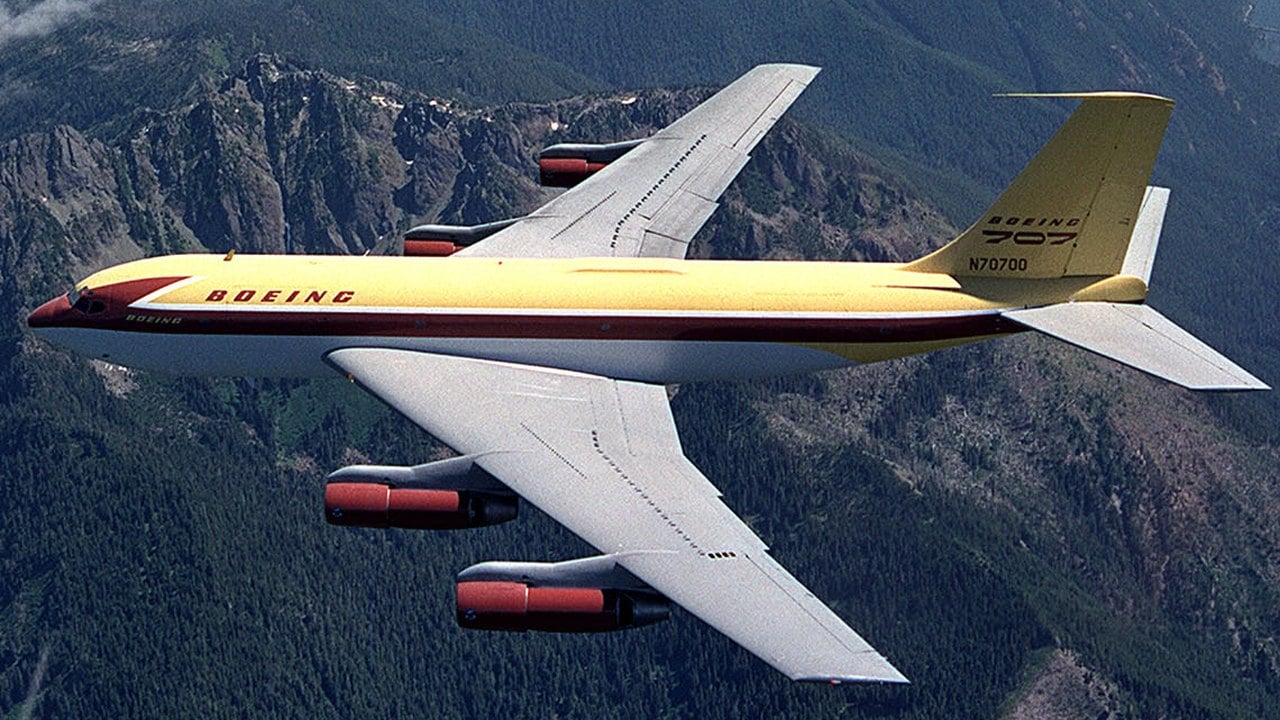
Ask an engineer why Boeing’s first jetliner was called the 707 and you may get a neat answer: 0.707 is the sine of 45 degrees, the angle of the wing sweep. It is a lovely theory. It is also wrong. The 707’s wings are swept at 35 degrees, and Boeing’s own historians have spent decades politely correcting the story.
The real reasons behind the 7x7 names, and behind Airbus’s A3xx family, are more down to earth: filing systems, seat counts, marketing departments and corporate mergers. Once you know the logic, every airliner model number at the gate starts to tell you something.
Kurzinfo
- Boeing block system: Post-war model numbers split into blocks of 100; 700s for jet transports
- First Boeing jetliner: Model 707, chosen over 700 by marketing
- Model 717, first use: Company number for the KC-135 tanker
- Model 717, second use: The former McDonnell Douglas MD-95, in service from 1999
- Odd one out: Boeing 720, originally marketed as the 707-020
- Airbus A300: Named for a planned 270 to 300 seats; built with about 225
- A310: Began as the A300B10
- A330 and A340: Originally the TA9 and TA11 studies, named in 1986
- A220: The former Bombardier CSeries, renamed in July 2018
- MD-80: DC-9 Super 80, redesignated in 1983
Boeing’s blocks of 100
Boeing had numbered its designs in sequence for decades, and its airliners simply used the model number as a name: the Model 247, the Model 307 Stratoliner, the Model 377 Stratocruiser. Military aircraft also carried Boeing model numbers, even if nobody used them. The B-17 Flying Fortress was, inside the company, the Model 299.
After the Second World War, president William Allen wanted Boeing to move back into commercial aircraft and into missiles and spacecraft. To keep the new product lines apart, the engineering department split the model numbers into blocks of 100. According to Boeing historian Mike Lombardi, the 300s and 400s continued to cover aircraft, the 500s went to turbine engines, the 600s to rockets and missiles, and the 700s were set aside for jet transports.
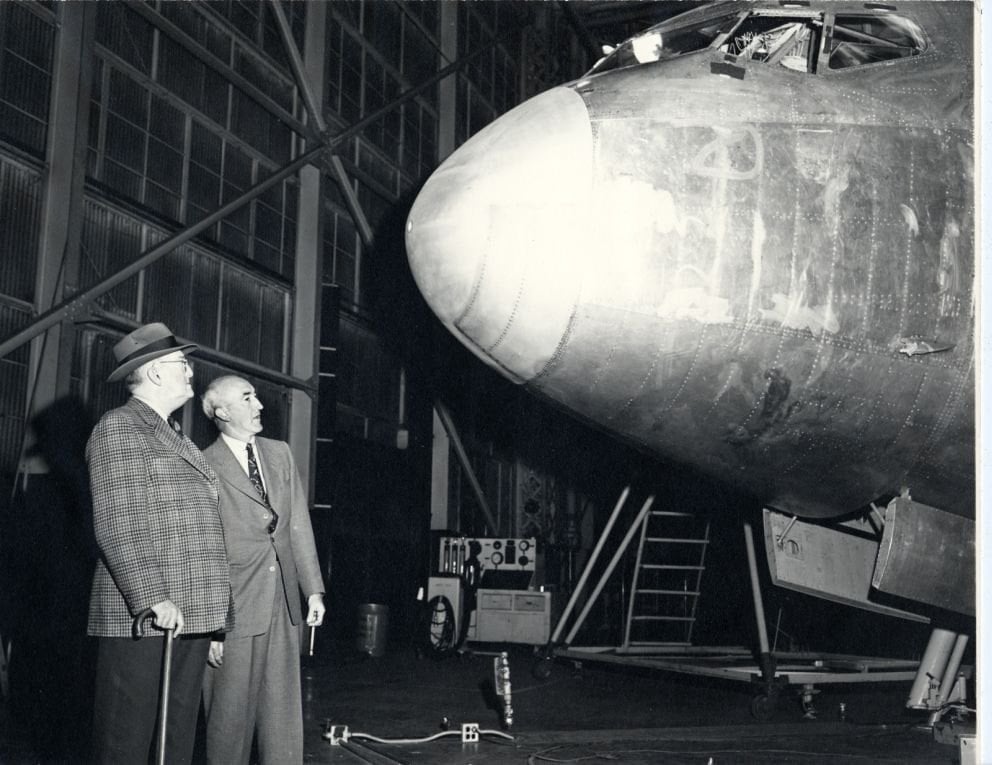
The first jet transport to need one of those numbers grew out of the Model 367, the piston-engined KC-97 tanker. Boeing worked through many redesigns of the 367 until it chose version 367-80, the famous “Dash 80”, which it built with its own money as a prototype for both an Air Force tanker and a commercial jet.
Why 707 and not 700
The numbering system said the Dash 80’s offspring should get numbers in the 700s. Strictly, the first would have been the Model 700. Boeing’s marketing department did not like the sound of it.
So the airliner became the 707, and the pattern of sevens at both ends was born. The next step locked it in: after the tanker version took the next slot, the marketing department reserved every model number that began and ended in 7 for commercial jets. The 727, 737, 747, 757, 767, 777 and 787 all follow that rule.
Boeing test pilot Tex Johnston’s famous barrel roll in the Dash 80, the prototype behind both the 707 and the KC-135.
The 717 that was used twice
That tanker is the reason the 717 has the strangest history of any Boeing number. The Air Force version of the Dash 80 was given the company model number 717, and the military designation KC-135. Because the world knew it as the KC-135, the 717 name barely registered with the public, and it looked as if Boeing had simply skipped from 707 to 720 and 727.
The 720 was itself an exception. It began as a shorter-range 707 marketed as the 707-020. United Airlines wanted it but had already picked the Douglas DC-8, so to spare the airline the awkward headlines of going back to the 707, Boeing renamed the 707-020 the 720.
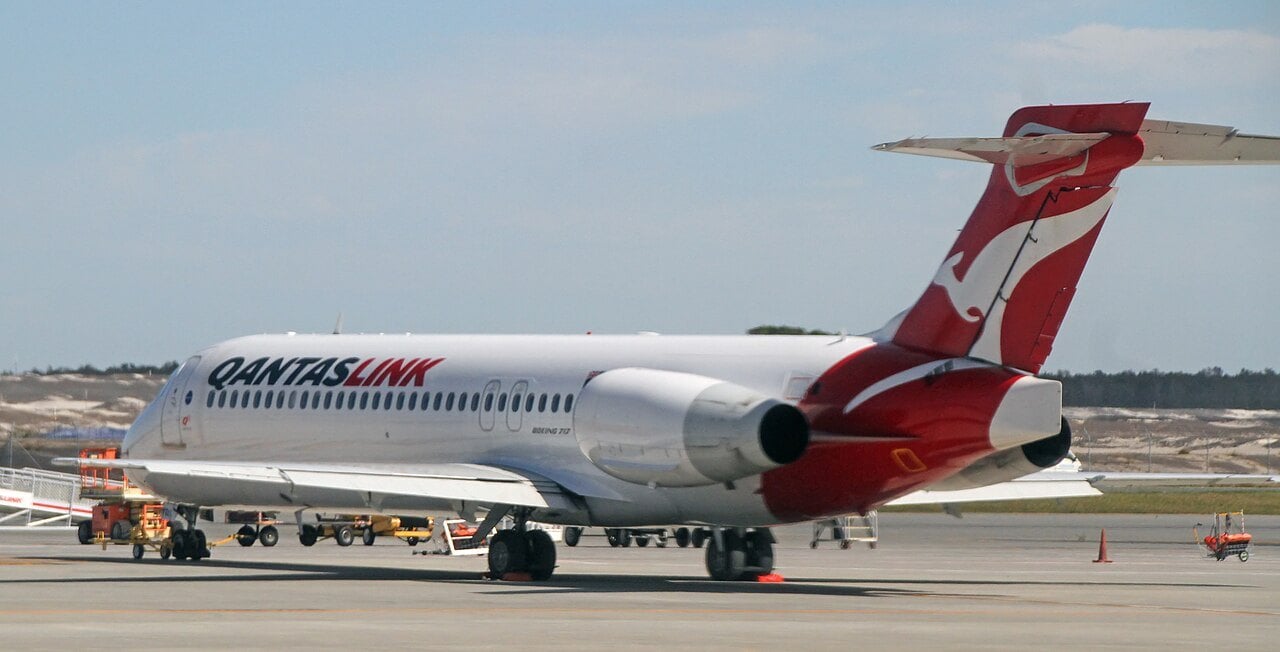
Four decades later, the 717 came back. When Boeing merged with McDonnell Douglas in 1997, it inherited the MD-95, a 100-seat twinjet descended from the DC-9. Boeing kept the programme and gave it the dormant number: the MD-95 became the Boeing 717, entering service with AirTran Airways in 1999. One number, two completely different aircraft, a four-engined military tanker and a rear-engined regional airliner.
The rule bent once more in the 2000s. Boeing announced its next efficient twinjet in 2003 as the 7E7, with a letter where the middle digit should be. By the time it entered service, it was the 787, back in line with the sevens.
Airbus counted the seats
Europe’s numbers started from a different question: how many people does it carry? In the mid-1960s, European manufacturers studied a short-to-medium-haul “air bus”, then a generic industry term for a big airliner. In July 1967, France, Germany and the UK agreed to develop one together, and by then the project had grown into something close to a 300-seater.
The name outlived the number. Air France and Lufthansa did not need 300 seats, and Airbus trimmed the design to about 225 passengers with an eight-abreast, twin-aisle cabin. The revised aircraft became the A300B. It first flew at Toulouse on 28 October 1972 and became the world’s first twin-engined widebody airliner.
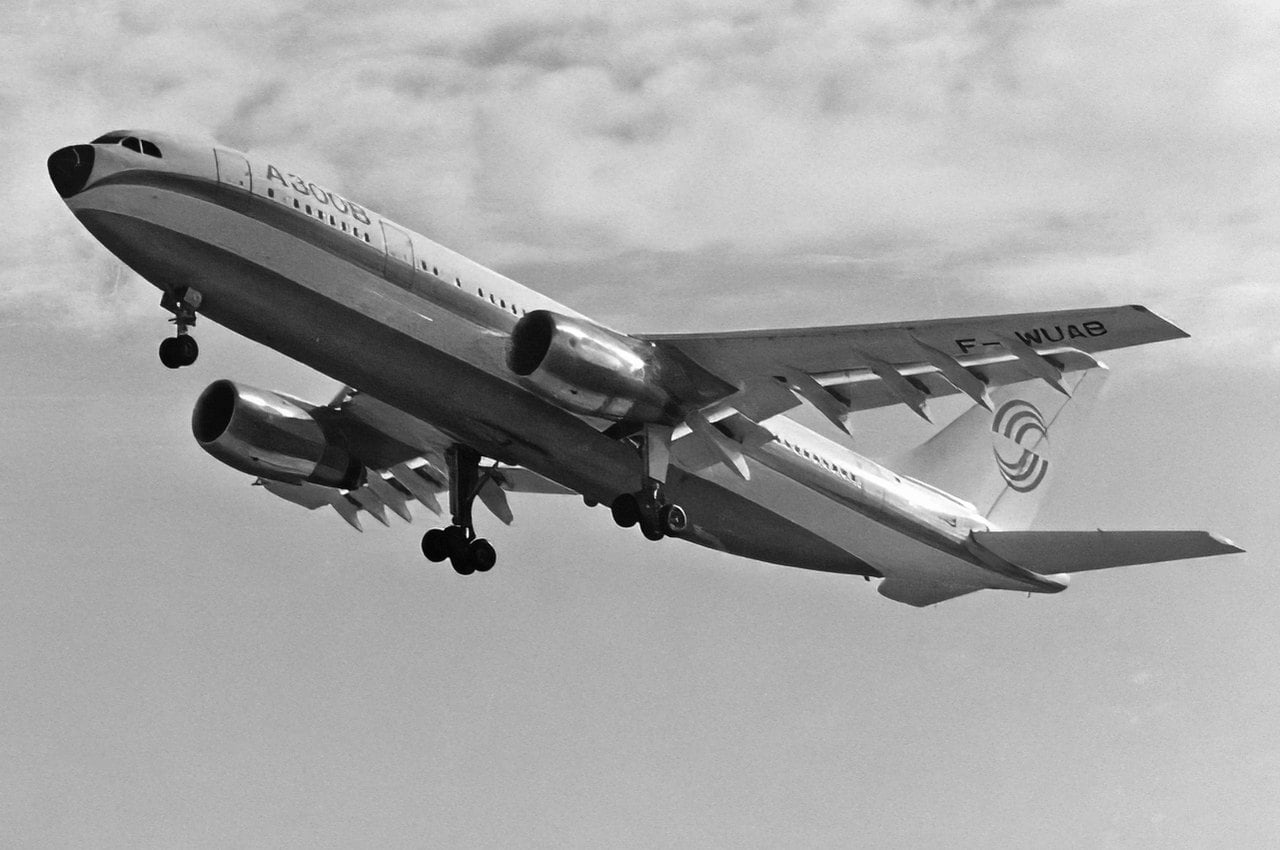
Airbus then numbered its studies off the A300. Variants B1 to B9 were sketched; the tenth, the A300B10, became the shorter, longer-range A310. The twin-aisle TA9 and TA11 studies were officially named A330 and A340 in 1986, a handy memory aid since the A340 is the one with four engines. The single-aisle family launched in 1984 as the A320, and its smaller and larger siblings became the A319 and A321.
Airbus marks the 50th anniversary of the A300’s first flight, the aircraft that started its numbering system.
Not every Airbus began life at Airbus. The Bombardier CSeries was renamed the A220 in July 2018, after Airbus took control of the programme, slotting a Canadian design neatly into the bottom of the European number range.
Reading the suffixes
After the family number comes the variant. Boeing uses dash numbers for major versions: the 707-120 was the first production model and the 707-320 the larger intercontinental version, just as the 747-400 and 737-800 later identified specific generations. Airbus does the same with dashes, as in A330-300, and adds plain-English tags when it upgrades an existing design. When the A320 got new engines, Airbus called it the A320neo, for new engine option, and renamed the earlier version A320ceo, for current engine option.
The American rival that disappeared into Boeing had its own logic. Douglas airliners were DC types, for Douglas Commercial, from the DC-1 of 1933 onwards. After the McDonnell and Douglas merger, the DC-9 Super 80 was officially redesignated the MD-80 in 1983, and the last member of the family, the MD-95, ended up wearing a Boeing number.
What’s in a number
So the 707 is not a trigonometry joke, the A300 is not a 300-seater and the 717 has been two different aeroplanes. Behind every airliner name is a mix of engineering bookkeeping, seat maths and marketing instinct, and sometimes a merger that hands one company another company’s numbers.
Next time you board, look at the safety card. That model number is a small piece of corporate history, and now you can read it.
Sources: Boeing Frontiers (Mike Lombardi, 2004), Airbus, Reuters, Stewart Wilson (Boeing 707, Douglas DC-8, and Vickers VC-10, 1998)
0 Comments